
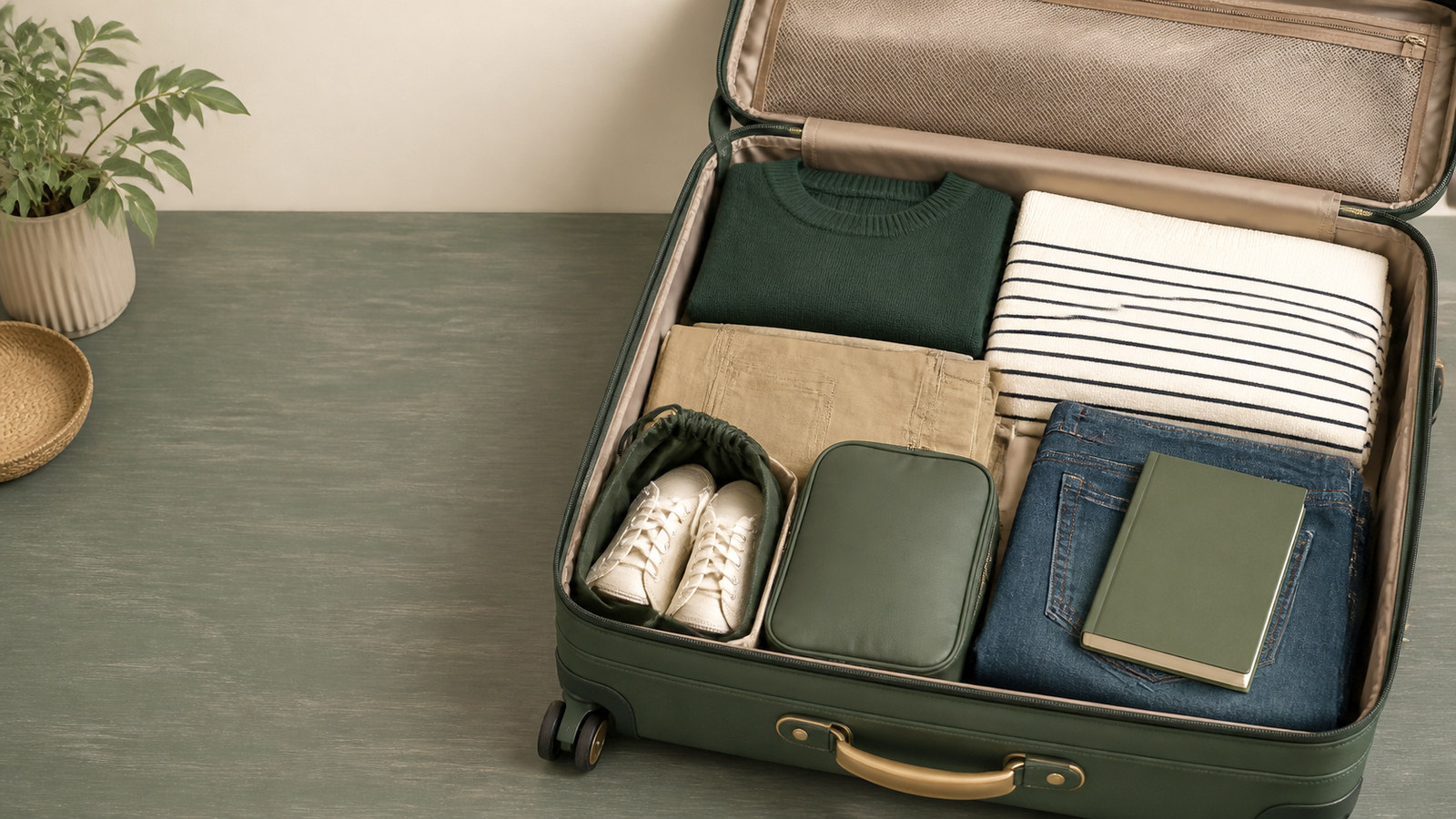
Deep Arrival original, generated with OpenAI image tools
Checked-bag packing matrix
What Can You Pack in Checked Luggage?
Most ordinary clothing, shoes, toiletries, and nonhazardous personal items can go in checked luggage. The important exceptions are spare lithium batteries and power banks, electronic cigarettes, many hazardous products, high-value essentials, and items controlled by the airline or destination. Classify each uncertain item before packing it.
Most ordinary clothing, shoes, toiletries, and nonhazardous personal items can go in checked luggage. The important exceptions are spare lithium batteries and power banks, electronic cigarettes, many hazardous products, high-value essentials, and items controlled by the airline or destination. Classify each uncertain item before packing it.
Fast read
What matters first
Use this page as the practical filter before you open booking pages, maps, or official policy documents.
Usually fine
Clothing, shoes, books, and ordinary nonhazardous personal items can normally be checked.
Cabin-only group
Power banks, spare lithium batteries, and electronic cigarettes belong with the passenger under FAA rules.
Separate decision
Liquids, alcohol, aerosols, dry ice, sports equipment, food, and tools each have item-specific conditions.
Decision system
The planning sequence
Use the sequence below to decide how this should shape the trip.
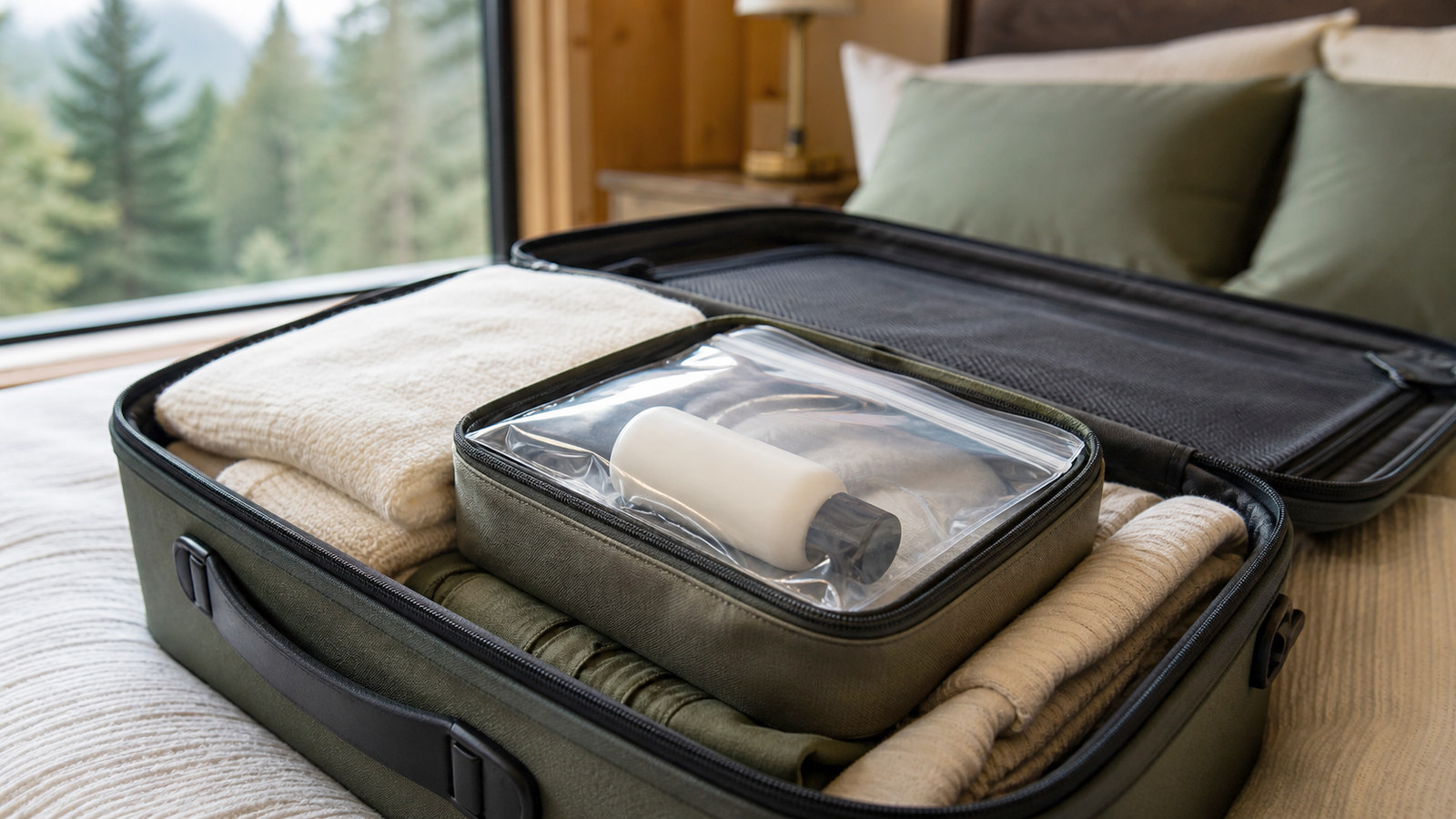
Containment example
Allowed does not mean unprotected
An allowed toiletry can still damage the rest of the suitcase. Close the container, add an independent leak barrier, and cushion the organizer away from electronics and documents.
Use the dedicated liquids guide for aerosols, alcohol, quantity limits, and the three-layer containment method rather than treating every liquid as unrestricted.
Classify the item before choosing a bag
TSA and FAA rules are organized by the hazard and function of an item, not by whether it fits in a suitcase. Start with the exact product name, ingredients, battery type, fuel source, pressure container, or tool design. An ordinary sweater and a camping stove may occupy similar space but create completely different aviation decisions. If the item is not clearly listed as allowed, ask the airline before travel.
Pack ordinary clothing and durable personal items normally
Clothing, shoes, books, and many nonhazardous everyday items can normally travel in checked baggage. Protect items that can bend, stain, or break, and keep identification inside the case. An allowed checked item can still be a poor candidate when it is irreplaceable, needed immediately after arrival, or likely to be damaged by pressure and handling.
Move spare lithium batteries and power banks to carry-on
FAA requires spare lithium batteries and power banks to remain in carry-on baggage. Protect exposed terminals from short circuit and prevent accidental activation. A device with an installed battery may be permitted in checked baggage under specific conditions, but it should be completely powered off and protected from damage. Electronic cigarettes and vaping devices also stay in the cabin.
Use the dedicated liquid rules for toiletries and alcohol
The carry-on 3.4-ounce rule does not create one universal checked-bag limit. Checked toiletries, aerosols, alcohol, medicines, and hazardous liquids follow their own conditions. Deep Arrival's liquids-in-checked-luggage guide separates ordinary toiletries from quantity-limited personal-care products, alcohol by strength, and forbidden hazardous liquids, then adds a leak-containment method.
Check sports equipment and tools by exact component
A bicycle, golf bag, fishing kit, ski bag, or tool case can include several separate decisions. The main equipment may be allowed while a fuel canister, compressed gas cylinder, blade, loose battery, or chemical treatment is restricted. Read the airline size and fee rule, then search each potentially hazardous component in FAA PackSafe and the TSA item list.
Treat food as an aviation and destination question
Many solid foods can travel in checked baggage, but customs, agriculture, and wildlife rules can restrict what enters the destination. Packaging, refrigeration, liquid content, and spoilage also matter. Check the arrival authority before packing meat, produce, seeds, plants, or homemade items on an international or territory route. A security yes does not guarantee an import yes.
Keep valuables and trip-critical items with you
DOT advises travelers to avoid checking valuables and essentials when practical. Keep travel documents, keys, medication needed in transit, electronics, and items that cannot be replaced quickly in the cabin within the airline allowance. Checked baggage can be delayed, inspected, exposed to weather, or handled roughly even when the contents are completely legal.
Use exact official tools for uncertain products
FAA PackSafe explains dangerous-goods categories, while TSA What Can I Bring provides item-level screening status. Search both when a product includes a battery, aerosol, fuel, chemical, tool, weapon component, or unusual quantity. Then apply a stricter airline or destination rule. If the exact item remains unclear, leave it out rather than relying on a broad packing list.
Planning traps
Mistakes to avoid
These are the small decisions that quietly derail an otherwise good plan.
Moving an item out of the cabin does not remove dangerous-goods rules.
Power banks and spare lithium batteries belong in carry-on baggage with protected terminals.
FAA hazardous-material rules, airline conditions, and destination restrictions may add another gate.
Legal items can still be delayed or damaged, so keep critical documents and medicine accessible.
A sports or camping kit may contain one prohibited fuel, battery, blade, or chemical even when the main item is allowed.
Sources checked
Official and supporting references
Use these references to confirm live prices, dates, rules, and operating details before money changes hands.
FAQ
Common planning questions
Can you put full-size toiletries in checked luggage?
Can a power bank go in checked luggage?
Can electronics go in checked baggage?
Can food go in a checked bag?
What is never allowed in checked luggage?
Continue planning