
Deep Arrival original editorial illustration
Mainland China Power Guide
China Travel Adapter: Plugs, Voltage, and Converter
Pack for socket variation in mainland China, then read every device input label. A plug adapter changes the physical connection. It does not make a single voltage appliance compatible with the local electrical supply.
Pack for socket variation in mainland China, then read every device input label. A plug adapter changes the physical connection. It does not make a single voltage appliance compatible with the local electrical supply.
Fast read
What matters first
Use this summary to identify the checks that matter before you act.
Mainland China
Plan for a 220 to 230 V, 50 Hz supply and more than one socket pattern in existing lodging
Adapter only
Use when the device input covers the local voltage and frequency but the plug shape does not fit
Converter question
Stop and follow the device maker when its input label does not include the local supply
Decision system
The planning sequence
Use the sequence below to make the decision in a clear order.
Read Before Connecting
The input label controls the voltage decision
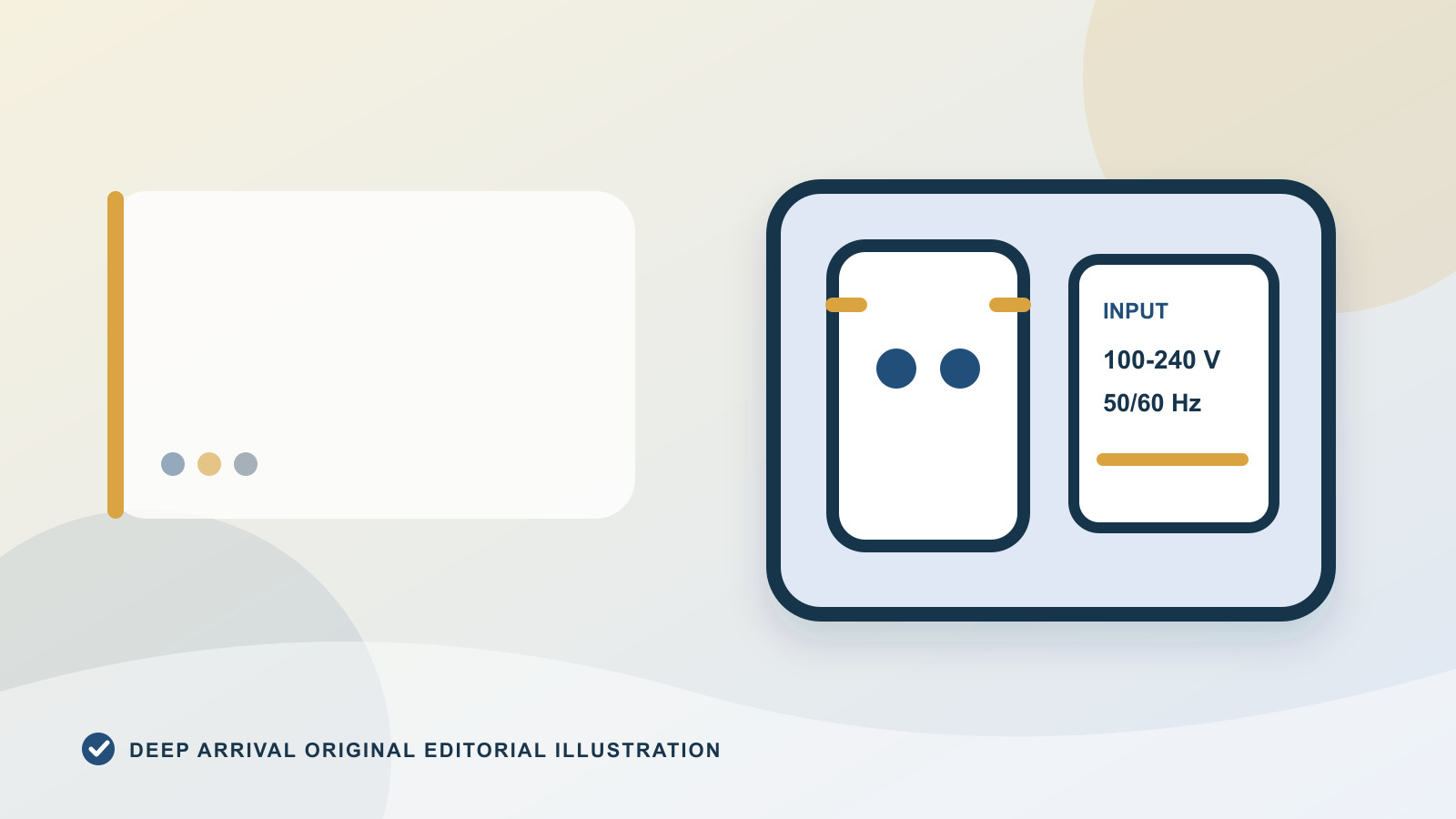
Find the line marked input on each charger or appliance. A range that covers the local voltage and frequency may need only a safe plug shape match, while a narrow label requires a different plan.
Pay special attention to heating appliances, grounded devices, medical equipment, and anything used through a power strip. Adapter fit does not establish electrical compatibility.
Use the mainland China answer only for the mainland
For mainland China, prepare for a nominal supply commonly described as 220 to 230 volts at 50 hertz. Existing lodging can contain more than one socket pattern, including outlets that accept flat parallel blades, angled three pin plugs, or legacy round pins. A socket that appears to accept a plug is not proof that the electrical connection is secure, grounded, or compatible with the device.
The Civil Aviation Administration of China Electricity guidance describes the local 220 volt, 50 hertz supply and notes socket variety. Pack a well constructed adapter that matches the traveler's source plug and anticipated destination sockets, but avoid promising that one plug will fit every room, train, airport, or older building.
Separate plug shape from electrical compatibility
A travel adapter changes the physical connection between a plug and a socket. It normally does not change voltage or frequency. That distinction matters because a United States plug can be made to fit a mainland Chinese outlet even when the attached appliance is not designed for the supply. Electrical Safety First Travel Adapter Guidance explains this limitation and also recommends checking the adapter's rating.
Read the adapter instructions for supported plug types, grounding, maximum current, and total wattage. Never stack loose adapters to force a connection, defeat a ground pin, or use a cracked unit. If the plug does not sit firmly, choose another outlet or ask the lodging for a suitable solution rather than holding the device in place.
Read the input line on every device
Turn the charger or appliance over and find the label marked input. A charger that explicitly covers 100 to 240 volts and 50 to 60 hertz is one common example of a wide range supply, but the exact device label still controls. Photograph small print before departure so it can be enlarged on another screen.
Apple USB Power Adapter Specifications provides an example of Apple adapters with a broad input range; that example must not be generalized to every charger. If the label is missing, damaged, ambiguous, or limited to 110 or 120 volts, do not assume an adapter makes it safe. Consult the manufacturer for that model or use a destination compatible replacement.
Treat heat appliances as a separate decision
Hair dryers, straighteners, curling tools, kettles, and similar heat producing appliances can draw substantial power. Some travel models have a voltage selector, some are automatically dual voltage, and others are built for one supply only. Check the input label, switch position, frequency statement, plug, grounding, and wattage before use.
A converter must be designed for the appliance type and its real power demand, not merely sold with a familiar connector. When instructions are unclear, the safer practical choice is often to use a locally compatible appliance supplied by the lodging or purchase one designed for the destination. Do not connect a single voltage heat appliance just because a universal adapter accepts its plug. Apple USB Power Adapter Specifications provides one limited broad input range example.
Preserve grounding and stay within ratings
A three pin plug may indicate that the device expects a protective earth connection. Use an adapter and outlet configuration that preserve that path. A two pin adapter that physically accepts a grounded plug does not create grounding by itself. Read the adapter's maximum current and wattage, then consider the combined demand if it has several USB ports or AC outlets.
Do not connect a high power appliance through a unit intended only for low power electronics. Inspect for heat, discoloration, looseness, or damage and stop using the setup if anything seems abnormal. The adapter maker's instructions and the device maker's directions take priority over generic travel advice because they define the tested operating conditions. Apple World Travel Adapter Kit provides one manufacturer specific plug example.
Plan phone, laptop, camera, and USB charging
Many modern phone, laptop, and camera chargers accept a broad voltage and frequency range, but travelers should verify each one individually. One charging brick with enough safely rated ports can reduce clutter when every connected device and cable is compatible. Do not assume that a power strip bought at home is suitable for the destination supply; its plug, internal components, surge protection, and rating may differ.
The Apple World Travel Adapter Kit illustrates that mainland China uses a distinct removable connector within one manufacturer's system. It is evidence for that Apple kit, not a universal promise about all devices. Pack the correct cable, confirm USB charging standards, and keep essential medication or accessibility equipment on its maker approved power plan. Electrical Safety First Travel Adapter Guidance explains the adapter's electrical limits.
Expect socket variation in lodging
Newer and older rooms may not present identical outlets, and a multi standard faceplate can be worn or wired differently from another. China government plug guidance describes several plug forms travelers may encounter. Before connecting, inspect the outlet for damage, scorching, looseness, or blocked shutters. Insert the adapter without force and make sure the weight of a large charger does not pull it partly out of the wall.
A short extension lead designed and rated for the local system may reduce leverage, but it introduces another component to verify. Ask the property for help when the socket does not match expectations. Do not alter pins, wedge a connection, or use a bathroom outlet without understanding its intended purpose. Civil Aviation Administration of China Electricity documents the mainland supply and socket variation.
Check Hong Kong and Macau separately
A trip itinerary may combine mainland China with Hong Kong or Macau, but the mainland plug answer should not be carried across those borders automatically. Treat each jurisdiction as a new electrical check. Confirm the current plug type, nominal voltage, frequency, grounding method, and lodging conditions for every stop, then make sure the chosen adapter covers the entire itinerary without unsafe stacking.
Keep each removable plug head labeled so the correct part is easy to identify. The safest packing list is based on actual destinations rather than a product label that says Asia. Recheck official destination guidance close to departure because building stock and standards can change even when the underlying supply remains stable. China Government Plug Guidance describes common mainland plug forms.
Run a five minute predeparture audit
Place every powered item beside its charger. Photograph the input labels, circle any single voltage device, and identify the source plug on each cord. Verify that the adapter supports the destination plug, grounding needs, and total load. Check all cables for cuts or exposed conductors and replace damaged parts. Decide which device will charge first if the room has only one convenient outlet.
Save manufacturer support pages offline for medically necessary or high value equipment. Leave unverified heat appliances at home and plan to use a known compatible alternative. This audit is faster and safer than solving compatibility after arrival, when a visually fitting outlet can tempt a traveler to connect equipment before reading its requirements.
Planning traps
Mistakes to avoid
These are the small decisions that quietly derail an otherwise good plan.
A plug adapter normally changes only physical fit. The device input label determines whether the local supply is compatible.
A broad input range on a phone or laptop charger says nothing about a hair dryer, medical device, or power strip.
Use a connection that preserves grounding when the device requires it and never remove or bypass a ground pin.
Verify Hong Kong and Macau separately from mainland China and check every property when the outlet differs.
Sources checked
Official and supporting references
Use these references to verify the factual guidance and recheck details that can change.
FAQ
Common planning questions
Do United States plugs work in mainland China?
Do I need a voltage converter for a phone or laptop?
Can I use a United States hair dryer in China?
Are Hong Kong and Macau outlets the same as mainland China?
Is a universal adapter better than a China specific adapter?
Continue planning