
EPCOT Height Requirements 2026
Ride minimums range from 40 to 44 in (102 to 112 cm). Browse all 20 listed attractions, including 15 with no minimum height.
How tall is your child?
Converted choices retain the exact posted threshold.
Planning at home: measure without shoes for a conservative number. Staff measure at the ride and make the final call.
Heights come from official Walt Disney World pages, verified October 4, 2026. Cast Members at the ride make the final call.
What each height unlocks
Tap a height to load it in the checker.
EPCOT rides with a height requirement
Listed rides with a minimum height, lowest first. Underlined ride names link to the full ride guide.
| Ride | Minimum | cm | Land | Good to know |
|---|---|---|---|---|
| Mission: SPACE Green MissionSimulator · Less intense | 40 in | 102 | World Discovery | Rider Switch |
| Soarin’ Across AmericaFlight simulator · Moderate | 40 in | 102 | World Nature | Rider Switch |
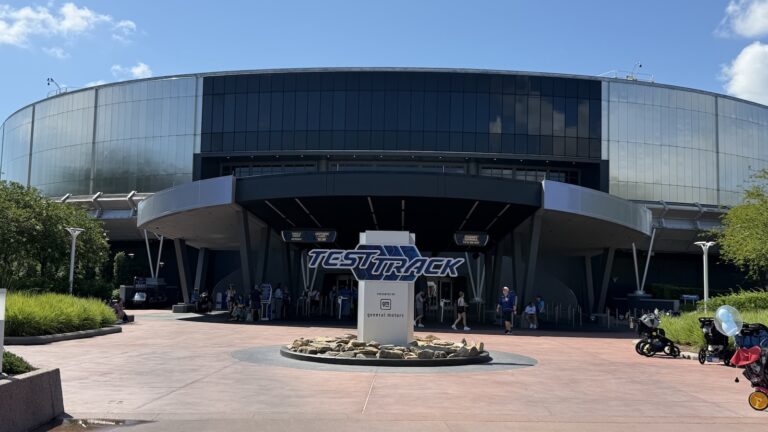
| Test TrackRide · Moderate | 40 in | 102 | World Discovery | Rider Switch |
| Guardians of the Galaxy: Cosmic RewindCoaster · High | 42 in | 107 | World Discovery | Rider Switch |
| Mission: SPACE Orange MissionSimulator · More intense | 44 in | 112 | World Discovery | Rider Switch |
EPCOT rides with no height requirement
15 attractions with no minimum height.
- The American AdventureShow
- Disney and Pixar Short Film FestivalShow
- Frozen Ever AfterBoat ride
- Gran Fiesta Tour Starring The Three CaballerosBoat ride
- Impressions de FranceShow
- Journey Into Imagination With FigmentDark ride
- Living with the LandBoat ride
- Remy’s Ratatouille AdventureTrackless ride
- The Seas with Nemo and FriendsDark ride
- Spaceship EarthDark ride
- Turtle Talk With CrushShow
- Advanced Training LabInteractive
- Beauty and the Beast Sing-AlongShow
- Canada Far and Wide in Circle-Vision 360Show
- Reflections of ChinaShow
Good to know before you measure
Measuring your child
At home, measure without shoes for a conservative number. At the park, Cast Members measure at the ride and make the final call.
Rider Switch in three steps
- 1With the whole group at the attraction entrance, tell a Cast Member you want to use Rider Switch.
- 2The group splits in two: Party A rides first while Party B waits outside the queue; a Cast Member scans Party B’s tickets and says where to return.
- 3After Party A rides, up to two people from Party B go to the return entrance, are rescanned and board without waiting.
Companion and measuring rules
Children under age 7 must be accompanied by someone aged 14 or older. Cast Members measure at the attraction and make the final call. Meeting a height minimum does not remove other boarding conditions.
Plan around the height thresholds
Choose a few priorities
Use the ladder to see what changes at each height, then pick the attractions your child actually wants to experience. Being tall enough does not mean they will enjoy every ride.
Pair a restricted ride with a nearby option
Browse the no minimum list before you go. It gives the waiting group something to enjoy when another part of your party rides.
More help with height planning
- Height decisions at EPCOT
- What the height milestones mean
- Minimum height and riding independently
- How to use the no-minimum attraction list
- Comparing two children without mixing their results
- Using inches and centimetres accurately
- When a child is close to the next threshold
- Understanding the scope of the chart
- What to confirm before joining a queue
- Connecting the height shortlist to the other park tools
Height decisions at EPCOT
At EPCOT, the Mission: SPACE rows need careful reading. Green Mission and Orange Mission are choices within the same attraction, with different posted minimums. They are separate rule rows in this chart, not two separate physical rides. A child who meets the Green Mission requirement has not met the Orange Mission requirement merely because the attraction name looks familiar.
The other useful distinction is between the 40-inch group and Guardians of the Galaxy: Cosmic Rewind at 42 inches. Compare those exact steps rather than treating EPCOT as a park with one thrill-ride cutoff. The no-minimum list supplies additional attractions outside this numeric subset. It should not be added to a headline count and described as a guarantee that every member of a family can board everything.
The numeric chart contains 5 listed rule rows, starting at 40 in and reaching a highest minimum of 44 in. This range describes the confirmed numeric subset. It is not a claim that every attraction requires at least 40 in, or that everyone above 44 in can board every attraction. Read the no-minimum list and the conditions next to the individual result as part of the answer.
What the height milestones mean
The checker choices are the park’s actual reference heights, rather than age estimates. Select one to see that exact milestone, or enter a measured height between choices. The groups below identify which listed rows begin at each step. Keep the individual conditions in the chart attached to the attraction; a new minimum does not cancel them.
40 in milestone
Mission: SPACE Green Mission, Soarin’ Across America, Test Track.
42 in milestone
Guardians of the Galaxy: Cosmic Rewind.
44 in milestone
Mission: SPACE Orange Mission.
The highest number here is the highest listed minimum, not a maximum height or an all-access pass. Conversely, a child below the first number may still have options in the separate no-minimum list. Those two lists answer different questions.
Minimum height and riding independently
Check the companion and age notes for EPCOT even when a row has only one numeric minimum. The absence of a second numeric column does not establish that a younger child can ride independently.
Work through the proposed seating arrangement before joining a queue. Identify who meets the minimum, who needs a qualifying companion and which person will take that role. The companion must meet the operator’s own requirements as well. An adult’s willingness to accompany a child does not lower the child’s minimum, remove a maximum or create an exception to an attraction’s stated rule.
Age and height are separate parts of that decision. Keep an age-based instruction in years and a height-based instruction in the posted measurement system. Do not convert a phrase about children of a certain age into an invented centimetre or inch threshold. Where the chart retains an unresolved rule or a staff-check note, explain the intended party arrangement to a Cast Member rather than filling the gap with an assumption.
For a family with two children, check each child separately before assigning one adult to both. The height chart does not certify a particular row of seats or a one-adult-to-two-children arrangement. Ask about that arrangement where it matters, while keeping the child’s actual measured height unchanged in the checker.
How to use the no-minimum attraction list
The separate list contains 15 experiences with no numeric minimum in this page’s retained scope, including The American Adventure, Disney and Pixar Short Film Festival, Frozen Ever After. These are useful alternatives when a child is below a numeric threshold, but the label answers only the minimum-height question. It does not erase the attraction’s age, posture, supervision, maximum-height or other access conditions.
Keep the attraction name attached to any condition when making a family list. A note that belongs to a small play feature should not become a rule for an entire themed area. Equally, a general no-minimum label should not be used to wave away a particular feature’s upper limit. Read the expanded rider conditions where available, then ask staff about anything that remains unclear.
Do not use the numeric total to decide how many things a younger child can do. That total tracks the rows included in the checker; the no-minimum list is a different part of the page. Start with the experiences that suit the child and have confirmed applicable rules, then keep a few alternatives available. This is more useful than treating the largest headline number as a promise of a complete day.
Comparing two children without mixing their results
Enter the first child’s measured height and make a short named list of the relevant EPCOT attractions. Then replace that height with the second child’s measurement. Keep the two lists separate until you have compared the attraction names and their conditions. A result for the taller child does not carry over to the smaller child, even when both children are comfortable with the same kinds of experiences.
For example, a child just below the 40 in first numeric milestone and a child who has reached it are in different positions for Mission: SPACE Green Mission. That difference need not define the whole visit. Check the separate no-minimum options and decide which confirmed experiences the children can share. Save the height-restricted option as a separate decision rather than making it the only acceptable activity.
If only one child meets a chosen ride’s requirements, decide which adult will stay with the other child before entering the queue. Ask the attraction team about any applicable switching arrangement and where each part of the group should wait. Do not assume that one park’s procedure, return entrance or permitted party size applies to another attraction or destination.
The shared family list should describe the actual arrangement: child, named attraction and any qualifying companion. This keeps a result useful when another adult takes over the planning. It also avoids the common mistake of saving a generic screenshot that shows a large eligible count but hides the one condition that changes the family’s choice.
Using inches and centimetres accurately
EPCOT uses inches as the reference for this page’s listed operator-native thresholds. The unit switch changes the display, while the height choices retain the exact physical threshold behind the conversion. A neat-looking converted label should not replace the original figure when a child is close to a boundary.
One inch equals exactly 2.54 centimetres. For example, 40 inches is 101.6 centimetres, and 100 centimetres is approximately 39.37 inches. Those are not the same height. If a rule starts at 40 inches, rounding a 100 cm measurement up to 40 inches would change the eligibility comparison. Keep the measurement you actually have rather than selecting a more convenient-looking number.
Use a park-height choice to understand what a genuine threshold changes. Use the text box when your child’s measurement falls between the choices. The buttons are reference points, not a suggestion to increase the entered height to the next available number. Switch units after making a selection if you want to discuss the same physical height with somebody using the other system.
An at-home measurement helps with planning; it is not an entry credential. Staff use the attraction’s procedure and make the final decision. If the child is close to a requirement, plan around the confirmed lower-height options as well. A calculator result cannot require a Cast Member to accept a measurement, a conversion or a screenshot.
When a child is close to the next threshold
A child just below a published minimum remains below it. Use the next milestone to understand the difference, not to promise that the attraction will be available on the day. At EPCOT, the clearest conversation is about the named attractions in that group and the alternatives already covered by the lower-height or no-minimum rules.
Avoid making one almost-reached ride the condition for the whole visit being successful. Explain that the requirement belongs to the attraction, keep the child’s interest in mind and choose several confirmed alternatives. A child who reaches a new minimum can still decide not to ride. Height eligibility and willingness to experience a ride are different questions.
If the source wording is genuinely ambiguous at an exact endpoint, use the staff-check instruction retained in the chart. That is different from being clearly below a confirmed minimum. Do not round an exclusive maximum into an inclusive one, and do not borrow a more favourable interpretation from a similarly named attraction in another park.
Before sharing a result, include the height and units you used. Someone reading only the ride count cannot tell whether the result was produced at an actual measurement, a demonstration height or a converted park-height choice. Reopen the checker with the intended value when the result is going to guide a real attraction decision.
Understanding the scope of the chart
This page covers the named EPCOT rules shown above. A numeric row represents a listed attraction or a separately specified ride mode, not necessarily one unique physical ride. A resort comparison can also contain similarly named attractions in different parks. Read the park label and the full row name before comparing the numbers.
An attraction outside the confirmed scope is not automatically unrestricted. The operator may publish a condition somewhere other than a summary height chart, or the page may retain a conflict that requires staff confirmation. Those cases should stay distinct from an affirmative no-minimum rule. Unknown information is useful to identify, but it should not be converted into an automatic yes.
The source links provide the operator context behind the chart. A guide edition, the page’s source-verification date and today’s operating status are different things. New explanatory text does not turn an older linked guide into a newly issued edition. Keep the dated source disclosure and any unresolved-rule note when using or sharing the information.
What to confirm before joining a queue
Check the chosen attraction’s name, measured height and any companion or upper-limit note first. Then check whether the attraction is operating through the park’s current information. A height result for Mission: SPACE Green Mission, Soarin’ Across America, Test Track describes the listed height rules; it does not confirm that the attraction is open at the moment you arrive.
Bring the relevant companion question to the entrance, before the group splits or commits to a queue. Tell staff which child or adult needs the condition clarified. Asking whether a particular arrangement is accepted is more useful than asking only whether the whole family can ride, especially when two children have different heights or a child is eligible only with supervision.
Keep the operator’s additional boarding conditions separate from the height comparison. Restraint fit, required posture, a particular seat or vehicle, and any other posted restriction can still affect boarding. This page does not attempt to certify those conditions from a person’s height alone. Use the current attraction instructions and staff assessment for the final decision.
If the attraction is unavailable or the proposed arrangement is not accepted, return to the named alternatives already identified for the child. That keeps the height chart useful as a shortlist rather than a promise. It also makes it easier to change one activity without rebuilding the family’s whole plan.
Connecting the height shortlist to the other park tools
Use the related utilities for their own jobs: park map to locate the shortlisted attractions and their entrances; park hours to check the dated operating information; wait times to compare the reporting attraction queues after checking eligibility; crowd calendar to compare available date estimates when choosing a visit. Height requirements remain the starting point for deciding which listed ride rules a child meets. A low wait or an attractive visit date does not change a minimum, maximum or companion requirement.
Keep this page as the reference for the height decision. The map supplies location, the hours page supplies operating information, and queue or crowd tools help with the timing question they actually cover. Separating those tasks makes a saved plan easier to update. A change to operating information should not be mistaken for a change to the attraction’s height rule.
An individual ride guide is the next step when the child meets the listed rules and you want to understand the experience. Follow a linked ride name where a guide is available. That deeper description can help with the child’s preferences, while this chart continues to supply the concise height and companion reference. Neither page should be used as a boarding guarantee.
Quick answers
EPCOT height requirements FAQ
What is the lowest height requirement at EPCOT?
What can a 40 inch child ride at EPCOT?
What is the height requirement for Mission: SPACE Orange Mission?
Does the checker show operating status?
Park day gear worth packing
A compact set of comfort picks for long lines, heat, rain, refills, and high step counts.


Keep planning
Sources
Official pages: EPCOT official attractions and Walt Disney World Rider Switch. Verified October 4, 2026.