
Michigan’s Adventure Crowd Calendar
Crowd guidance and operating dates through October 2027.
Michigan’s Adventure Crowd Levels by Date
Monday, November 16, 2026
Estimate- Michigan’s Adventure5ModerateOperating schedule not confirmed
No recorded crowd indicator is available for this past date.
If the park operates. Hours are unconfirmed for this date.
Confirm the Official Operating CalendarClosed = no public admission. A range = broader historical planning guidance, not a precise daily score. Operating calendar = schedule context where crowd evidence is unavailable. No record = missing past observation. Estimates with unknown hours apply only if the park operates.
Dates use Muskegon park time.
Historical refresh checked 2026-10-31. Daily estimates refresh from our maintained crowd feed; hours retain their original source and collection date.
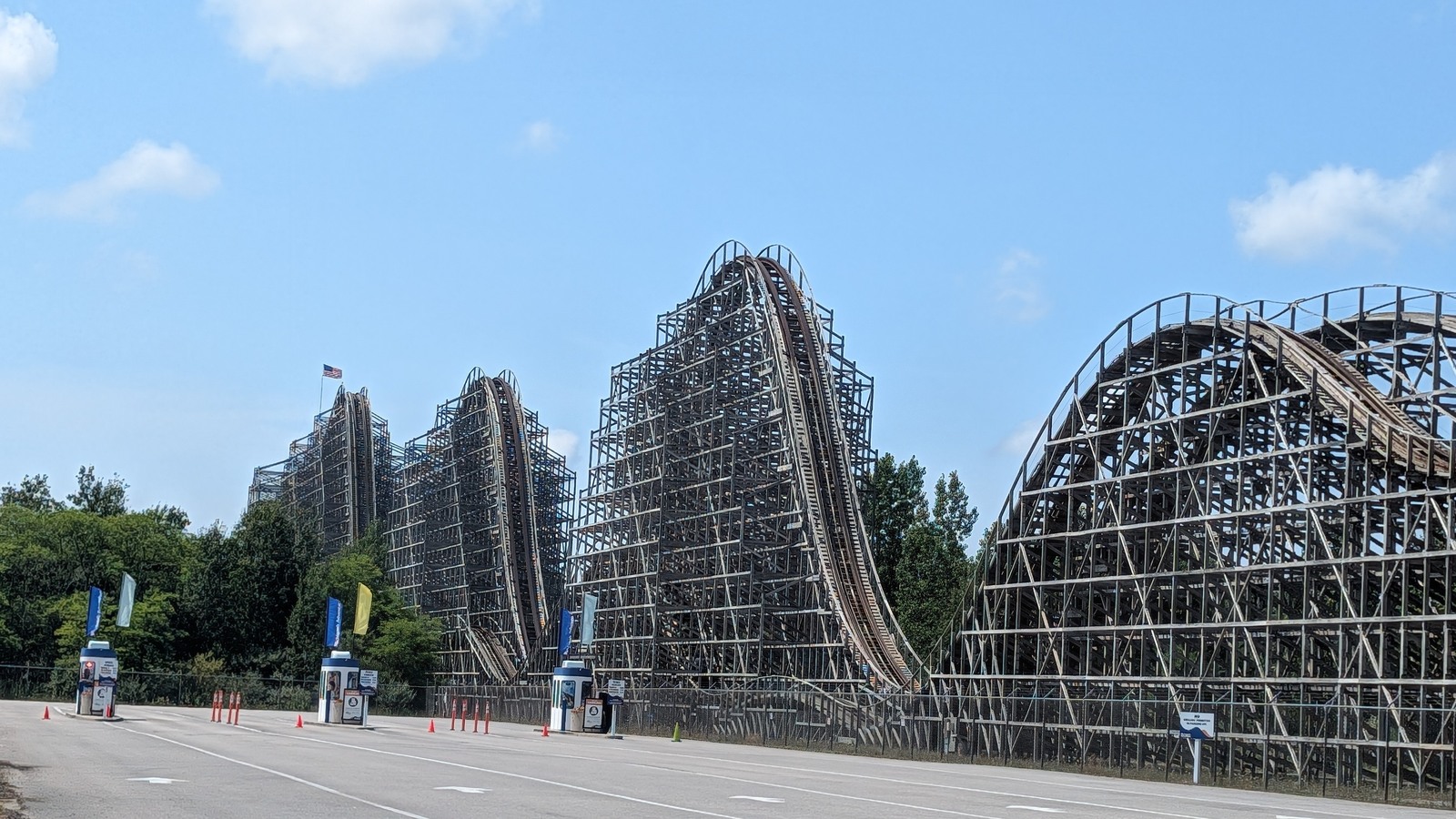
Photo: Jeremy Thompson, CC BY 4.0. Cropped to fit.
Month by Month
Average of supported daily levels, rounded to a whole number. Coverage counts show how many dates contribute; missing dates and confirmed closures are excluded. Sparse months are not representative of the whole month. Open any month in the calendar.
| Month | Average | Dates in Average | Notes | Calendar |
|---|---|---|---|---|
| November 2026Baseline Estimates | Operating calendar | 0 of 30 scored dates | Daily baseline estimates are available in the calendar; excluded from this average. | Open November 2026 in the Calendar |
| December 2026Baseline Estimates | Operating calendar | 0 of 31 scored dates | Daily baseline estimates are available in the calendar; excluded from this average. | Open December 2026 in the Calendar |
| January 2027Baseline Estimates | Operating calendar | 0 of 31 scored dates | Daily baseline estimates are available in the calendar; excluded from this average. | Open January 2027 in the Calendar |
| February 2027Baseline Estimates | Operating calendar | 0 of 28 scored dates | Daily baseline estimates are available in the calendar; excluded from this average. | Open February 2027 in the Calendar |
| March 2027Baseline Estimates | Operating calendar | 0 of 31 scored dates | Daily baseline estimates are available in the calendar; excluded from this average. | Open March 2027 in the Calendar |
| April 2027Baseline Estimates | Operating calendar | 0 of 30 scored dates | Daily baseline estimates are available in the calendar; excluded from this average. | Open April 2027 in the Calendar |
| May 2027Baseline Estimates | Operating calendar | 0 of 31 scored dates | Daily baseline estimates are available in the calendar; excluded from this average. | Open May 2027 in the Calendar |
| June 2027Baseline Estimates | Operating calendar | 0 of 30 scored dates | Daily baseline estimates are available in the calendar; excluded from this average. | Open June 2027 in the Calendar |
| July 2027Baseline Estimates | Operating calendar | 0 of 31 scored dates | Daily baseline estimates are available in the calendar; excluded from this average. | Open July 2027 in the Calendar |
| August 2027Baseline Estimates | Operating calendar | 0 of 31 scored dates | Daily baseline estimates are available in the calendar; excluded from this average. | Open August 2027 in the Calendar |
| September 2027Baseline Estimates | Operating calendar | 0 of 30 scored dates | Daily baseline estimates are available in the calendar; excluded from this average. | Open September 2027 in the Calendar |
| October 2027Baseline Estimates | Operating calendar | 0 of 31 scored dates | Daily baseline estimates are available in the calendar; excluded from this average. | Open October 2027 in the Calendar |
Choosing a Visit Date at Michigan's Adventure
Michigan's Adventure needs a seasonal operating check before a crowd comparison. The current operator calendar labels the main park and water park separately and explicitly marks closed dates. A lower historical month or weekday is not a recommendation unless the intended visit is actually offered. Keep a main-park outing distinct from a trip requiring WildWater Adventure. Compare supported evidence for the feasible dates without converting future planning ranges into an announced opening season or a guarantee that both park components will operate.
What the Stored Historical Summary Suggests
The page's stored historical summary, labelled 2026-10-08, lists Tuesday as the lowest available weekday indicator at 38%. October, June, September are the three lowest available monthly indicators in that summary. These are relative historical indicators for Michigan's Adventure, not attendance percentages or a newly issued forecast. A month's result reflects the operating dates represented in the source; it cannot establish a future opening season or a quiet day that was never offered. Use the summary to identify windows to investigate, then compare the actual eligible dates. A later feed refresh does not retroactively make this stored comparison a prospective prediction.
Choose the right kind of visit
Shortlist offered dates inside the actual operating season. If WildWater Adventure is essential, require its confirmed operation alongside the main park before comparing levels. For a fixed summer window, compare the eligible days within it. Closed dates should display Closed and stay outside the shortlist rather than appearing as unusually quiet opportunities.
Seasonal Timing at Michigan's Adventure
Use these notes to compare visit options. They explain admission and seasonal context; the calendar method identifies the evidence actually used for each estimate.
A seasonal park is not an all-year date choice
Check the operator's calendar before selecting a spring or autumn weekday from a broad historical pattern. A closed date is not a low-crowd visit, and an unconfirmed future date is not an announced opening. Compare offered days within the relevant season. The current calendar's explicit closed labels should stay visible without a numerical score competing with operating dates for the lowest level.
Main park and WildWater Adventure
For a combined amusement-park and water-park trip, qualify both intended experiences. The operator distinguishes their operating states, so a main-park estimate cannot establish the water park's availability. Compare days meeting the same requirements and use the source-backed guidance to choose among them. A slight difference in level does not make a shorter or incomplete intended visit automatically preferable.
Michigan school-break context
Check the relevant district and the exact travel dates rather than assuming one school-return date throughout Michigan. A visiting family's break may differ from nearby schools. If the summer holiday is fixed, compare feasible dates within it instead of recommending a term-time week outside the family's options. School calendars identify a possible demand context; they do not establish an attendance count or an untested numerical uplift.
Read broader future guidance conditionally
A future range can help identify dates to investigate while operation remains unconfirmed. Preserve that evidence type and check the operator before booking. Do not reduce a historical range to a precise daily score simply to make every month look identical. Once the intended visits are offered, compare their actual guidance and practical fit, keeping the original source and observation dates intact.
School Holidays and Visit Trade-Offs
A holiday is a timing signal, not a crowd count
The US federal holiday calendar is a useful reference for identifying long-weekend questions. It does not establish that every school closes, that every employer gives the day off or that the park operates. Check the school district and travel dates relevant to your options. Then compare the park's actual guidance for those dates. A holiday can narrow the shortlist without supporting a claim that a particular number of extra visitors will arrive.
Choose a window before choosing a weekday
If your dates are flexible, compare a school-term window with the holiday period you would otherwise use. Qualify open dates and the desired programme in both windows before deciding. If your dates are fixed, compare the eligible days within that trip instead. This keeps the recommendation useful for families who cannot move to a different month. A broad historical weekday pattern can help start the search, while a current event condition can make an individual day different.
Separate the crowd choice from the operating choice
An operating calendar answers whether the visit is offered; the crowd evidence helps compare relative pressure if it goes ahead. A confirmed closed date should not compete with open days as the quietest option. Unknown hours also do not mean closed or quiet. When the guidance is otherwise similar, prefer a date that meets the group's practical requirements with clearer admission information. Keep the second viable option available if the trip allows it.
Compare Your Available Dates
If you can move the whole trip
Begin with two plausible travel windows rather than searching for one permanently quiet date. In each window, identify open park days that deliver the experience you want. Compare the evidence for those dates and look for a meaningful, consistently supported difference. Then weigh that against the wider trip. A broad monthly indicator is a starting point for investigation; it should not overrule an unavailable park day, an essential event or a materially shorter usable visit.
If only the park day is flexible
Keep the wider trip fixed and shortlist two or three eligible park days. Compare the same visit type and read each selected-day panel. If the guidance is close, use the party's practical requirements to decide. Record a workable second option if your bookings allow it. Before switching, check that admission still supports the intended visit. A numerical level does not reserve a ticket, provide an attraction booking or establish that all experiences will operate.
If the visit date is fixed
Use the level to set expectations rather than trying to solve an impossible date change. First make sure the intended admission and programme are correct. A higher-pressure estimate can justify allowing more flexibility in the day's ambitions, without dictating a ride order or promising a particular queue. The Wait Times page addresses reported queue conditions where available. This calendar's task remains explaining the date choice and the strength of the evidence behind it.
If two sources appear to disagree
Check whether they concern the same park, date, admission period and evidence type before comparing their colours. Different providers can use different scales and historical samples. A lower category elsewhere is not automatically a more accurate forecast, and a past indicator is not a prediction issued before that day. Use the stated method and coverage to understand the difference. Do not average unrelated provider scores into a new number that neither source supports.
How the Crowd Levels Work
Compare dates at the same park. Levels run from 1 to 10 and represent relative wait pressure, not attendance, capacity, a wait in minutes or a probability. A 4 at one park is not a ranking against a 4 elsewhere.
Estimate. A fresh, dated Queue-Times prediction is converted from its relative 0 to 100 indicator to our 1 to 10 scale. Predictions expire after 72 hours and remain separate from recorded historical data.
Past. Only a source-identified recorded historical indicator is a past record. Asterisk and Forecast-labeled source predictions are excluded. Missing historical observations stay missing. A zero indicator is valid and maps to level 1; it is not a closure. Previously predicted values never enter historical training.
Operating schedule. An explicit dated closure in an attributed operating schedule suppresses crowd guidance. Unknown hours do not establish a closure: future guidance applies only if the park operates. Operating records retain their original checked date and expire after 72 hours. Confirm hours and separate event admission before booking.
Maintained sources and accuracy. Our daily Crowd job adds newly recorded historical indicators, refreshes dated provider predictions and checks operating records separately. Existing live waits do not calibrate these scores. Prospective accuracy is not yet measured for these new pages. Historical collection began with 2025 and 2026 calendars checked October 8, 2026; all-time tables below are a separate snapshot.
Daily guidance when exact coverage is sparse. Existing supported estimates retain their method. Otherwise a park-specific historical peer median supplies the daily baseline, using seasonal weekdays, seasonal weekdays or weekends, then broader weekday or operating-day history when the stated sample minimum is met. Broader groups carry more uncertainty. These are estimates, not attendance or guaranteed waits. The selected-day panel identifies the basis, sample size and original source dates.
Separate operating evidence. A fresh dated closure displays Closed and suppresses scores. Unknown or expired hours leave estimates conditional on operation. Newly supplied baselines are excluded from best-day rankings and month averages. Past missing observations are never filled with predictions. Method issued October 18, 2026.
The supplemental baseline keeps its issued reference. Existing daily jobs maintain their original raw feeds separately; a new reference requires qualification before the offered horizon can advance.
Historical Crowd Patterns
Compare the month and weekday tables separately. Each summarizes this park’s available history; neither predicts a specific visit date. Lower indicators suggest lighter historical wait pressure, not guaranteed short lines.
| Month | Historical Indicator |
|---|---|
| January | Not available |
| February | Not available |
| March | Not available |
| April | Not available |
| May | 59% |
| June | 30% |
| July | 55% |
| August | 60% |
| September | 41% |
| October | 18% |
| November | Not available |
| December | Not available |
| Weekday | Historical Indicator |
|---|---|
| Sunday | 49% |
| Monday | 47% |
| Tuesday | 38% |
| Wednesday | 42% |
| Thursday | 46% |
| Friday | 48% |
| Saturday | 62% |
Queue-Times all-time tables retrieved October 8, 2026. The published tables do not provide sample counts or joint month-by-weekday results. Missing historical data does not establish a closure.
Frequently Asked Questions
When is the best time to visit Michigan’s Adventure for lower crowds?
Shortlist offered dates inside the actual operating season. If WildWater Adventure is essential, require its confirmed operation alongside the main park before comparing levels. For a fixed summer window, compare the eligible days within it. Closed dates should display Closed and stay outside the shortlist rather than appearing as unusually quiet opportunities.
Which weekday should I choose at Michigan’s Adventure?
Compare the actual eligible dates inside your travel window rather than treating one weekday as a year-round rule. A school holiday, special event or limited operating pattern can make the same weekday a different visit. If the historical summary suggests a weekday to investigate, use it as a shortlist and then read the selected date. Prefer an option that delivers the intended programme with adequately supported guidance.
What do the 1 to 10 crowd levels mean?
The 1 to 10 levels provide relative planning guidance for this park; 5 and 6 are Moderate. They are not attendance, occupancy, a probability or an attraction wait in minutes. The day panel identifies the source and estimation basis. Supplemental baselines are computed from source records or disclosed calendar assumptions, rather than by taking the midpoint of a broad range. Equal levels at different parks do not establish equal visitor counts.
How are the estimates on this page supported?
Existing supported daily estimates keep their method. Where exact coverage is sparse, a separately computed median of this park’s recorded historical indicators supplies a baseline, using the qualified seasonal or broader peer group identified in the day panel. It is not the midpoint of a displayed range, measured attendance or a guaranteed wait. New baselines carry more uncertainty and are excluded from best-day rankings and month averages. Original source dates are retained; the supplementary method was issued October 18, 2026.
How far ahead can I use this calendar?
The supplemental reference supports eligible future dates through October 31, 2027, within the calendar’s offered horizon. Existing dates retain their method; newly filled dates use the source-based baseline identified in the day panel. These are estimates, not a promise of an operating date or precise crowds. Unknown hours leave the guidance conditional on operation. Past estimates and recorded indicators remain distinct, and missing observations are never fabricated.
Does a blank or unconfirmed schedule mean the park is closed?
No. Unknown or expired hours do not establish that the park is closed or quiet. A fresh, qualified closure displays Closed and suppresses the crowd score. Otherwise future guidance is conditional on the park operating. Past missing observations remain missing; a prediction is never relabeled a recorded crowd.
Do school holidays and special events automatically change these scores?
No. The seasonal notes explain factors to investigate when choosing a date. They do not establish that every factor is an input to the existing model or justify adding a numerical uplift. The method block and selected-day panel identify the actual evidence. Use official school, holiday and event information to qualify the visit, while keeping the score source and its original observation or issue date intact.
Can a lower level guarantee short queues or the full attraction offering?
No. A park-wide date estimate cannot guarantee a particular queue, attraction opening or event admission. First make sure the date offers the experience you want, then use the crowd guidance to compare eligible alternatives. Park Tools links to the same park’s Map, Hours, Wait Times and other available utilities for their separate tasks. A seasonal or evening programme should be checked on its own terms.
Sources
- Michigan’s Adventure Queue-Times statistics: separate all-time tables, checked October 8, 2026.
- Dated Queue-Times calendars: recorded indicators and attributed predictions, kept separate in our maintained Crowd feed.
- Queue-Times methodology: its relative crowd indicator.
- Official operating calendar: hours and event admission. Dated operating records use the accepted Deep Arrival Park Hours snapshot, retaining its original checked date. Empty event-calendar cells are not treated as closures.
- Michigan’s Adventure Park Hours: operating context and source details.
Michigan’s Adventure planning guide · Back to the Calendar
Supplementary daily-baseline method issued October 18, 2026. Original provider history and check dates are retained; the issue date is not a new observation or an operating-calendar check. Estimates are not attendance.
Visit-date Planning
These links support the visit-date guidance. The calendar data sources above describe the estimates and their coverage.
Park day gear worth packing
A compact set of comfort picks for long lines, heat, rain, refills, and high step counts.


