
Coney Island, Brooklyn, New York · Planning your visit
Deno’s Wonder WheelPlanning guide
A landmark wheel, a family coaster and a compact children’s park beside the Coney Island Boardwalk. Choose the rides your group wants, keep the different park payment systems straight, and leave time for the sea.
The trip at a glance
Build a seaside visit around a few good choices.
Deno’s suits a focused ride stop or an unhurried family afternoon. The neighborhood can fill a day; the park does not need to fill every hour.
01 / Start hereA small park with a very big landmark.
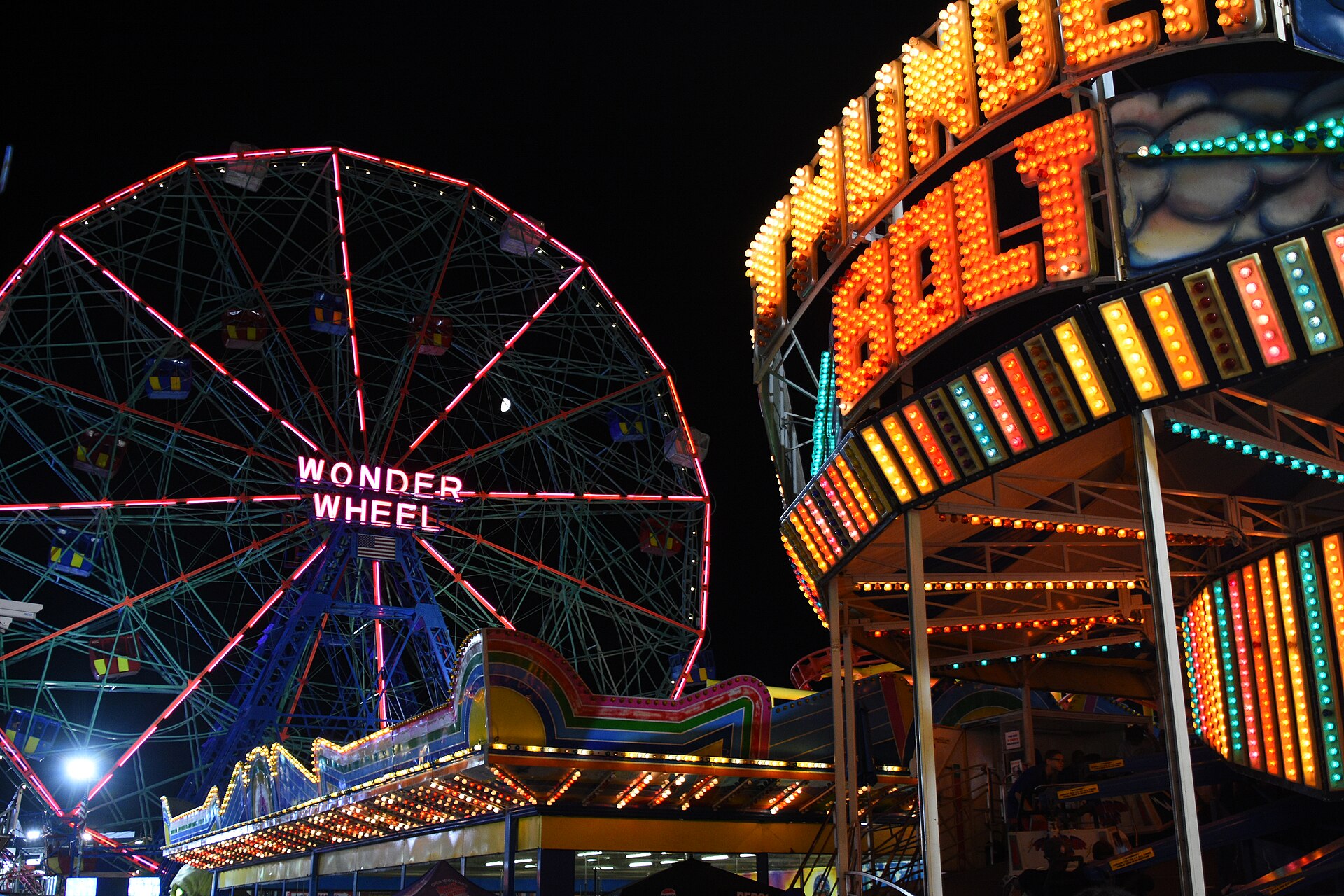
Deno’s Wonder Wheel Amusement Park is a distinct family amusement park within Coney Island, the seaside district at the southern end of Brooklyn. Its namesake wheel is the obvious reason to come, but Phoenix, Spook-A-Rama and the children’s rides give the visit more range. Entry to Deno’s is free. Paying for the rides separately makes a short visit practical, including for groups where some people prefer to watch.

The first decision is how much of the day belongs to Deno’s. A visitor who wants the wheel and one other attraction can keep the outing compact. A family trying several children’s rides will need more time between queues, ticket purchases, snacks and breaks. A full Coney Island day can also include the beach, Boardwalk or another independently operated attraction. Those additions bring separate schedules and costs.
Choose two priorities before arriving, then let the remaining plan respond to weather and energy. The Wonder Wheel’s swinging cars are a different proposition from its stationary cars; Phoenix is a coaster, even though the operator presents it as a family experience. Neither a family label nor the absence of a published minimum height makes an attraction comfortable for every visitor.
| Group | Useful starting plan | Main tradeoff |
|---|---|---|
| First-time adults | Wonder Wheel, one classic ride, Boardwalk meal | More atmosphere, fewer repeated rides |
| Young children | Kiddie Park, a shared break, an optional wheel ride | Companion costs and tolerance matter as much as credits |
| Coaster enthusiasts | Phoenix and the wheel, with a separate Luna Park plan | Different operators require distinct purchasing decisions |
| Mixed generations | Agree on a meeting place and buy only chosen rides | Walking and weather still affect non-riders |
02 / ExploreKnow which park and which entrance you need.

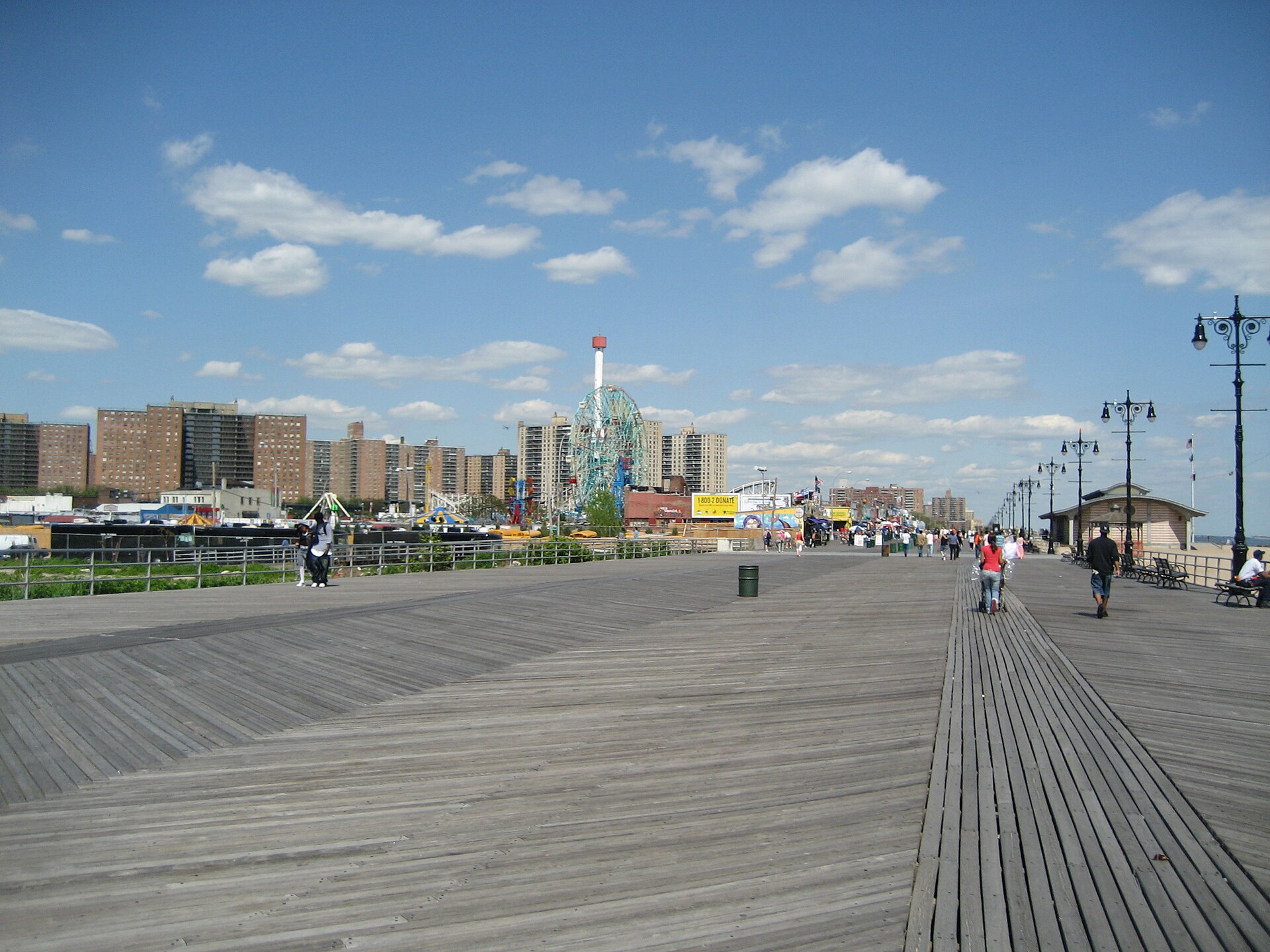
Think of Coney Island as a neighborhood of adjacent attractions, rather than one enclosed resort. Deno’s sits on the Boardwalk at West 12th Street, also called Denos Vourderis Place. The operator places it between the original Nathan’s Famous restaurant and the New York Aquarium. The Wonder Wheel is a useful skyline marker, while the Boardwalk and Surf Avenue give the wider district its two main orientation lines.
Use the park map to connect the wheel, Phoenix, the adult rides and the Kiddie Park. Seeing a track or a tall structure does not tell you where its queue begins. Walk to the posted entrance before buying a specific ride product, particularly if part of the group is checking height rules. A short pause at the right sign can prevent an unnecessary return to a ticket booth.
Keep Deno’s and Luna Park separate
The neighboring Luna Park has its own attractions and admission products. A Deno’s Fun Card should be treated as a Deno’s purchase, with the intended ride checked before payment. Do not assume a product advertised for Coney Island covers every attraction visible from the Boardwalk. This matters most when combining Phoenix or the Wonder Wheel with the Cyclone or another neighboring coaster.
There is also a naming trap: Deno’s lists Thunderbolt as a music ride. That is different from Luna Park’s Thunderbolt roller coaster. Use the operator and attraction description together when discussing plans with family, checking a ticket package or choosing a meeting point. The word Thunderbolt alone is too ambiguous.
Set an exact place to regroup, away from a loading platform or a busy entrance. Agree on when to return before anyone goes off for food or another ride. Keep the relevant map saved on a phone, but use the current signs for the final approach. Older photographs are useful for understanding the setting; they do not promise that every pictured ride or booth still operates.
Add history only when its own calendar works
The Coney Island History Project and Wonder Gallery sit beside the Wonder Wheel, with a calendar separate from the rides. The published 2026 indoor exhibition season ended October 11. Its outdoor history displays have a different access pattern tied to park operation. Check the current gallery notice before treating it as an indoor break or a guaranteed stop. A photograph of its frontage helps explain the location, but does not mean the exhibit is open on the date of your trip.
03 / ExperiencesChoose motion, mood and height before the queue.

Wonder Wheel: stationary or swinging
The Wonder Wheel stands 150 feet high and has been part of Coney Island since 1920. Its distinctive choice is between stationary cars and cars that move along internal tracks as the wheel turns. The operator identifies red and blue cars as swinging and white cars as stationary. Decide which experience everyone wants before joining the queue, and check the loading instructions with the attendant.
A stationary car still rises above the waterfront. It removes the sliding motion, not the height. Someone uneasy with heights may prefer to stay on the ground, while a visitor hoping for a calm view should understand that a swinging car can feel quite different. The wheel is an especially useful shared priority when several generations want one experience together, provided everyone is comfortable with the selected car.
Phoenix: the coaster choice
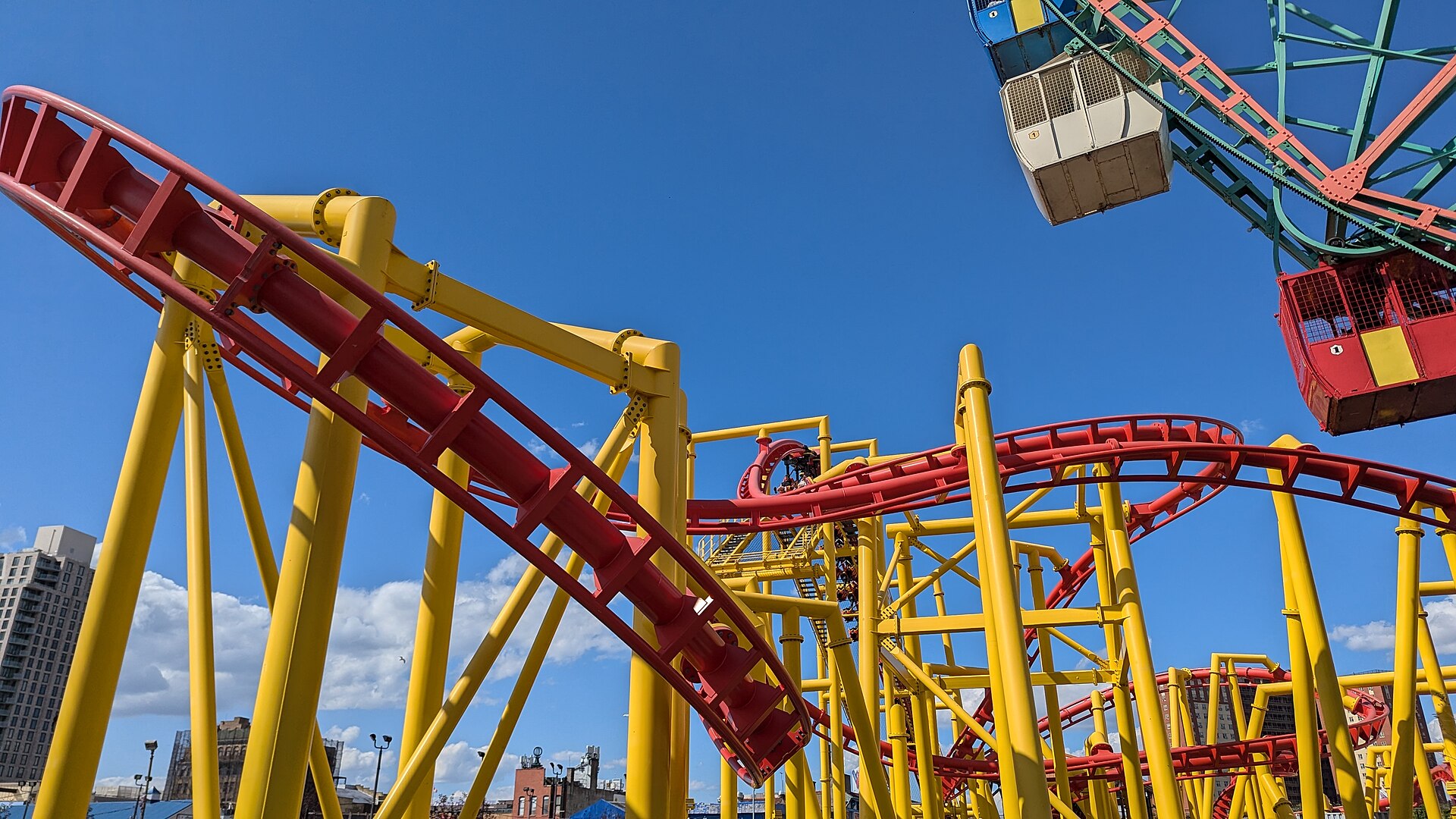
Phoenix is Deno’s family thrill roller coaster. The current operator page lists 39 inches as the minimum with a responsible person and 48 inches to ride alone. Recheck the posted requirements on the day, including any other rider restrictions. For a child approaching those limits, make Phoenix an option rather than the sole reason for the trip.
Watch the ride from the ground before committing credits if anyone is uncertain. A family coaster can still involve speed, height and changes of direction that feel substantial to a newer rider. Choose a gentler first attraction when confidence is the limiting factor. Enthusiasts combining parks should verify Phoenix operation before allocating the rest of their day to another operator.
Classic rides and smaller adventures
Spook-A-Rama offers a dark-ride choice, while Bumper Cars and the Thunderbolt music ride give the adult area different kinds of movement. Stop the Zombies is another listed adult-area attraction. Do not equate the operator’s adult-area label with one universal height rule: the published requirements vary by attraction. Darkness, sound and sudden effects can also matter even where a minimum height is not listed.
The Kiddie Park offers options such as Fire Engines, Boats, Big Trucks, the Rio Grande Train and a carousel. Start with one ride a child actively wants, then decide whether repetition or another style is the better next step. Some entries have companion conditions or maximum heights. Read the exact ride sign; a single age-based promise would be misleading.
A good short list covers different experiences rather than collecting names. For example, choose the wheel for its landmark setting, Phoenix if the group wants a coaster, and one smaller or classic ride suited to the least confident participant. Repeating a favorite can be a better use of time and money than persuading someone onto a ride they do not want.
04 / DaysA flexible afternoon, with room for the Boardwalk.

For planning purposes, allow roughly three to four hours for Deno’s, a meal break and a short Boardwalk walk. This is an editorial allowance, not a measured completion time. A wheel-only visit can be shorter, while queues, repeated children’s rides or a relaxed group can extend the stay. Add travel time separately. A full neighborhood day needs more room if it includes another paid attraction.
Start with the ride that determines the visit
Before leaving your hotel, check the exact day’s operating information and transport. At arrival, confirm that the priority ride is running, locate the relevant ticket booth and establish a meeting point. If the wheel is the main reason for coming, do it while conditions and group energy are favorable. If Phoenix is essential, check it first rather than saving it for a presumed quiet final hour.
Put a break between ride blocks
After the first one or two attractions, pause for food, water or a walk with no queue attached. This is the moment to decide whether the group genuinely wants more rides. Young children may want to repeat a familiar option; adults may prefer the waterfront. A free-entry format makes that change easier because the plan does not need to justify an expensive all-day admission.
Finish according to the conditions
For an evening visit, check the actual closing time before relying on illuminated rides or a sunset turn on the wheel. Seasonal events and fireworks need their own current confirmation. Neither a historic photograph nor a summer schedule establishes what will operate on a particular autumn day. If weather changes, keep an alternative that works independently, such as a meal or a previously checked indoor attraction.
Choose a return-travel cutoff before the final queue. With children, leave enough energy for the walk to the station and the train ride home. Keep the last activity optional. Finishing after a successful favorite is often more satisfying than spending the return trip managing fatigue from one unnecessary extra ride.
For an autumn trip, compare the dated events calendar with the general hours page. The checked 2026 calendar lists selected October opening days, while other pages retain summer wording. Use the actual intended date, and ask the park when the information does not clearly resolve that day. Do not infer a whole season of daily opening from one highlighted event.
Park day gear worth packing
A compact set of comfort picks for long lines, heat, rain, refills, and high step counts.


05 / TicketsBuy for the rides you will actually use.
Deno’s publishes free park admission with individual ride tickets and discounted credit packages. The distinction is simple: entering and accompanying others does not itself require a ride purchase, while riding does. Check the current hours and ticket page before deciding between single rides and a larger Fun Card balance. Posted prices and available products can change before a later visit.
Start with a rider-by-rider list. Include the adults who will accompany children, then multiply each selected attraction’s credit requirement by the number of people riding. This produces a useful estimate before considering a bonus-credit package. A larger package is worthwhile only when its usable credits justify its cost for this group. Spending more to obtain a lower price per credit can still be poor value if much of the balance goes unused.
The operator says unused Fun Card credits remain valid for future use. That can help a local family planning repeat visits, but it should not be treated as cash back or a reason for a one-time visitor to overbuy. Keep the card and check the current rules for sharing balances, replacing a lost card or applying an existing balance before relying on any of those options.
On the current site, the wheel and Phoenix each require more credits than most individual children’s rides. The exact comparison belongs in the current price list, including companion charges. A reasonable first purchase covers the confirmed priority and a small amount of flexibility. Reassess after the first ride if a child’s comfort is unknown.
Ticket booths are listed near the Wonder Wheel and Thunderbolt, with Kiddie Park booths at the Boardwalk entrance beside Famiglia Pizza and near Big Trucks. Verify the right booth and payment product on arrival. Deno’s says ticket purchases accept cash or credit cards. Keep a second workable payment method for the wider trip, since neighboring businesses have their own arrangements.
If using a sightseeing pass, read that provider’s exact current Deno’s inclusion and redemption instructions. A listed Wonder Wheel experience is not automatically a bundle of all Deno’s rides. Compare what the group will actually receive, not just the headline attraction name. Keep Luna Park purchases on a separate line in the budget.
A small worked example
At the operator prices checked on October 20, 2026, a single Wonder Wheel ride costs $10 or 10 credits, and a $50 pack provides 60 credits. Four individual riders therefore spend $40 if each buys one wheel ride; purchasing the $50 pack solely for those rides increases the immediate outlay. Six individual rides total $60, so a 60-credit pack becomes worth comparing when those rides will actually be used. Confirm current prices and whether the intended people can use the same card before buying. This arithmetic does not establish sharing rights, refunds or future prices.
01Keep the booking check in one place
Save the confirmation, the seller’s terms, the included activities and the permitted visit dates together. Check admission, transport and any timed booking as a single plan. When one part changes, review its effect on the others before buying another nonrefundable element.
06 / StayChoose a hotel for the whole New York trip.
Deno’s works as a day trip within a wider New York stay. The most useful hotel question is how its location fits all the planned activities, including the journey home after Coney Island. There is no need to relocate for a brief wheel-and-Boardwalk outing if an existing base has a workable connection. Check a journey planner from the actual hotel address instead of estimating from a borough name.
A Manhattan base may suit a trip dominated by Manhattan sights; a Brooklyn base may be more convenient when other Brooklyn visits already occupy the itinerary. Neither choice guarantees a quick trip to Coney Island. Proximity to a useful subway service, the number of transfers and the final walk can matter more than straight-line distance. Evaluate the return route as carefully as the outbound one.
For families, compare the complete evening rather than the room rate alone. Consider whether there is somewhere to eat near the hotel, how late the group wants to travel, and whether a tired child can manage the station transfers. When a visitor needs elevators, use current station-access information for both ends of the journey. An accessible destination station does not make every possible origin or transfer accessible.
A hotel booking advertised with attraction tickets deserves the same product check as any other bundle. Confirm the named operator, visit date, ride entitlement and cancellation conditions. Do not assume a Coney Island package includes the Wonder Wheel simply because it shows the skyline. Keep accommodation flexible until the park’s operating date is confirmed when this visit is central to the trip.
07 / DiningMake the meal a real break.

Deno’s official dining page lists Nathan’s Famous hot dogs, Deno’s Old Fashioned Sweet Shoppe, Famous Famiglia Pizzeria and Deno’s Snack Bar. It also states that food purchases can be made with cash or credit cards. Treat these as choices to check on the day rather than a promise of every counter’s hours, menu or dietary accommodation.
Build the food plan around the people taking the longest to recover between rides. A snack during a queue is not the same as sitting down, drinking water and deciding how everyone feels. A proper break after the first ride block can prevent overbuying credits for a group that is already ready to stop. If the park is busy, choose a meal time slightly away from the group’s usual rush where practical.
The wider Boardwalk and Surf Avenue offer separate businesses, which can make a neighborhood meal part of the outing. Keep the exact location clear when meeting someone: the original Nathan’s on Surf Avenue and an in-park or Boardwalk outlet are not interchangeable meeting instructions. Use a named storefront and an agreed time.
For food allergies or other specific dietary needs, ask the food operator directly about ingredients, preparation and cross-contact. The published dining list does not establish those details. Make that check before leaving home if a particular meal is essential. Keep food and ride spending separate when setting the day’s budget, with some room for water and a small treat rather than committing everything to ride credits.
08 / ArrivalUse the subway plan that matches your needs.
Deno’s directions identify the D, F, N and Q trains to Coney Island-Stillwell Avenue. From that terminal, head toward the beach and Boardwalk, then toward West 12th Street. The F and Q also serve West 8 Street-NY Aquarium, another approach to the district. Service patterns can change for maintenance or disruptions, so check the MTA journey planner and service notices for the visit date.
The MTA’s Coney Island guide makes an important accessibility distinction: Coney Island-Stillwell Avenue is an accessible station, while West 8 Street-NY Aquarium is not. Check current elevator status before using the accessible route. This information concerns the station, not the boarding arrangements of individual park rides.
Leave a margin for the transfer from train to park. That interval includes finding the right exit, walking with children or mobility equipment, checking the ride status and reaching the ticket booth. It is part of the visit even if a map makes the distance look short. Save the return route before the phone battery is low and decide which station exit or entrance the group will use.
Drivers should route to the actual parking facility they plan to use. Deno’s directions refer to the Belt Parkway and Ocean Parkway approach, but the park’s free admission does not imply free parking. Check a lot’s price, hours, vehicle restrictions and walk to the Boardwalk separately. Allow for time finding the entrance and returning to the car; avoid building an itinerary that depends on finding a particular curbside space.
For a taxi or rideshare, choose a legal, recognizable pickup point and confirm it with the driver. Do not use the ride entrance as a vague pickup instruction. Busy event days can change the practical approach, so retain a little flexibility and avoid a tight onward reservation immediately after the last planned ride.
09 / FamilyLet the least flexible need shape the plan.

A compact park can make mixed-age visiting easier, but the range of rides still calls for individual decisions. Measure children before travelling, then let the operator make the final eligibility check at the attraction. The Kiddie Park’s published list includes minimum heights, companion provisions and some maximum heights. Those differences are the reason to choose particular rides instead of promising that an age group can do everything.
For a newer rider, begin with a visible, understandable experience and explain what happens before joining the line. If a child changes their mind, preserve the option to stop. Buy credits in stages when confidence is uncertain. A companion may also need a paid ride, which belongs in the estimate from the start.
For visitors with access needs, contact Deno’s about the exact rides under consideration. Its website accessibility statement discusses access to the website; it is not a complete physical-access or ride-transfer guide. Ask about the route to the platform, steps, transferring from a mobility device, restraint requirements, companion assistance and whether a particular vehicle or loading procedure is available.
Describe the practical need rather than relying on a general question about whether the park is accessible. Someone who can transfer with assistance has different requirements from someone who must remain in a wheelchair. A visitor sensitive to loud sound or darkness may need different information again. A positive answer about one attraction should not be generalized to the others.
Agree on supervision before adults split between Phoenix, the wheel and the children’s rides. Free admission lets a non-riding adult stay involved without buying a park-entry ticket, but that person still needs a comfortable plan for waiting, shade and breaks. Keep the meeting place, bathroom stops and return-travel time simple enough for everyone to remember.
10 / GearPack for waterfront weather and a city journey.

Bring comfortable walking footwear, a light extra layer, sun protection and a phone with enough charge for tickets, directions and the return trip. The waterfront can feel different from the neighborhood where the day began. Check the forecast and the park’s operating update together; pleasant weather inland does not settle the conditions beside the sea.
Keep bags small enough to manage comfortably through queues and onto transit. Ask attendants where loose articles belong before boarding. Do not assume every attraction has a secure locker or that a phone can be used during a ride. If one person is holding the group’s belongings, agree on the handover before the others join the line.
A combined beach-and-rides day adds towels, dry clothing and more things to carry. Decide whether that extra load is worth it for the actual plan, and keep an adult with belongings when the group separates. Swimming depends on current beach rules, conditions and lifeguard coverage; a park operating day is not a swimming authorization. For a short Deno’s visit, travelling light usually leaves more flexibility for the walk, the rides and the journey home.
11 / FAQDeno’s Wonder Wheel planning questions.
Is Deno’s Wonder Wheel free to enter?
Yes. Deno’s states that admission to the park is free. The rides require individual tickets or credits, so estimate the cost from the actual riders and attractions. Food, travel and any neighboring attraction are separate expenses.
Should I choose a swinging or stationary Wonder Wheel car?
Choose according to the group’s comfort with motion. Red and blue cars swing, while white cars are stationary according to the operator. Both types rise above the waterfront. Decide before queuing and confirm the correct loading instructions with the attendant.
Does a Luna Park ticket include Deno’s rides?
Treat the two operators as separate purchases. Check the exact provider and named attractions in any ticket or sightseeing-pass product. A Coney Island label alone does not establish access to the Wonder Wheel, Phoenix or every neighboring ride.
How long should I allow at Deno’s?
Three to four hours is a flexible editorial starting point for a few rides, a meal and a short Boardwalk walk. A single-ride stop can be shorter. Repeated children’s rides, queues or another Coney Island attraction can extend the visit. Allow travel time separately.
Can children ride Phoenix?
The current official Phoenix page lists a 39-inch minimum with a responsible person and 48 inches to ride alone. Check the current posted restrictions and let the attendant make the eligibility decision. Height eligibility does not establish that every child will enjoy the experience.
Which subway station is the accessible option?
The MTA identifies Coney Island-Stillwell Avenue as accessible and West 8 Street-NY Aquarium as not accessible. Verify elevator status and the accessibility of the origin and any transfer stations. Separately ask Deno’s about individual ride boarding and transfer needs.
Can I count on the same hours every day?
No. Deno’s publishes seasonal hours and says operations can change with weather and operating conditions. Check the exact date before travelling, including the opening time of the adult rides and Kiddie Park. Confirm any evening event independently.
Is Deno’s Thunderbolt the Coney Island roller coaster?
No. Deno’s lists Thunderbolt as a music ride. The neighboring Luna Park operates a separate Thunderbolt roller coaster. Use both the operator name and ride description when planning purchases or meeting friends.