The brilliant blue in a luxury ornament can be the first thing you admire and the last thing you understand. At the Walters Art Museum, Luxury & Loss: Feather, Shell, Tusk, Horn opens November 7 with a deceptively simple question: what did beautiful objects cost the animals that supplied their materials? The Baltimore exhibition runs through January 24, 2027.
This is a reason to plan a museum stop, not a shopping trend. The show connects craftsmanship with wildlife, then brings contemporary artists into the conversation. Our Baltimore sightseeing guide places the Walters in Mount Vernon, a different part of the city from the Inner Harbor attractions and the Baltimore Museum of Art in Charles Village.
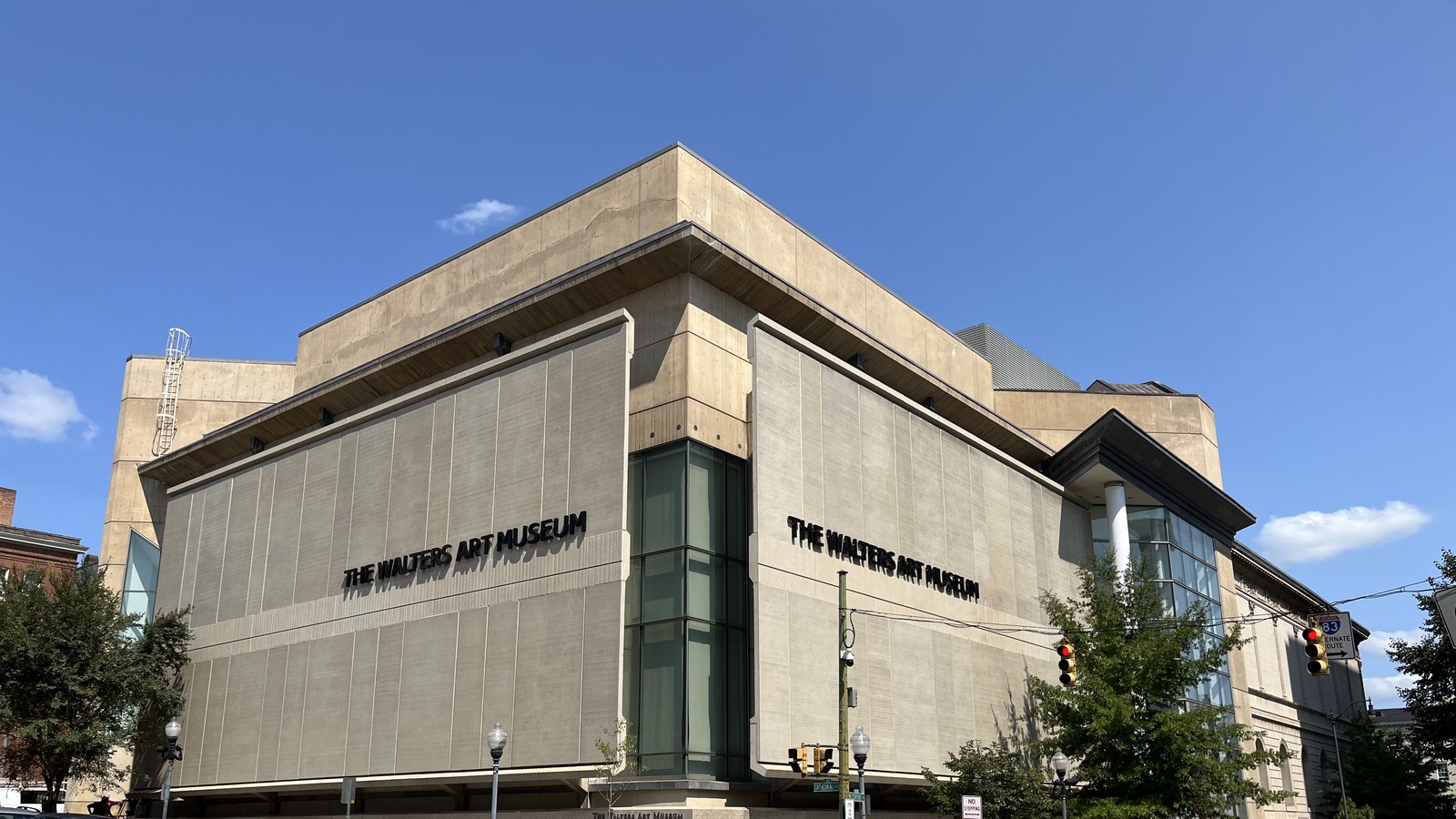
Image context: the Walters exterior was photographed September 5, 2024. It illustrates the venue, not the new exhibition, its objects or a November 2026 installation. Follow the museum’s current Centre Street arrival instructions rather than treating a historical exterior photograph as an entrance map.
- Dates: November 7, 2026, through January 24, 2027.
- The exhibition: 94 objects exploring animal-derived luxury materials and contemporary responses.
- Location: Centre Street Building, first floor, Walters Art Museum, Baltimore.
- Opening-day option: Free artist talks November 7, 3 to 4 p.m., with an RSVP link on the museum’s event page.
Beautiful First, Uncomfortable Second
The museum’s announcement identifies four main materials: kingfisher feathers, tortoiseshell, elephant ivory and rhinoceros horn. Their appeal was not accidental. Color, texture, scarcity and skilled workmanship helped turn animal materials into objects associated with wealth and power. The exhibition asks visitors to keep that artistry in view while considering the environmental consequences of demand.
That creates a more interesting visit than a simple verdict that the objects are either magnificent or wrong. You can appreciate a maker’s precision and still ask how the material arrived at the workshop. The tension is the subject. It also gives people who do not normally seek out decorative art an accessible starting point: begin with what catches your eye, then investigate what made it possible.
The Blue Is a Material, Not Just a Color
In an Apollo feature published October 26, exhibition curator Dany Chan explains the appeal of kingfisher feathers through a Chinese swallow-shaped hair ornament in the Walters collection. The article, told to Arjun Sajip, describes how the feathers’ structure produces shifting blue tones. The color is not simply painted onto an otherwise ordinary decorative surface.
The same account connects the ornament to specialist craft and a collecting history with unanswered questions. It notes that the museum has not determined how an earlier owner obtained two feather ornaments. That is an important boundary: an unresolved provenance is not evidence that a particular object was looted. We also have not independently matched the interview’s ornament to an exhibition accession list, so it is context for the material, not a promise to find that exact piece on view.
Four Materials, More Than One Kind of Response
The show’s structure moves from a broader introduction to sections devoted to feather, shell, tusk and horn. Fifty of the 94 works feature ivory, according to the museum. That is a substantial share, but the exhibition is not an ivory-only survey. Keep the other materials in the picture rather than letting one familiar wildlife issue stand in for the whole show.
Contemporary works complicate the historical display. The museum describes artists using faux, ethically sourced or repurposed animal materials, so the comparison is not simply old craft against a modern prohibition. Consider how an artist can pursue pattern, surface or visual abundance without repeating the earlier demand for a particular wild material. That is a useful question to carry between sections.
This exhibition is not a buying guide or a summary of current wildlife-trade law. Rules can depend on the material, jurisdiction and individual object. Nor should an artwork about possible extinction be read as a verified scientific forecast. The visitor opportunity here is to examine how desire, craft and environmental responsibility meet inside a museum.
Opening Day Has a Conversation Attached
The November 7 opening-day artist talks run from 3 to 4 p.m. in the Centre Street Building’s Graham Auditorium. Chan will moderate a conversation with Baltimore artists Amy Boone-McCreesh and Luci Jockel, followed by audience questions. The event is listed as free and provides an RSVP link; we have not completed a reservation or confirmed remaining seats.
If hearing artists discuss material choices is your main draw, build the day around that hour instead of assuming a talk happens whenever you arrive. If you prefer an independent gallery visit, the exhibition continues well beyond opening weekend. The regular public opening is November 7; an earlier preview listed on the calendar should not be mistaken for unrestricted early admission.
Free Admission Still Needs a Realistic Day Plan
The Walters’ current visit page says admission is free. Regular hours are 10 a.m. to 5 p.m. Wednesday and Friday through Sunday; Thursday runs from 1 to 8 p.m. Monday and Tuesday are closed. A free museum can be a flexible trip anchor, but it does not eliminate the need to choose an open day or register for a particular program.
The museum gives 600 N. Charles Street as its address and identifies the main entrance on Centre Street near Cathedral Street. Visitors with limited mobility are directed to Centre Street; the Upper Charles Street entrance is temporarily closed. For rideshare, its listed destination is 10 W. Centre Street. These are current visitor instructions, separate from what appears in the dated hero photograph.
Leave room to compare reactions, especially if you are visiting with someone who sees the objects differently. A museum stop becomes more memorable when it gives you something to discuss afterward. In this case, the conversation can begin with a blue feather or an elaborate carving and end somewhere much larger than a display case.
When does Luxury & Loss open at the Walters?
The public exhibition opens November 7, 2026, and runs through January 24, 2027, on the first floor of the Centre Street Building.
Are the November 7 artist talks free?
Yes. The museum lists the 3 to 4 p.m. talks as free and provides an RSVP link. Check that registration page for current availability; a place has not been reserved or verified here.
Is the exhibition about ivory alone?
No. Its four main materials are kingfisher feathers, tortoiseshell, elephant ivory and rhinoceros horn, with contemporary responses throughout the presentation.
Image Credits
- Lead Photo
Antony-22 · CC BY-SA 4.0 · cropped