Don Ramey Logan · CC BY-SA 4.0 · cropped
Los Angeles International Airport sent more overnight domestic flights than any other U.S. airport in 2025, according to a Champion Traveler analysis of 26 years of Bureau of Transportation Statistics records. The study, released September 10, 2026, counted 19,064 red-eye departures from Los Angeles and found that 97 percent of all U.S. overnight flights still leave from the Pacific and Mountain states plus Alaska and Hawaii.
The traveler decision is whether a late west-to-east departure is worth the sleep trade, because the same data says those flights are more punctual than daytime ones and almost never run in the opposite direction. If you are landing at breakfast and need a bed near the airport, start with Deep Arrival’s Los Angeles stay guide before you lock the red-eye.
- Definition: a red-eye here is a flight scheduled to leave between 9 p.m. and 3 a.m. and land between 3 a.m. and 10 a.m. local time.
- 2025 volume: 115,580 of 6.9 million U.S. domestic flights, about one in 60.
- Geography: 97 percent departed the West, a share that has not fallen below 95 percent since 2000.
- Los Angeles: 19,064 overnight departures, the most of any U.S. airport by count.
- Reliability: 82.4 percent arrived within 15 minutes, versus 77.6 percent of other flights.
97 Percent of Red-Eyes Still Leave the West
Champion Traveler, operated by Terra Lake Data, analyzed every scheduled domestic flight reported to the federal government from 2000 through 2025. In 2025, 115,580 flights met the overnight definition. That is a 54 percent increase from 75,158 in 2000, after a low in 2009 and a collapse in 2020. The September 10 release is the company’s own summary of that work.
The western concentration is not new. 97 percent of 2025 overnight flights departed from the Pacific and Mountain states plus Alaska and Hawaii. That share has never fallen below 95 percent in the 26-year file. Among the 300 busiest red-eye routes in the study, 82 percent land in the Central or Eastern time zones. An overnight flight from the West Coast crosses three time zones and arrives at breakfast. The same trip westbound would land in the middle of the night, so airlines schedule almost none of those.
Travel Industry Wire carried the same figures on September 13. The underlying federal file is the Bureau of Transportation Statistics on-time performance database. The 97 percent figure, the airport ranking, and the reliability gap are Champion Traveler’s calculations, not a BTS press ranking. The full tables sit on the company’s study page.
Los Angeles Leads by Count, Anchorage by Share
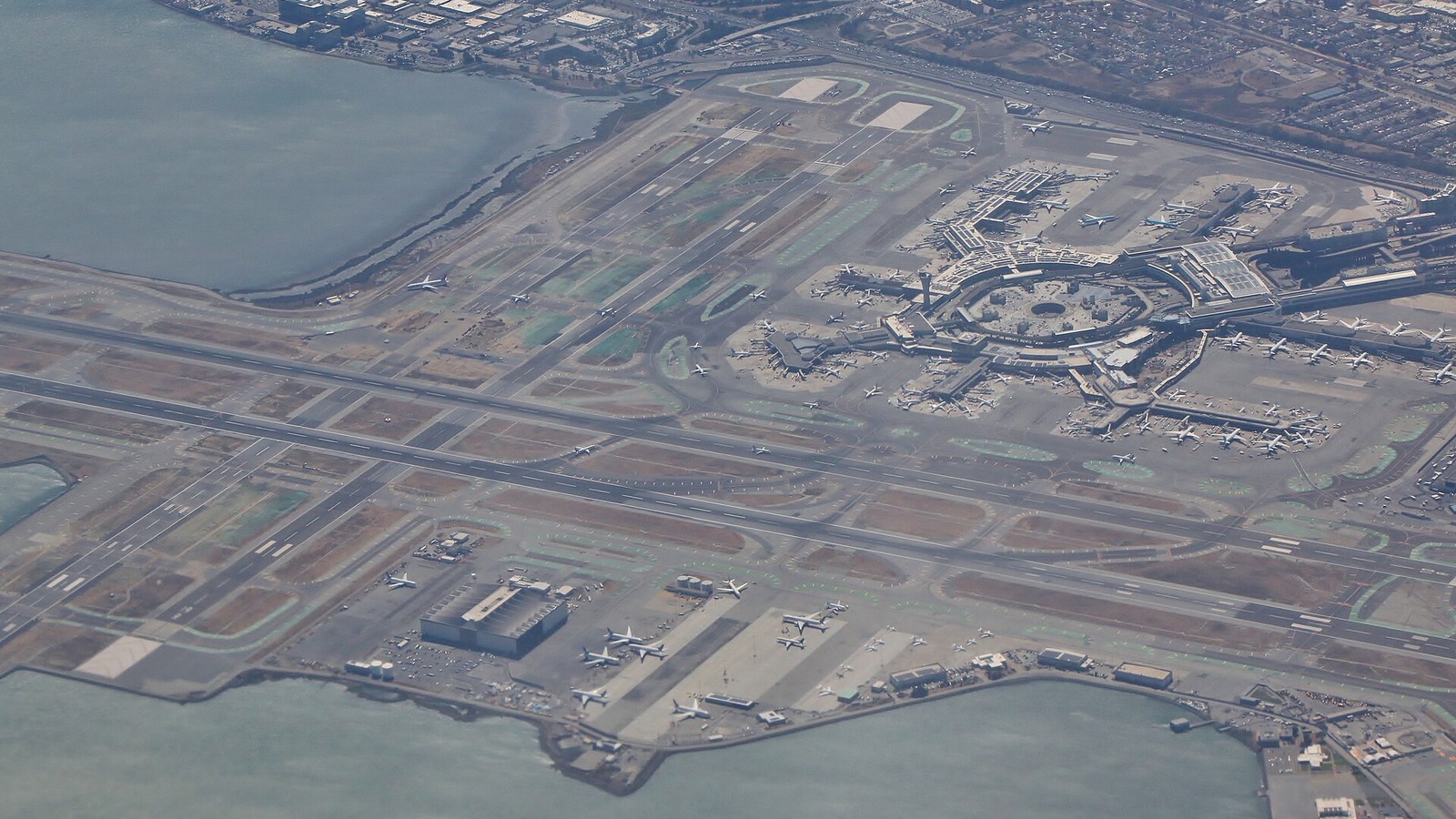
Los Angeles is the volume leader, not the share leader. 19,064 overnight departures made it the busiest red-eye airport in America in 2025. Anchorage is the red-eye capital by share: 26 percent of its departures were overnight. Those are two different planning facts. If you live in Southern California, a late departure is a common product. If you live in Alaska, overnight flying is a much larger slice of the local schedule.
Las Vegas flew the most red-eyes in America in 2000, then lost more than half of that overnight flying by 2010, and has since recovered. The middle-of-the-night departure is fading even as the overall overnight market grows. Flights leaving after midnight were 31 percent of red-eyes in 2000 and 14 percent in 2025. Airlines have moved the product earlier in the evening, which is easier to sell and still lands at breakfast in the East.
If you are choosing between a 9:30 p.m. west-to-east nonstop and a 1 a.m. departure, the 2025 mix says the industry has already voted for the earlier bank. That does not make a 1 a.m. flight a bad idea. It does mean those later seats are a thinner part of the market than they were a generation ago.
Legacy Carriers Lost the Overnight Market
American, Delta, and United flew 97 percent of U.S. red-eyes in 2000 and 64 percent in 2025. Alaska Airlines is now the most red-eye-heavy carrier in the study. Southwest, which flew none for 25 years, took 5.6 percent of the overnight market in its first year in the product. The overnight map is no longer a three-carrier franchise.
That shift matters if you pick an airline first and a departure time second. Alaska’s network is built around West Coast hubs that feed the same eastbound overnight pattern the data describes. Deep Arrival’s Alaska Airlines 737-900ER first class review is the cabin page for that carrier if you are comparing a late-night coach seat against a lie-flat or extra-legroom upgrade on the same west-to-east bank.
Southwest’s new share is the other planning change. A carrier that spent a quarter century with no overnight flying now holds a measurable slice of the market. If you used to assume a red-eye meant a legacy hub connection, that assumption is dated. Check Southwest and Alaska alongside American, Delta, and United before you decide the overnight option does not exist on your route.
Red-Eyes Are More Reliable Than Daytime Flights
In 2025, 82.4 percent of red-eyes arrived within 15 minutes of schedule, against 77.6 percent of other flights, and they were cancelled less often. Champion Traveler presents that as a reliability edge, not a comfort edge. A flight that leaves at 10 p.m. and lands at 6 a.m. can still be a miserable night of sleep. It is, on this file, a slightly more punctual night of sleep.
The reliability gap is one reason a red-eye can beat a morning connection even if you hate overnight flying. A daytime itinerary with a tight hub connection can miss more often than a single overnight nonstop. The study does not publish route-by-route on-time tables in the release. It does say journalists can request data for any airport, airline, or route, and that the public study includes sortable airport tables for 2000, 2010, 2019, and 2025.
Do not treat 82.4 percent as a promise for your specific flight. It is a national overnight average for 2025. Weather, a ground stop, or a crew timeout can still wreck a Tuesday in January. Treat it as a reason to price the red-eye instead of dismissing it as the unreliable option.
What the Time Zones Mean for Your Next Booking
If you are flying east from Los Angeles, San Francisco, Seattle, Las Vegas, or Anchorage, the overnight product is a real, growing part of the schedule. If you are flying west from New York, Atlanta, or Dallas, the data says you should not expect a true overnight nonstop. Airlines do not want to land you in California at 2 a.m. local. That is why 97 percent of the departures sit in the West.
Book the red-eye when you would rather spend the night in the air than pay for a hotel plus a morning flight, and when a single nonstop replaces a connection. Skip it when you have an early meeting that requires you to be sharp, or when the only overnight option is a one-stop that still lands at dawn. The 2025 record volume means more of those nonstops exist than in 2000. It does not mean every city pair has one.
Confirm the live schedule, the fare rules, and the seat type before you treat any of these national averages as your itinerary. Champion Traveler’s study is a map of how the industry uses the clock. Your ticket is still a specific flight on a specific night.
West-to-east overnight nonstops are the product. If you need a red-eye, start the search in Pacific and Mountain airports, especially Los Angeles.
East-to-west overnight nonstops are rare. Do not plan a 2 a.m. California arrival. Airlines almost never schedule that direction.
2025 is the record year in this file. Overnight flying is more common than it was in 2000, and the later-than-midnight bank is smaller.
Which U.S. airport ran the most red-eye flights in 2025?
Los Angeles, with 19,064 overnight departures, according to Champion Traveler’s analysis of BTS records. Anchorage led by share, at 26 percent of its departures.
Why do so few red-eyes leave the East Coast?
A westbound overnight flight would land in the middle of the night on the West Coast. Airlines instead send overnight flights east, where they arrive at breakfast.
Are red-eye flights more on time than daytime flights?
In 2025 they were, on this national file: 82.4 percent arrived within 15 minutes, versus 77.6 percent of other flights, and they were cancelled less often.
Which airline is most concentrated on red-eyes?
Alaska Airlines is the most red-eye-heavy carrier in the study. American, Delta, and United fell from 97 percent of overnight flying in 2000 to 64 percent in 2025.