4300streetcar · CC BY 4.0 · cropped
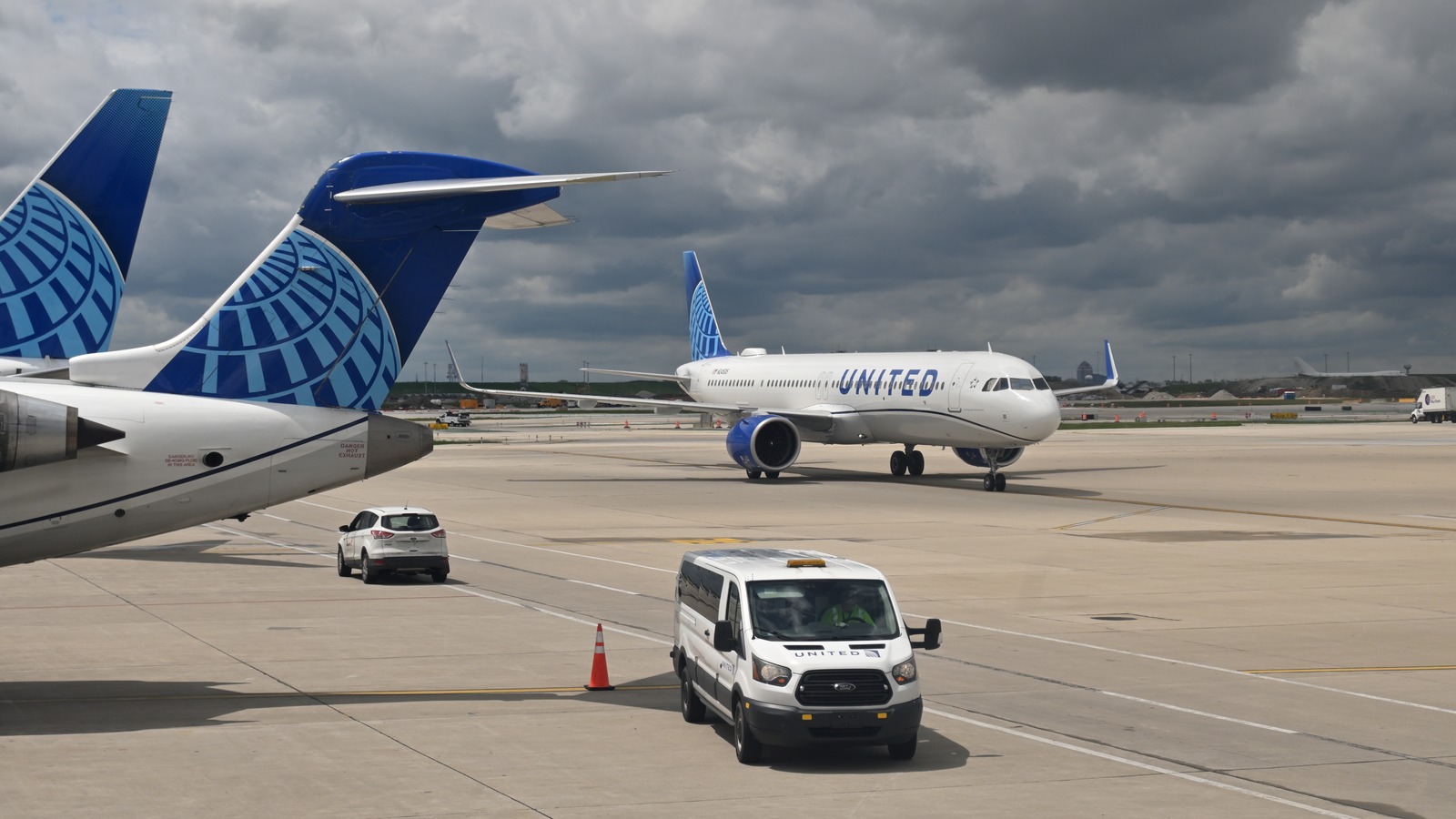
United Airlines announced a record O'Hare schedule for summer 2026, then had to fit it under an FAA cap on daily movements. A Simple Flying analysis published September 13, 2026 reports the carrier now advertises up to 650 daily flights to 222 nonstop destinations, 47 of them international, and is making up the difference with larger aircraft.
The change traces to the FAA order published April 20, 2026, which limits O'Hare to 2,708 scheduled operations a day from May 17 through October 24, 2026, counting arrivals and departures together. For travelers, the effect is fewer departures to small Midwestern cities, a schedule pushed to early mornings and late evenings, and thinner margins when weather or construction slows the field.
- The cap: 2,708 scheduled operations a day at O'Hare, arrivals and departures combined, from May 17 through October 24, 2026.
- The filing: Published summer 2026 schedules exceeded 3,080 daily operations on peak days, 14.9 percent above a 2025 peak day.
- United's plan: Announced at 750 daily O'Hare flights in January; Simple Flying reports the capped plan now advertises up to 650 to 222 nonstops.
- Bigger jets: Because the cap counts movements, a 50-seat regional jet uses the same slot as a 180-seat narrowbody, so upgauging offsets the cut.
- Small markets: About ten to eleven cities lost O'Hare nonstops, including Champaign/Urbana, Bloomington/Normal, Kalamazoo and Lansing.
United's O'Hare Filing Versus the 2,708 Cap
United Airlines said on January 27, 2026 that it would reach 750 daily flights from O'Hare, calling it the largest schedule any carrier had flown there, with 222 destinations and 47 international cities. Across the airport, published summer 2026 schedules exceeded 3,080 daily operations on peak days, a 14.9% increase over a peak day in summer 2025.
The FAA order set that ceiling at 2,708 operations per day, below the 3,080 filed peak-day total, and it counts arrivals and departures together rather than seats. In other words, the cap limits takeoffs and landings, not the number of passengers the airport can handle.
Independent schedule data from OAG, cited by Simple Flying, show United pulled 9,088 departures from its June-through-August O'Hare schedule, about a 13 percent reduction from the 70,042 departures it originally filed. Seat capacity fell by the 7.6 percent the report cites, from 7.93 million to 7.33 million, leaving 60,954 departures for the quarter.
The Small Cities Losing O'Hare Nonstops
The routes hit hardest were among the newest. United had announced four-times-daily service from O'Hare to Champaign/Urbana and to Kalamazoo starting April 30, 2026, and to Lansing, La Crosse and Bloomington/Normal starting May 7, 2026. None of those flights survived the cap.
Simple Flying, citing CBS News, reports about ten to eleven small markets lost O'Hare service outright. Besides the five new routes, those include Marquette, Wausau, Erie, Rochester in Minnesota, and Bristol/Tri-Cities in Tennessee. Planned seasonal Guadalajara service, tied to international soccer dates, was also dropped.
The consequence is a longer trip for those communities: a connection through another hub, a drive to a larger airport, or a different airline. Simple Flying, citing Aero Crew News, says United is expected to revive the routes once the FAA order lapses in 2027, which remains an expectation rather than a confirmed schedule.
Why a Movement Cap Rewards Bigger Jets
The cap counts movements, so a 50-seat regional jet takes up exactly the same slot as a 180-seat narrowbody. Airlines call the response upgauging: replacing small aircraft with larger ones on the same number of takeoffs and landings to move more people inside a fixed schedule.
Simple Flying reports United has been doing this for several years under its United Next fleet plan, which aimed to cut the share of North American departures flown on 50-seat regional jets from roughly a third to about 10 percent while lifting average seats per departure from about 104 in 2019 to 134 now.
At O'Hare, that meant swapping single-class regional jets for larger single-aisle aircraft on routes with enough demand to fill them, and protecting trunk and hub-to-hub flights while sacrificing the newest, thinnest regional additions. For travelers, the visible change is fewer departures but fuller, larger planes, especially on short Midwest hops.
What the Cap Means for Delays and Connections
The limit exists because the airfield is under construction. The FAA order lists tollway work along the western boundary, rehabilitation and partial closure of Taxiway A, Terminal Area Plan construction and continued Taxiway N work as continuing through summer 2026, and it expects challenges similar to 2025.
Cirium data cited in the order show O'Hare handled 495,874 operations in summer 2025 at roughly 75 percent average on-time performance, with construction a major factor. United could not add flights in the already-saturated midday window, so Simple Flying reports new frequency went to earlier morning departures and a new late-evening bank.
Simple Flying also reports that a perimeter-taxiing procedure, needed while the field shifts from intersecting to parallel runways, limits simultaneous pushbacks regardless of the daily number. The airline plans to hire about 2,500 more O'Hare employees before the end of 2026 to support the longer operating day.
When the operation does break, the fallout can be uneven. Simple Flying reports that during an August 9 ground stop United cancelled 52 flights against American's 10 while logging nearly identical delay counts, 1,055 to 1,053. Deep Arrival's flight cancellation rules guide is a planning reference for rebooking and refunds when a trip is disrupted.
How Long the O'Hare Limit Lasts
The FAA order took effect May 17, 2026 and expires October 24, 2026. In it, the agency said significant progress on airfield construction through the season would reduce the likelihood of needing a scheduling limit beyond it. O'Hare remains an IATA Level 2 schedule-facilitated airport, where the FAA does not allocate slots or apply historic precedence and instead relies on voluntary agreement with carriers.
Simple Flying reports a longer timeline: that the FAA extended the same ceiling in July through October 30, 2027, citing continued ORDNext construction, including a new 19-gate Concourse D, a Terminal 3 renovation and foundations for a replacement Global Terminal. That is later than the April order's October 24, 2026 expiry.
For travelers, the practical reading is that O'Hare connections remain capped for now, seats per flight stay high and small-market service stays thin. Simple Flying reports United holds roughly 48 percent of O'Hare's scheduled seats this summer, against American's 34.3 percent and Delta's 3.6 percent, so a nationwide disruption tends to land on United's operation first.
- The extension: Simple Flying reports the ceiling now runs through October 30, 2027, later than the April order's October 24, 2026 expiry.
- Returning routes: Simple Flying, citing Aero Crew News, expects United to restore small-market O'Hare routes after the cap lapses in 2027.
- The expiry: The April order expires October 24, 2026, and the FAA said construction progress could reduce the need for a limit beyond it.
- O'Hare gates: Simple Flying reports United holds about 48 percent of scheduled seats against American's 34.3 percent, and the gate contest is unresolved.