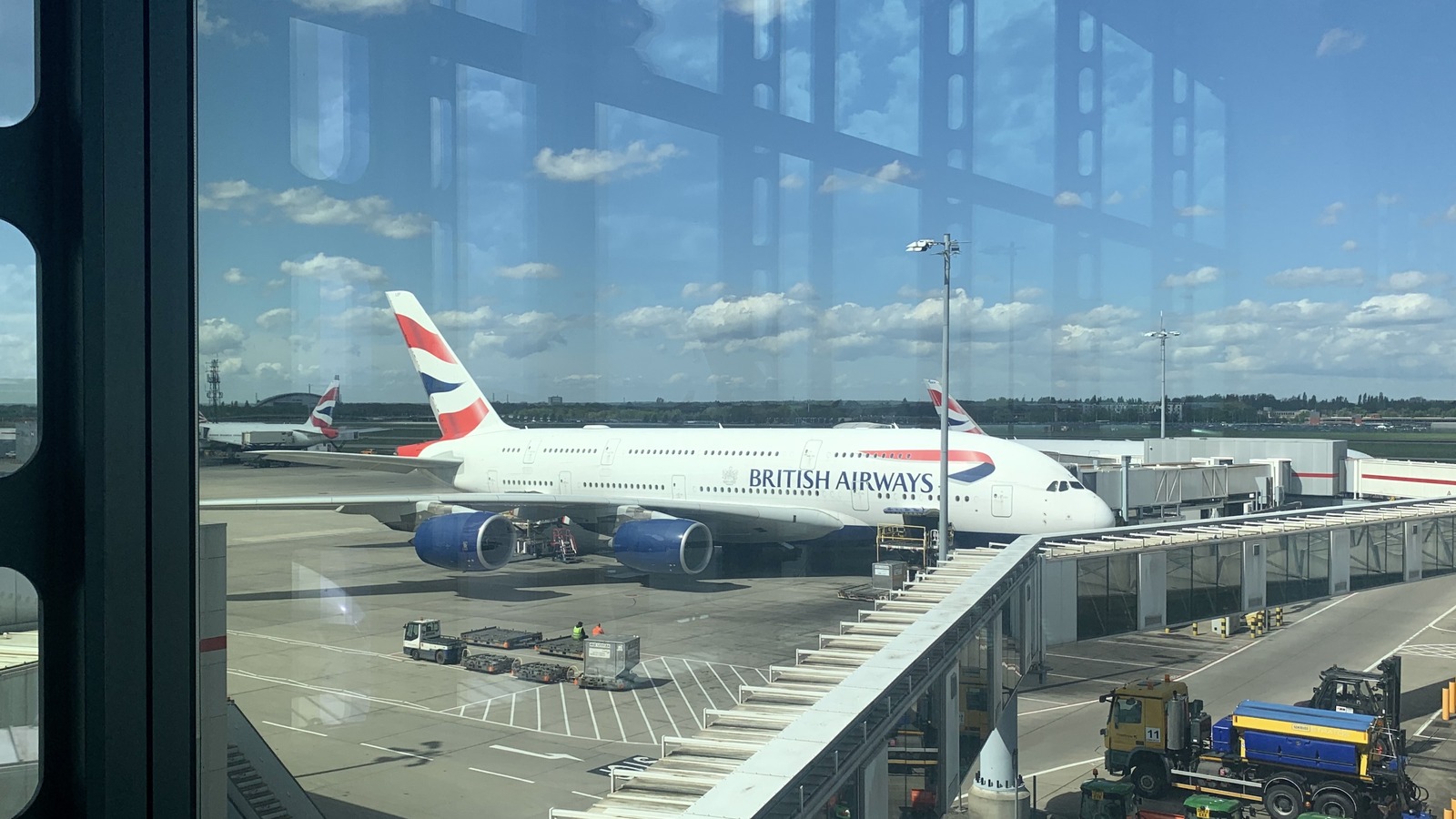
London Heathrow Airport 2025-04-16 · Sam Town · CC BY-SA 2.0 · edited
Britain’s air traffic control system is working normally again, but that does not mean Tuesday’s canceled and delayed flights are back on schedule. In its 7:30 p.m. update on September 8, NATS confirmed the technical fault was resolved while a backlog of flights still needed clearing, leaving passengers with an airline decision rather than an all-clear for their journey.
Check the operating airline’s instructions before leaving for Heathrow, Gatwick or another affected airport, even if the airport itself is open. If British Airways moves you to a different flight or carrier, compare the replacement booking’s bag terms with the British Airways baggage allowance before accepting a connection that changes what you can carry.
- Event: A NATS flight processing system failure disrupted departures on September 8, 2026.
- Latest official phase: System resolved and normal air traffic operations restored, with a flight backlog remaining at 7:30 p.m. UK time.
- Reported scale: Associated Press cited at least 625 cancellations in a Flightradar24 snapshot, not a final daily total.
- Passenger decision: Confirm whether your flight is operating, delayed or canceled before choosing rerouting or a refund.
The Fix Restores Control, Not Every Flight
The distinction between a repaired control system and a recovered airline timetable is the central point of tonight’s update. NATS can resume handling traffic while passengers remain booked on flights that have already been canceled, so the authority’s statement cannot replace a new departure time or confirmed alternative issued by your airline.
NATS first acknowledged a technical issue at 1:46 p.m. and identified the flight processing system in its 3:25 p.m. statement. It announced a fix at 4:40 p.m.; the later 7:30 p.m. message said recovery had taken longer than hoped and directed passengers to continue checking with their airline.
These are UK local times on Tuesday, not Eastern time, and the later statement is the relevant operating update. A traveler reading an earlier headline about grounded departures should not conclude that the same restriction is still in force, just as someone seeing that the fault is fixed should not assume a canceled ticket has been reinstated.
Heathrow and Regional Airports Share the Disruption
Associated Press reported at least 625 cancellations, citing Flightradar24, with Heathrow, Gatwick, Stansted, London City, Manchester, Birmingham and Scottish airports among those affected. British Airways, easyJet, KLM and Lufthansa were among the airlines named, making this a network disruption rather than a problem confined to one terminal.
That count is useful for scale, but it is not a forecast for your particular departure or a final total for September 8. The more consequential information is the status of the flight attached to your reservation, particularly when a long distance arrival in Britain connects to a shorter flight elsewhere.
ITV’s reporting from Birmingham and East Midlands described suspended departures and airport advice to contact airlines. It also illustrates why an arrival board and a departure board can tell different stories during the same event: an airport receiving aircraft does not establish that your outbound service has permission and resources to leave on time.
Tonight’s Choice Is Rerouting or Abandoning the Trip
Start with whether the airline has canceled the flight or merely delayed it, because those are different decisions for the passenger. A cancellation notice creates an immediate need to choose an alternative or stop traveling; a delay may still leave the original service operating, with a changing departure estimate and check-in instructions that need attention.
The UK Civil Aviation Authority’s cancellation guidance says covered passengers can choose a refund for unused travel or an alternative flight. UK coverage includes departures from Britain on any airline, arrivals in Britain on a UK or EU airline, and arrivals in the EU on a UK airline; do not assume every inbound itinerary has identical coverage.
Ask for the whole replacement itinerary before accepting it, including the arrival airport, connection and final arrival time. A seat to London is not necessarily a completed solution for a ticket that continues beyond London, while a refund is not simply a way to keep the original flight available and claim money at the same time.
Overnight Care Is Different From Cash Compensation
The CAA’s delay guidance separates food, accommodation and other care from fixed compensation. For covered delays, care starts at two, three or four hours depending on distance, and an overnight wait can require a hotel and transport; ask the airline what it is arranging before making expensive independent plans.
When an airline cannot arrange reasonable care, the regulator says passengers can make their own arrangements and seek reimbursement with receipts. That is not permission to book any room at any price, and it is separate from whether the cause of a particular cancellation qualifies for a fixed compensation payment.
A technical problem in the air traffic system is not, by itself, proof that every affected airline owes the same cash award. Keep the airline’s explanation and disruption notice, but avoid treating a compensation headline as a guaranteed settlement before the circumstances of your own flight and the applicable rules have been assessed.
A London Connection Needs Its Own Check
A passenger beginning at Heathrow and a passenger connecting there can face the same delayed departure but different downstream consequences. On one connecting booking, discuss the final destination with the airline; on separate bookings, tell the onward carrier promptly rather than assuming it can see the first airline’s disruption or will automatically protect the next seat.
The CAA distinguishes protected connecting bookings from self-transfer journeys, which do not carry the same statutory protection for a missed separate flight. For tonight’s backlog, that distinction is more useful than trying to predict a nationwide recovery hour: it tells you which reservation needs an immediate conversation and which airline can actually change it.
| If you… | What to do |
|---|---|
| Have a delayed September 8 departure | Follow the airline’s check-in and boarding instructions; the NATS fix is not a new flight time. |
| Receive a cancellation | Compare a confirmed alternative with abandoning unused travel before choosing a refund. |
| Need an overnight stay | Ask the airline about care and reasonable accommodation before paying independently. |
| Booked separate onward flights | Contact that carrier about the missed connection risk; do not assume automatic protection. |
The important document tonight is the revised reservation, not a general announcement that flights are moving again. Confirm that every traveler in your party is on it and that the destination is the one you need, especially if an offered alternative changes the airport or breaks an onward connection.
For passengers who have not yet started their journey, the decision can still be made before committing to the airport transfer. For those already waiting airside, stay within reach of airline instructions while comparing the options; leaving the airport without understanding the revised boarding plan can create a second problem unrelated to the original failure.
September 8 evening is the recovery window. Use your airline’s current flight status, not an earlier report that departures were suspended.
A cancellation is the rebooking decision point. Request the complete alternative itinerary before accepting it or choosing a refund.
An overnight wait is the care checkpoint. Ask what accommodation and transport the airline is providing under the rules covering your flight.
NATS has confirmed the system repair, not a universal departure time for the remaining backlog. The sensible next update to watch is therefore the airline’s message about your own reservation, followed by any revised airport instructions for the journey you will actually take.
Wednesday travelers should also check their booking before setting off, without assuming that Tuesday’s disruption automatically cancels the next day’s schedule. A confirmed change is actionable; a prediction that every airport will recover at the same moment is not something the official statement establishes.
Is the UK air traffic control fault fixed?
Yes, NATS said at 7:30 p.m. UK time on September 8 that its system was resolved and operating normally. A backlog of flights remained.
Why can a flight still be delayed after the fix?
Restoring the control system does not clear the accumulated flight backlog immediately. Your airline must confirm the status of your individual reservation.
Should I go to Heathrow if my flight is canceled?
Check the airline’s cancellation and replacement instructions before traveling to the airport. An open airport does not mean a canceled flight has been restored.
Does this disruption guarantee cash compensation?
No. Fixed compensation depends on the flight’s circumstances and applicable rules, while care and rerouting rights are separate questions.