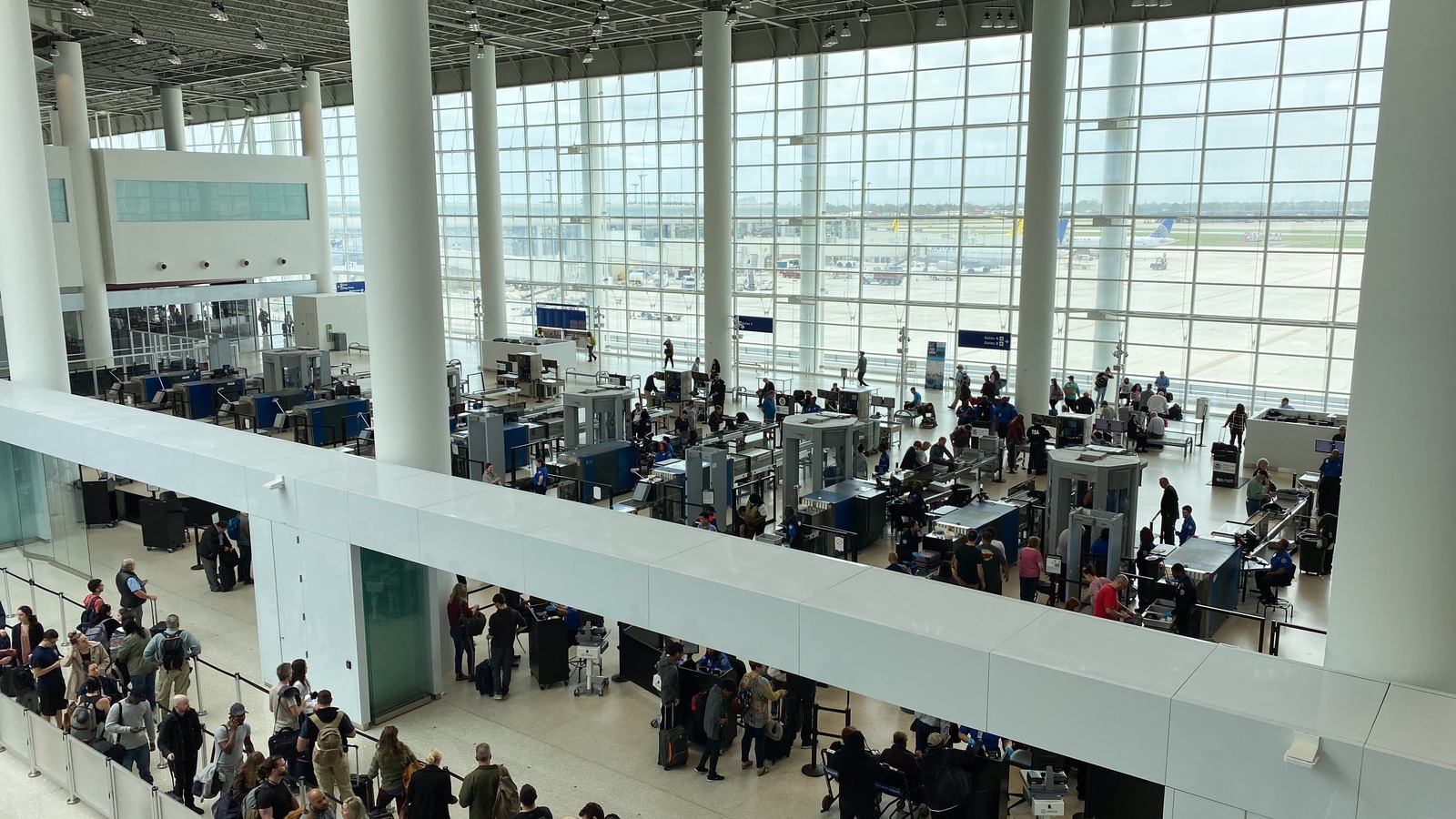
TSA Security Checkpoint at Airport · Tony Webster · CC BY 2.0 · cropped
Transportation Security Administration officers screened 204,152,406 travelers at United States airport checkpoints from June 21 through September 7, 2026, which is 5,758,036 fewer than the 209,910,442 screened across the same 79 dates in 2025. The 2.7 percent year over year decline comes from a comparison of official TSA daily checkpoint figures in the JohnnyJet summer checkpoint analysis published September 8, and the underlying daily counts come from the TSA checkpoint travel numbers page.
The practical meaning is simple: plan fall flights for busy airports even though summer growth cooled. Lines can still run long on peak mornings and Sundays, so keep an early arrival habit and keep your screening routine sharp with reminders such as the TSA liquids guidance for common toiletries.
- Summer window: June 21 through September 7, 2026, compared with the same dates in 2025.
- Summer total: 204,152,406 screened in 2026 versus 209,910,442 in 2025.
- Summer decline: 5,758,036 fewer travelers, down 2.7 percent year over year.
- Weakest month: August fell 4.4 percent with about 3.54 million fewer travelers.
- September turn: September 1 through 7 rose 0.2 percent to 16.44 million.
June 21 to September 7 TSA Totals Show a 5.76 Million Drop
The headline total covers 79 travel days and averages to about 2.58 million screened passengers per day in 2026, compared with approximately 2.66 million per day across the same dates in 2025. That daily gap of roughly 73,000 travelers is small on any single morning, yet it compounds into nearly 5.8 million fewer screenings across the full summer window.
Context matters because recent summers were defined by record crowds and repeated announcements of the busiest screening days in agency history. Against that background, a 2.7 percent decline reads as cooling demand rather than empty terminals. More than 204 million people still passed through checkpoints, and the analysis notes numerous days above 2.9 million.
The single busiest day in the 2026 window was June 21, when officers screened 2,981,485 passengers. That detail supports the planning message for the rest of this story. Early summer Saturdays around school release dates can surge even inside a softer season, so calendar position still matters more than the season average.
August 2026 Fell 4.4 Percent Against August 2025
August carried the summer decline. TSA screened approximately 76.8 million passengers in August 2026, compared with 80.3 million in August 2025. The gap of about 3.54 million travelers in one month represents a 4.4 percent year over year decline, which is more than double the pace of the earlier summer months.
June and July softened at a gentler rate. From June 21 through June 30, checkpoints screened approximately 27.6 million passengers, down 1.8 percent from the same dates in 2025. July followed with approximately 83.3 million travelers against 85.1 million in July 2025, a decline of about 2.1 percent that kept the summer trend intact without alarming anyone.
Travelers connecting through the busiest hubs felt the August dip least, because schedule banks and Sunday evening returns still concentrate crowds. The monthly pattern therefore argues for airport specific planning. A national decline does not flatten the Friday and Sunday peaks at places such as Atlanta, Dallas Fort Worth, Denver, or Chicago O’Hare, where smooth TSA screening preparation still pays off in shorter-feeling lines.
September 1 to 7 Reversed the Slide With a 0.2 Percent Gain
The first week of September broke the pattern. From September 1 through September 7, TSA screened 16.44 million travelers, slightly above the 16.41 million screened during the same dates in 2025. The increase of about 0.2 percent is narrow, yet it ended three consecutive softer stretches and overlapped the Labor Day return rush.
That reversal connects directly with airport level expectations reported before the holiday. Philadelphia International, for example, prepared for 559,000 Labor Day travelers across its September 3 to 8 window in our earlier Philadelphia Labor Day travel outlook. Holiday concentrated demand can therefore run hot even while the broader season cools.
The open question is whether August was a late summer pause or the start of a longer slowdown in United States air travel. One week of flat to slightly higher September volume cannot settle that question. Fall booking and fare behavior across the next two months will give a clearer signal than any single week.
Weekday Alignment Caveat Behind the Daily Comparisons
One caution applies before travelers over read any single date comparison. Days of the week do not line up between years, and checkpoint traffic swings sharply between a Tuesday and a Sunday. Comparing August 9, 2026 directly with August 9, 2025 is therefore not an apples to apples check, because those dates fell on different weekdays with different travel mixes.
That is why the monthly and full summer totals carry more weight than individual day matchups. Broader windows absorb the weekday distortion and reveal the demand trend underneath. The 79 day totals and the monthly splits are the figures to trust, while single day records deserve weekday context before anyone draws conclusions.
TSA publishes its national checkpoint counts on business days, with updates generally posted Monday through Friday by 9 a.m. and occasional delays around holiday weeks. Travelers who want to sanity check a specific date can therefore consult the official daily table rather than relying on a screenshot of one day circulating on social media.
Fall 2026 Airport Planning After a Softer Summer
A 2.7 percent national decline should not change what time you reach the airport. Staffing lanes are built around peaks, and peaks still produce long queues on holiday adjacent Fridays, Sunday evenings, and early morning bank departures. Keep the standard two hour domestic and three hour international arrival buffers, then adjust only when your airport publishes a same week advisory.
Trusted traveler programs keep their value in a softer market because they protect against the worst 15 minutes of a trip rather than the average. TSA PreCheck, Global Entry, and mobile identification options such as the Colorado mobile ID accepted at a growing list of airports reduce the variance that causes missed flights. Enrollment center visits remain worth scheduling before Thanksgiving rather than during the rush.
Packing discipline is the quiet lever most travelers control. Liquids compliance, laptop and electronics readiness, and uncluttered bins move a lane faster than any demand trend. With more than 204 million summer screenings behind us and the holiday season ahead, small personal preparation still beats betting that lighter national totals will shorten your specific line.
| If you… | What to do |
|---|---|
| Fly on a fall Friday or Sunday | Keep the full two hour domestic buffer because peak banks still surge. |
| Connect through a mega hub | Allow extra connection time since hub peaks ignore national averages. |
| Travel over Thanksgiving week | Book PreCheck enrollment now and recheck airport advisories that week. |
| Compare daily TSA records online | Match weekdays before concluding demand rose or fell on one date. |
September shoulder season is the booking window. Use calmer September and October trips to test your airport routine before the holidays.
Late November is the stress test. Thanksgiving week will concentrate travelers regardless of summer softness, so lock flights and arrival plans early.
Now is the enrollment moment. Schedule trusted traveler appointments in the fall lull instead of competing with December applicants.
How many fewer travelers did TSA screen in summer 2026?
TSA screened 5,758,036 fewer travelers from June 21 through September 7, 2026 than across the same dates in 2025, falling to 204,152,406 from 209,910,442.
Which summer month declined the most at TSA checkpoints?
August declined the most, with approximately 76.8 million screened versus 80.3 million in August 2025, a drop of about 3.54 million travelers or 4.4 percent.
Did September 2026 TSA traffic recover?
September 1 through 7 edged up 0.2 percent to 16.44 million from 16.41 million, which broke the summer slide but is too narrow to confirm a full recovery.
Should I arrive at the airport later because volume fell?
No. A 2.7 percent national decline does not remove peak day lines, so keep the two hour domestic and three hour international buffers for fall travel.
Where can I check official daily TSA passenger numbers?
TSA posts national daily screening counts on its passenger volumes page, generally updated Monday through Friday by 9 a.m. with occasional holiday week delays.