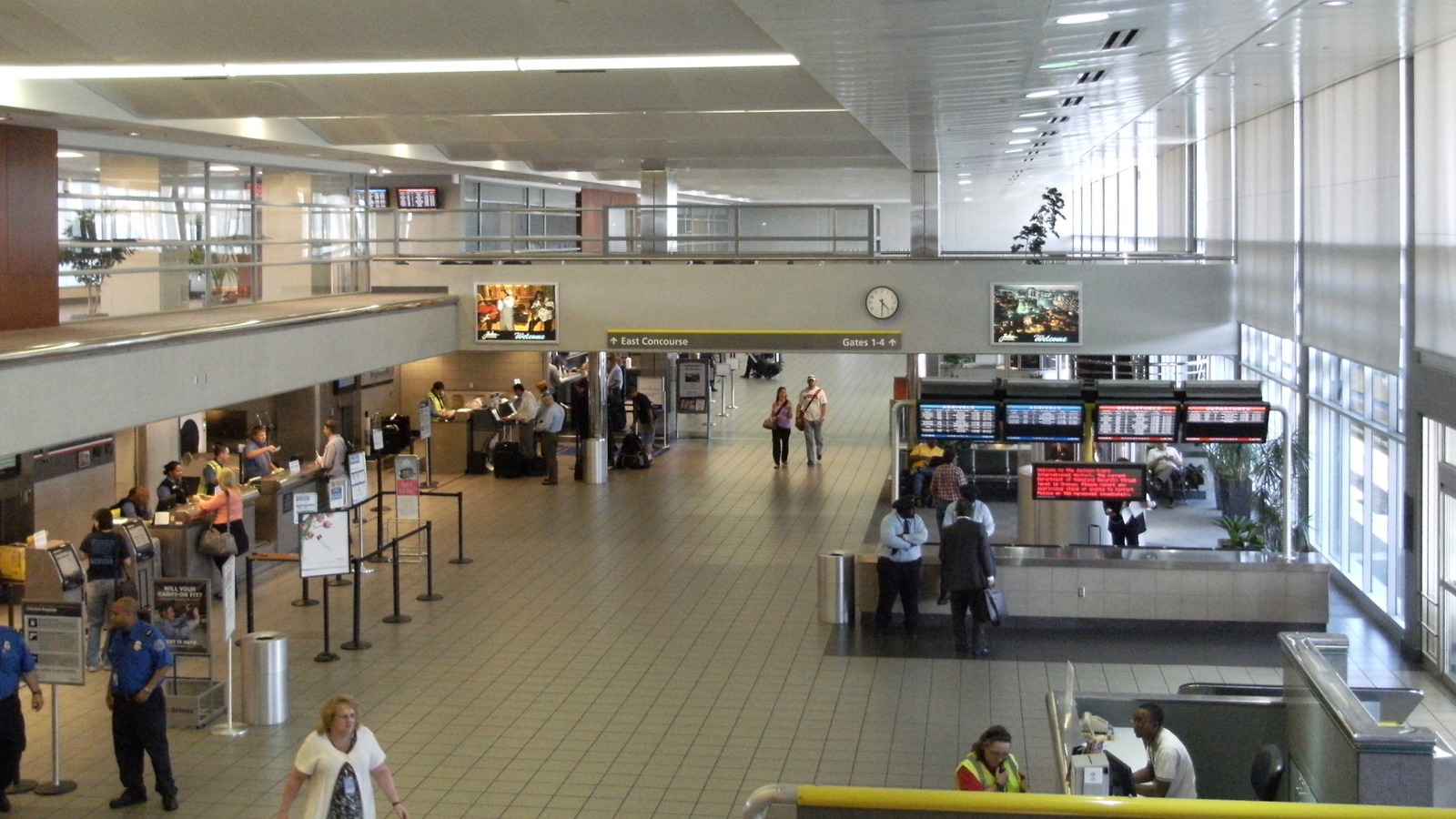
Love dogs and have a few hours to spare? The Transportation Security Administration is looking for volunteers at Jackson-Medgar Wiley Evers International Airport in Mississippi to help train its explosive detection dogs by playing a kind of hide and seek with them inside the terminal.
TSA explains how the effort works on its official Canine Decoy Program page, where volunteers act as covert role players who carry a training item through the airport while canine teams work to find them.
- What: TSA Canine Decoy Program volunteers.
- Where: Jackson-Medgar Wiley Evers International Airport (JAN).
- Time: sessions usually last 2 to 3 hours.
- How often: once every 45 days at most.
- Age: 18 and older; companions of any age may come along.
Inside the Canine Decoy Program
Volunteers are given training items to carry as they move naturally through areas of the airport such as security checkpoints, ticketing lobbies, gates and concourses, while the dog teams try to track them down, Darkhorse Press reported. The outlet compared it to a high stakes game of hide and seek.
The exercises are meant to mimic real situations so the dogs stay sharp in busy, noisy terminals, and TSA says the training is carefully planned to keep everyone safe and avoid disrupting airport operations, according to the report.
| If you… | What to know |
|---|---|
| Are 18 or older and love dogs | You meet the basic requirements. |
| Use a wheelchair or scooter | You are welcome to take part. |
| Want to bring your kids | Companions of any age may come; minors take part in a limited way. |
| Already volunteered | Wait 45 days before your next session. |
Volunteer Requirements at JAN
Participants must be at least 18 years old, though they may bring companions of any age, and minors can take part in a limited capacity, Darkhorse Press reported. Volunteers need to be comfortable around dogs and able to sit or move through airport areas as needed, and wheelchair and scooter users are welcome.
No experience is required. Volunteers serve as role players, not certified canine trainers, according to TSA and the report.
The 45 Day Rule
Each volunteer may take part once every 45 days, a rule meant to keep the exercises realistic, Darkhorse Press reported. Dogs learn quickly, and fresh faces and scents help make sure the teams are searching for the training item rather than recognizing familiar people.
Signing Up
TSA lists program details on its Canine Decoy Program page, and Darkhorse Press reported that a TSA contact is handling inquiries for the Jackson airport. Start with the TSA page to learn how the program works, then follow the contact information in the local report if you want to volunteer at JAN.
Sessions are scheduled in advance, so you will not simply show up at the checkpoint. Expect to coordinate a date and time with TSA before your visit.
What to Expect on the Day
Plan on spending two to three hours at the airport. You may walk through public areas and the screening area while carrying the training item, and you may be asked to sit, stand or move naturally so the dogs can work in realistic conditions. Wear comfortable shoes, bring water and plan for parking at the airport.
If you are nervous around large dogs, this may not be the right fit, since the whole point is for the dogs to find you.
TSA has not said how many volunteers it needs at Jackson or how long the recruiting push will last, so reach out sooner rather than later if you are interested. Sessions are set around the needs of the canine teams, which means available dates and times can vary.
Dogs on the Security Team
TSA says explosive detection canine teams are an important part of airport security, and the program helps keep those teams ready for real threats, according to Darkhorse Press. Dogs can screen large crowds quickly, which helps at busy checkpoints and in public areas before security.
Training never really stops for these teams. Handlers and dogs practice regularly so they can work in the same conditions travelers create every day, from rolling suitcases and crying babies to long lines and crowded gate areas. Volunteers help supply the variety of people, clothing and walking styles that a real airport offers.
A Fun Way to Help
For dog lovers, it is a rare chance to see working dogs in action up close and to play a small part in airport security. Volunteers do not need to buy a ticket or fly anywhere, and the experience offers a behind the scenes look at how TSA trains its teams.
Traveling Through JAN Soon?
If you are flying from Jackson instead of volunteering, you may still spot TSA canine teams working in the terminal. Let the dogs do their jobs, and do not pet or distract a working dog unless a handler says it is OK.
More TSA News
TSA is also bringing PreCheck enrollment to smaller airports, as we reported in our story on Lewiston’s PreCheck enrollment event, and some airports now let non-flyers past security, as covered in our story on TSA gateside passes.
2 to 3 hours. Typical volunteer session.
Every 45 days. Maximum frequency per volunteer.
18 and older. Companions of any age welcome.
What is the TSA Canine Decoy Program at Jackson airport?
Volunteers carry a training item through the airport so TSA dogs can practice finding it.
How long does a TSA canine decoy session last?
Sessions typically last two to three hours.
Who can volunteer to help train TSA dogs at JAN?
Adults 18 and older who are comfortable around dogs; no experience is needed.
How often can I volunteer as a TSA canine decoy?
Once every 45 days, to keep the exercises realistic.
Image Credits
- Lead Photo
Jackson Intl Airport main departures and ticketing hall Sept 2010 · Absecon 49 · CC BY-SA 3.0 · cropped