Your Tokyo through train needs a second look for November 7. On that Saturday in 2026, JR East plans to suspend Yokosuka Line and Sobu Line (Rapid) service between Tokyo and Shinagawa from the first to last train. JR identifies other services to check across the gap; the right connection depends on your destination and the affected-day timetable, not a promise that every Tokyo journey is unchanged.
If you have already chosen a Tokyo base, our Tokyo stay guide recommends checking the exact station, operator and exit near your accommodation rather than relying only on a district name. That route check matters here: Tokyo and Shinagawa are separate ends of the gap, and your next train depends on where your trip starts and where it needs to go.
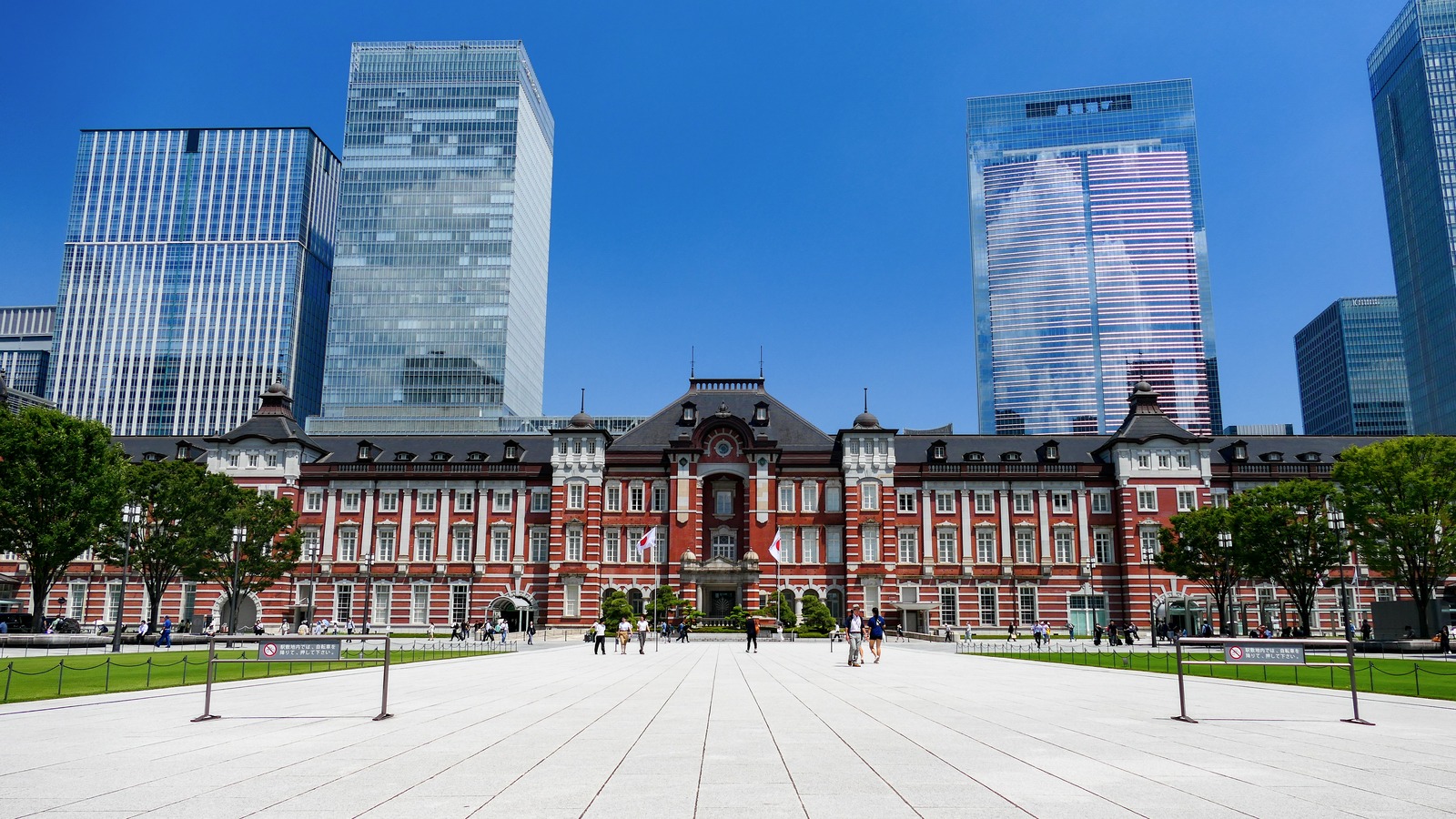
The station image shows Tokyo Station’s Marunouchi entrance and nearby buildings as photographed on June 29, 2023. It is destination context, not a picture of the November 2026 tunnel work or a current service pattern.
- Main closure: No Yokosuka Line or Sobu Rapid service between Tokyo and Shinagawa on November 7, from the first to last train.
- Turnbacks: Yokosuka trains turn at Shinagawa toward Yokohama; Sobu Rapid trains turn at Tokyo toward Chiba.
- Other JR routes: Check the Tokaido or Ueno-Tokyo, Yamanote and Keihin-Tohoku lines for a way across the city.
- Narita Express: Affected trains start or end at Tokyo; some changes extend into Friday evening and Sunday morning.
The Gap Is Between Tokyo and Shinagawa, Not Across Tokyo
The planned suspension covers the Yokosuka Line and Sobu Line (Rapid) section between Tokyo and Shinagawa stations on Saturday, November 7. JR East lists that closure for the first train through the last train of the day. It does not say that all trains stop across Tokyo or that every railway route through central Tokyo closes.
JR lists separate affected dates in September and November, not a continuous outage through those months. The upcoming November date in this notice is November 7. An older account of the September work does not establish the train arrangements for your November journey.
The JR East tunnel-work notice gives the line-by-line turnbacks. Use it for planned operations, then check current departure information for your journey. Neither the notice nor this historical station photograph confirms conditions on the day of travel.
Where the Affected Trains Turn Back
The service pattern divides at the two stations. Yokosuka Line trains turn back at Shinagawa toward Yokohama. Sobu Line (Rapid) trains turn back at Tokyo toward Chiba. Riders should plan around those endpoints instead of expecting a through train across the Tokyo-Shinagawa stretch.
If you approach from the south on the Yokosuka Line, Shinagawa is the turnback point. From Chiba on the Sobu Rapid, Tokyo is the turnback point. Choose another operating route for the remaining leg and confirm it for your travel time. The line name on a saved itinerary is not enough to prove the through journey survives unchanged.
JR identifies parallel Tokaido and Ueno-Tokyo services, plus the Yamanote and Keihin-Tohoku lines, as routes to consider between Tokyo and Shinagawa. They are separate JR services, not a promised one-for-one replacement. JR East says it will not provide alternative transport through other railway companies, so do not treat this as a cross-operator transfer arrangement or a promise of free travel on another company’s trains.
An Extra Clock Applies to Narita Express
Not every Narita Express train is cancelled. On affected trips, trains run to or from Tokyo but not beyond it to Shinjuku or Ofuna. JR gives an approximate change window at Tokyo of 7:40 p.m. Friday, November 6, to 8 a.m. Sunday, November 8, with train-specific exceptions. Some services around those edges run as scheduled; others retain a partial restriction. Check the exact train and direction, not a blanket Sunday restoration time.
Tokyo Bureau’s route guide adds destination-based transfer context. Its operating information is JR-derived; JR East remains the authority for the affected train table. The guide is not separate on-the-day confirmation that the works or revised services have begun.
Make the Station Choice Before You Travel
Start by identifying the exact line on your planned trip. A Yokosuka or Sobu Rapid itinerary that normally runs through Tokyo-Shinagawa needs a new route decision on November 7. Check whether the train you need ends at Shinagawa or Tokyo, then find an operating onward service rather than assuming the original through journey is intact.
Do not carry the Yokosuka and Sobu Rapid all-day gap into Sunday; Narita Express changes are a separate, train-specific window. Likewise, do not change accommodation simply because one line is interrupted. First compare the working connections from your actual base with the time and destination of the trip you need to make.
Before leaving, check JR East’s special construction table and current departure information for your exact origin, destination and train. The notice does not assign one universal platform, accessible walking route or transfer time. If luggage or step-free access matters, confirm the station arrangements rather than building a tight connection around an assumed walk between platforms.
| Your trip | What to check |
|---|---|
| Approaching from Yokohama on the Yokosuka Line | The Shinagawa turnback and an operating onward route toward Tokyo. |
| Sobu Rapid trip from the Chiba side | The Tokyo turnback and how to continue beyond Tokyo. |
| Crossing between Tokyo and Shinagawa | The Tokaido or Ueno-Tokyo, Yamanote and Keihin-Tohoku schedules. |
| Narita Express to or from Shinjuku or Ofuna | Whether your exact train is affected within the November 6 to 8 window. |
Friday evening to Sunday morning: Some Narita Express trains change to or from Tokyo; check the train-specific table.
Saturday, November 7: Yokosuka and Sobu Rapid trains do not run between Tokyo and Shinagawa from first to last train. That all-day gap is not listed for Sunday.
Are the Yokosuka Line and Sobu Rapid closed all day on November 7?
Only the segment between Tokyo and Shinagawa is suspended, from the first to last train. The lines turn back at those stations, toward Yokohama and Chiba respectively.
Will every train between Tokyo and Shinagawa stop running?
No. JR lists parallel Tokaido or Ueno-Tokyo, Yamanote and Keihin-Tohoku services as alternatives. Check the actual timetable for your destination and travel time.
Is the Narita Express cancelled all weekend?
No. Affected trains operate to or from Tokyo, with changes on some trips from Friday evening into Sunday morning. The official table has train-specific exceptions.
Image Credits
- Lead Photo
MaedaAkihiko · CC BY-SA 4.0 · cropped, adjusted