The number dropped. The map still matters. The U.S. State Department lowered Tanzania’s overall travel advisory from Level 3 to Level 2 on October 16, 2026, while retaining a higher warning for the Mtwara Region and Mozambique border area. For Americans reviewing a safari, coastal stay or overland journey, the change is a reason to reread the actual itinerary, not a countrywide all-clear.
If your trip includes a Stone Town port call, our Zanzibar cruise-day guide covers the walking itinerary and optional extensions. It is background for that particular stop, not security clearance for mainland transfers or southern border travel. Start with the places and routes on your booking, rather than treating every Tanzania trip as the same journey.
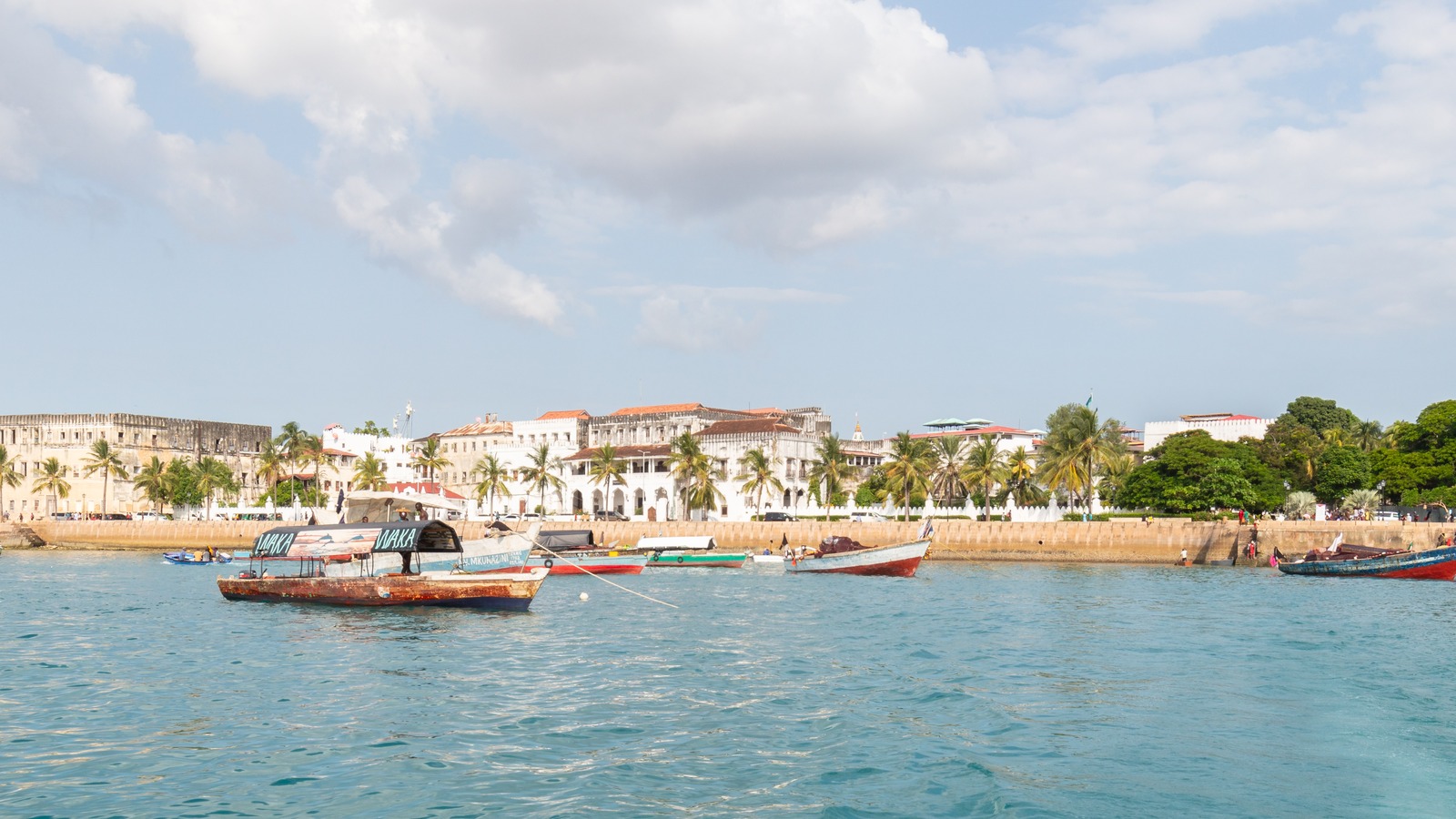
Historical geographic context: Stone Town harbour, Zanzibar, photographed May 31, 2024. This image does not show Mtwara or establish current security, health or travel conditions.
- New U.S. country level: Level 2, exercise increased caution, issued October 16.
- Regional exception: Level 3, reconsider travel, for the Mtwara Region and Mozambique border area, including the A19 context in the advisory.
- Also changed: A Health risk indicator was added; the history does not explain its cause.
- Next decision: Compare each overnight stop and transfer with the full current advice before changing plans.
The Number Dropped, Not Every Warning
The dated history on the State Department’s Tanzania advisory records the October 16 decrease and the added Health indicator. The previous history entry, October 31, 2025, put the overall country at Level 3. The new country-level instruction is to exercise increased caution.
That is a meaningful change in the American government’s advice, but it does not remove the regional exception printed on the same page. Read the country summary and the specific-area section together. A lower number at the top cannot answer whether a particular southern transfer still crosses an area with higher risk.
The summary continues to identify crime, terrorism, health, unrest, arbitrary enforcement of laws and targeting of gay and lesbian individuals as concerns. Travelers for whom a particular issue is relevant should read its detailed section before deciding whether the revised overall level changes their plans. This is not a new guarantee from a tour company or accommodation provider.
Mtwara Is the Itinerary Check That Matters
The U.S. specific-area section retains Level 3, meaning reconsider travel, under its Mtwara Region and Mozambique border heading. Its text includes the border and the A19 highway in the terrorism risk discussion. It also warns that U.S. emergency assistance in those areas is limited because of security risks.
Ask an operator to identify the actual overnight locations and transfer route if a southern leg is unclear on the booking. A product name or a country label is less useful than knowing which region and road the journey uses. Do not assume a route is outside the warning simply because the trip’s main attraction is elsewhere.
Australia’s independent Tanzania assessment, updated October 2, separately advises against travel within 30 kilometres of the Mozambique border in Mtwara. Its overall advice remains a high degree of caution, with higher levels in some areas. That is another government’s assessment, not confirmation that it adopted the U.S. downgrade.
Keep the issuer attached to the boundary: Australia’s 30-kilometre wording does not define the U.S. Level 3 area. Read the advice that applies to your nationality and circumstances, then compare the specific journey with it. Mixing the two systems into a single invented map would make the decision less clear.
Health Was Added, Not Explained Away
The new Health indicator deserves a separate look even though the overall level fell. The U.S. advisory describes limited routine and emergency medical services, particularly outside Dar es Salaam and Arusha. Its change history does not identify an outbreak as the reason for adding the indicator.
For a remote stay, review the operator’s emergency arrangements and the actual medical evacuation terms in your insurance. The State Department specifically recommends checking evacuation coverage. A policy name or a reassuring booking email does not explain what transport, treatment or assistance that particular contract provides.
Use the official health information linked by the advisory and seek qualified advice for your own medical circumstances. Do not infer new treatment instructions, an outbreak or a change to arrival screening from one new indicator. A security advisory and an entry-health requirement are different kinds of information.
Check the Route Before You Change the Booking
If you held off on a Tanzania trip because of the overall U.S. Level 3 advice, review the new wording against the same itinerary before making a fresh decision. Keep any Mtwara or border segment visible in that review. Do not use a Zanzibar photograph or a northern stop to answer a different question about southern access.
If the trip is already booked, ask the provider about any proposed route change and the terms that apply to it. Check insurance questions with the insurer rather than assuming the advisory change creates a refund, a waiver or a different coverage promise. The new number is not a substitute for those separate answers.
Before departure, reread the current official advisory and consider the State Department’s STEP enrollment for embassy updates. Keep emergency planning independent of an assumption that the U.S. government can assist everywhere. The useful takeaway is a revised country-level assessment with a regional exception, not an instruction to book or cancel every Tanzania trip.
| Your situation | Next decision |
|---|---|
| Northern or Zanzibar itinerary | Check each stop; Level 2 is not a countrywide all-clear. |
| Mtwara or Mozambique border leg | Review the retained U.S. Level 3 regional advice. |
| Remote stay or medical-care concern | Review emergency arrangements and exact evacuation cover. |
For a new decision: The October 16 U.S. downgrade changes the overall advisory, so compare the revised text with your actual route.
For an existing booking: Regional risks, medical arrangements and provider or insurance terms still need their own checks. The advisory does not replace entry requirements.
What changed in the U.S. Tanzania advisory on October 16?
The overall level decreased from Level 3 to Level 2, a Health risk indicator was added and the advisory summary was updated. The country-level instruction is to exercise increased caution.
Does Level 2 remove the Mtwara regional warning?
No. The U.S. specific-area section retains Level 3, reconsider travel, for the Mtwara Region and Mozambique border area, with the A19 highway included in its risk discussion.
Does the new Health indicator establish a new outbreak?
No cause is identified in the advisory’s change history. Do not infer an outbreak or new arrival-screening rule from the indicator alone; check current official health information separately.
Image Credits
- Lead Photo
Diego Delso, delso.photo · CC BY-SA 4.0 · cropped