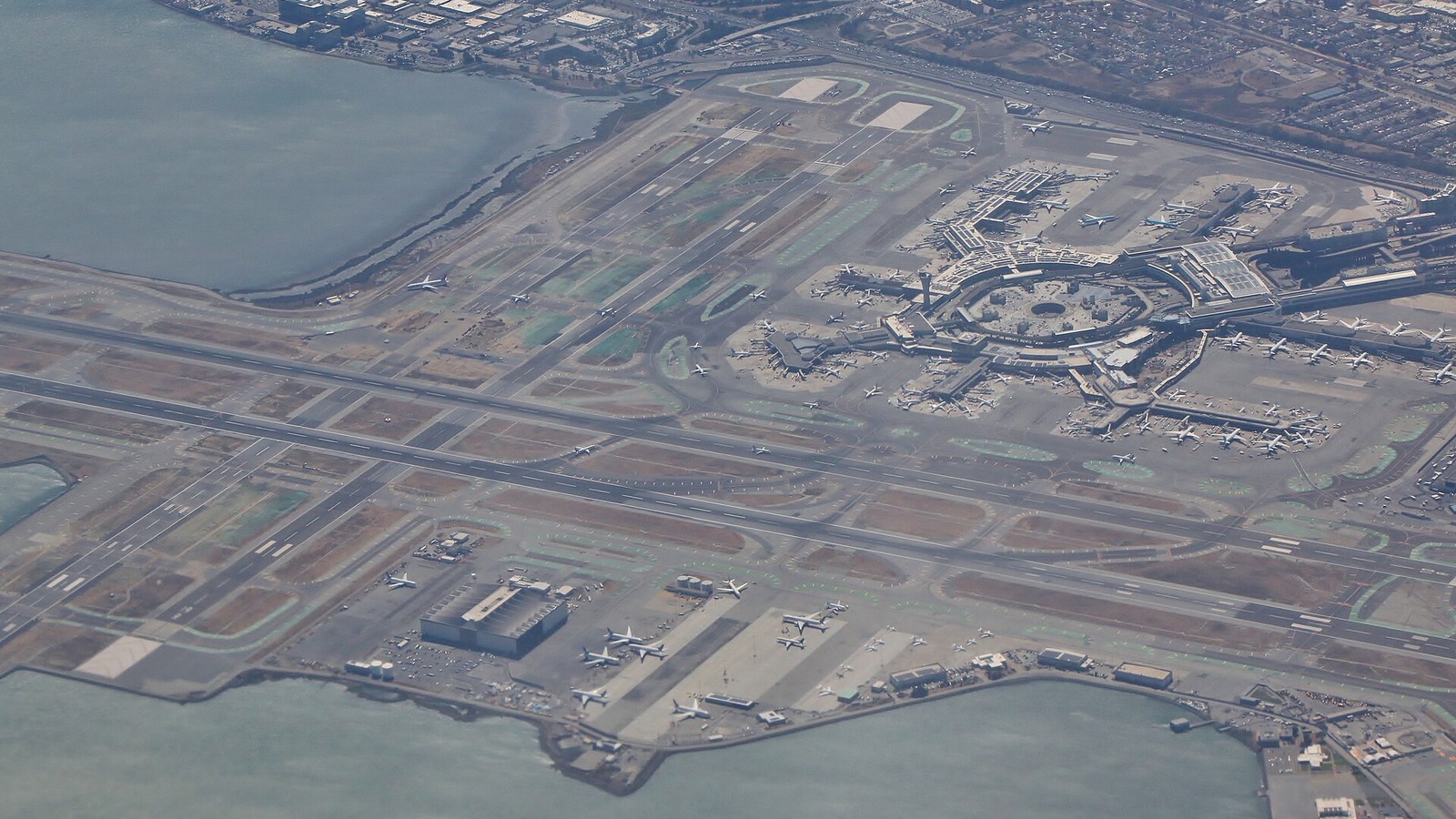
San Francisco International Airport reopened Runway 1 Right on Tuesday, September 29, 2026, ending a closure that began in March, and the airport expects fewer delays because more aircraft can arrive each hour, CBS San Francisco reported. SFO said arrivals are now expected to run between 45 and 48 an hour.
That is up from 36 an hour during the closure, though still below the 54 an hour the airport could handle before it. If you fly through SFO, the change matters most on the arrival side, and our airlines guide covers what to check before you book a tight connection.
- Reopened: Tuesday, September 29, 2026, after a six-month closure.
- Arrivals per hour: 54 before the closure, 36 during it, 45 to 48 expected now.
- Cost: About $215 million, with $92.1 million from the FAA.
- Still a limit: Low clouds can still trigger arrival restrictions.
Arrival Rates Climb From 36 Toward 48 an Hour
CBS reported that the closure and an initial FAA restriction in March cut arrivals from 54 to 36 an hour. SFO now expects 45 to 48 an hour, which is a recovery of most of what was lost but not all of it.
More arrivals per hour means fewer aircraft held in the air or at their origin when traffic is heavy. It is the number that decides whether a busy bank of flights lands on time or backs up.
Flight delayed or cancelled? AirHelp can check whether your trip may qualify for compensation. Check a flight with AirHelp Disclosure: Deep Arrival may earn a commission.
The reopening came three days ahead of the October 2 target that The Traveler cited for the project, which began on March 30. Anyone who planned around an early October return can treat the runway as back in service now.
The FAA Rule Mattered More Than the Paving
SFO said the FAA’s procedural change had much more effect on delays than the repaving did. The change suspended parallel arrivals on the airport’s east-west runways after an FAA internal review found the existing procedures did not meet its aircraft separation standards.
The FAA later modified its decision to allow staggered arrivals, according to the report. The reopened runway and the revised procedure together are what lift the hourly rate back toward the upper 40s.
A $215 Million Rebuild Used 200,000 Tons of Asphalt
Crews poured more than 200,000 tons of asphalt, replaced 64 miles of electrical cable and installed 2,440 new light fixtures, CBS reported. AeroHaber adds that adjacent taxiways were upgraded and new markings and signage were painted.
The FAA paid $92.1 million of the roughly $215 million cost. AeroHaber names Granite Construction as the primary contractor.
Runways 28L and 28R Carried All Traffic During the Closure
During the closure, AeroHaber reports, all arrivals and departures were moved to Runways 28L and 28R, and Runway 1L was used as an extra taxiway to ease congestion on the ground. That simplified layout is part of why the airport had less room to recover when a bank of flights bunched up.
With 1R back, the airport has more options for separating arriving and departing traffic. The sources do not say how quickly schedules will settle, so expect a transition rather than an instant return to the old pattern.
Fog and Low Clouds Still Cap the Rate
A reopened runway does not remove SFO’s weather problem. When low ceilings roll in, the FAA can still slow arrivals, as it did in the low-ceiling ground delay program we covered on September 27.
AeroHaber expects weather to be the main remaining cause of delays. Treat the new rate as the best case on a clear day, not a guarantee for every flight.
Planning another trip? Review Travel Guard plan terms for delays, cancellations, and baggage before choosing coverage. Review Travel Guard plans Disclosure: Deep Arrival may earn a commission.
United and Connecting Passengers Feel It Most
United is SFO’s largest carrier, with more than half the market, followed by Alaska, Delta and American, according to AeroHaber citing The Frequent Flyer. Connecting passengers on those airlines are the most exposed when an inbound flight slips and a connection gets tight.
Passengers on nonstop trips feel it differently, mainly as a shorter wait in the air before landing. Either way, the airline’s own flight status page is the best check on the day, because it reflects any restriction in force at that hour.
| If you… | What to do |
|---|---|
| Have an October flight into SFO with a tight connection | Check the arrival time and consider a longer layover if your trip allows, since the rate is better but not back to 54. |
| Booked earlier at a long layover to be safe | You can keep it, but there is no published reason to change a booking because of this reopening. |
| Are flying on a foggy morning | Expect possible arrival restrictions, because low ceilings can still slow SFO. |
| Are meeting an arriving passenger | Check the airline’s live flight status before leaving for the airport. |
Better odds on clear days. The airport expects 45 to 48 arrivals an hour, up from 36 during the closure.
Weather still decides some days. Low ceilings can trigger arrival limits regardless of the runway.
Watch the airport’s updates. SFO has not published a date by which the rate returns to 54, according to the sources we read.
When did SFO Runway 1R reopen?
It reopened on Tuesday, September 29, 2026, after a six-month closure for repaving and other improvements.
How many flights can SFO land per hour now?
SFO expects 45 to 48 arrivals an hour, up from 36 during the closure and below the 54 an hour before it.
Will SFO delays go away?
Not entirely. The airport expects fewer delays, but fog and low clouds can still slow arrivals.
How much did the Runway 1R project cost?
It cost about $215 million, and the FAA covered $92.1 million of that.
Why were SFO arrivals cut to 36 an hour?
The runway closure and an FAA restriction on parallel arrivals both cut the rate, and SFO said the FAA change had the larger effect.
Image Credits
- Lead Photo
SounderBruce · CC BY-SA 4.0 · cropped