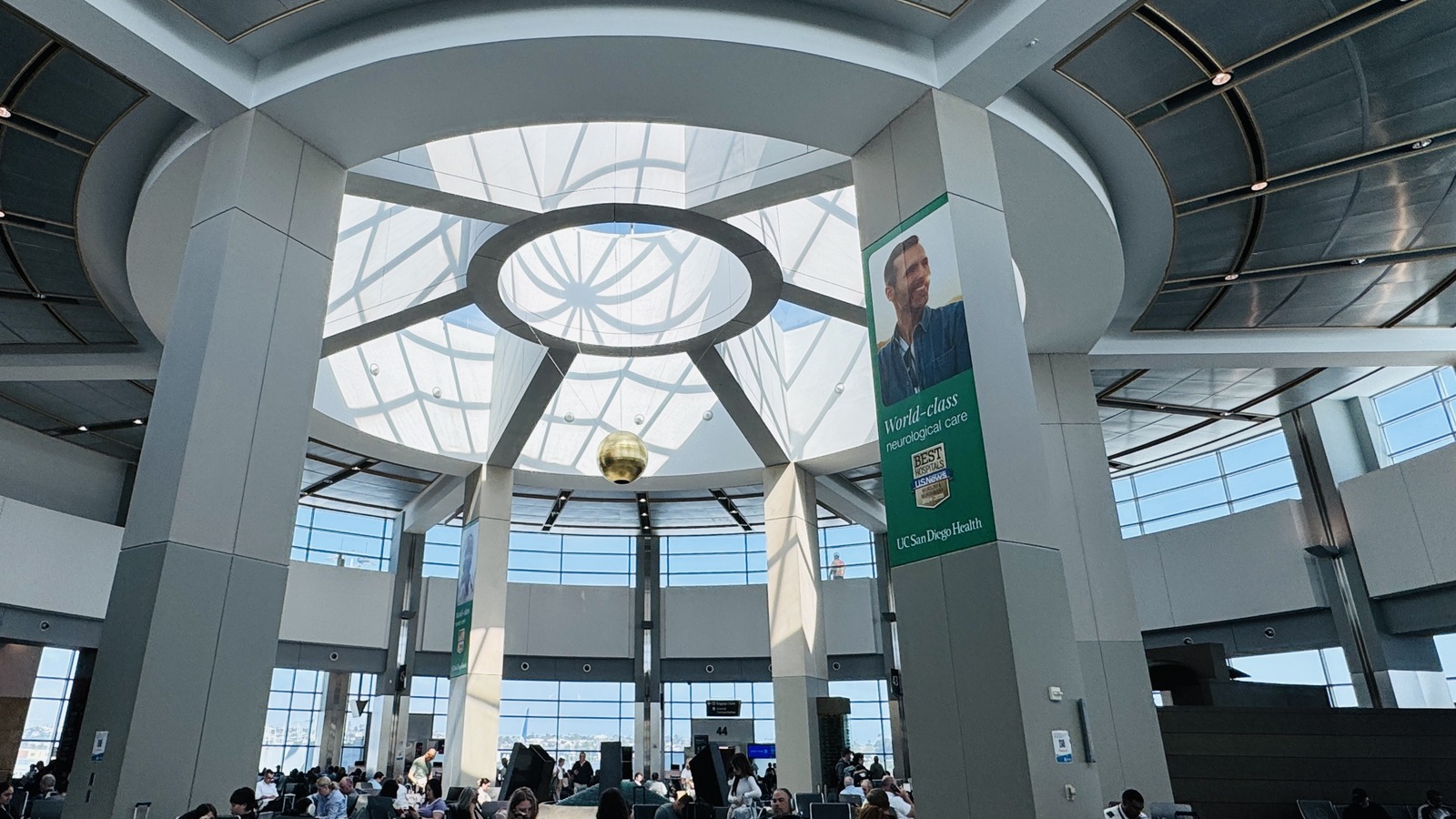
The Federal Aviation Administration is holding inbound flights to San Diego International Airport on Thursday, October 8, 2026, because of low ceilings. The Command Center’s live airport-status feed lists a ground delay program with a 43-minute average hold and a maximum of 1 hour and 38 minutes. The public summary shows the program from 1400Z to 0559Z, which is 7:00 a.m. PDT (10:00 a.m. ET) through 10:59 p.m. PDT, with San Diego’s arrival rate cut to 20 aircraft an hour.
If you fly into San Diego today, the wait is at your departure airport. A ground delay program keeps the aircraft on the ground until SAN has a slot. Check the airline app before you leave home, then use Deep Arrival’s San Diego airport access guide only after the inbound time is stable, so a late arrival does not send you to the wrong curb or to Tijuana by mistake.
- Average hold: 43 minutes on inbound flights, per the FAA status feed at 17:00 GMT October 8.
- Longest listed: 1 hour and 38 minutes.
- Window: 7:00 a.m. PDT to 10:59 p.m. PDT October 8 (10:00 a.m. ET to 1:59 a.m. ET October 9).
- Cause: Low ceilings and low clouds, not volume and not the October 3 wind program.
- Arrival rate: 20 aircraft an hour.
San Diego Arrival Holds Run Through the Evening
The FAA Air Traffic Control System Command Center posted SAN on its public summary with start 1400Z, end 0559Z, scope ALL, reason weather and low ceilings, average 43 minutes, arrival rate 20. Those Zulu times are 7:00 a.m. to 10:59 p.m. Pacific on October 8. The program can end early if the ceiling lifts, or it can be extended. Recheck the live feed before a late connection.
FlightAware’s San Diego board, captured the same morning, reported inbound flights delayed at their origin by an average of 43 minutes due to low clouds. That independent tracker matches the FAA average to the minute and names the same weather. It does not show an airport closure. The delay is a slot wait in Boston, Phoenix, Denver, or wherever the aircraft sits until San Diego can take it.
This is a new dated weather program. Deep Arrival already covered a San Diego wind ground delay on October 3 at San Diego International Airport Wind Delay Oct. 3. Thursday’s reason line is low ceilings, not wind. Treat today’s 43-minute figure as its own number.
Low Ceilings Cap the Arrival Rate at 20
San Diego’s single commercial runway and marine layer are a known pair. When the ceiling sits on the approach, air traffic cuts the arrival rate so aircraft are not stacked in the stratus. An arrival rate of 20 is a hard throttle for a busy Thursday. Banks that normally land more than that have to wait on the ground at the other end.
The FAA daily air traffic report for October 8 listed low clouds for Seattle, Los Angeles, and San Diego. Boston’s separate program is runway construction. Do not mix them. A San Diego low-ceiling hold is not covered by a Boston construction story, and a Gulf hurricane waiver does not move a SAN slot.
Scope ALL means the program can reach flights from across the country, not only California departures. A 70-minute hop from Phoenix and a transcon from the East Coast can both sit for the 43-minute average. International arrivals still clear federal inspection after they land. The hold happens before the aircraft leaves the origin.
Connecting Passengers Should Rebook Short Turns
The traveler who should change a booking first is the one with a tight SAN connection, especially to Cabo, Hawaii, or a last East Coast bank. A 43-minute origin hold can erase a 50-minute connection even when both flights still show as scheduled. Rebook the outbound before you leave home if the inbound is already near the FAA average.
People starting in San Diego have a different problem. Departures can still push, but inbound aircraft that become the evening outbounds arrive late. A 6 p.m. Honolulu departure that uses an aircraft still sitting in Dallas at 5 p.m. will move. Watch the tail, not only the scheduled time. If the airline offers a later SAN departure on the same ticket, take it while seats remain.
Ground delay programs do not automatically pay hotels. U.S. carriers generally treat this as a delay, not a cancellation, until they cancel. Ask for a confirmed later flight if you will miss a last connection. Keep meal receipts during a long origin hold. For how airlines handle irregular operations, see Deep Arrival’s airline guides.
Rechecking a San Diego Flight Before You Leave
Refresh three sources: the airline app for your record locator, the FAA airport-status feed for whether the SAN program is still active, and FlightAware for the current inbound average. If the FAA line disappears, the program has ended even if one delayed aircraft is still inbound. If the average climbs toward the 1-hour-38-minute maximum, assume later banks will miss last trolleys and last coastal highway slack.
Do not use a short Terminal 2 security line as permission to skip the delay check. Drive time from Mission Valley or the trolley from downtown can still land you at a gate whose aircraft has not left Phoenix. If you are meeting an arrival, add 43 minutes to the original block, then bag time. Have a rideshare backup if the inbound slides toward the 1-hour-38-minute mark after 9 p.m. PDT.
The Posted Window Closes at 10:59 p.m. PDT
The Command Center set an end of 0559Z, 10:59 p.m. PDT October 8. Programs can expire early if the marine layer lifts, or they can run long. Recheck the FAA feed after 9 p.m. Pacific. If SAN is still listed, overnight arrivals remain on the throttle.
San Diego has run ground delay programs for volume and for wind this year. Thursday’s 43-minute ceiling program is shorter than some of those hits and still long enough to break a short connection. Compare today’s number with your own slack. If you have 2 hours between flights, you can wait. If you have 40 minutes, move the second flight now.
| If you… | What to do |
|---|---|
| Have a SAN connection under 43 minutes | Rebook the second flight before you leave for the origin airport. |
| Are flying into San Diego after 7:00 a.m. PDT | Add 43 minutes, and plan for a hold as long as 1 hour and 38 minutes. |
| Are meeting an arrival tonight | Use the delayed inbound time, then add bag time, and keep a late ride backup. |
| Hold a last Cabo or Hawaii outbound from SAN | Watch whether the aircraft is still sitting at the origin, not only the posted time. |
7:00 a.m. PDT October 8 is the start of the San Diego arrival throttle. Flights due in after that time can be held at the origin for about 43 minutes, and some for as long as 1 hour and 38 minutes.
10:59 p.m. PDT October 8 is the posted end of the program. Recheck the FAA feed before late connections and last rides from the airport.
A 43-minute inbound hold is the connection test. Rebook any SAN transfer shorter than that number before you travel to the departure airport.
Is San Diego Airport delayed on October 8?
Yes. The FAA listed a San Diego ground delay program for low ceilings, with inbound aircraft held at their origin.
How long are San Diego Airport delays October 8?
The FAA average is 43 minutes. The same feed lists a maximum of 1 hour and 38 minutes. FlightAware showed the same 43-minute inbound average due to low clouds.
Why is San Diego Airport delayed today?
The FAA reason line is low ceilings. FlightAware names low clouds. This is not the October 3 wind program.
Will my San Diego connection still work?
Plan as if the inbound will miss any connection shorter than 43 minutes. Rebook the second flight if the slack is under that average.
When does the San Diego ground delay end?
The Command Center posted an end of 10:59 p.m. PDT October 8. Confirm on the live FAA feed, because programs can end early or run long.
Is San Diego Airport closed?
No. The FAA and FlightAware snapshots show a delay program, not a closure. Check your airline for any individual cancellation.