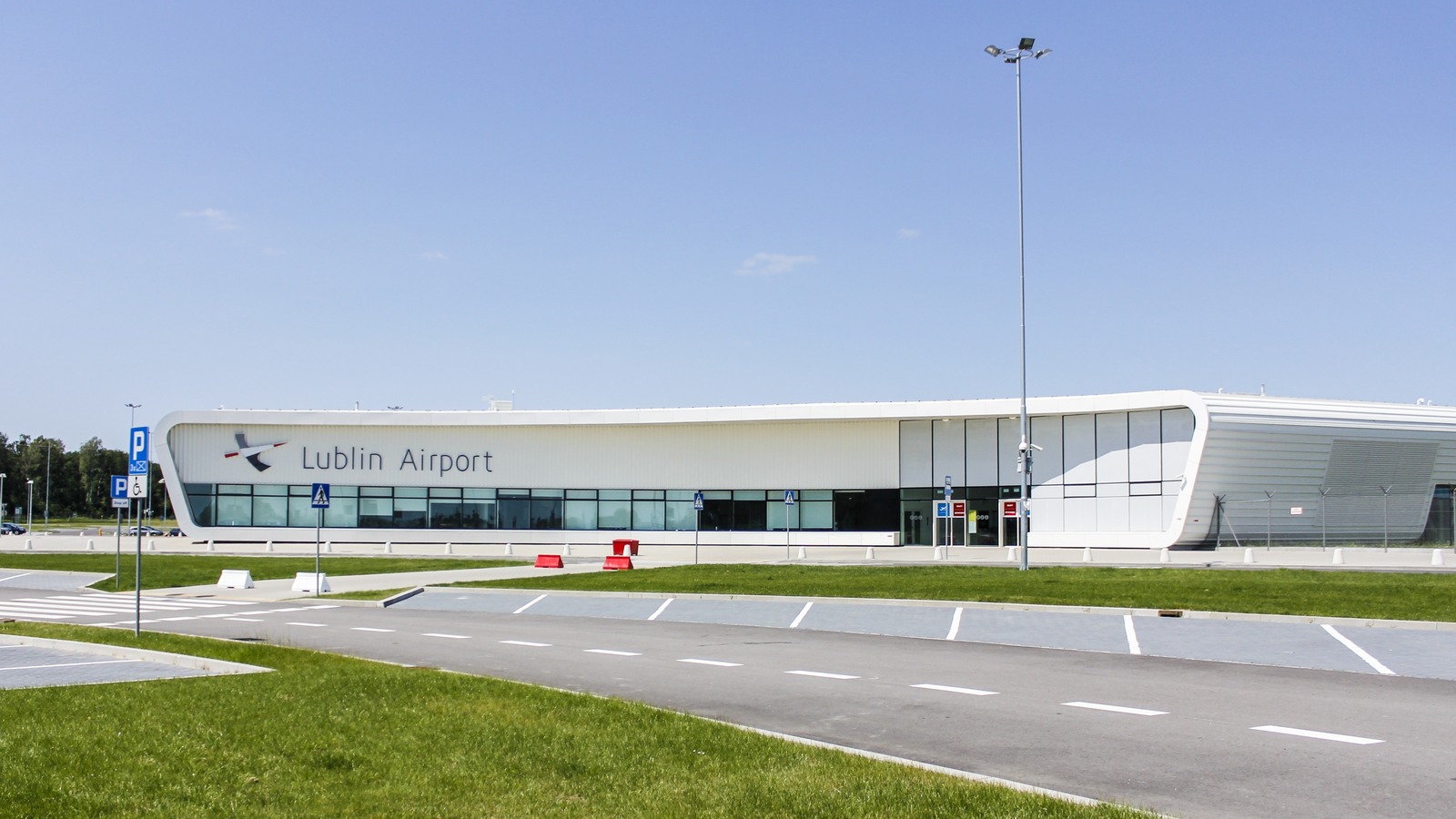
Poland’s air navigation agency paused flights at Lublin Airport (LUZ) and Rzeszów-Jasionka Airport (RZE) on Sept. 17, 2026, so military aircraft could operate after a Russian jet-powered drone approached the Polish border from western Ukraine. The Polish Air Navigation Services Agency, quoted by TVN24, said the two airports temporarily suspended operations to give military aviation freedom of action. The military operation ended about an hour later, and both airports resumed flights. No violation of Polish airspace was recorded.
If you are flying into or out of eastern Poland today or in the next few days, treat this as a short, repeatable disruption rather than a day-long closure. Check the live board before you leave for the airport, and use the airlines hub only as a starting point for carrier pages. The same two airports also paused on Sept. 16, so a same-day recheck is the useful habit, not a one-off refresh.
- Airports: Lublin (LUZ) and Rzeszów-Jasionka (RZE) paused, then resumed, on Sept. 17, 2026.
- Cause: Polish military aviation operating after a Russian jet-powered drone approached the border.
- Duration: About one hour, according to Polish reporting of the PANSA pause.
- Alert: Poland’s Government Center for Security warned Lublin and Subcarpathian voivodeships, then lifted the alert at 12:48 local time.
- Pattern: The same two airports also halted operations on Sept. 16.
Lublin and Rzeszow-Jasionka Flights Stopped for About an Hour
This was a civil-airport pause for a military operation, not a runway outage or a staffing strike. PANSA named Lublin and Rzeszów-Jasionka. Those are the only two commercial airports you should treat as affected unless a later notice adds another field. Warsaw Chopin, Krakow, and Gdansk were not named in the Sept. 17 pause.
AeroTime reported that PANSA suspended LUZ and RZE so military aviation would have freedom of action. Ukrainska Pravda, citing TVN24, said the military operation ended about an hour later and the airports resumed. Lublin Airport’s public departures board later showed scheduled services moving again, including London Luton and Dublin turns. That is the recovery half: the pause was real, and it was short.
Poland Issued an Air Attack Alert, Then Lifted It
Poland’s Government Center for Security, the RCB, sent an air-attack warning at 11:54 local time to all 24 counties and cities with county status in Lublin Voivodeship and all 25 in Subcarpathian Voivodeship. Recipients were told to find a safe place. The follow-up said the threat had been revoked and that there was no threat on Polish territory. AeroTime timed the lift at 12:48 local time.
Poland’s Armed Forces Operational Command, DORSZ, said at 11:40 local time that military aircraft had begun operating in Polish airspace in response to Russian strikes on western Ukraine using jet-powered unmanned aerial vehicles. Ground-based air defense and radar reconnaissance systems were brought to readiness. A loud boom heard in central Poland before noon was later attributed to combat aircraft breaking the sound barrier, not to an impact on Polish territory.
The Drone Came Down on the Ukrainian Side of the Border
DORSZ said the drone came down 3 to 4 kilometers, about 2 to 2.5 miles, inside Ukraine. Spokesperson Lieutenant Colonel Jacek Goryszewski told Interia and the Polish Press Agency that Ukraine had warned Poland of an object approaching the border at high speed, which Polish radar also tracked, prompting fighters to launch. The command was still checking system records on the exact neutralization. DORSZ later said no violation of Polish airspace had been recorded.
Prime Minister Donald Tusk, speaking after meeting Austrian Chancellor Christian Stocker, said a target near the Yahodyn-Dorohusk crossing, probably a gas station, had been struck and that there had been a very large explosion. Deputy Defence Minister Cezary Tomczyk said the operational commander issued an order for prior authorization and was ready to shoot down the objects. The State Border Guard Service of Ukraine said no border infrastructure was hit. Do not read those statements as a closure of the road crossing itself unless that crossing’s own operator posts it.
This Was the Second Consecutive Day of the Same Pause
On Sept. 16, Poland also scrambled fighters and halted operations at Rzeszów and Lublin during a Russian air attack on Ukraine’s western regions. Sept. 17 was the second consecutive day of the same two-airport pattern: a short civil pause while military aviation worked, then a resume. That is why a traveler should not treat today’s reopen as a guarantee that tomorrow morning will be quiet.
The border belt has been noisy for days. A Sept. 13 strike on a passenger train near the Poland border already changed surface connections in the same corridor. AeroTime noted that a drone hit a passenger-train locomotive at Yahodyn station on Sept. 13, and that Deputy Prime Minister Władysław Kosiniak-Kamysz said those drones struck about 1 kilometer and 5 kilometers from the Polish border without crossing it. Today’s airport pauses sit in that same corridor, on a different mode.
Travelers Through Eastern Poland Should Recheck Same-Day Flights
If you hold a ticket through LUZ or RZE in the next several days, the practical move is a same-morning status check with your airline and the airport board, not a rebooking on rumor. The Sept. 17 pause lasted about an hour. A diverted inbound, if your carrier posts one, is a separate fact from the PANSA pause itself. Confirm the actual flight, not the headline.
If you can route via Warsaw, Krakow, or another Polish airport that was not named, that is an option, not a requirement. Do not assume a nationwide Polish shutdown. Do not assume Ukrainian airspace is newly open or newly closed based on this Polish pause. The confirmed traveler change is two named eastern airports, twice in two days, for roughly an hour each time, with alerts to two voivodeships that were later lifted.
| If you… | What to do |
|---|---|
| Fly today from Lublin or Rzeszów-Jasionka | Check the live airport board and your airline app before you leave. Both fields resumed after about an hour on Sept. 17. |
| Hold a ticket through LUZ or RZE in the next few days | Keep the booking unless your carrier rebooks you, and recheck the morning of travel. Sept. 16 and Sept. 17 both saw short pauses. |
| Can connect through Warsaw, Krakow, or another unnamed Polish airport | That is a hedge, not a required reroute. Those airports were not named in the Sept. 17 PANSA pause. |
| Are on the road at the Yahodyn-Dorohusk crossing | Do not treat the airport pause as a road closure. Use the crossing operator’s own notice if one appears. |
Sept. 17, 2026, around midday local, is the second short pause. LUZ and RZE stopped, then resumed after about an hour. Recheck same-day flights rather than assuming a multi-hour outage.
12:48 local is when the RCB lifted the air-attack alert. The voivodeship warning is not the same as the airport pause. The alert being lifted does not freeze the airports in an open state if another military operation starts.
Sept. 16 is the first day of the same two-airport pattern. A traveler through eastern Poland should plan for another short notice pause until Polish authorities say the military aviation response has ended for good.
Are Lublin and Rzeszow airports still closed?
No. PANSA paused them on Sept. 17 so military aircraft could operate, and Polish reporting says they resumed after about an hour. Check the live board for your specific flight.
Did a Russian drone enter Polish airspace on Sept. 17?
Poland’s Armed Forces Operational Command said the drone came down 3 to 4 kilometers inside Ukraine and that no violation of Polish airspace was recorded.
Which Polish airports were affected?
Lublin Airport (LUZ) and Rzeszów-Jasionka Airport (RZE). Other Polish airports were not named in the Sept. 17 PANSA pause.
Could this happen again tomorrow?
Yes. The same two airports also paused on Sept. 16. Treat short-notice military-aviation pauses as a current risk on eastern Poland flights until authorities say otherwise.