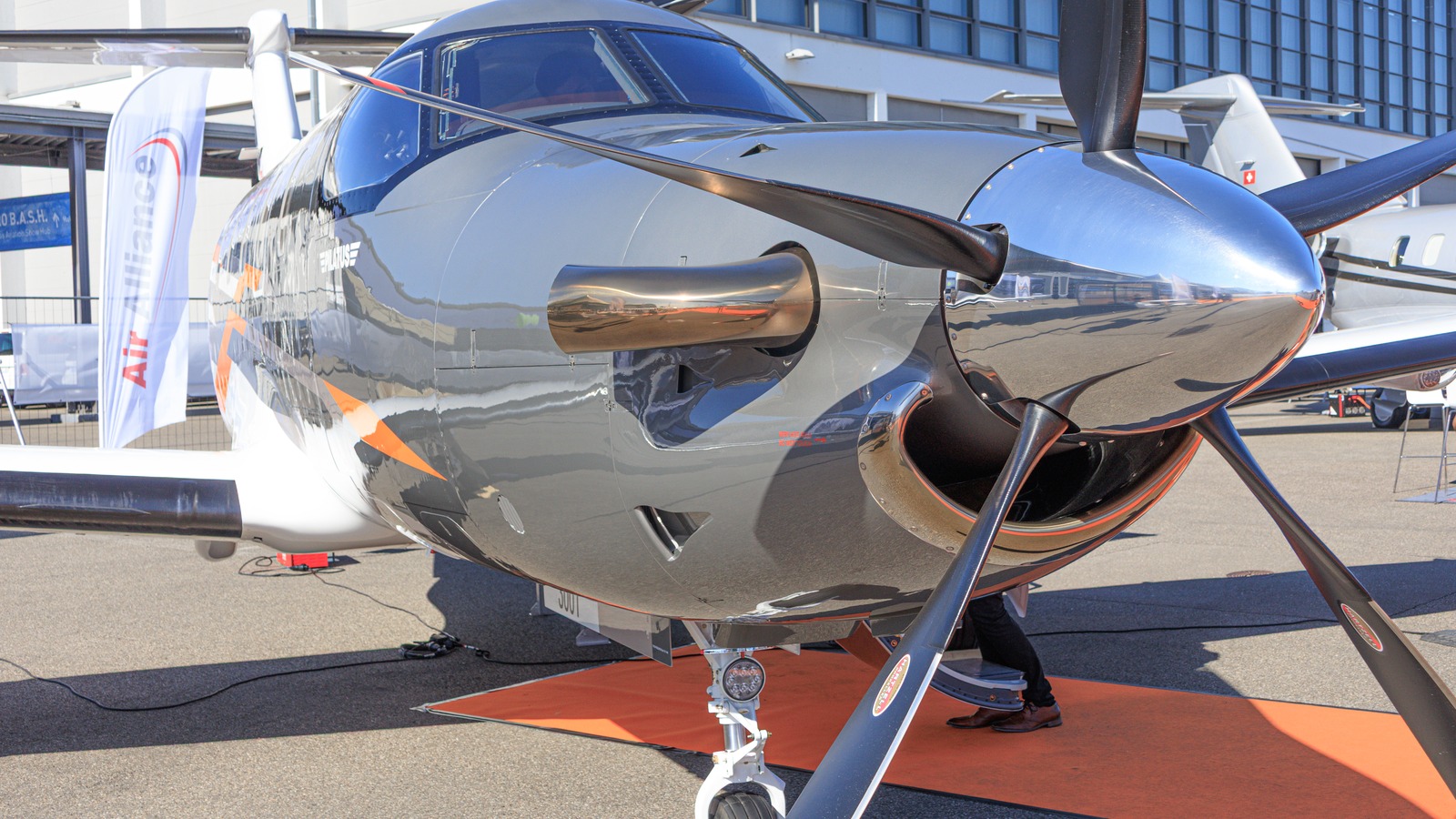
New York-air · CC BY-SA 4.0 · cropped
Pilatus confirmed on September 24, 2026 that the Safety Autoland system on the new PC-12 PRO has earned certification from both the Federal Aviation Administration and the European Union Aviation Safety Agency, clearing the Garmin based emergency landing capability for customer aircraft in the United States and Europe, according to the manufacturer’s official announcement.
For travelers who buy, operate, or charter single engine turboprops, the decision changes from asking whether an autoland option exists in this class to confirming it is certified on the specific PC-12 PRO delivery or charter aircraft they are evaluating, a step our airlines and private aviation hub tracks across new aircraft programs.
- Certified: September 24, 2026, by the FAA and EASA.
- Aircraft: Pilatus PC-12 PRO single engine turboprop.
- System: Garmin Emergency Autoland, called Safety Autoland by Pilatus.
- Trigger: Pilot incapacitation, by button press or detected inactivity.
- Result: Fully automated landing with automated radio calls and engine shutdown.
Certification Covers the Full Automated Landing Sequence
Pilatus said final certification flights demonstrated the complete sequence from activation through touchdown in real world conditions, including automated communication and engine shutdown. The announcement positions the PC-12 PRO as the first member of the single engine turboprop family to carry the certified system, a detail confirmed by independent aviation coverage from FLYING Magazine.
When engaged, the system takes full control and tells everyone aboard that automated landing mode is active. It weighs weather, aircraft status, navigation data, runway length, wind, and remaining fuel, then picks the best airport and plots a route that avoids terrain and obstacles, Pilatus said.
During the autonomous flight the system manages flaps, landing gear, lighting, brakes, and de-icing equipment, configures the aircraft for final approach, and makes its own radio calls on the correct frequencies so air traffic control and nearby aircraft know what is happening. AeroTime reporting adds that certification testing covered the sequence from activation through landing and engine shutdown.
Cockpit Built Around the Garmin G3000 Prime
The PC-12 PRO arrived in March 2025 with a redesigned cockpit built around the Garmin G3000 Prime avionics suite, and Garmin identified the aircraft as the first certified with the new flight deck while listing Autoland availability separately for 2026. That timeline closed with this certification.
Pilatus calls its installation the Advanced Cockpit Environment. It combines three main touchscreen displays with two smaller secondary screens and a cursor control device that gives pilots a physical alternative to touch inputs, plus control yokes derived from the PC-24 business jet.
Other safety functions in the flight deck include electronic stability protection, emergency descent mode, and autothrottle, with crew alerts linked to electronic checklists that open when a pilot touches an alert message. The broader private aviation manufacturing footprint keeps growing too, as seen in the Sarasota airport Pilatus and Elixir aviation cluster.
Autoland Spreads Across Business Aviation
Garmin Autoland already holds certification on a long list of aircraft, including the Piper M600 SLS and M700 Fury, the Daher TBM 940, 960, and 980, the Cirrus SR20, SR22, and SR22T G7 series, the Vision Jet G2, G2 plus, and G3, the HondaJet Elite II, and the Embraer Phenom 300EV. Retrofit installations are available for eligible Beechcraft King Air 200 series and King Air 350 aircraft, depending on model year and equipment.
Additional installations have been announced for the Beechcraft Denali, the Epic E1000 AX, the Cessna Citation M2 Gen3, CJ3 Gen3, and CJ4 Gen3, and the HondaJet Echelon. The PC-12 PRO certification therefore lands inside an established pattern rather than as a one off experiment.
Under the hood, the PC-12 PRO keeps the Pratt and Whitney Canada PT6 engine family, which Pilatus notes has more than 60,000 units in service and more than 400 million flight hours. The company also says the PRO emits less carbon dioxide than comparable twin engine turboprops and can operate on sustainable aviation fuel blends with no loss of performance.
What Buyers and Operators Should Do Next
Prospective buyers should ask their sales representative to confirm that Safety Autoland is included on their specific delivery slot and to document any training the system requires. Pilatus describes certification at the aircraft type level, so written confirmation for an individual airframe removes doubt before contracts are signed.
Current PC-12 operators should note that the sources name no retrofit program for earlier PC-12 airframes, only the listed King Air retrofits and the announced future installations. Owners of older aircraft should treat an upgrade as unconfirmed until Pilatus or Garmin publishes one.
Charter clients who value the extra layer can ask operators whether their assigned PC-12 aircraft is a PRO with the certified system aboard, and pilots moving into the type should expect differences training on the Advanced Cockpit Environment and its automated modes.
| If you… | What to do |
|---|---|
| Are comparing new single engine turboprops | Weigh the certified autoland on the PC-12 PRO alongside price, range, and cabin needs. |
| Hold a PC-12 PRO delivery position | Get written confirmation that Safety Autoland is on your airframe and ask about training. |
| Fly charters on PC-12 aircraft | Ask the operator whether the assigned aircraft is a PRO with the certified system. |
| Operate an older PC-12 | Do not assume a retrofit exists; await a published program from Pilatus or Garmin. |
September 24, 2026 is the certification gate. From this date the system is FAA and EASA certified for the PC-12 PRO, so purchase and charter conversations can treat it as approved equipment rather than a future promise.
Contract signing is the next gate. Before signing, confirm the system on your airframe in writing and clarify pilot training, because type certification alone does not prove every delivery slot carries identical equipment.
Training enrollment is the third gate. Pilots new to the Advanced Cockpit Environment should schedule differences training that covers automated modes and incapacitation procedures.
Which aircraft just gained certified autoland?
The Pilatus PC-12 PRO, certified by the FAA and EASA on September 24, 2026 with the Garmin based Safety Autoland system.
How does Safety Autoland activate?
A passenger or pilot presses the activation button, or the system engages after detecting pilot inactivity, then it lands the aircraft automatically while making its own radio calls.
Can older PC-12 aircraft add the system?
Neither Pilatus nor the independent reports name a retrofit for earlier PC-12 airframes, so owners should wait for a published program before planning an upgrade.
Does certification change charter safety today?
It adds a certified backup for pilot incapacitation on equipped PC-12 PRO aircraft, so charter clients can ask whether their assigned aircraft carries it.