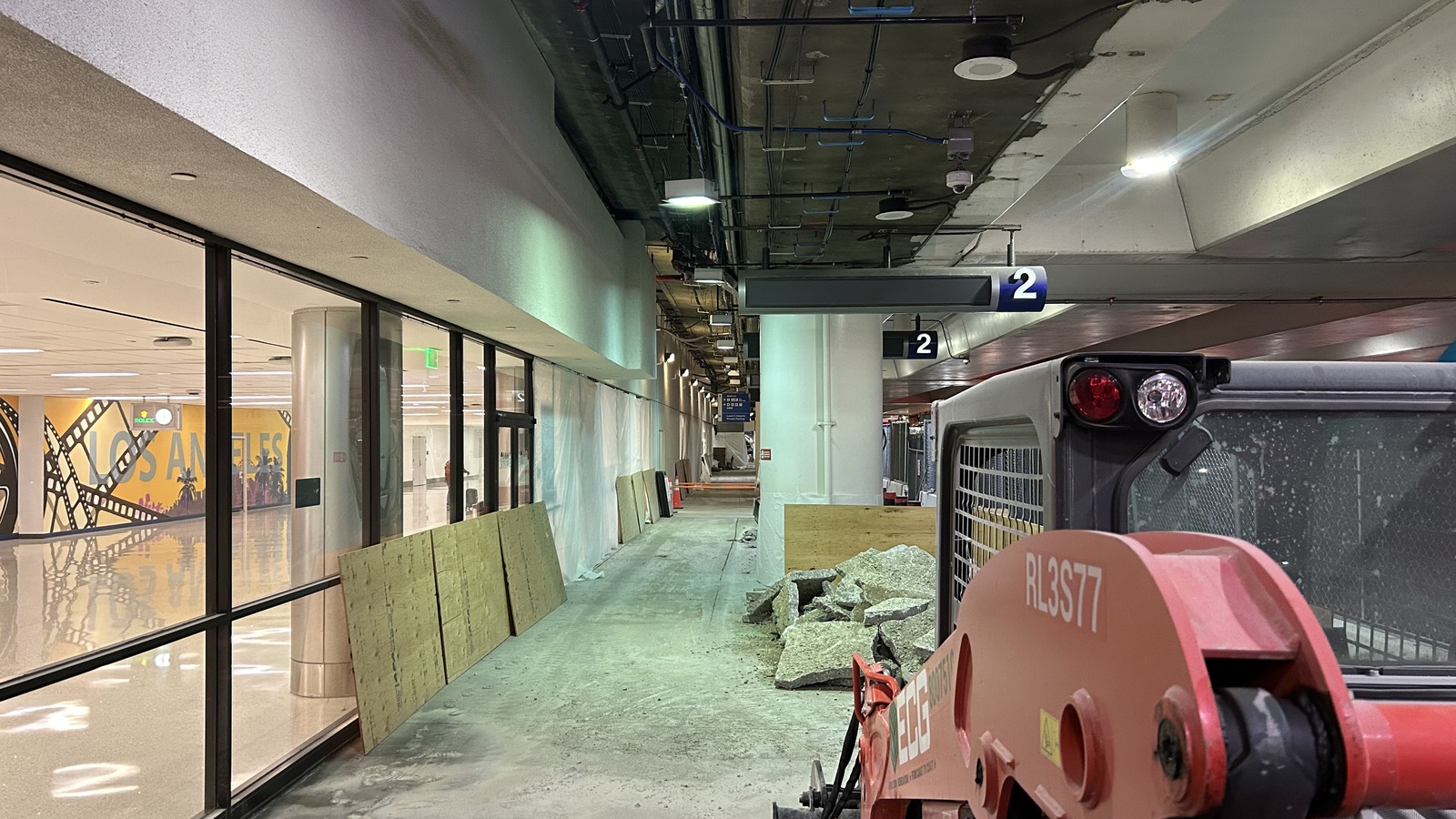
File photo: Phoenix Sky Harbor terminal interior on April 27, 2025, before the October 10 disruption.
Phoenix Sky Harbor delays averaged 2 hours and 48 minutes for affected incoming flights at 6:34 p.m. Phoenix time on Saturday, October 10, 2026, according to the FAA. The current restriction is a staffing-related ground delay program, with flights held at their departure airports rather than an airport-wide shutdown.
That is a different operational status from the afternoon weather ground stop reported as thunderstorms and blowing dust reached the Phoenix area. If you are already waiting at PHX, the Phoenix airport lounge access guide can help assess a terminal-appropriate option, but confirm boarding time before leaving the gate.
- Current restriction: A ground delay program for flights arriving at Phoenix Sky Harbor.
- FAA reason: Staffing, not a currently declared dust-storm ground stop.
- Average delay: 2 hours and 48 minutes for affected inbound departures at 6:34 p.m. Phoenix time.
- Program window: The FAA plan lists it through 11:59 p.m. Phoenix time October 10, subject to revision.
- Immediate check: Use your airline’s flight-specific status for departure, connection and pickup decisions.
Why the Delay Can Start Before You Reach Phoenix
The FAA’s Phoenix real-time status page says departure traffic destined for Sky Harbor is experiencing the delay. An aircraft can therefore remain at its origin while the program manages arrivals into Phoenix, even if conditions at that origin airport look normal.
The same page lists airborne arrival delays of 15 minutes or less. That smaller figure does not cancel out the longer ground delay: the two measurements describe different parts of the journey, and an affected passenger may spend the larger wait before takeoff rather than circling over Arizona.
The FAA explicitly says its status describes general airport conditions, not individual flights. Treat 2 hours and 48 minutes as the reported program average, not a fixed extra interval to add to every ticket; your flight may have a different delay or may not be included in the affected group.
Staffing Is the Current Cause, After an Earlier Weather Stop
The FAA’s current operations plan says the Phoenix ground delay program was revised and extended because of an additional airport air traffic control tower staffing trigger. Its active-program list runs through 06:59 UTC on October 11, which is 11:59 p.m. in Phoenix on October 10.
Earlier that afternoon, the Arizona Republic reported a weather-related ground stop scheduled until 2:30 p.m. local time. Its report, updated at 4:11 p.m., also described a dust-storm warning that had been in effect until 1:45 p.m. across parts of the metro area.
Those earlier windows are not proof that the same weather stop remains active tonight. The Republic reported 78 delayed flights and two diversions at 1:40 p.m.; those are historical afternoon counts, not a current evening cancellation total or the number of flights still affected by the staffing program.
Check the Connection Before Changing the Whole Trip
For a flight bound for Phoenix, check the airline’s revised departure and arrival estimates, then compare the new arrival with any onward boarding time. If the connection becomes uncertain, ask the airline to review the complete itinerary before buying a replacement segment that may create a separate-ticket problem.
For a flight leaving Phoenix, the FAA warns that departure schedules may be affected by delayed arriving aircraft. That does not mean every outbound flight has the inbound program’s average delay; monitor the actual flight number and gate rather than assuming that a three-hour cushion is guaranteed.
If someone is collecting you at the airport, share the flight-specific arrival update rather than the regional headline. An origin hold, an aircraft already airborne and a flight diverted earlier in the day are different situations, so the pickup plan should follow the actual arrival being tracked.
The Published End Time Is Not an All-Clear
The FAA can revise or cancel a traffic management program before its listed end, and flight schedules can remain disrupted afterward. The 11:59 p.m. entry is therefore the current operational planning window, not a promise that every delayed traveler will be on time at midnight.
The operations plan also lists a possible Phoenix ground stop or delay program after 12:00 UTC on October 11, equivalent to 5 a.m. Phoenix time Sunday. That is a planning possibility, not a confirmed Sunday restriction; recheck the FAA and your airline before turning it into a changed booking.
| If you… | What to do |
|---|---|
| Are waiting to fly into Phoenix | Check your airline’s departure estimate and whether the arrival hold affects your connection. |
| Depart from Phoenix tonight | Follow your flight number and gate; do not apply the inbound average to every departure. |
| Are meeting an arriving passenger | Use the actual flight’s revised arrival before changing pickup time. |
| Fly early Sunday | Recheck the morning FAA status; a possible program is not a confirmed extension. |
Protect the onward journey. A hold before takeoff can consume connection time even when airborne delays are short.
Separate the clocks. The afternoon storm report, evening staffing program and possible Sunday restriction are not interchangeable.
Keep checking the airline. The FAA average and planned end time do not determine an individual flight’s boarding instructions.
Is Phoenix Sky Harbor closed?
The FAA status describes an arrival traffic management program, not an airport closure.
Will every flight be nearly three hours late?
No. The 2 hour 48 minute figure is the average for affected inbound departures, not every flight.
Is the afternoon dust-storm ground stop still the current restriction?
The current FAA page lists staffing-related delays. The earlier weather stop had a separate afternoon window.
When should travelers recheck?
Before leaving for the airport, when the airline updates the flight, and before making a connection or pickup decision.