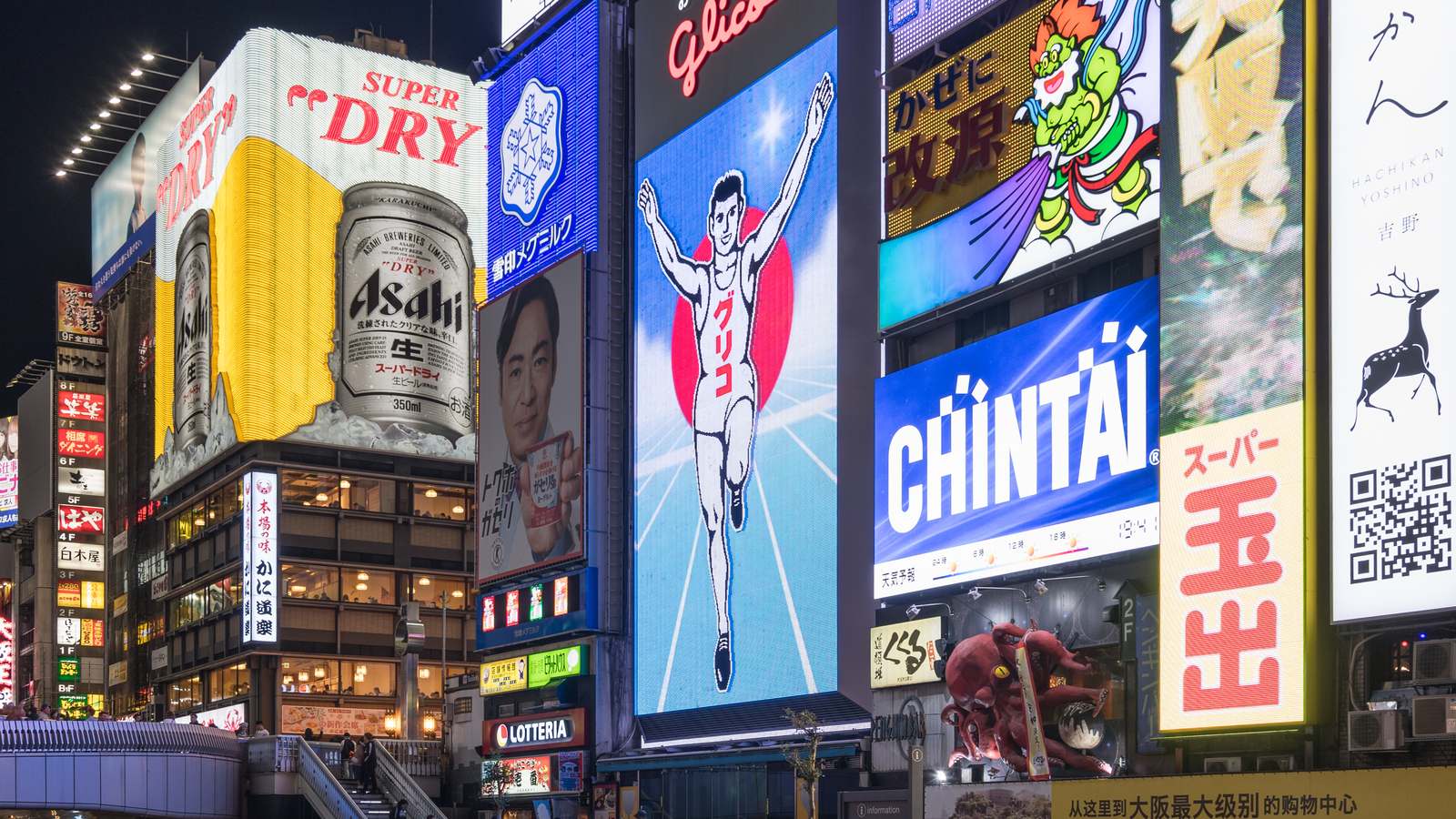
The Glico Running Man sign in Osaka’s Dotonbori district will be shown for the last time at the end of November 2026, with renovation starting in December and a new seventh generation sign planned for spring 2027, according to an October 14 press release from Ezaki Glico. Time Out Tokyo reported on October 19 that the current sign stays up until November 30.
If Osaka is on your itinerary this fall, plan your Dotonbori photo stop for November or earlier. Visitors arriving in December or early 2027 should expect the sign to be out of view for several months.
- Last display: End of November 2026.
- Work begins: December 2026.
- New sign: Seventh generation, planned for spring 2027.
- Stays the same: The running man.
- Where: Dotonbori, near Ebisubashi Bridge, Osaka.
The Last Month for the Current Sign
Ezaki Glico said the sixth generation Dotonbori Glico Sign will end its display at the end of November 2026, and renovation work will begin in December. The company plans to put up a seventh generation sign in spring 2027. The release does not give an exact final day, while Time Out Tokyo reported that the sign stays up until November 30.
The company has not released the new design. Glico said the runner at the center of the sign will continue, describing it as a symbol of the company’s founding spirit. Time Out Tokyo reported that the pose of the running man will stay the same and that the new sign is designed to be more energy efficient.
A Landmark With a Long History
The current sign has been in place since October 2014 and was the first version to use an LED display, with about 140,000 LED chips, Time Out Tokyo reported. SoraNews24, which reported on the change on October 17, traced the sign’s history back to a 33 meter neon sign near Ebisubashi Bridge in 1935. That first version was taken down in 1943 when its materials were needed for the war.
Later versions added a giant toy crocodile playing the piano from 1955, a fountain spraying 12 tonnes of water from 150 nozzles from 1963, and, from 1972, a running track design similar to today’s, according to SoraNews24. When the fourth sign came down in 1996 during work on a neighboring building, Osaka went about a year without a running man, the site reported. The fifth generation, from 1998 to 2014, shifted its background colors to show the runner racing from morning to night. The current sign’s backgrounds show the runner passing through places in Japan and abroad.
SoraNews24 reported that the sign draws an estimated 70,000 to 80,000 visitors a day, while Time Out Tokyo described the crowds as thousands of visitors every day. Glico was founded in Osaka in 1922, according to SoraNews24.
Planning a Dotonbori Visit
Dotonbori is a short walk from the Namba area, which is served by Osaka Metro and several private railway lines, so it is easy to reach from most central Osaka hotels. The canal district is busy from late afternoon until late at night.
The classic photo spot is Ebisubashi Bridge over the Dotonbori Canal, where crowds often gather to copy the runner’s pose. Evening is the busiest and most popular time, when the sign and the surrounding neon are lit. Go earlier in the evening, or on a weekday, if you want a clearer view without the densest crowds.
Glico has not said whether a temporary display or covering will appear during construction. Dotonbori’s restaurants, canal cruises and other signs remain a draw while the runner is down, so the area is still worth a stop in December, even without the most famous sign.
For more on travel in Japan this fall, see our report on Japan’s new tax free refund rules. The photo at the top of this story is a file photo of the Glico sign in Dotonbori.
| If you… | What to do |
|---|---|
| Visit Osaka by November 30 | See the current sign at night. |
| Visit in December to early 2027 | Expect construction; the sign is down. |
| Want the new sign | Plan for spring 2027 or later. |
| Want smaller crowds | Go early evening on a weekday. |
| Need an exact date | Glico says end of November. |
End of November last display of the current sign.
140,000 LED chips in the current sign.
Spring 2027 planned new sign.
When is the Glico sign coming down?
After its final display at the end of November 2026.
When will the new Glico sign appear?
Glico plans the seventh generation sign for spring 2027.
Will the running man stay?
Yes. Glico says the runner will continue.
Where is the Glico sign?
In Dotonbori, Osaka, near Ebisubashi Bridge.
Has the new design been revealed?
No. Glico has not released it.
Image Credits
- Lead Photo
DXR · CC BY-SA 4.0 · edited