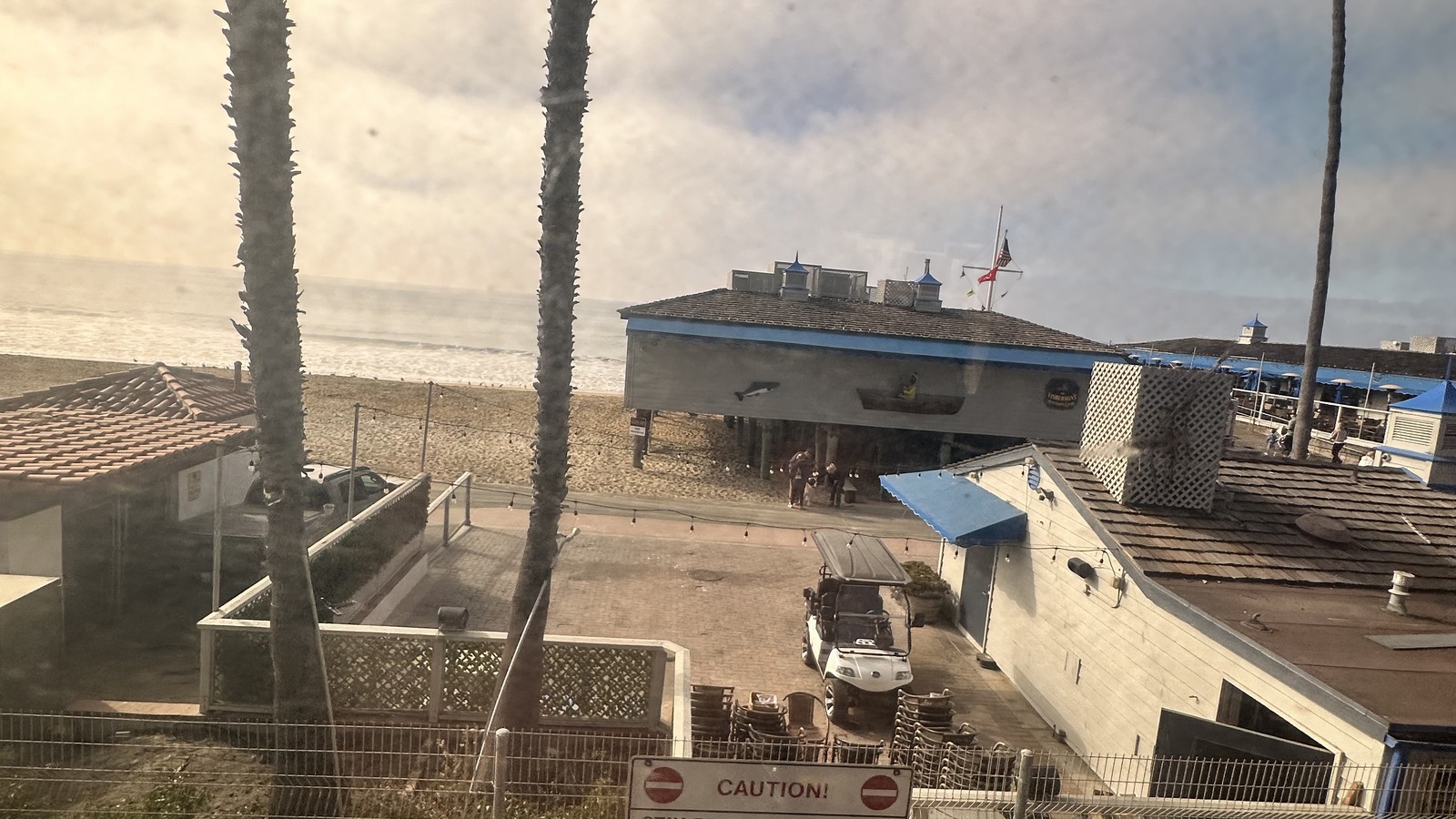
San Clemente from the Pacific Surfliner · Martin Lewison · CC BY 2.0 · edited
The Orange County Transportation Authority announced a coastal rail emergency on September 28, 2026, to advance protection work at San Clemente. Its dated primary notice describes a temporary passenger-service suspension earlier in September while crews performed emergency stabilization. The declaration and the October 1 Metro Magazine report do not establish a new October suspension or the trains’ current operating status.
Travelers using Metrolink or Amtrak Pacific Surfliner between Orange County and San Diego County should verify the specific service and travel date before departure. The September emergency declaration is not a live train-status notice. The earlier Pacific Surfliner corridor closure of September 12 to 13 is separate dated context, not evidence of today’s operation.
- What happened: OCTA declared an emergency for the San Clemente coastal rail line.
- Reported: Metro Magazine reported the declaration on October 1, 2026.
- Service history: The September 28 notice recounts an earlier September suspension; current train status requires a separate dated check.
- Protection plan: About 690,000 cubic yards of sand are planned for the San Clemente coast.
- Who is affected: Metrolink and Amtrak Pacific Surfliner riders in the corridor.
September Declaration Follows Wave Damage
Powerful waves and high tides earlier in September overtopped the tracks near San Clemente and caused added erosion and deterioration of the coastal slope beside the railroad, OCTA said. The damage added to a long record of interruptions on this stretch, where coastal bluff failures, beach loss, erosion of the railroad embankment, and deterioration of shoreline protection have stopped trains more than once.
The emergency declaration follows California Governor Gavin Newsom’s September 21 proclamation of a state of emergency as the state prepares for developing 2026 to 2027 El Nino conditions, which recognized threats to the coastline and critical infrastructure. OCTA said the emergency authority lets the agency accelerate contracting and procurement for protection work, including securing specialized contractors, equipment, and materials, while environmental review and permitting requirements remain in place.
The San Clemente segment sits within the 351 mile Los Angeles to San Diego to San Luis Obispo Rail Corridor, known as LOSSAN. The line carries Metrolink commuter trains and Amtrak Pacific Surfliner passenger trains along with freight and military traffic, so stabilization shutdowns in San Clemente ripple across the full coastal route linking San Diego, Orange County, and Los Angeles.
690,000 Cubic Yards of Sand Planned for San Clemente Shoreline
OCTA plans to place approximately 690,000 cubic yards of sand along the San Clemente coast to shield the railroad from ongoing erosion and potentially severe fall and winter conditions. About 240,000 cubic yards are planned between North Beach and Mariposa Point, with another 450,000 cubic yards planned south of San Clemente State Beach, according to the October 1 report.
The work is difficult because the railroad is squeezed between the bluff and the ocean with limited access from land. Large scale sand placement there requires specialized marine dredging equipment that can move sand to the site from offshore, which is one reason the emergency contracting authority matters for the schedule.
Separate emergency projects around Mariposa Point and near the San Clemente Pier include riprap repairs, sand placement, and catchment walls to protect the railroad. OCTA said the latest projects support keeping the existing coastal alignment in service while transportation officials study longer term solutions for the corridor over the coming decades.
Passenger Service Suspended During Emergency Stabilization
OCTA’s September 28 notice says passenger service was temporarily closed during stabilization earlier that month. It does not identify an exact start or end time for that suspension and does not establish whether trains are running on October 3. The October 1 trade report describes that earlier event; its publication date is not a new suspension date.
OCTA describes repeated interruptions since 2021 caused by bluff failures, beach loss, railroad-embankment erosion and weakened shoreline protection. That history supports checking the dated operating information for a planned trip. It does not establish a new closure, reopening, phased service return or current replacement-transport arrangement.
The September 28 release provides no fixed completion date for the proposed protection program. It says contracting, equipment availability, environmental review and permits affect delivery. Those work-planning limits are separate from the present operating status of passenger trains.
What Riders Should Check Before Traveling
Confirm the train and travel date with the operating carrier before heading to the station. Amtrak’s Pacific Surfliner alerts page explains status checks and carries separate dated notices; match each notice to the journey rather than infer that a general page proves service is running. A Metrolink service-updates page reviewed for this correction displays April and May 2025 updates and is not proof of October 2026 operation.
For a flight, cruise departure or another fixed connection, compare the confirmed train schedule with the onward check-in deadline. If the carrier announces a relevant interruption, check its actual alternative transport arrangements. This declaration does not establish a bus replacement, rail detour or a prescribed extra-hours allowance.
Recheck the dated carrier information before travel and retain the booking details needed to follow up on any applicable service change. The protection notice describes coastal vulnerability, not a measured same-day delay or a forecast that a morning train will stop by the afternoon.
| If you… | What to do |
|---|---|
| Ride the Pacific Surfliner between San Diego and Los Angeles | Check Amtrak service alerts on the day of travel for San Clemente suspensions. |
| Commute on Metrolink in Orange County or toward Oceanside | Check Metrolink alerts before departing and plan an alternate route if needed. |
| Connect to a flight or cruise the same day | Check the confirmed train schedule against the onward check-in deadline and any applicable carrier notice. |
| Travel after a coastal storm or high surf advisory | Check a dated carrier notice for the actual train and journey; the protection declaration is not an operating update. |
September 28 is the primary declaration date. The October 1 trade report describes that announcement. Neither establishes a new October passenger suspension or current train operation.
Protection work is a proposed program. OCTA cites potential fall and winter conditions; permits, equipment and contracting still govern delivery. No storm probability or next shutdown date is established here.
Use dated operating information for each journey. Match an applicable carrier notice to your train, direction and date before changing a booking.
Is the Pacific Surfliner running through San Clemente right now?
The September 28 notice describes an earlier September temporary suspension. It does not establish present train operation or a new October closure; confirm the dated service with the carrier.
Which trains does the OCTA emergency affect?
The San Clemente segment carries Metrolink commuter trains and Amtrak Pacific Surfliner trains, plus freight and military traffic on the LOSSAN corridor.
What is the 690,000 cubic yard sand plan?
OCTA plans about 240,000 cubic yards of sand between North Beach and Mariposa Point and another 450,000 cubic yards south of San Clemente State Beach to protect the tracks.
How long will the emergency work last?
The reviewed September 28 notice supplies no fixed completion date for the proposed protection program. It retains permitting and equipment constraints; actual work completion and current train operation are separate questions.