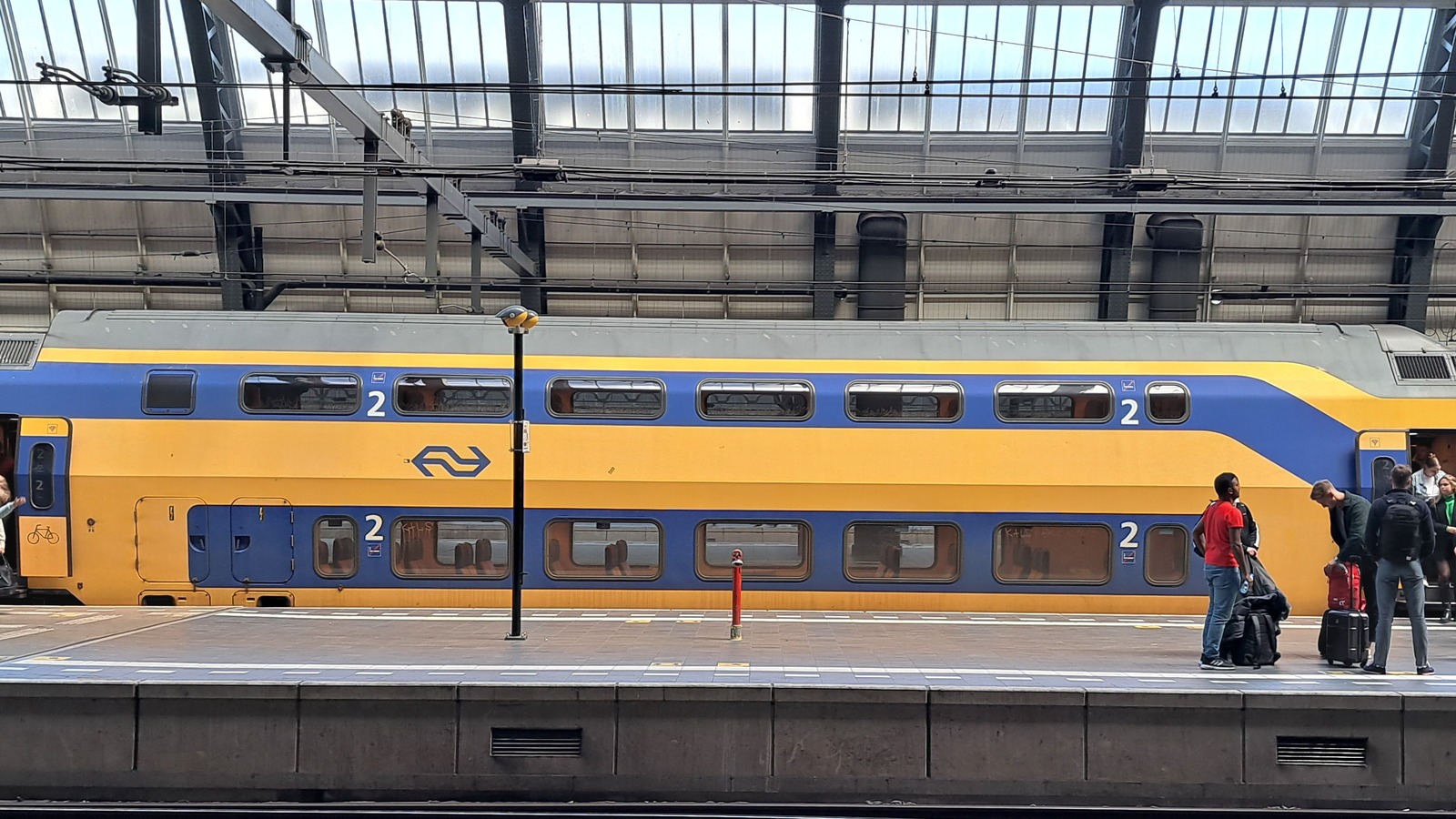
20220917_121136 · Matt Buck · CC BY-SA 2.0 · cropped
Dutch rail infrastructure operator ProRail said pipes were deliberately placed on railway tracks at about 20 locations across the central and northern Netherlands on Tuesday morning, September 15, 2026, disrupting train services during the morning rush hour and forcing several level crossings to stay closed while crews cleared the tracks.
If you are traveling by train in the Netherlands, check your connection before leaving and allow extra time, because ProRail warned that delays and cancellations were occurring across the affected network. Travelers who gain unexpected free time in the capital can fall back on our ranked list of things to do in Amsterdam while they wait for the network to stabilize.
- What happened: ProRail said pipes were deliberately attached to rails at about 20 locations on September 15, 2026.
- When: Tuesday morning rush hour, September 15, 2026, with delays and cancellations warned by ProRail that day.
- Where: Central and northern Netherlands, with several level crossings closed so road traffic was disrupted as well.
- Status: National police were investigating on September 15, with no identified suspect or motive and no stated time for a return to normal service.
What ProRail Reported on September 15
ProRail, the company that maintains the Dutch railway network, told reporters on September 15 that the objects found on the tracks were long, thin pipes that had been deliberately attached to the rails. Reporting by Reuters from Amsterdam that morning said around 20 separate incidences were reported, and Dutch broadcaster NOS showed images of the pipes being lifted off the tracks by recovery crews.
In its statement, carried by Reuters reporting on the September 15 disruption, ProRail said that at that stage the evidence pointed to a deliberate disruption of train services caused by human action. The operator added that it was not yet known who was responsible or what the motive was, and that the national police were investigating the incidents.
A second account of the same ProRail statements, published by the Sweden Herald with reporting from TT and De Telegraaf, quoted a ProRail spokesperson saying that material had been deliberately placed on the tracks in several locations across the country. That report described the objects as some kind of pipe and said ProRail was warning passengers that delays and cancellations were occurring on the affected routes.
The two reports agree on the core facts a traveler needs: the interference was deliberate in the judgment of the infrastructure operator, it struck multiple locations at once rather than a single point, and the immediate result was canceled or delayed trains during the busiest travel window of the day. Neither report named a suspect, a motive, or a timetable for full restoration, and ProRail said on September 15 that it was unable to say when services might return to normal.
Which Routes and Travelers Were Affected
The disruption centered on the central and northern Netherlands, according to the Reuters reporting, with parts of Dutch train traffic at a standstill on Tuesday. Commuters heading into major cities during the morning rush faced the worst of it, since the interference surfaced just as peak services were running and crews had to close the affected sections before trains could pass safely.
Road travelers felt secondary effects. ProRail said several level crossings had to remain closed while the pipes were removed and the track was checked, which disrupted road traffic near those crossings in addition to the rail cancellations. Travelers driving near railway crossings in the central and northern provinces therefore needed extra time on September 15 even if they never boarded a train.
Visitors moving through Amsterdam faced knock on uncertainty as well, because Amsterdam Centraal is the hub where many northern and central services connect with international trains and airport sprinters. Travelers connecting through the capital can review terminal and city transit options in our Amsterdam cruise port guide to the terminal and city transit, which explains how the port area links to central stations and local transit for rerouting.
What to Do If You Are Traveling Now
Start with the live operator boards before you commit to a departure time. ProRail warned on September 15 that delays and cancellations were occurring, so check the current ProRail or NS status for your specific train, and do not assume that a connection which ran yesterday will run today. If your route crosses the central or northern provinces, build in a buffer and have a backup departure in mind.
Allow extra time at level crossings if you are driving. Because ProRail kept several crossings closed during the September 15 clearance work, short car trips near railway lines in the affected provinces could take longer than usual. Treat any closed barrier as final and follow the posted diversion rather than waiting at the gate.
Keep plans flexible until the operator confirms the network is clear. ProRail said on September 15 that it could not say when services would return to normal, and neither of the September 15 reports carried a restoration timetable. That means travelers should verify morning of travel instead of relying on the September 15 snapshot in this article, and should keep hotel or meeting plans adjustable where possible.
| If you… | What to do |
|---|---|
| Ride a Dutch train on September 16 or later | Check the live ProRail or NS board for your train before leaving, since September 15 ended with delays, cancellations and no stated restoration time. |
| Connect through Amsterdam Centraal | Confirm the connecting train is running and keep an earlier backup connection, because northern and central services feed that hub. |
| Drive near tracks in the central or northern provinces | Allow extra time and obey closed level crossing barriers, since September 15 closures also disrupted nearby road traffic. |
| Hold a fixed meeting or hotel check in time | Warn the other party that rail timing is uncertain and keep a later arrival option open until the operator confirms normal service. |
September 15 morning rush is the disruption gate. Pipes found at about 20 locations that morning caused the delays and cancellations, so any itinerary using central or northern Dutch trains that day needed rechecking.
A confirmed all clear from ProRail or NS is the go gate. Until the operator states that the tracks are cleared and the timetable is restored, keep checking the live boards on the day of travel.
Police findings are the watch gate. The national police investigation was open on September 15 with no suspect or motive named, so further protective measures or new advisories remain possible.
What caused the Netherlands train disruption on September 15?
ProRail said pipes were deliberately placed on the tracks at about 20 locations, which it described as a deliberate disruption caused by human action. Police were investigating, with no suspect or motive identified in the September 15 reports.
Which parts of the Netherlands were affected?
The Reuters reporting placed the interference across the central and northern Netherlands during the Tuesday morning rush, with parts of train traffic at a standstill and several level crossings closed to road traffic as well.
Are Dutch trains running normally now?
ProRail said on September 15 that it could not say when services would return to normal. Check the live ProRail or NS departure boards for your exact train rather than assuming the September 15 disruption has fully cleared.
Should I change my Amsterdam connection?
Confirm it before you travel and keep a backup connection, since Amsterdam Centraal links many of the affected northern and central services with airport and international trains. Allow extra time for any reroute through the capital.