The mountain view can wait. If your Nepal itinerary heads into high country between October 29 and 31, 2026, a new government weather warning is a reason to rethink that leg before you set off, not simply pack another rain jacket. Heavy rain and snowfall could disrupt trails, roads and domestic flights, with the greatest impacts expected October 30 and 31.
The US Embassy’s October 27 weather alert, citing Nepal’s Department of Hydrology and Meteorology and disaster authority, advises tourists to avoid high altitude destinations during the warning period. Travelers already there are advised to remain in a safe location and consult local authorities and guides before continuing. That is the central decision: whether to begin or continue the exposed part of your trip.
Nepal News separately reported the disaster authority’s warning on October 27. This is a forecast for a specific upcoming period, not confirmation that every Nepal trek, road or airport is already closed.
- Dates: Heavy rain and snowfall are forecast October 29 to 31, with greatest impacts expected October 30 and 31.
- Travel advice: Tourists are advised to avoid high altitude destinations during the warning period.
- Already in the mountains: Remain in a safe location and consult local authorities and guides before continuing.
- Possible disruption: Flooding, landslides, debris flows, snowstorms and avalanches could affect roads, flights and trekking routes.
- Scope: Several provinces face rain risk; high altitude areas across Nepal, including parts of Karnali and Sudurpashchim, face snow risk.
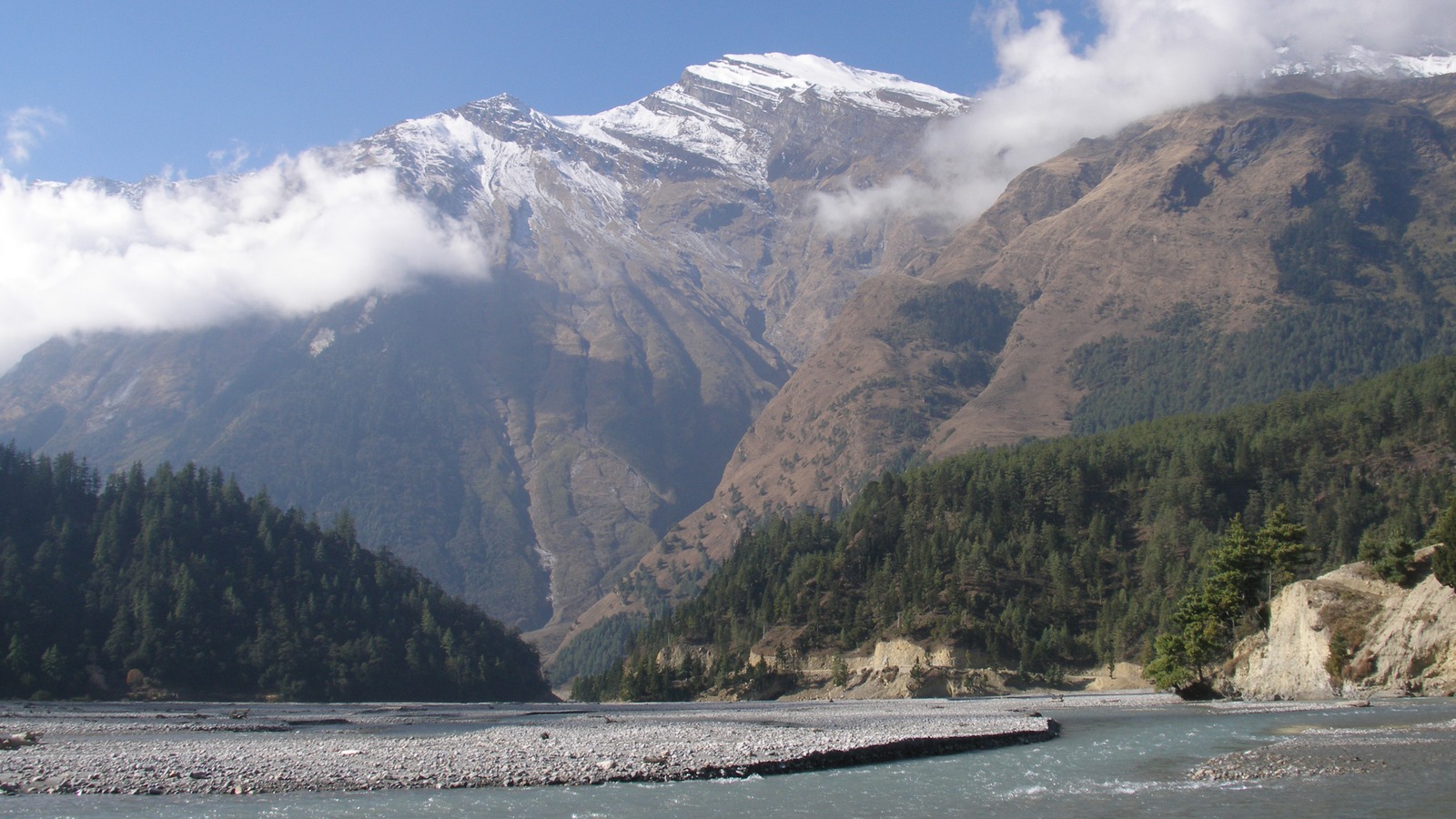
The featured photograph shows the Kali Gandaki Valley near Kowang on November 30, 2007. It is historical regional context, not the weather forecast for October 2026 or evidence of conditions on a particular trail.
A Trekking Day Is Not Just a Weather Forecast
The alert identifies Koshi, Madhesh, Bagmati, Gandaki and Lumbini among the affected provinces. It also covers high altitude areas throughout Nepal, including parts of Karnali and Sudurpashchim. The combination matters: rain can complicate the approach road while snow affects the higher section of the same itinerary.
Do not read that broad geography as a list of places that are all experiencing identical conditions. The notice describes potential hazards across a large area. It does not provide a pass by pass opening list, a trail inspection or a guarantee that a route outside one named province is clear.
For a trip starting soon, send your operator the actual dated itinerary and ask which days involve exposed terrain, river crossings or a road journey into the hills. Ask what can be changed before departure. A generic answer that the season is usually good does not resolve a warning tied to October 29 through 31.
Already High Up? Continuing Is a Different Decision
The advice for travelers already at altitude is not an instruction to rush downhill regardless of conditions. The embassy says to remain in a safe location and consult local authorities and guides before continuing. Whether the next movement is safer than staying put depends on the actual location and current conditions.
Contact your guide or operator while communications are available. Tell someone outside the trekking party where you are, which accommodation you are using and when you expect to check in again. The alert specifically recommends sharing travel plans with family or friends and keeping informed through official updates.
Do not treat another party’s photograph, yesterday’s successful crossing or a booking confirmation as clearance for your next leg. Neither the embassy notice nor the supporting report verifies an individual lodge, bridge, pass or evacuation arrangement. If your plan depends on one of those, seek an answer for that exact place.
Protect the Road and Flight Connections Too
The warning includes possible disruption to roads and domestic aviation as well as trekking routes. A flight booking therefore does not settle the whole journey: you still need to establish whether it is operating and whether the road transfer on either side is practical. Check directly with the airline and the operator responsible for the ground leg.
This is not a report of a new nationwide flight shutdown. The source does not give a cancellation count or name an airport that must close throughout the period. Keep the distinction clear when rearranging travel: a forecast creates a planning risk, while a confirmed airline change determines what has happened to your reservation.
The embassy advises avoiding unnecessary travel in areas at risk and not crossing flooded roads or rivers. If a transfer becomes unsafe, an onward reservation does not make the crossing safer. Ask the relevant provider about available changes rather than assuming a refund, free replacement transport or insurance coverage is automatic.
Use the Warning Window, Not an Assumed All Clear
October 31 is the end of the forecast period in this notice, not a promise that every route will reopen on November 1. A landslide or damaged crossing, if one occurs, can have a different recovery timetable. Equally, this warning does not establish that an older closure is still in place.
Check Nepal’s Department of Hydrology and Meteorology and National Disaster Risk Reduction and Management Authority updates, then confirm the local route with your guide or operator. Save those contacts before leaving a reliable connection. For emergencies, the embassy lists Nepal Police on 100 and the government rescue helpline on 1234; those are not routine booking desks.
The useful adjustment is specific, not dramatic: postpone the exposed section if advised, verify the approach and departure legs, and keep room to change plans. You do not need to declare an entire Nepal holiday lost to take a three day mountain warning seriously.
| Your Plan | Next Decision |
|---|---|
| Starting a high altitude trek October 29 to 31 | Follow the advice to avoid high destinations during the period; discuss changing the exposed leg before departure. |
| Already staying at altitude | Remain in a safe location and consult local authorities and guides before continuing. |
| Connecting by road and domestic flight | Check the airline and ground operator separately; a confirmed reservation does not establish safe road access. |
| Planning to resume after October 31 | Seek fresh local route information; the forecast’s end is not a route reopening announcement. |
Change the exposed day first: The warning’s practical focus is high altitude travel October 29 through 31.
Check both ends: Roads and domestic flights can affect the approach as well as the trek.
Keep the status honest: Potential disruption is not a confirmed blanket closure or an automatic refund entitlement.
Should I change a Nepal trek for October 29 to 31?
The October 27 embassy alert advises tourists to avoid high altitude destinations during that period. Discuss the exposed days and approach journey with your guide or operator before setting out.
Are all Nepal trekking routes closed?
No blanket closure is established by this notice. It forecasts weather hazards and gives travel advice; individual route conditions require current local confirmation.
What if I am already at high altitude?
The alert advises remaining in a safe location and consulting local authorities and guides before continuing, rather than making an unverified movement through hazardous conditions.
Will routes be clear on November 1?
The notice does not promise that. October 31 ends its forecast window, not any separate recovery work that might become necessary.
Image Credits
- Lead Photo
Vyacheslav Argenberg · CC BY 4.0 · cropped, adjusted