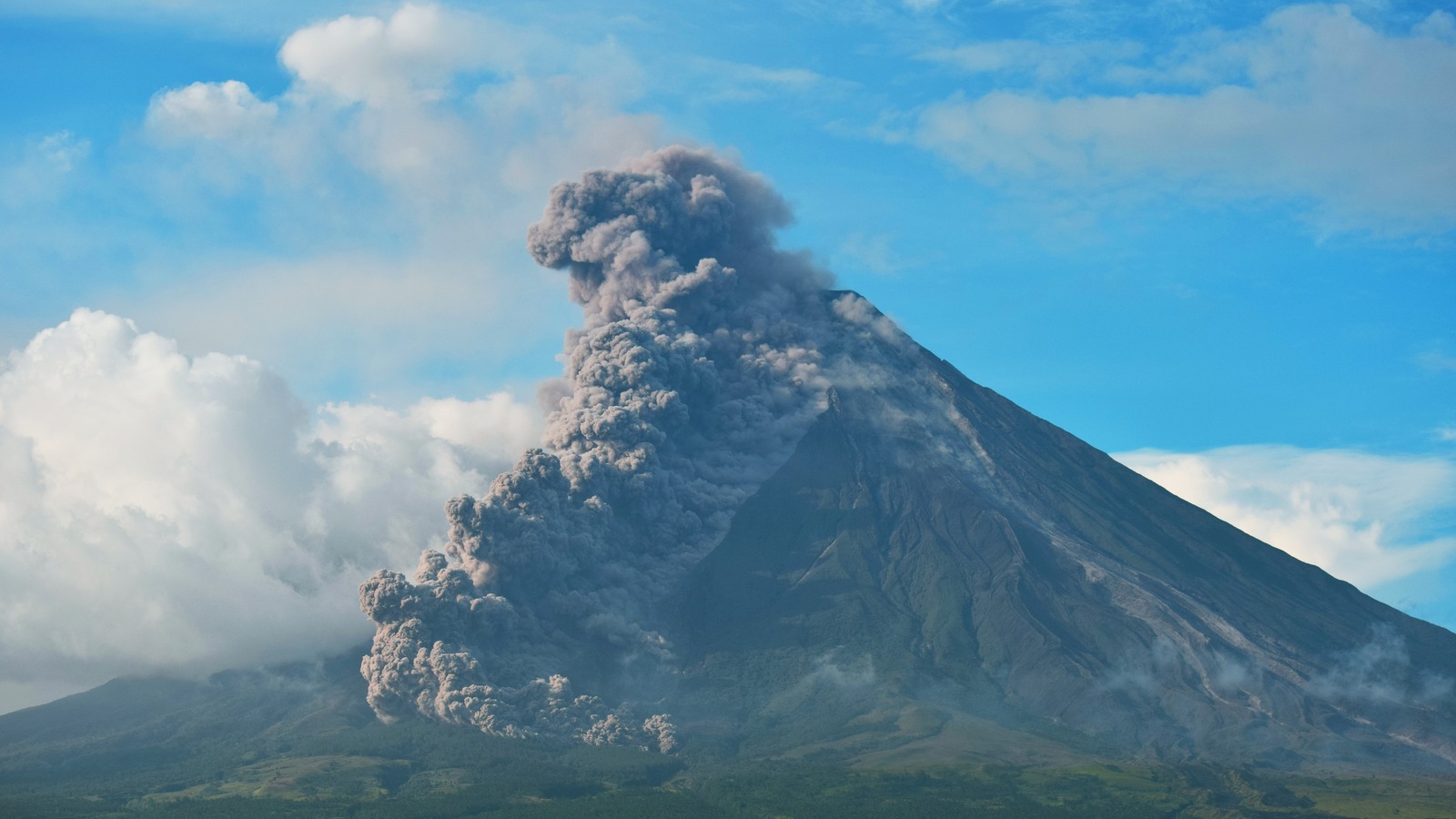
Mayon Volcano erupted at 11:53 a.m. local time on October 30, sending a dense ash plume about 3,000 meters above its summit crater, according to the 12:30 p.m. bulletin from the Philippine Institute of Volcanology and Seismology. The agency raised Mayon to Alert Level 3 and told airlines to avoid flying close to the summit, Reuters reported.
If you are flying to or from Bicol today, check your flight status with your airline before leaving for Bicol International Airport. Officials ordered evacuation of the 6 kilometer Permanent Danger Zone around the volcano because of lava flows, rockfalls and other hazards.
- Eruption: October 30 at 11:53 a.m. local time, with a 3,000 meter ash plume drifting west southwest.
- Alert status: Alert Level 3 on a zero to 5 scale, raised from Alert Level 2 which stood since August 5.
- No go zone: 6 kilometer radius Permanent Danger Zone under evacuation order.
- Flights: Airlines told to avoid the summit area; no airport closure or confirmed cancellations at writing.
- Traveler action: Confirm Bicol International Airport flights with your airline and keep a ground travel backup.
October 30 Eruption Timeline
The eruption did not arrive without warning signs. Between midnight on October 29 and midnight on October 30, monitors logged 101 volcanic earthquakes, including 18 tremors lasting one to eight minutes, the Manila Bulletin reported.
The explosive phase lasted roughly six minutes, Xinhua reported. The plume rose fast and drifted toward the west southwest while classes across Albay were suspended for Friday.
Moderate winds pushed ash toward Daraga, Camalig, Guinobatan and nearby Albay municipalities, BusinessWorld reported from the bulletin. The agency calls this a new phase of magmatic eruption, with vigilance urged against hot gas currents, lahars and sediment laden streamflows.
There were no immediate reports of casualties. Mayon is the most active volcano in the Philippines, with more than 50 eruptions in four centuries, and its near perfect cone makes it a popular tourist destination.
Alert Level 3 and the 6 Kilometer Danger Zone
Alert Level 3 means high volcanic unrest, with magma close to or already at the crater and a hazardous eruption more likely within weeks. The national scale runs from zero for normal conditions to 5 for an eruption in progress.
At this level, the agency routinely asks aviation authorities to keep pilots clear of the summit. A sudden burst can place ash directly across a flight path with little notice.
On the ground, officials recommended evacuating the 6 kilometer radius Permanent Danger Zone. The agency warned of lava flows and fast moving currents of hot gas and rock on the upper and middle slopes in the immediate days to weeks.
Bicol Flights and the Airline Advisory
For air travelers, the practical effect is restricted access to summit airspace near Bicol International Airport. Reuters reports that airlines were told to avoid flying close to the summit while the volcano sits at Alert Level 3.
One caution is in order for readers tracking official paperwork. Aviation analysts at AirMedia24 report that no Civil Aviation Authority of the Philippines notice for the October 30 eruption could be verified at writing. Early coverage cited a restriction running until 11:53 a.m. on October 31, but that window matches the standard 24 hour notice habit and remains unconfirmed.
Past Mayon notices follow a clear template worth knowing. On January 2 and 3, with the volcano at Alert Level 2, the authority closed airspace from the surface to 11,000 feet for 24 hours, and no Bicol flights were reported affected.
Ash is a jet engine problem rather than a visibility problem. Volcanic ash is fine glassy rock that melts inside a hot turbine and resolidifies downstream, choking airflow, which is what stopped all four engines on a Boeing 747 over Indonesia in 1982 before the crew restarted them clear of the cloud.
Bicol Travel Checklist for October 30
Start with your airline app or departure board, not with general news. Schedules around Bicol International Airport can change through the day as ash drift and crew decisions evolve.
If you are already in Albay, stay outside the 6 kilometer zone and follow local government guidance. Do not plan sightseeing near the cone, since rockfalls and hot gas currents threaten the upper slopes even between visible bursts.
If Bicol is one stop in a longer Philippines trip, keep Manila or Cebu routing options open. A short delay in Bicol beats a missed onward connection.
| If you… | What to do |
|---|---|
| Fly to or from Bicol on October 30 | Check your airline status before leaving for the airport and save a screenshot of rebooking options. |
| Face a cancelled Bicol flight | Ask your airline about rebooking through Manila or Cebu and keep every receipt for meals and lodging. |
| Are staying in Albay province | Remain outside the 6 kilometer danger zone and follow evacuation guidance from local officials. |
| Planned a Mayon sightseeing visit | Postpone cone area viewpoints, since Alert Level 3 warns of hazardous activity for days to weeks. |
October 30 is the check before you go gate. Confirm Bicol International Airport departures and arrivals with your airline, and leave extra time for airport changes.
The days to weeks after the eruption are the watch bulletin gate. Alert Level 3 means another hazardous burst is possible, so recheck volcano bulletins before any new Bicol booking.
The 6 kilometer zone is the hard boundary gate. Treat it as closed terrain for hiking, photography trips and drive by sightseeing until officials stand the order down.
Is Bicol International Airport closed by the Mayon eruption?
No closure was confirmed at writing. Airlines were told to avoid the summit area, so check live departure boards with your airline before traveling.
Which flights are affected by Mayon Volcano today?
No specific cancellations were confirmed at writing. Flights using Bicol airspace face the highest disruption risk while Alert Level 3 stands.
What does Mayon Alert Level 3 mean for travelers?
It signals magma near or at the crater with a hazardous eruption more likely within weeks. Expect summit airspace restrictions and possible ground evacuations near the cone.
Is it safe to visit Albay right now?
Stay outside the 6 kilometer danger zone and follow official guidance. Postpone volcano sightseeing until the alert level falls and restrictions lift.
Image Credits
- Lead Photo
Jaycee Esmeria via Wikimedia Commons · CC BY-SA 4.0 · cropped