Madison could regain passenger trains as soon as 2030, but that is a possibility, not a departure date. The city says an October 16, 2026 federal award of $218 million moves Amtrak’s Hiawatha West extension toward final design and construction, while Wisconsin still needs to commit its capital share and annual operating support.
The proposed connection would link Madison with Milwaukee through Watertown and Pewaukee, then connect with existing service toward Chicago. For a trip happening now, keep planning around current transportation rather than future trains; our Madison airport comparison explains the practical differences between MSN and the larger Milwaukee and Chicago gateways.
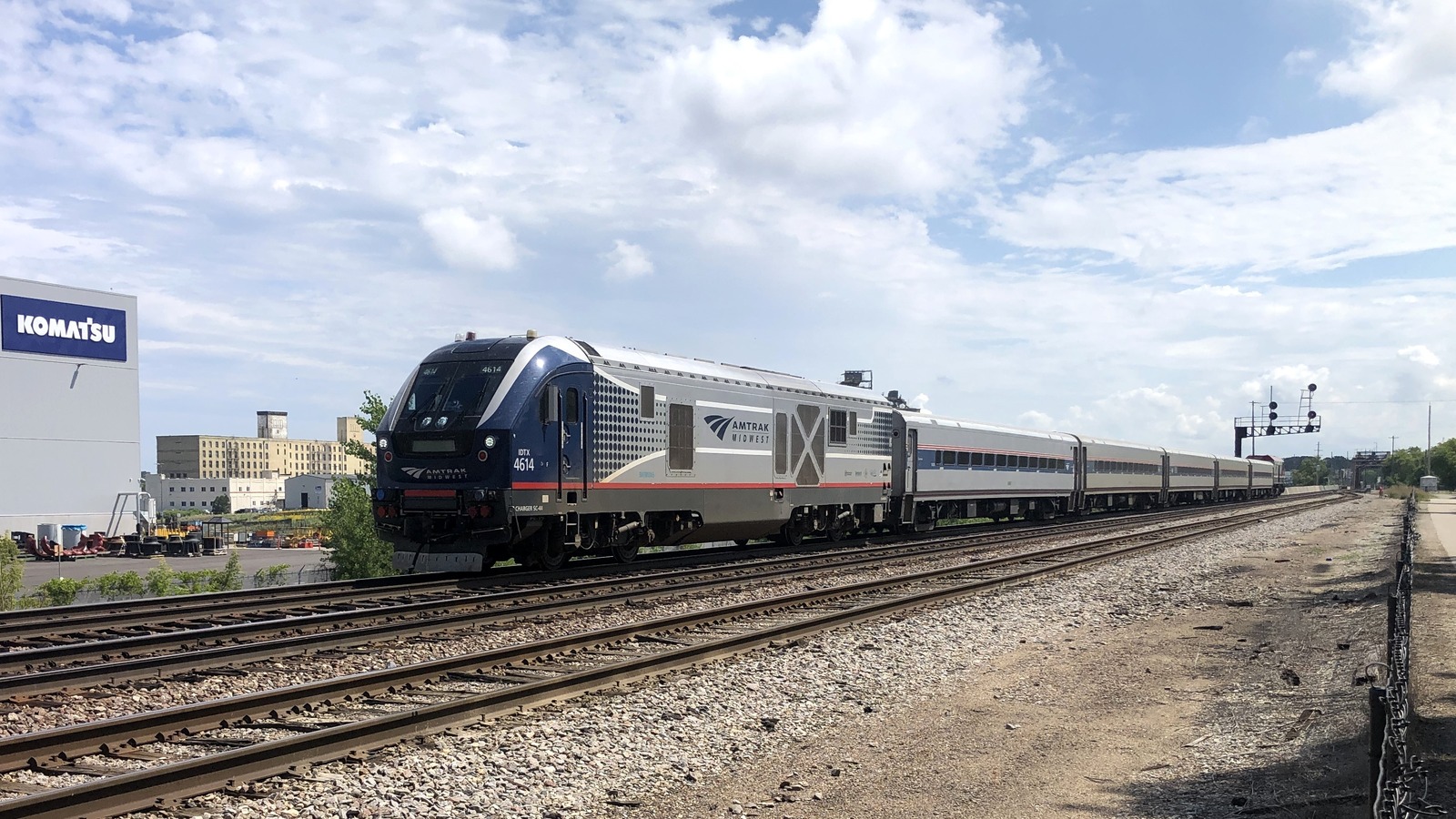
File photograph: an existing Hiawatha train in Milwaukee near the Kinnickinnic River Trail, photographed August 1, 2024. It does not show passenger service operating in Madison or the future extension.
- New development: Federal funding announced October 16 for Hiawatha West final design and construction.
- Award: More than $218 million, according to Wisconsin’s announcement.
- Proposed stops: Madison, Watertown and Pewaukee, connecting with Milwaukee and existing Illinois service.
- Possible timing: As soon as 2030, not a confirmed opening.
- Unfinished requirement: State capital contribution and annual operating funds.
What the $218 Million Actually Buys
A funding announcement is less glamorous than a first train, but this one addresses the physical work that must happen before passengers can board. The governor’s October 16 announcement identifies bridge rehabilitation, track and crossing upgrades, added rail capacity and accessible temporary station platforms in Madison, Watertown and Pewaukee.
The money comes through the Federal Railroad Administration’s Consolidated Rail Infrastructure and Safety Improvements program, known as CRISI. Wisconsin says the extension would largely use existing infrastructure, with capital improvements for passenger speeds, safety and reliability, rather than requiring an entirely new railway from scratch.
That shared infrastructure explains why this is not only a tourism story. The state also identifies freight benefits from the corridor improvements, while the passenger proposal would give residents, students and visitors another way to move between Wisconsin communities and Chicago without driving the whole route.
The Catch Behind That Possible 2030 Start
The City of Madison’s own announcement uses conditional timing: service could arrive as soon as 2030. It also states the next step plainly: Wisconsin must commit to 20 percent of design and construction costs, plus the annual operating funding needed to run passenger trains.
Those are two different financial obligations. A capital contribution helps build or improve the corridor and stations; operating support concerns the service after construction. Winning the federal portion does not, by itself, establish that both remaining obligations are settled or that a public timetable is ready.
The city says its proposed capital budget includes support for a Madison station and that it has completed a station study and coordinated planning with Amtrak and WisDOT. Proposed budget support is useful progress, but it should not be read as proof that every appropriation, construction milestone and operating decision has already been completed.
A Midwest Connection, Not a New Booking Option Yet
For travelers, the geographic idea is straightforward: extend the existing Milwaukee corridor west to Madison, with stops in Pewaukee and Watertown. The city’s release says combining that extension with existing Illinois service would provide a passenger rail connection to Chicago and beyond.
That description does not settle the eventual train frequency, fares, trip duration or whether a particular journey would require a transfer. The funding releases do not publish a passenger timetable, so there is no basis here to promise a specific departure, a through train on every trip or a price that beats driving.
The historical context makes the award notable: Wisconsin says Madison has lacked passenger rail since 1971. Returning an intercity connection would therefore change the city’s transportation options, rather than merely add a few seats to trains already stopping there. The distinction matters for readers scanning a headline and assuming a current Hiawatha ticket already reaches Madison.
Follow the Funding Before Changing Your Itinerary
Wisconsin Public Radio’s independent reporting puts Amtrak’s estimated total project cost at up to $275 million and describes a federal share of 80 percent, with state and local partners covering the remainder. That helps explain why a large federal award and an unfinished funding requirement can both be true.
The useful next milestones are the remaining funding commitments, final design, construction progress and an actual service announcement. A potential opening year belongs on a watch list, not in the transportation field of a reservation for an upcoming Madison weekend.
Keep three questions separate as the project develops: has the corridor received funding, is the infrastructure ready, and can passengers actually book and ride? This week’s announcement materially advances the first question. It does not answer all three, and the city itself still identifies work needed before the long wait for trains ends.
| If you… | What this changes |
|---|---|
| Have a Madison trip coming soon | Keep using currently available transportation; the extension is not operating. |
| Are watching for a 2030 opening | Treat that as a possible earliest year, not a promised start. |
| Want to understand the funding gap | Follow the state capital share and annual operating commitment separately. |
| Need accessible station information | Temporary accessible platforms are in the funded scope; final passenger arrangements are still future work. |
The award is real news. It supports final design and construction of a long proposed Madison connection.
The timetable is not a promise. The city’s possible 2030 start remains conditional, with state financial commitments still needed.
Current trips stay current. Do not substitute a future rail proposal for transportation available for your actual travel dates.
When could passenger trains return to Madison?
The city says possibly as soon as 2030. That is not a confirmed opening date, and state capital and annual operating funding commitments are still needed.
Is Hiawatha West operating to Madison now?
No. The October 16 announcement concerns funding for final design and construction, not the start of passenger service to Madison.
Which communities would the extension serve?
The proposal links Madison with Milwaukee through Watertown and Pewaukee, connecting with existing service toward Chicago. Final passenger schedules and fares are not established by these funding announcements.
What will the federal award fund?
Wisconsin identifies bridge, track and crossing improvements, capacity work and accessible temporary platforms in Madison, Watertown and Pewaukee as part of the project.
Image Credits
- Lead Photo
Amtrak Hiawatha train, KK River Trail, Milwaukee · Aaron Volkening · CC BY 2.0 · cropped