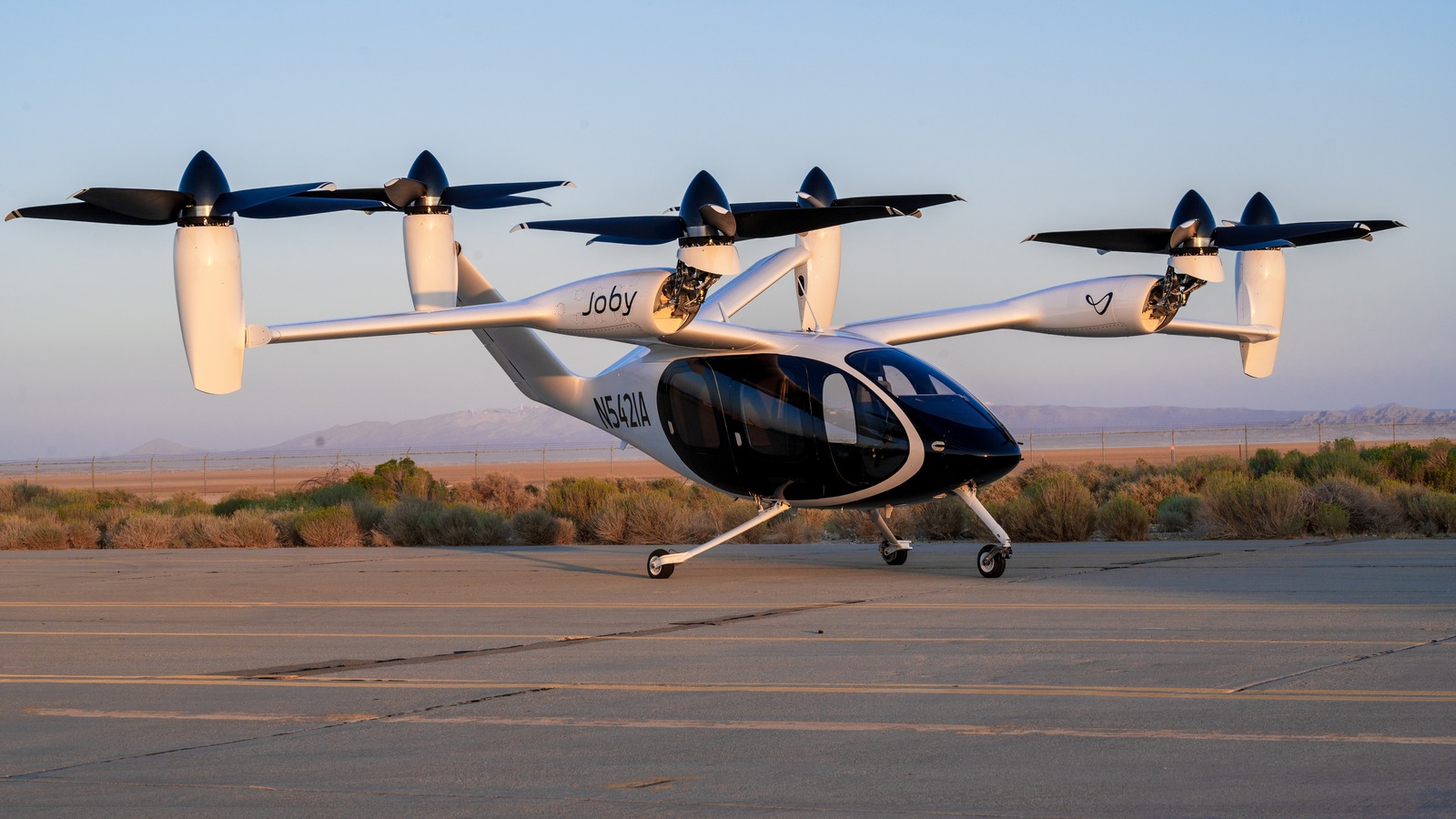
Demonstrations under the federal Advanced Air Mobility Integration Pilot Program, known as eIPP, ran at Perot Field Fort Worth Alliance Airport on September 10, 2026, making Texas the sixth location to launch nationwide. BETA Technologies flew its ALIA electric aircraft and Joby Aviation flew its S4, a piloted electric aircraft that lifts off and lands vertically.
The FAA's September 10 announcement says a Joby aircraft is scheduled to fly a roundtrip from Alliance Airport, code AFW, to Dallas Fort Worth International Airport, code DFW, on Saturday, September 12. The trip tests operations between major airports so regulators and TxDOT can collect safety and integration data.
- First Texas eIPP demonstration: Demonstrations ran September 10, 2026, at Perot Field Fort Worth Alliance Airport. Texas is the sixth location to launch under the federal program.
- Scheduled next: A Joby roundtrip between AFW and DFW is scheduled for Saturday, September 12. It is a planned test, not a completed flight.
- Aircraft: BETA's electric ALIA and Joby's piloted S4 eVTOL flew; Joby's J208 is being demonstrated for autonomous cargo and logistics.
- State plan: TxDOT's three-year pilot begins with passenger-free tests, adds medical and cargo work, then moves toward passenger air taxis.
- Booking status: The September event is a demonstration and testing milestone. Passenger air taxi phases sit later in the state's multi-year plan.
What Happened at Fort Worth Alliance and What Is Next
TxDOT and other participants plan more test flights across Texas through the rest of the year. FAA Administrator Bryan Bedford says data from test flights in Texas and elsewhere will help ensure new aircraft integrate safely into the airspace, which is why the September 10 event is a testing milestone rather than certification.
Joby founder and CEO JoeBen Bevirt says the company began pursuing its vision in 2009 and has accumulated thousands of hours of flight testing, and he credits eIPP support and cooperation among government, industry and communities for the current demonstrations.
The scheduled Saturday roundtrip would link Alliance and Dallas Fort Worth International, two separate North Texas airports with different codes. The aim is to test how an electric aircraft moves between major airports rather than within one, a step that would matter for any future regional network serving the state.
The FAA describes the Texas effort as a partnership with BETA, Joby and TxDOT to develop regional air taxi flights connecting Dallas, Austin, San Antonio and eventually Houston. That is a development goal for the program, not an operating route map or a published schedule.
TxDOT Executive Director Marc Williams describes Project Nexus as a way to gather real-world data, improve safety and build a framework for how electric aircraft could one day connect people, goods and communities across Texas. Those connections remain a framework rather than a scheduled network.
Two Aircraft, Two Different Joby Programs
Joby's Electric Skies schedule for 2026 lists Texas electric air taxi and autonomous demonstration flights from September 10 to 15. The company describes its first electric air taxi flights under eIPP during a week of activity across Dallas Fort Worth.
Joby says its J208 aircraft arrived at Fort Worth Alliance to show autonomous air logistics and cargo possibilities, a separate platform from the piloted S4 that flew on September 10. Joby describes its autonomy system as serving commercial and defense needs across several platforms.
The same tour page also offers a signup for tour stop announcements, invitations to local demonstration flights and general updates. It is not a ticket checkout, a fare promise or a confirmed public viewing timetable, and signing up does not guarantee a ride.
Inside TxDOT's Three-Year Phased Plan
TxDOT's phased plan says the state pilot will launch in phases over three years. The opening phase tests without passengers, using conventional aircraft such as helicopters and fixed-wing planes to validate appropriate routes. The overview was published on March 10, 2026, and the September demonstrations sit alongside that program.
Later phases move into medical and cargo logistics, including moving critical medical supplies or organs between rural facilities and urban medical centers in Austin and San Antonio. Those are planned examples of the work the state intends to support, taken from the March overview rather than from a completed operation.
The final phases call for passenger air taxi flights across the Texas Triangle, connecting Dallas, Austin, San Antonio and Houston as a linked system. Those flights are the program's eventual passenger stage and remain ahead of the current test work.
TxDOT frames the difficult part as handling transitions between urban, rural and state airspace rather than running isolated tests in one city. Data from the pilot projects, the state says, will help the FAA develop new regulations for safe operations at larger scale.
What the Texas Network Would Have to Prove
Both TxDOT and the FAA say the purpose of these projects is data. That data would inform federal regulations for safely scaling new technology, alongside a separate advanced air mobility strategy and action plan with 40 recommendations. The initiative follows a federal executive order, and the selected projects were announced in March 2026.
The eight selected federal projects span 26 states and cover urban air taxis, regional passenger transport, cargo and logistics, emergency medical response, autonomous flight technology and offshore energy transportation. Regional passenger transport includes short takeoff and landing aircraft alongside other designs.
Dallas Innovates reported in August that Joby leased 45,000 square feet at Alliance Air Trade Center in Haslet, part of the Perot Field site. The same reporting names Joby, Archer Aviation, BETA Technologies and Wisk Aero as four companies selected for the Texas project, broader membership than the two makers at the September event.
That reporting also describes a 2022 NASA regional vertiport route study and a 2023 simulation modeling up to 120 air taxi operations per hour in busy Dallas Fort Worth airspace. Both are historical research and modeling, not achieved live traffic rates or current airport capacity.
BETA chief executive Kyle Clark says his company's Texas work involves moving cargo and medical supplies, supporting disaster response and offshore operations, and learning what is necessary at scale. He describes those as the domains the company is working toward as the program grows.
What This Means for Travelers
For travelers, the practical read is that Texas eIPP work is a testing and regulatory program: the September flights gather data for future rules, and passenger service sits in the later phases of the state's three-year plan. That sequencing explains why a demonstration can matter without yet changing how anyone books a trip.
For anyone flying this year, an airport strategy for business travel still rests on conventional timing, connection buffers and security preparation, which Deep Arrival's live guide covers for established airports. A short electric hop between cities would be a separate option with its own rules, and paying passengers sit in later phases of the state plan rather than today's testing.
Dallas Innovates reported in August that Joby chief executive JoeBen Bevirt described Texas flights beginning with only Joby pilots on board, with paying passengers eventually under FAA oversight. That was the company's stated plan at the time, and it lines up with the state's phased approach.
- Passenger flights: Joby plans to start Texas flights with pilots only, adding paying passengers later under FAA oversight, per an August update.
- More test flights: TxDOT and other participants plan more Texas test flights through the rest of 2026.
- Regulation: The FAA will use project data to develop rules for scaling new aircraft, alongside a strategy with 40 recommendations.
- Route validation: The state's opening phase uses helicopters and fixed-wing aircraft to validate routes before later passenger phases.