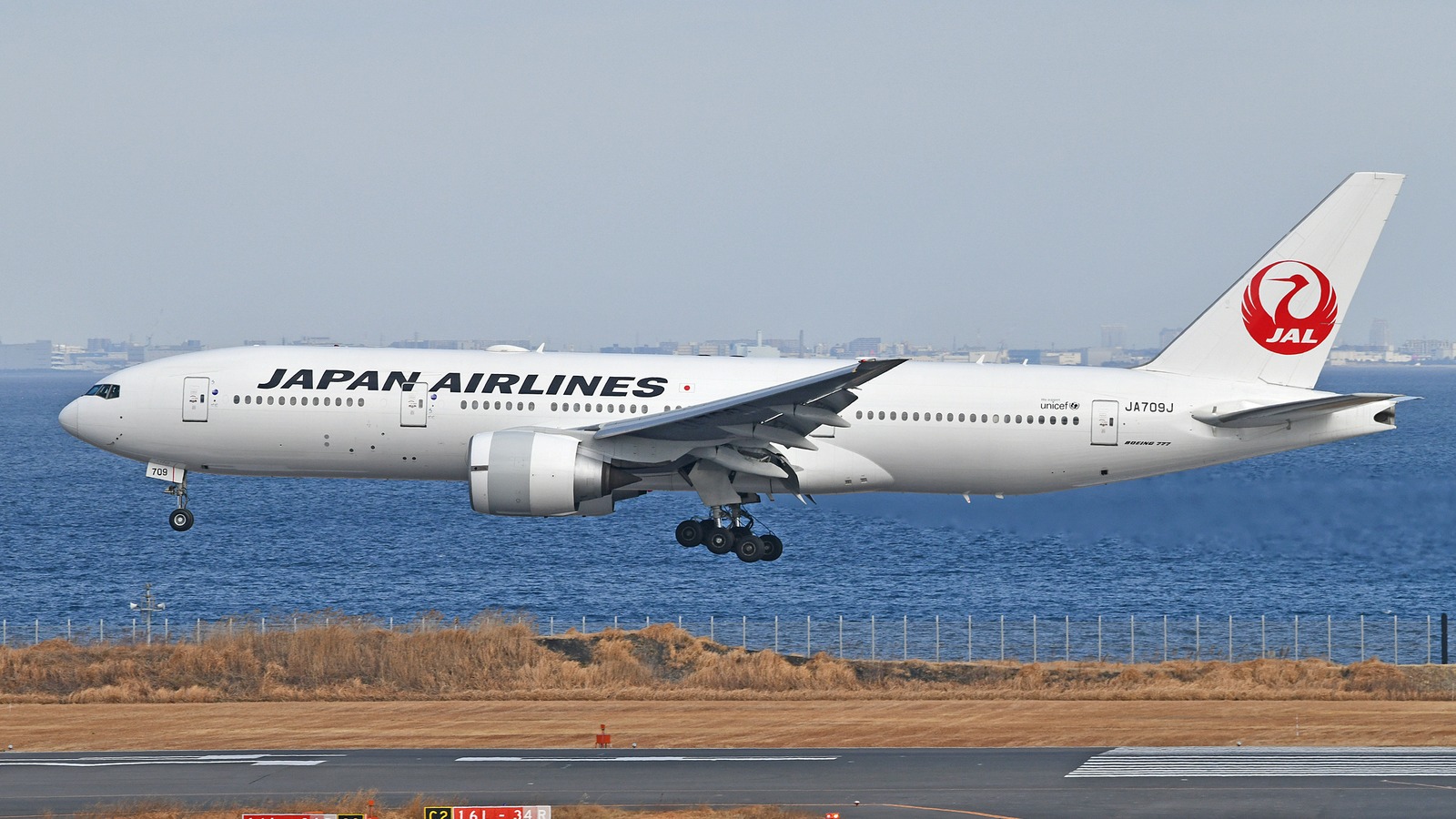
Japan Airlines B777-246ER JA709J · Steven Byles · CC BY-SA 2.0 · edited
Japan Airlines Group put special ticket handling in place for island flights in southern Japan as Typhoon No. 26 approaches, offering free changes, rebooking and refunds on covered flights. TRAICY reported the waiver on September 26, citing the airline group’s notice, which set the coverage as of 3:00 p.m. on September 25.
Any traveler holding a JAL Group ticket to or from the Amami islands on September 28, or to or from Kita-Daito and Minami-Daito on September 28 to 29, can move or refund the trip without paying a fee. Travelers comparing Japanese carriers can review Japan Airlines before deciding whether to rebook onto an earlier departure or wait out the storm.
- Waiver announced: Japan Airlines Group set special handling as of 3:00 p.m. on September 25, reported September 26.
- Amami coverage: Flights arriving at and departing from Kikai Island, Tokunoshima, Okinoerabu and Yoronjima on September 28.
- Daito coverage: Flights arriving at and departing from Kita-Daito and Minami-Daito from September 28 to 29.
- Terms: Changes, rebooking and refunds are free of charge regardless of delays or cancellations.
- Storm outlook: The Japan Meteorological Agency forecasts Typhoon No. 26 at 960 hectopascals with 40 meter per second sustained winds by September 28.
Waiver Covers Four Amami Airports on September 28
The September 28 coverage reaches four airports across the Amami island chain in Kagoshima Prefecture. Kikai Airport on Kikai Island, Tokunoshima Airport on Tokunoshima, Okinoerabu Airport on Okinoerabu and Yoron Airport on Yoronjima are all included for both arrivals and departures on that single day. These short hop island routes run with limited daily frequencies, so even one day of disruption can strand travelers with few same day alternatives.
The waiver applies to tickets on eligible flights whether or not the flights are ultimately delayed or cancelled. That detail matters because travelers do not need to wait for an official cancellation notice before acting. Anyone who prefers not to fly on September 28 can change the booking now and keep the full ticket value moving to another date.
Travelers heading to the Amami islands for beach stays, diving trips or family visits should treat September 28 as a decision day rather than a wait and see day. Moving a departure even one day earlier can be the difference between reaching the island on schedule and spending the night at a mainland gateway airport.
Kita-Daito and Minami-Daito Coverage Runs Through September 29
The two Daito islands east of Okinawa receive a longer two day window. Flights arriving at and departing from Kita-Daito Airport and Minami-Daito Airport are covered from September 28 to 29. The Daito islands sit farther offshore in the Pacific, and their air links are thin lifelines for residents and visitors alike.
The extended window reflects the storm’s expected track and timing near Okinawa prefecture waters around those dates. Travelers booked on either of those two days hold the same free change, rebooking and refund rights as Amami ticket holders. With only a small number of weekly connections serving these remote runways, rebooking early gives the best chance of finding an open seat once skies clear.
Visitors planning multi island itineraries that combine Okinawa main island with a Daito stop should review the whole sequence now. A missed Daito hop can break hotel nights and onward connections that are difficult to rebuild at short notice.
How Free Changes and Refunds Work
For tickets on eligible flights, Japan Airlines Group will accept changes, rebooking and refunds free of charge. The standard change fees and fare difference penalties that normally apply to discounted domestic tickets are lifted inside the covered airports and dates. The relief applies regardless of whether the specific flight is delayed or cancelled, so proactive travelers receive the same treatment as those whose flights are disrupted.
Tickets bought directly from the airline group and tickets bought through travel agencies both fall under the announcement, since the handling attaches to the flight rather than the sales channel. Travelers should keep the original booking reference available and act through the channel where the ticket was purchased. Screenshotting the current itinerary, including flight numbers and travel dates, makes the change request faster.
Refunds are available for travelers who prefer to cancel the island leg entirely rather than move it. That option suits visitors who can shift the whole trip to a later week, as well as residents weighing whether the journey is essential while the typhoon passes.
Typhoon 26 Track Points Toward Okinawa and Amami Waters
Typhoon No. 26, named Surigae, was strengthening faster than initially predicted as it moved toward Okinawa and the Amami Islands. As of 3:00 p.m. on September 25, the Japan Meteorological Agency placed the storm east of the Philippines, moving west northwest at 25 kilometers per hour with a central pressure of 1,000 hectopascals and maximum sustained winds of 20 meters per second, according to details compiled by Meyka on September 25.
Forecasters expect the typhoon to curve northeastward around September 27 and approach waters south of Okinawa. By September 28 at 3:00 p.m., the agency predicts the central pressure will fall to 960 hectopascals, with maximum sustained winds of 40 meters per second and gusts reaching 60 meters per second. The storm force wind zone is expected to extend 350 kilometers from the center of the storm.
The United States military Joint Typhoon Warning Center projects maximum sustained winds of 46 meters per second by 9:00 p.m. on September 27, slightly higher than the Japan Meteorological Agency estimate of 40 meters per second. Longer range models suggest the typhoon may veer eastward toward the Kinki, Tokai and Kanto regions between October 1 and 2, which would bring a second round of travel effects to mainland Honshu.
Island Travelers Face Limited Backup Options
Flights to Kikai, Tokunoshima, Okinoerabu, Yoron, Kita-Daito and Minami-Daito operate with small aircraft and tight schedules, and ferry alternatives take many hours where they exist at all. When airlines waive change fees this far in advance, it usually signals real schedule risk rather than routine caution. Travelers should take the signal seriously and avoid planning tight connections through Naha, Kagoshima or Amami Oshima on September 28 and 29.
Hotel cancellation deadlines add urgency to the decision. Many island guesthouses enforce strict cutoff times, so aligning the flight change with the accommodation policy in the same phone call prevents paying for a room on a night the flight cannot reach. Travel insurance purchased before the storm’s approach may also cover prepaid nights if the trip must be abandoned.
Travelers already on the islands should confirm the return leg now rather than assuming the schedule will hold. Asking the airline group about the earliest available seat after the storm, and keeping medication, chargers and one extra day of essentials in the day bag, turns a possible strand into a manageable delay.
| If you… | What to do |
|---|---|
| Hold a JAL Group ticket to or from the Amami islands on September 28 | Change to an earlier or later date free of charge before seats fill. |
| Hold a JAL Group ticket to or from Kita-Daito or Minami-Daito on September 28 to 29 | Rebook or refund the island leg now under the two day waiver window. |
| Are already on one of the six islands | Confirm the return flight and keep one buffer day of essentials packed. |
| Plan to book island travel for late September | Wait until the typhoon track settles before locking nonrefundable hotels. |
September 25 at 3:00 p.m. is the waiver gate. Coverage defined from that timestamp decides which tickets change free of charge, so check the booking against the listed airports and dates before calling.
September 28 is the disruption gate. Amami flights face the storm on this day while Daito coverage begins, so complete any rebooking before this date.
September 29 is the reassessment gate. Daito coverage ends and the storm’s turn toward Honshu comes into focus, so confirm onward mainland connections before this date.
Which Japan Airlines flights does the Typhoon 26 waiver cover?
The waiver covers JAL Group flights arriving at and departing from Kikai Island, Tokunoshima, Okinoerabu and Yoronjima on September 28, plus Kita-Daito and Minami-Daito from September 28 to 29.
Can I change my flight even if it still operates on schedule?
Yes. Japan Airlines Group accepts changes, rebooking and refunds free of charge for eligible tickets regardless of delays or cancellations.
How strong is Typhoon 26 expected to become?
The Japan Meteorological Agency forecasts a central pressure of 960 hectopascals with 40 meter per second sustained winds and gusts to 60 meters per second by September 28.
Could more airports be added to the waiver?
Possibly. The airline group defines coverage with an as of timestamp and updates it as the storm moves, so travelers to nearby islands should recheck the notice before departing.
What should island travelers do about hotels?
Align any flight change with the accommodation cancellation deadline in the same step, since island guesthouses often enforce strict cutoffs.