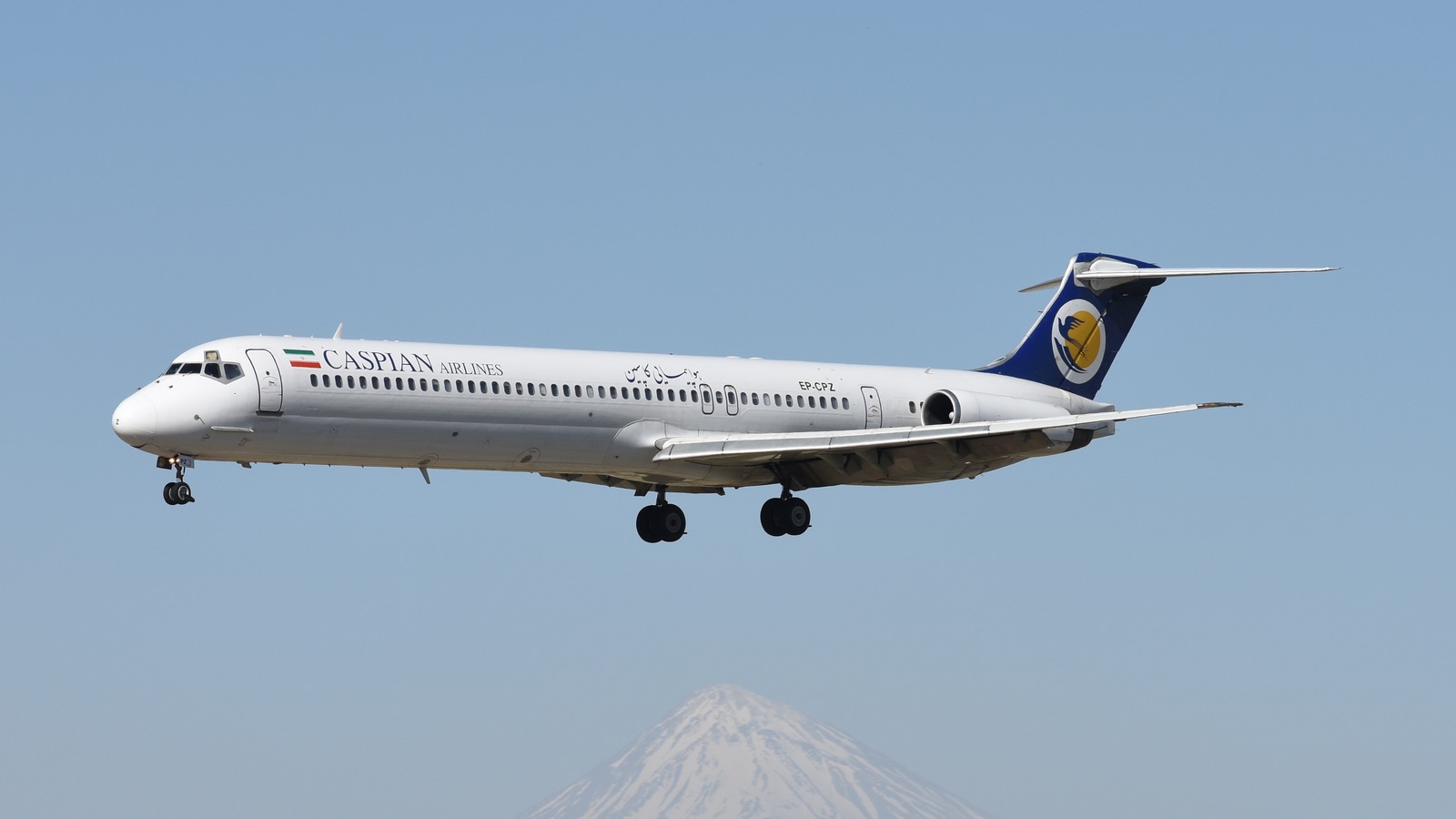
Javidfa · CC BY-SA 4.0 · cropped
Update, September 25, 2026: Treasury Secretary Scott Bessent’s predicted September 23 worldwide shutdown date has passed. The binding OFAC action was issued September 8 and designated additional Iranian airlines, suspended a civil-aircraft authorization and issued a wind-down license. That source does not establish that every Iranian domestic and international flight physically stopped on September 23. Treat the shutdown statement as a forecast and sanctions warning, and verify your own booking with the operating carrier and airports.
If your ticket is on an Iranian carrier, check the airline and both airports for the specific flight, then ask the ticket seller for written rebooking or refund terms if service is unavailable. Do not infer a systemwide cancellation from a date in a televised warning, and do not assume a live booking record proves the flight will operate.
- Date: September 23 was the date Bessent named in a warning; it has passed and was not a published flight-by-flight cancellation list.
- Mechanism: OFAC designated airlines and warned that third-country firms supporting sanctioned carriers could face sanctions risk.
- Host-country decisions: Flight access varies by country and carrier; confirm the current status of each sector.
- Who should check: Travelers with flights operated by a designated Iranian carrier, especially international sectors dependent on foreign handling.
- U.S. tickets: Most U.S. travelers already cannot book Iranian airlines; the new risk is third-country handling and leftover itineraries.
What OFAC Issued and What Was Only Forecast
Bessent said in a September 21 CNBC interview that Iranian airline operations would shut down worldwide on September 23. That was a forecast of sanctions pressure. The OFAC September 8 record is the published sanctions action; it includes designated carriers and a suspension of General License J-1. It does not list all flight numbers canceled September 23.
The Treasury press release explains that the September 8 designations target additional Iranian airlines and third-country support networks. The OFAC record also identifies a wind-down authorization. These are legal and commercial changes with potential operational effects, but a statement that all aircraft were physically grounded requires separate flight evidence.
Do not read “shut down” as confirmation that every Iranian aircraft was grounded at 00:01 on September 23. Service can vary by carrier, airport, route and date; the booking-specific question belongs with the airline and the airports involved.
Iraq, Georgia, and Turkey Already Move
Early reports about an Iraqi suspension were disputed by an Iraqi transport spokesperson. That disagreement is another reason to seek the actual flight and airport status instead of relying on a broad country-level claim.
Reports also described restrictions involving Georgia and Turkey. These were route-level reports, not a complete worldwide flight register; check a current carrier and airport notice for each sector.
A Tehran to Baghdad, Tbilisi or Istanbul sector may be disrupted by host-country or carrier decisions. Verify the operating carrier, airport status and current ticket record before traveling.
Ticket Holders Face Rebook and Refund Checks
Start with the operating airline on the ticket, not only the city pair. A designated Iranian carrier faces sanctions and third-country support risk, but the published OFAC action is not a universal itinerary cancellation notice.
Ask the issuer in writing whether your specific flight is operating and what rebook or refund path applies if it is not. Check both departure and arrival airport notices close to travel time.
Existing restrictions already affect U.S. travelers. The new designations and service-provider sanctions risk may also affect third-country connections and tickets bought outside the United States; the precise remedy depends on the ticket and carrier.
February Airspace Closure Left Only Iranian Carriers
Iranian air service had already been disrupted by the wider conflict before this sanctions warning. The September 23 prediction did not establish a new published timetable for every carrier; its actual effect must be checked route by route.
Earlier Deep Arrival coverage of the wider conflict tracked airfare and routing effects. This post focuses on the Iranian-carrier sanctions action and what a ticket holder can verify about a specific flight.
Do not assume a foreign carrier will fill every canceled Iranian sector on short notice. Aircraft, slots, overflight, and insurance still have to line up. If your trip depends on reaching or leaving Iran, build extra time, a refundable backup, and a written alternative on a non-Iranian airline where that is even possible.
Airports and Agents Now Carry Dollar-System Risk
Bessent warned companies that provide fuel, ground handling or ticketing to sanctioned carriers. The published OFAC action names designated entities and licensing changes; it does not publish a live list of airports refusing each service.
Al Jazeera reported that Bessent’s comments followed talks with Chinese Vice Premier He Lifeng, with a U.S. meeting involving Chinese President Xi Jinping scheduled around the same week. China is a major economic partner for Iran. Whether Chinese banks and firms treat the aviation warning as binding will shape how far the cutoff reaches, but travelers cannot wait for that diplomatic outcome to decide a ticket.
The practical rule after September 23 is to seek current, route-specific proof. Confirm the operating airline, check the airport status and get a written answer on alternatives before going to the airport.
| If you… | What to do |
|---|---|
| Hold a ticket on an Iranian carrier | Confirm the specific flight with the operating carrier and airports, then request a written rebook or refund path if it is disrupted. |
| Connect through Iraq, Georgia, or Turkey on Iranian metal | Treat Sept. 21 host-country moves as active. Do not travel until the carrier and airport both show the flight still operating. |
| Hold a codeshare ticket | Check the operating carrier on each coupon; if it is Iranian, confirm the flight directly and request the issuer’s contingency terms. |
| Are not booked on an Iranian carrier | Keep the trip unless your own operating airline issues a schedule change. |
Country reports need route-level confirmation. Early suspension reports were not a reliable substitute for a current flight status and airport notice.
September 23 was Bessent’s stated target. It is now past. The OFAC record does not prove that every Iranian flight stopped on that date.
Now check route-level operations. Sanctions may affect fuel, handling and sales, but the airline and airports must confirm your flight status.
Did every Iranian airline shut down on September 23?
The September 8 OFAC action sanctioned additional carriers and changed licenses. Bessent named September 23 as a shutdown target, but the official record reviewed here does not verify a worldwide grounding of every flight.
Does this cancel every Iranian domestic flight?
Bessent described a global shutdown through third-country services, not a published domestic timetable. Domestic sectors inside Iran can still move even when international handling stops. Confirm each coupon.
Is Mahan still flying to Turkey?
The Straits Times, citing AFP, said Mahan Air suspended service to Turkey on Sept. 21 at the Turkish government’s request. Do not count on that sector until Mahan and the airport both show it restored.
Can U.S. travelers still book Iran Air?
Most U.S. travelers already could not book Iranian airlines under existing sanctions. The new date matters for leftover tickets, third-country issues, and anyone whose itinerary still uses Iranian metal.
What if my ticket is on Emirates or Turkish Airlines?
A non-Iranian operating carrier is outside Bessent’s fuel and ticket warning. Recheck the operating airline on every coupon and watch for schedule changes if Iranian feed traffic shifts.
Where do I check before going to the airport?
Use the operating carrier’s live status, the departure and arrival airport notices, and a written answer from the ticket issuer on rebooking. AFP-reported host-country bans can land before the Sept. 23 date.