A faster airport trip sounds great until you start wondering where your face goes next. In its new passenger survey, released October 28, IATA finds growing biometric use alongside privacy concerns, including 59% worried about data breaches.
Photo context: Global Entry kiosks at San Diego International Airport on December 14, 2023. This US example does not represent every airport in IATA’s survey.
That headline figure measures worry, not a breach rate. A biometric passport, a digital travel credential and a camera-assisted airport process are related ideas, not interchangeable promises about the documents accepted on your next trip.
- The tension: Convenience and clear data handling both matter.
- The reading trap: Concern is not the probability of an incident.
- The geography check: Read the region before generalizing to a country.
- The trip decision: Verify your actual program, not a global preference.
A Faster Journey Can Still Raise Questions
IATA reports biometric experience rising from 50% in 2025 to 58% this year. That is an eight-percentage-point increase, not an eight-percent increase.
The difference matters when a technology story starts sounding inevitable: the finding describes more respondents encountering the process, not every airport adopting the same system.
The appeal is easy to picture. Fewer repeated checks could mean less rummaging for a boarding pass and a smoother sequence through a terminal.
But the convenience pitch and the privacy question are not opposites. Someone can appreciate a faster checkpoint and still want a clear explanation of what happens to an image afterward.
Euronews’ reporting, carried by AOL, puts the concern figures alongside that enthusiasm: data breaches at 59%, information sharing with other organizations at 49%, and unclear handling of personal information at 41%. Those are different worries. A promise about speed does not, by itself, answer any of them.
The 59% Figure Is Not a Risk Calculator
The most important reading rule is also the easiest one to lose in a dramatic headline. Concern about a breach is not the probability that a breach will happen. The survey does not turn that percentage into a risk estimate for a particular airline, airport, camera or government database.
Nor can you subtract one headline percentage from another to discover a clean split between technology fans and privacy skeptics. People may belong to both groups. The public headline findings do not show which individual respondents overlap, so arithmetic on the totals would create a group the published figures have not established.
A better question for the operator is practical: what data does this particular process collect, who handles it and where are the current terms? That is a question to ask before enrolling, not a conclusion that every biometric program is unsafe.
North America Is Not a United States Sample
IATA’s regional table puts past-year biometric experience at 63% for North America, compared with 58% globally and 47% in Europe. The association also describes North American respondents as especially concerned about data breaches. Higher use clearly does not mean the privacy discussion has disappeared.
For a United States reader, the geographic label deserves attention. North America is the reported region; calling that number a US adoption rate would overstate what this release establishes.
The public summary covers more than 10,000 responses from over 200 countries, but it is not a count of every passenger passing through an airport.
AI Planning Is Growing, Too. Accuracy Is a Different Test
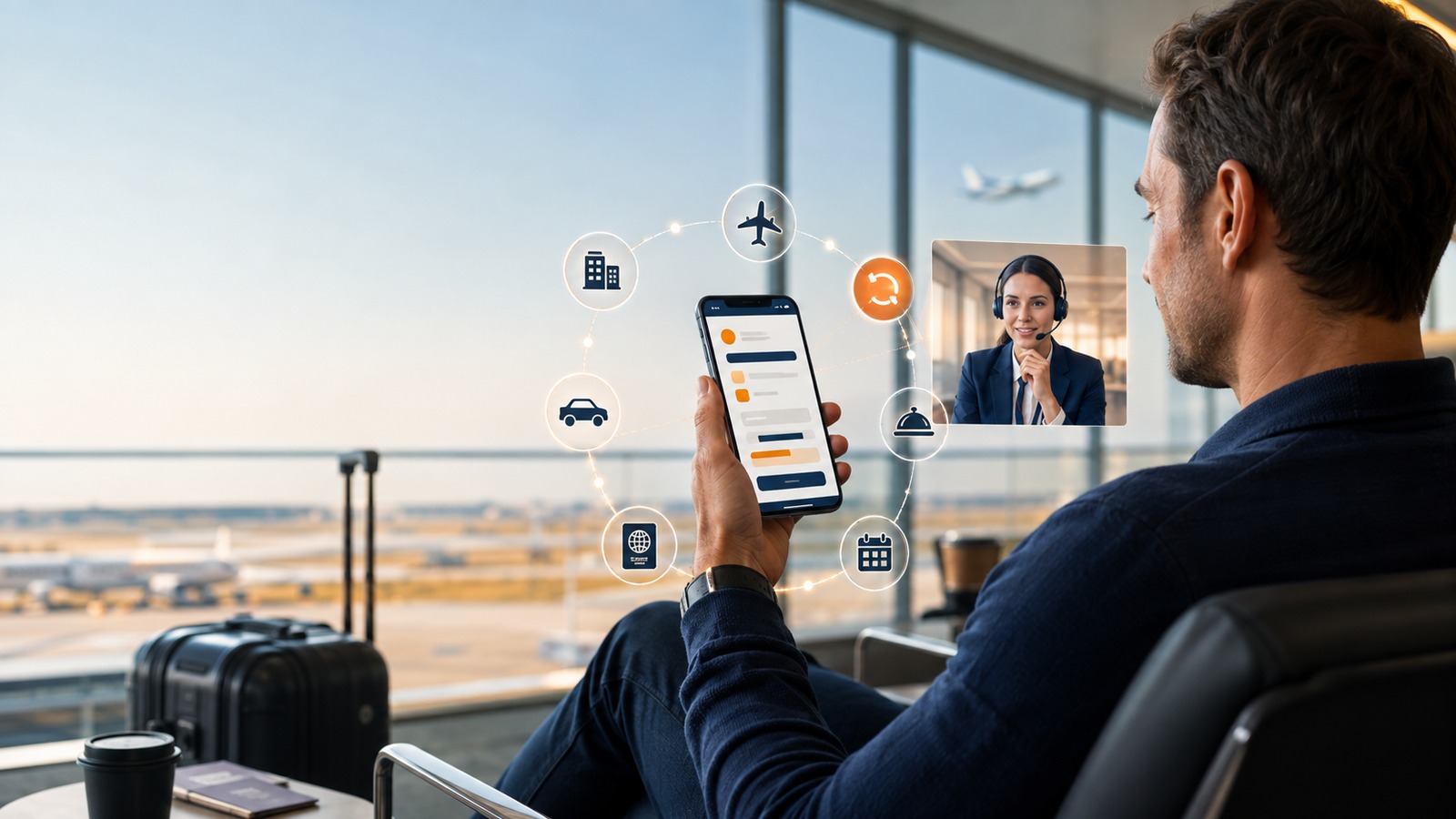
Travel Weekly’s account of the same survey focuses on trip planning. IATA says 49% have used AI for that purpose; searching for a specific destination’s flights, cheaper fares and destination inspiration are among the reported uses.
That describes behavior, not a quality score for an assistant. It does not establish that every suggested fare was bookable, every entry-rule answer was correct or every recommendation suited the traveler. Use a planning tool to narrow the possibilities, then verify the consequential details with the airline, destination authority or seller that will actually handle the trip.
| A figure catches your eye | Read it this way |
|---|---|
| 58% experienced biometrics | Reported past-year experience, not universal airport coverage. |
| 59% worry about breaches | A concern measure, not the chance of a breach. |
| 63% for North America | A regional result, not a US-only statistic. |
| 49% used AI to plan | Use does not certify the accuracy of the advice. |
The useful habit is to turn a broad technology promise into a specific itinerary question. Instead of asking whether airports have gone digital, ask which process you will encounter at the place you are actually entering, connecting or departing.
Do the same with a tempting AI recommendation: open the actual seller’s terms and compare them with the answer you were given. A clear source trail is more useful than a confident paragraph when money, documentation or a missed connection is on the line.
Does concern measure the likelihood of a breach?
No. Worry and the probability of an incident are different measurements; one cannot stand in for the other.
Is a North America figure automatically a United States figure?
No. Those geographic labels are not interchangeable; check the stated region before applying a statistic to a country.
Does this survey announce a new passport or border rule?
No. It reports passenger experiences and preferences, not a new document requirement or permission to travel without a passport.
Does more AI travel planning prove the advice is accurate?
No. Reported use is different from a test of accuracy, price availability or suitability for your trip.