Yes, Guayaquil’s airport reopened after the October 26, 2026 thunderstorm. That is the good news. The part worth checking before you leave the hotel is whether your flight and the journey to the terminal have recovered together. An airport can be operating while an individual departure has changed and flood affected streets still complicate a transfer.
The US Mission’s October 26 Guayaquil weather alert says José Joaquín de Olmedo International Airport is open after an earlier temporary suspension during severe thunderstorms. It tells travelers to check directly with their airline before heading to the airport and to avoid walking or driving through flooded streets. For visitors connecting a flight with a port stay, the Guayaquil cruise port guide provides destination context, not current road clearance.
El Comercio’s October 26 report separately says airport operator TAGSA confirmed normal operations after temporary restrictions and flight diversions. Read that as a reopening report, not a guarantee that every passenger’s original itinerary is intact.
- Airport status: The October 26 embassy alert says Guayaquil’s airport is open after an earlier storm suspension.
- Flight check: Contact your airline about the specific departure or connection before leaving for the terminal.
- Ground risk: Heavy rain and localized flooding can cause road closures, traffic disruption and hazardous access.
- Do not cross: The alert advises against walking or driving through flooded streets or standing water.
- Local updates: Monitor ECU911 and official municipal channels for road and emergency information.
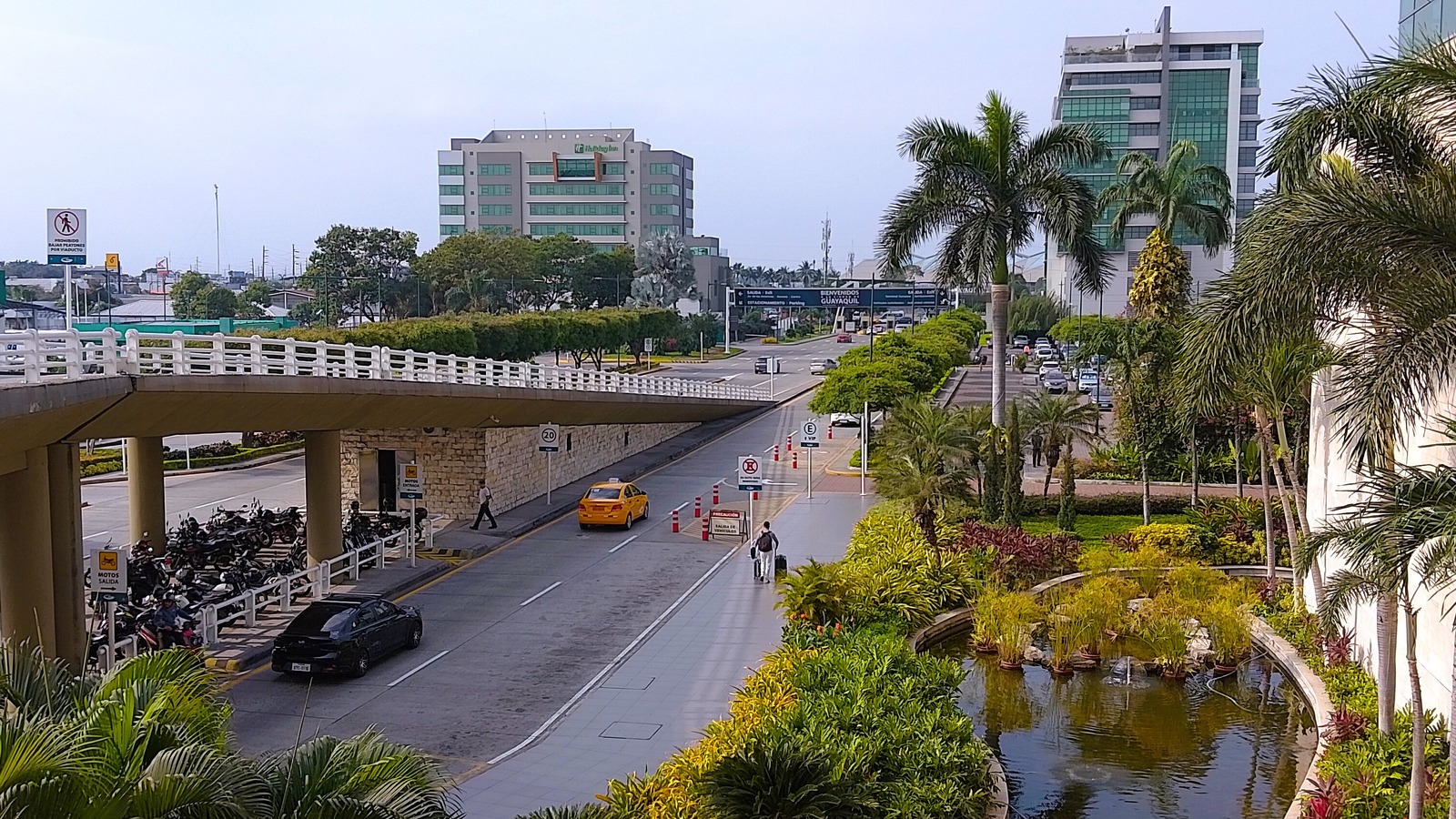
The featured photograph shows the approach road at Guayaquil’s airport on August 6, 2024. It is historical location context, not a photograph of the October 2026 storm, diverted flights or current road conditions.
Open Airport, Changed Flight: Both Can Be True
The airport’s reopening answers whether the facility had resumed operations after the storm. Your airline still controls the status of your particular flight. El Comercio reports that thunderstorms and heavy rain caused preventive diversions before operations returned to normal, which is why checking the reservation remains useful after a reopening announcement.
Open your airline’s current flight status and booking information, then look for a revised departure, arrival or connection. If a message conflicts with the general airport announcement, ask the airline to resolve your itinerary rather than treating the broad reopening headline as a boarding instruction.
The sources do not establish a universal delay, a cancellation total or an exact time when every passenger disruption will be cleared. Avoid turning a report that systems are operating normally into a promise about a specific aircraft, crew or onward flight. Those are separate questions for the operating carrier.
The Transfer Is the Other Half of the Trip
The embassy’s alert is city specific: Guayaquil in Guayas Province, with heavy rains, thunderstorms and localized flooding. It warns that rainfall may cause road closures and traffic disruption. It does not publish a reliable street by street access map or declare that every road to the airport is closed.
Before departure, ask your hotel or transfer provider to check the route it actually intends to use, and compare that with current official municipal and ECU911 information. A driver who can reach one neighborhood does not establish that an entirely different pickup or dropoff is accessible.
Keep a changed meeting point practical. Confirm the address and who will meet you before moving, particularly if you have luggage or limited mobility. Do not accept a flooded crossing simply to protect a departure time. The embassy explicitly advises against walking or driving through flooded streets or standing water.
Keep Monday’s Flood Reports in Their Time Window
El Comercio reported flooding in 19 sectors and power interruptions in at least 10 neighborhoods during the October 26 storm response. Those figures describe that reporting window; they are not a verified inventory of streets or properties still affected on October 27.
That distinction is important for a traveler arriving the following day. Ask your accommodation whether its access and essential services are functioning now. The article does not establish that every hotel lost power, nor that an interruption reported elsewhere applies to your address.
This incident report is also narrower than Ecuador’s broader seasonal weather preparedness. It concerns a particular Guayaquil storm, temporary airport interruption and reopening. A national outlook does not substitute for current local transfer information, and this recovery notice is not evidence of a new countrywide airport shutdown.
Make One Check Before You Move, Then Keep a Backup
The embassy recommends avoiding nonessential travel during heavy rain, thunderstorms and flooding, staying away from trees, utility poles and electrical cables, and keeping mobile devices charged. For a visitor, the practical order is airline status first, route confirmation second, and departure from a safe location only when the journey makes sense.
If you are arriving, confirm the pickup arrangement before landing where possible and recheck it once connected. If you are departing, tell the airline when a documented access problem threatens your journey and ask what options actually apply. Neither the weather alert nor the reopening report creates an automatic refund, hotel entitlement or free replacement transfer.
For an emergency in Ecuador, the alert lists 911. Routine flight changes belong with the airline, not emergency services. Keep your hotel, carrier and transfer contacts together so that a changed plan does not become a search for three different phone numbers while you are trying to move.
The useful takeaway is reassuring but conditional: Guayaquil’s airport reopened, so do not plan around an outdated claim that it remains shut. At the same time, check the exact flight and ground leg before treating a reopening as the end of your travel disruption.
| Your Situation | What to Confirm |
|---|---|
| Departing Guayaquil after the storm | Check your airline’s specific flight status before arranging the airport journey. |
| Taking a hotel or private transfer | Ask about the actual route and current official road information; do not cross flooded streets. |
| Arriving after reading Monday’s flood reports | Confirm current accommodation access and services; old neighborhood counts are not today’s property status. |
| Finding a changed flight or unsafe transfer | Contact the relevant provider about available options; compensation and replacement transport are not automatic. |
Use the reopening: The October 26 sources say the airport is open, not still suspended.
Verify the individual journey: A normal airport announcement and a changed passenger itinerary can coexist.
Do not guess the road: Use current local information for the actual transfer, not a citywide assumption.
Is Guayaquil airport open after the October storm?
The October 26 embassy alert says it is open after an earlier temporary thunderstorm suspension. El Comercio also reports TAGSA’s confirmation that normal operations resumed.
Does reopening mean my flight is on time?
No. Check the airline’s current status for your particular flight and connection before traveling to the terminal.
Are all roads to Guayaquil airport closed?
The sources do not establish that. They warn about localized flooding and possible road disruption; confirm the actual route through current municipal, ECU911 and transfer provider information.
Should I walk through flooded streets to meet a transfer?
No. The embassy advises against walking or driving through flooded streets or standing water. Resolve a safer arrangement with the provider rather than treating a booking time as clearance.