Glacier National Park says the alpine stretch of Going-to-the-Sun Road is typically fully open until the third Monday of October, and in 2026 that Monday falls on October 19. The National Park Service repeats the same rule on its current Going-to-the-Sun Road information page: weather can close Logan Pass earlier, and there is no guaranteed last driving day.
If you still need the full 50-mile crossing this fall, treat October 19 as the planning date and recheck the park map the morning you drive. Lower sections near the West Entrance stay open year-round, so a Lake McDonald stay does not depend on Logan Pass remaining open. Start with Deep Arrival’s Glacier National Park guide, then confirm the live road layer before you leave Kalispell or St. Mary.
- Typical alpine close: third Monday of October, which is October 19, 2026, weather permitting.
- Who said so: National Park Service Going-to-the-Sun Road general information, current for the 2026 season.
- What can move it: snow, ice, or winter storms at Logan Pass can shut the alpine section earlier.
- What stays open: lower Going-to-the-Sun Road near the West Entrance remains open all year.
- Status channel: text GNPROADS to 333111, or use the park directions page plus Montana 511 for connecting highways.
October 19 Is the Typical Alpine Close Date
The park does not publish a single locked closing hour for 2026. It publishes a rule. On the Going-to-the-Sun Road general information page, the National Park Service says portions of the road may close because of weather and that the road is typically fully open until the third Monday of October. That Monday is October 19 this year.
The same page is the 2026 operations source for other traveler rules that still apply until the alpine gates shut: vehicle reservations are not required in 2026, the full drive is about 50 miles and about two hours without stops, and Logan Pass sits at 6,646 feet, 32 miles from the west entrance and 18 miles from the east entrance. Those numbers do not change if a storm arrives a week early. The date you can still cross the pass does.
A historical Logan Pass table on nps.gov records the same third-Monday target as the pre-established close, weather permitting. Use that as pattern, not as a 2026 work order. The live rule for this season is the current general-information page, not the archive footnotes.
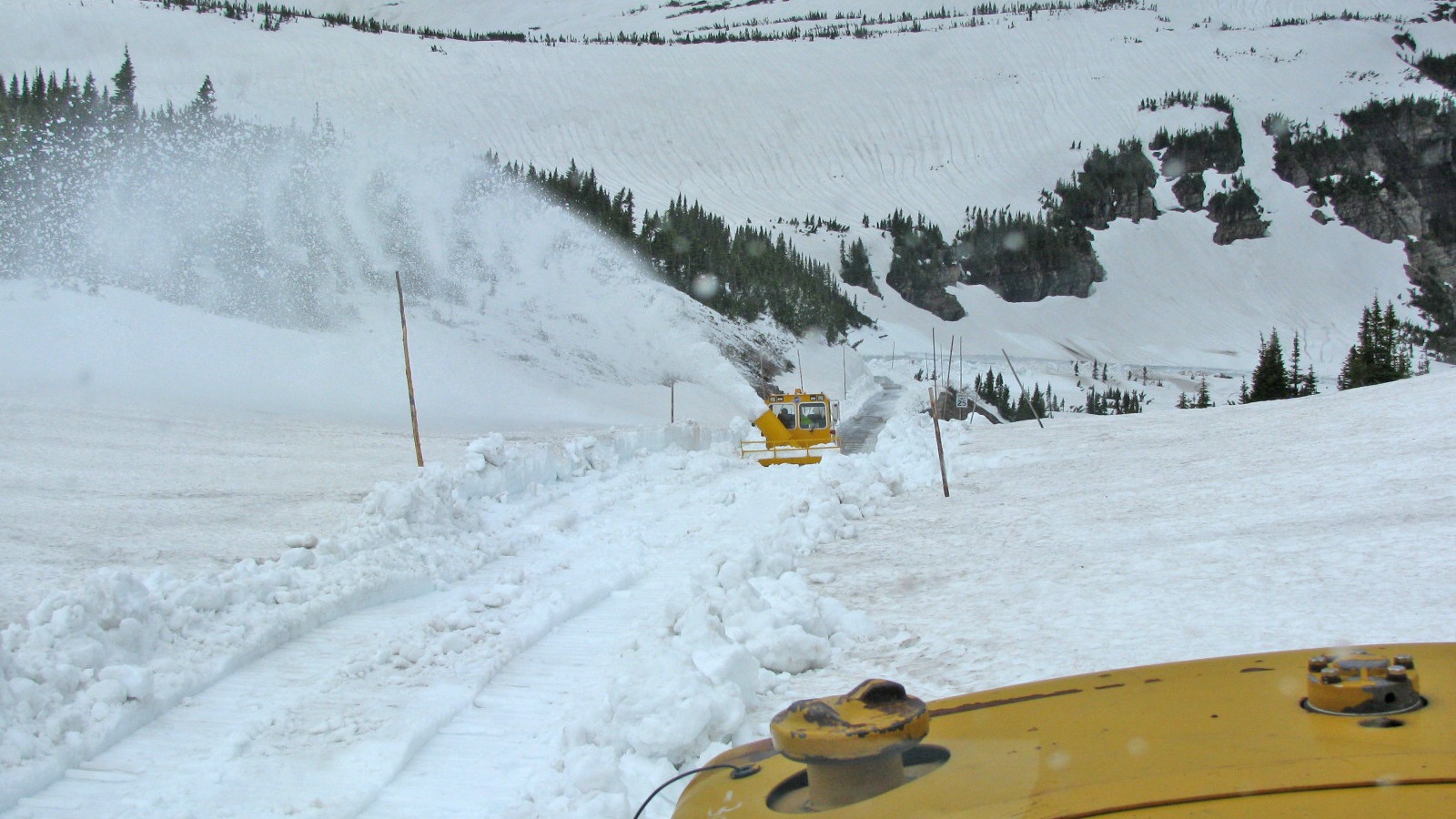
Snow Can End Logan Pass Access Earlier
The park already showed how fast the alpine road can drop out this month. Deep Arrival covered the September 14 snow closure at Logan Pass, a same-day weather gate on the same road. That event is the reason October 19 is a target, not a reservation.
NPS directions language is blunt: the alpine sections typically close for the winter around the third Monday of October, and this can happen earlier due to wintery weather. Parking at Logan Pass often fills by sunrise while the road is still in summer mode, so a late-season day trip that starts after a storm warning is the easy way to miss the pass entirely. If the map shows the alpine section closed, do not count on a same-day reopen.
Sign up for Glacier road notices before you need them. The park tells travelers to text GNPROADS to 333111 for live opening and closing alerts, and it warns that the interactive road report can lag when conditions change quickly. That text list is the fastest official ping when a front is moving across the Continental Divide.
The West Entrance Stretch Stays Open All Year
A closed Logan Pass is not a closed park. NPS says the lower elevation sections of Going-to-the-Sun Road remain open all year and still reach Lake McDonald, Apgar, West Glacier, and park headquarters. If the trip is built around Hidden Lake Overlook, the Highline, or a through-drive to St. Mary, you need the alpine section. If it is built around Lake McDonald, you can keep the dates after October 19. Where to stay in Glacier National Park is the next page for that split.
Fuel is not sold inside the park. Fill in West Glacier, Columbia Falls, St. Mary, or East Glacier before a long out-and-back on the remaining open pavement.
Size Limits and Recheck Steps Before You Drive
Until the alpine section closes, vehicles and combinations longer than 21 feet including bumpers, or wider than 8 feet including mirrors, are prohibited between Avalanche Creek and Rising Sun. Vehicles over 10 feet high can scrape rock overhangs west of Logan Pass toward The Loop. Speed limits stay 40 mph on the lower road and 25 mph on the alpine section while it is open. Lodges and kitchens at Rising Sun, Lake McDonald Lodge, and Apgar Village are summer-season services, so do not assume a late October kitchen is still serving.
Recheck the morning of a Logan Pass attempt in this order: the NPS Going-to-the-Sun information page, the park road-conditions map, then the GNPROADS text alert. If any of those three says the alpine road is closed, switch to the west-side plan or Highway 2.
Montana Highways Travelers Use After the Pass Closes
When Logan Pass is gated, the year-round public road around the southern edge of the park is U.S. Highway 2. NPS directions send travelers to the Montana Department of Transportation seasonally closed roads list and the state 511 map for highways outside the park. MDT closes specified high-elevation state routes for winter, provides no winter maintenance on those routes, and prohibits travel once they are posted closed.
Going-to-the-Sun Road is an NPS road, so it will not appear on that MDT list. Use MDT for Beartooth Highway, Thompson Pass, Skalkaho Pass, Looking Glass Highway, and 511 status on U.S. 2. A Banff to Glacier road trip in late October should treat the alpine crossing as a bonus. Two Medicine Road is already in a separate fall construction closure, so do not stack that east-side dead end onto a pass that may also be gated.
| If you… | What to do |
|---|---|
| Need Logan Pass or a full west-to-east crossing | Hold October 19 as the typical last day and recheck GNPROADS the morning you drive. |
| Hear a snow warning before October 19 | Assume the alpine road can close that day; keep Highway 2 as the backup. |
| Are staying on the west side only | Keep the trip. Lower Going-to-the-Sun Road near the West Entrance stays open year-round. |
| Are adding other Montana mountain passes | Check MDT’s seasonally closed roads list and 511. Those state routes close separately from the park road. |
October 19, 2026, is the typical last full alpine day. If you need Logan Pass or a west-to-east crossing, keep a weather cancel option and a Highway 2 backup in the same reservation window.
Any snow warning before October 19 is an earlier gate. Recheck GNPROADS and the park map the morning of the drive; a September-style closure can return without a new press release.
West Entrance pavement is the winter default. Keep west-side lodging if the trip can live without the pass, and fill the tank before you enter the park.
When does Going-to-the-Sun Road close in 2026?
The National Park Service says the alpine road is typically fully open until the third Monday of October. In 2026 that date is October 19, unless weather closes Logan Pass sooner.
Is Logan Pass guaranteed open through October 19?
No. NPS says weather can close the alpine section earlier, and a snow shutdown already happened at Logan Pass on September 14, 2026.
Does the whole Going-to-the-Sun Road shut in winter?
No. Lower sections near the West Entrance stay open year-round. The seasonal close is the alpine portion over Logan Pass.
How long is the full Going-to-the-Sun Road drive?
About 50 miles, or about 2 hours without stops, while the alpine section is open. Logan Pass is 32 miles from the west entrance and 18 miles from the east.
Are vehicle reservations required on Going-to-the-Sun Road in 2026?
No. The park says vehicle reservations are not required in 2026. Length and width limits still apply on the Avalanche Creek to Rising Sun stretch while it is open.
What road do I use if Logan Pass is closed?
Use U.S. Highway 2 around the south side of the park, and check the Montana Department of Transportation 511 map plus MDT’s seasonally closed roads list before you add other mountain passes.