Gerald R. Ford International Airport Authority
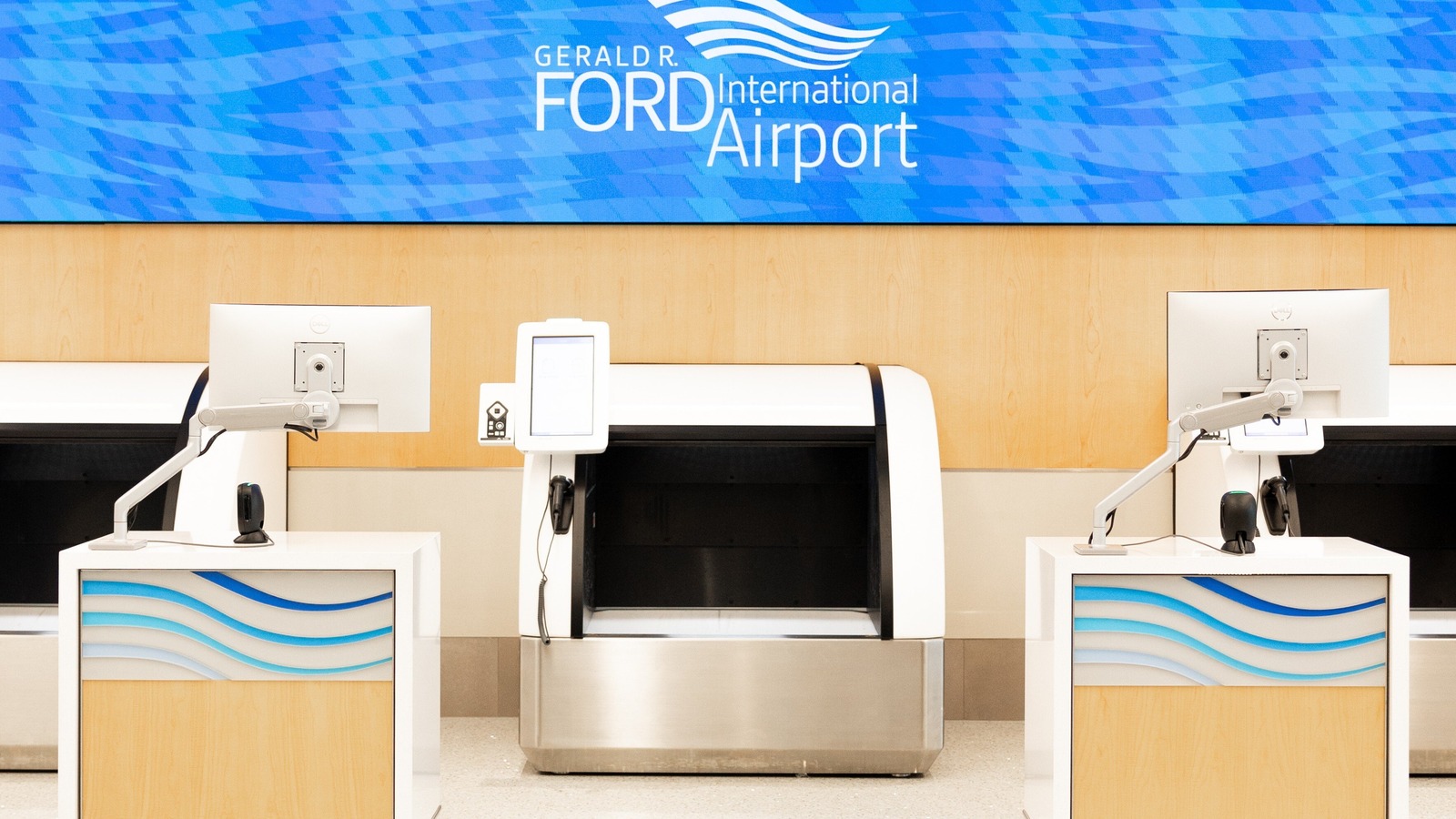
Gerald R. Ford International Airport in Grand Rapids, Michigan, will begin offering self-service bag drop on September 9, 2026. The airport’s August 26 Terminal Enhancement Project announcement says passengers on American Airlines, United Airlines, and Frontier Airlines can check in at kiosks, tag their own luggage, and use automated bag drop.
The first practical change is at the ticketing hall, not the security checkpoint. A WGVU News report independently confirmed the September 9 start and the three-airline rollout; travelers extending a West Michigan trip can also use Deep Arrival’s Grand Rapids planning guide after the airport decision.
- First date: Self-service bag check begins September 9, 2026.
- First airlines: American, United, and Frontier use the new area first.
- Traveler steps: Check in at a kiosk, tag the bag yourself, and use automated bag drop.
- Staffed help: Extra airport staff will assist during rollout, and ticketing agents remain available.
- Capacity goal: The new baggage system is designed to rise from about 600 to nearly 1,000 bags per hour when fully operational.
GRR’s September 9 self-service opening
The September 9 change is the passenger-facing part of a larger $135 million Terminal Enhancement Project. The airport says the project expands the west end of the terminal, adds ticketing capacity, and introduces a new Consolidated Baggage Inspection System, or CBIS, that connects the ticketing handoff with baggage screening.
That system uses an Individual Carrier System, or ICS, with RFID-enabled totes moving checked bags through the screening process. In plain language, your bag enters a more automated path after you hand it over, while the airport tracks the tote through the facility rather than relying on the older manual movement at each stage.
GRR says the system is designed to increase baggage processing from approximately 600 bags per hour to nearly 1,000 per hour when fully operational. That is a capacity figure for the whole system, not a promise that every September 9 passenger will see a shorter line or that a bag will reach the aircraft in a fixed number of seconds.
First airlines on the new bag drop
American Airlines, United Airlines, and Frontier Airlines are the first named users. The airport expects additional airline partners to transition to the new space by the end of 2027, but its August announcement does not give a separate start date for each carrier.
If your ticket is on one of those three airlines after September 9, look for the new kiosk and self-service bag check area when you enter the terminal. If you are flying another airline, use the check-in instructions shown in your booking and follow airport signs rather than assuming the new units are already assigned to your carrier.
The word “self-service” describes an option, not a requirement. The airport says travelers who prefer traditional check-in can still work with a ticketing agent, so a passenger who wants help with the bag tag or the handoff does not need to solve the new process alone.
The kiosk, tag, and automated drop sequence
Start at a kiosk for your operating airline and complete the normal check-in steps. The airport’s description puts the passenger in charge of the bag tag, so allow a moment to print or retrieve the tag, attach it securely to the handle, and confirm the routing information before moving to the automated drop unit.
At the bag drop, follow the screen and staff directions for placing the tagged bag on the conveyor. The bag then enters the CBIS and the RFID tote system described by the airport; this is a checked-baggage handoff, not a replacement for the Transportation Security Administration checkpoint or a new security-clearance program.
The airport’s public announcement does not publish a complete list of exceptions for oversized, unusual, or special-handling luggage. If the unit directs you to an agent, the bag does not fit the instructions, or the tag will not scan, stop and ask the nearby staff member instead of forcing the handoff.
GRR has also published an instructional video for passengers who want to see the sequence before arriving. Watching it can make the first kiosk visit less confusing, but it does not replace checking the airline’s own baggage rules for your ticket.
What stays the same during rollout
Traditional ticketing support remains part of the opening plan. GRR says additional staff will help passengers navigate the new options and answer questions while travelers become familiar with the equipment, so the airport is not asking every passenger to arrive already trained on the system.
The back-end change is also larger than the visible kiosks. The airport and WGVU both describe the CBIS and its baggage handling technology as a way to improve tracking, reliability, security, and throughput; those improvements happen after the bag is accepted and do not change what a traveler may pack or carry through screening.
Neither source announces a new TSA checkpoint rule, a changed boarding deadline, or a guarantee of faster security screening. Treat the self-service option as a new check-in choice, keep your normal arrival buffer, and use the staffed counter if the new process adds uncertainty to an important departure.
September 9 departure checklist
Before leaving for GRR, confirm the operating airline in your booking and check whether your departure falls on or after September 9. If it is an American, United, or Frontier flight, plan for the kiosk and automated drop to be available, but follow the signs and staff directions at the terminal because this is the first day of a phased rollout.
Keep the items needed for check-in and baggage handoff easy to reach. You will need to complete the kiosk flow, attach the printed or issued bag tag yourself, and place the luggage at the designated drop point; if any screen or scanner rejects the bag, move directly to the staffed help rather than repeating an unclear step.
Passengers who prefer an agent can choose that route. The airport’s promise of staffed help matters most for families managing several bags, travelers with accessibility needs, or anyone whose luggage does not fit a straightforward standard-bag workflow, although the release does not provide a separate eligibility chart for those cases.
Finally, do not infer a rollout date for another airline from the September 9 announcement. GRR says more partners are expected to move into the new space by the end of 2027, which is a broad endpoint rather than a carrier-by-carrier schedule; check your airline and the airport again before a later trip.
| If you… | What to do |
|---|---|
| Fly American, United, or Frontier on or after September 9 | Use the kiosk, attach your bag tag, and follow signs to automated bag drop. |
| Fly another airline | Follow your airline’s current GRR check-in instructions because its transition date is not published. |
| Prefer personal assistance | Choose the staffed ticketing counter; self-service is optional. |
| Have an unusual or unclear bag | Ask rollout staff or a ticketing agent before placing it in the automated unit. |
| Travel on the first rollout day | Watch the airport video and keep normal arrival time in case you need help. |
September 9 is the airline gate: American, United, and Frontier passengers can use the new process first; other carriers have no published individual transition date.
The kiosk is the first traveler step: Complete check-in, print or retrieve the tag, attach it yourself, and follow the automated drop instructions.
The staffed counter is the fallback: The airport is adding rollout help and keeping agents available, so self-service does not have to be a risky experiment on a tight connection.
When does Gerald R. Ford International Airport’s self-service bag drop start?
The airport says the new ticketing and self-service baggage check options begin September 9, 2026.
Which airlines use the new GRR bag drop first?
American Airlines, United Airlines, and Frontier Airlines are the first named users. GRR expects more airlines to transition by the end of 2027, without listing each date.
Do I have to use the self-service bag drop?
No. GRR says traditional ticketing agents remain available, and extra staff will help passengers during the rollout.
What do passengers do at the new bag drop?
Check in at a kiosk, tag the luggage yourself, and place the tagged bag at the automated drop unit while following the screen and staff directions.
Will the new system make every airport line faster?
GRR says system capacity should rise from about 600 to nearly 1,000 bags per hour when fully operational, but it does not promise a specific personal wait time.