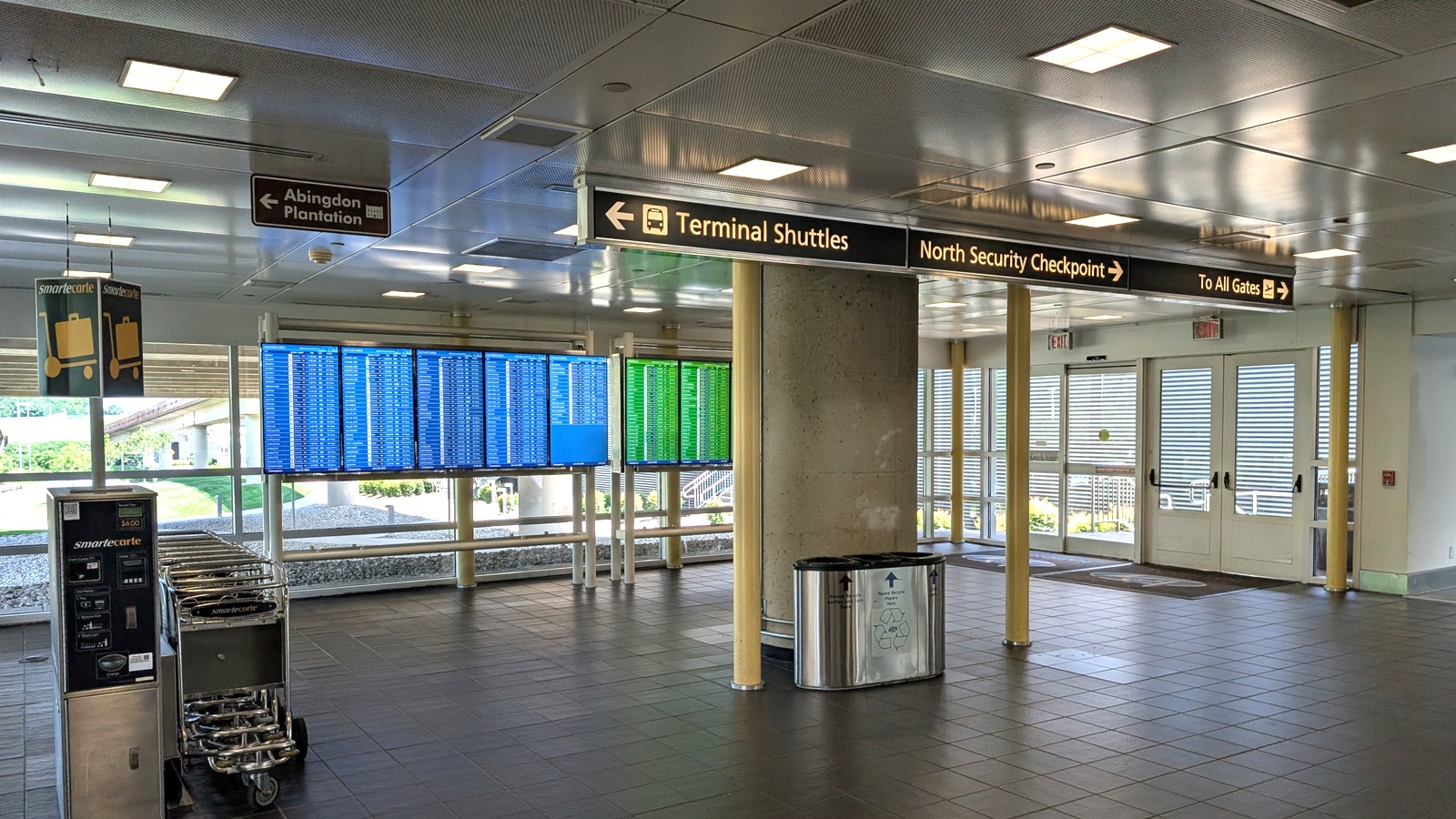
Image credit: G. Edward Johnson via Wikimedia Commons. License: CC BY 4.0 (https://creativecommons.org/licenses/by/4.0); author: G. Edward Johnson; source page: https://commons.wikimedia.org/wiki/File:Flight_status_display_near_metro_DCA_National_Airport_2025-06-25_11-36-51.jpg.
The U.S. Department of Transportation has finalized a new way for major airlines to report ten causes of flight delays and cancellations. The Section 511(b) category takes effect October 19, 2026, and removes those causes from the reporting bucket used for events considered within an airline’s control. DOT also says the change is expected to reduce the total value of some voluntary meals, hotels, transportation, credits, and other assistance airlines provide after disruptions.
For travelers, the practical question is no longer only whether a flight was delayed. It is how the carrier classifies the cause, what that airline has promised for that cause, and whether the traveler accepts a replacement flight. Our guide to the best U.S. airlines by trip type offers broader context for comparing carriers, while the new rule sets a firm date for checking each carrier’s disruption commitments more closely.
- Effective date: The new reporting category starts October 19, 2026.
- Scope: Ten causes move out of the Air Carrier reporting category.
- Potential effect: DOT expects fewer disruptions may qualify for some voluntary airline amenities and compensation.
- Refund protection: A refund can still be required after a cancellation or significant change when the passenger rejects the alternative offered.
The October 19 Rule Changes Classification First
The final DOT rule amends 14 CFR Part 234, the regulation used for monthly airline reporting about delays of at least 15 minutes and cancellations. Reporting carriers have traditionally assigned disruptions to categories such as Air Carrier, Extreme Weather, National Aviation System, Security, and Late Arriving Aircraft. The new Section 511(b) category becomes a sixth delay category and a fifth cancellation category.
This is a reporting rule with a consumer consequence, not a new universal compensation program. Congress directed DOT to exclude the ten listed events from the Air Carrier code. DOT says the cleaner data should help travelers make more accurate carrier comparisons. At the same time, many customer service promises are written specifically for disruptions that are within the airline’s control, so moving an event outside that classification can affect whether the airline’s promise applies.
These 10 Delay Causes Move Into a New Category
The first group covers aircraft cleaning required after a passenger’s death; aircraft damage caused by extreme weather, foreign object debris, or sabotage; and baggage or cargo delays caused by an outage of a baggage system that neither the airline nor its contractor controls. A generic cleaning or baggage delay is not automatically included.
The second group includes a cybersecurity attack when the airline complies with applicable rules, an unexpected government system failure that directly affects safe flights, and overheated brakes caused by a safety incident requiring emergency procedures. Those conditions mean not every computer problem, brake issue, or government related delay qualifies.
The remaining causes are qualifying nondeferrable unscheduled maintenance; a medical emergency through no fault of the carrier; removal of an unruly passenger; and an airport closure caused by volcanic ash, wind, or wind shear. An airline should state the specific cause instead of relying on a vague operational label.
An independent legal analysis from Crowell & Moring confirms the October 19 date and the narrower Air Carrier category. Travelers can ask one focused question: which cause code is the airline using?
Meals and Hotels Depend on the Carrier’s Promise
Federal law does not generally promise every stranded U.S. passenger a meal, hotel room, or cash payment. Instead, major airlines publish customer service plans with voluntary commitments for controllable delays and cancellations. DOT can hold a carrier to commitments it has made. The agency’s economic analysis says the number of disruptions receiving amenities or noncash compensation is expected to fall when the ten causes leave the controllable Air Carrier category.
That expected reduction does not mean every airline will refuse help in every listed situation. A carrier may still provide meals, lodging, ground transportation, rebooking, credits, or miles at its discretion, and its contract or customer service plan may be more generous than the minimum. Ask what is being offered before buying food or a hotel, and request written authorization when an airline agent says an expense will be reimbursed.
Travelers can compare promises on DOT’s Airline Cancellation and Delay Dashboard. Save the relevant carrier column when a disruption begins, along with boarding passes, notifications, chat transcripts, receipts, and the identifier of any agent who explains the cause.
Refund Rights Remain Separate From Courtesy Benefits
The most important boundary is between a refund and disruption assistance. DOT states that airline amenity commitments do not change a passenger’s refund entitlement. If the airline cancels a flight or makes a significant change, the traveler is entitled to a prompt refund when the traveler chooses not to accept the alternative transportation or compensation offered. The reason for the cancellation does not erase that basic refund rule.
Before accepting a replacement, compare the new arrival time, airport, connections, cabin, and ground costs. If it no longer works, tell the airline you are declining the alternative and requesting the refund available for the canceled or significantly changed trip.
For a long delay that is not a cancellation or significant change, ask for the cause and options in writing. Compare the customer service plan, DOT dashboard, insurance terms, and card benefits. Each policy may have its own delay period, covered reasons, documents, and cap.
A Four Step Disruption Record Protects the Claim
First, capture the airline’s notification and the original schedule. Second, ask whether the event is coded as Air Carrier, Section 511(b), weather, security, National Aviation System, or another category. Third, request the specific event behind that label, such as nondeferrable unscheduled maintenance or an airport wind closure. Fourth, preserve every offer and expense before leaving the airport or ending the chat.
If an agent gives only a broad phrase such as operational reasons, ask for the specific cause. Routine cleaning differs from cleaning after a passenger death. Scheduled maintenance differs from qualifying unscheduled maintenance. A carrier technology outage differs from a compliant airline facing a cybersecurity attack.
If the response conflicts with the airline’s commitment, use its written customer relations channel and keep the case number. If a commitment is not honored or a required refund is denied, file a DOT complaint with the ticket, schedule change, stated cause, requested remedy, response, and receipts.
| If you… | What to do |
|---|---|
| Travel before October 19 | Use the carrier’s current commitments and ask how it classifies the disruption today. |
| Travel on or after October 19 | Ask whether one of the ten Section 511(b) causes was assigned before paying for meals or lodging. |
| Reject a canceled or significantly changed trip | Request a prompt refund and do not accept a replacement you cannot use. |
| Accept rebooking | Confirm the new airport, arrival time, cabin, connections, and any written expense authorization. |
October 19, 2026 is the rule gate. Travelers flying from that date should expect the new Section 511(b) classification to be available in airline reporting systems.
The first disruption notice is the evidence gate. Save the original schedule, notification, stated cause, and carrier promises before accepting a recovery option.
Acceptance of rebooking is the choice gate. Compare the replacement against the refund option before confirming it.
Does the DOT rule end airline refunds for these 10 causes?
No. DOT says refund rights remain separate from amenity commitments. A traveler who rejects the alternative after a cancellation or significant change can still be entitled to a prompt refund regardless of the cause.
Will airlines still provide meals or hotels after October 19?
They may, but the answer depends on the airline’s published commitment and its classification of the disruption. DOT expects the total value of some amenities and compensation to decline.
Which maintenance delays are in the new category?
The rule covers qualifying unscheduled maintenance that appears outside a scheduled program and cannot be deferred or must be handled before flight. It does not recategorize every maintenance problem.
What should I ask an airline agent during a delay?
Ask for the specific cause, its reporting category, the carrier’s available rebooking and amenities, and written confirmation of any promised reimbursement.
When does the new DOT delay category begin?
The final rule takes effect October 19, 2026. Travelers can prepare now by saving the carrier’s current service commitments and reviewing refund choices before accepting rebooking.