Delhi International Airport Ltd. CEO Pradeep Panicker told a media roundtable on Tuesday, October 6, 2026, that a driverless Automated People Mover is expected to run about 7.3 km between Terminal 1 and Terminal 3 around 2030. Business Standard reported the CEO’s briefing, including six stations, a 13-minute T1 to T3 trip, and a 30-month build once construction starts. A firm start date is not final. Design work has already begun.
The traveler decision is how you move between terminals until that link opens, and whether a 2030 connection changes a long-range India itinerary. Current T1 to T3 transfers still use road vehicles. Keep that in mind when you book split-terminal connections, then use the airlines planning hub for carrier-level schedule checks. The Times of India, drawing on PTI, independently put the APM cost at about Rs 3,500 crore and the opening-year ridership target at 55,000 people a day.
- Link: 7.3 km driverless APM, six stations, about 13 minutes T1 to T3.
- Target: operational around 2030; 30 months of construction after a start date that is not set.
- Fare: boarding-pass holders are not expected to pay; other fares are undecided.
- Capacity: airport target about 125 million passengers a year, up from 106 million now.
- Nearer change: three more bus gates at T1, taking that terminal from 42 million to 45 million.
T1 to T3 in 13 Minutes on a 7.3 km APM
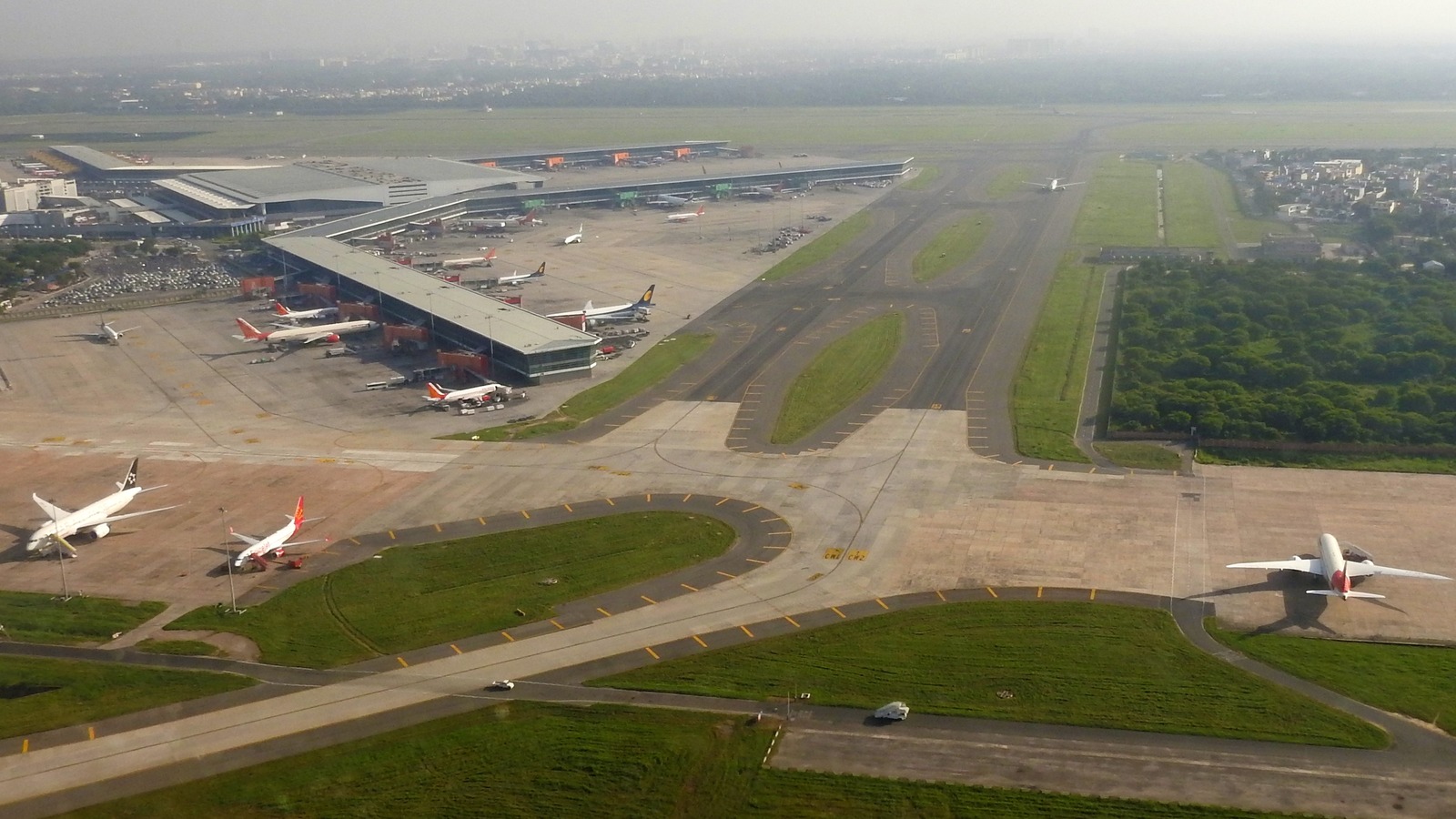
Panicker said T1 and T3 will be the origin and destination stations on a line about 7.32 km long. The APM will also serve the cargo area and Aerocity, sitting close to the existing Airport Metro station so riders can connect into Delhi Metro. Times of India noted that T2 and T3 already sit near each other, while T1 is a few kilometres away, which is why the road transfer exists today.
The machine is planned as a driverless people mover, not a new metro line. Officials have discussed an APM for several years. Tuesday’s briefing is the first time DIAL’s CEO put a public 2030 target, a 13-minute runtime, and a 30-month construction duration on the record together.
Business Standard sources put the wider Master Plan investment at about Rs 7,000 crore, covering terminal expansion, extra aircraft stands, and the APM. Times of India isolated the APM itself at about Rs 3,500 crore. Those are different buckets. Do not treat the smaller figure as the whole airport program, and do not treat the larger figure as the APM bill alone.
Fares, Boarding Passes, and Who Pays
Panicker said passengers moving between terminals with a valid boarding pass are not expected to be charged. “It is not going to be paid for passengers. Even today we provide free bus service,” he said, according to Business Standard. A decision on fares for non-passengers and employees has not been taken. Times of India recorded the same open question on non-flyers.
Until the APM opens, that free bus logic is the current transfer product. DIAL is also awaiting approval for airside bus transfers from T3 to T1, Times of India reported via PTI. An airside bus would keep connecting passengers inside security. It is not approved yet. Do not plan an airside T3 to T1 bus as if it already runs.
Aerocity connectivity matters for hotel guests and metro riders who are not flying that day. If DIAL later charges those users, a hotel-to-terminal hop becomes a paid local ride. Watch for a later notice rather than assuming the boarding-pass free ride extends to everyone.
Terminal Capacity Moves Before 2030
The APM sits inside a 10-year Master Plan that runs to 2036. Panicker said some pieces land within five years and the rest by 2036. T1 capacity is slated to rise from 42 million to 45 million passengers a year with three more bus gates. T3 is slated to rise from 50 million to about 66 million, of which 27 million would be domestic and 39 million international. T2 stays at about 14 million.
Stands are part of that T3 job. The airport has about 228 equivalent aircraft stands and plans about 270. T3 work also includes passenger-processing space and baggage reclaim. Times of India said Pier E at T3 is scheduled for construction by April 2030, and that Pier C has already been converted from domestic to international use. Those pier facts change which door you walk to, not only how many people the building can theoretically hold.
The airport handled about 79 million passengers in FY26 and expects about 82 million in FY27, Panicker said. Earlier forecasts had pointed to about 95.5 million. He tied the cut to international aviation disruptions, including the West Asia conflict and restrictions on Pakistani airspace. Capacity expansion is still the plan. The traffic recovery path is slower than the old curve.
Construction Clock and What Is Unset
Thirty months of construction after an unannounced start means the 2030 opening is a target, not a ticketed date. If work begins in 2027, a 30-month clock lands in 2030. If the start slips, the opening slips. Panicker said a team is already on design. That is the only “now” construction fact in the briefing. Do not treat 2030 as a guaranteed first-ride month.
Road access is a parallel hold. DIAL is pushing agencies on Dwarka Expressway, the Urban Extension Road, and T1 access roads. Those projects sit outside DIAL’s fence. A finished APM with a clogged T1 curb still leaves you in a car. Treat landside road work as a separate watch item from the people-mover itself.
Times of India said earlier concepts used a design, build, finance, operate, and transfer model. Tuesday’s briefing did not restate that as a signed contract. Carry DIAL’s 2030 target, six stations, 13 minutes, and the unpaid boarding-pass transfer intent.
Connections Until the APM Opens
Split-terminal itineraries at Indira Gandhi International Airport still require a landside transfer between T1 and T3. Budget extra time for that road move, especially with bags and evening traffic. Same-terminal connections remain the cleaner booking choice until the APM, or an approved airside bus, is actually running. The Delhi Airport third runway planning note is the recent operations chronology on the same airfield.
T3 already has other landside products. The Encalm transit nap rooms near Terminal 3 are a current layover option, not a substitute for a terminal-to-terminal ride. If your layover is T1 arriving and T3 departing, a nap room at T3 only helps after you have completed the road transfer.
International share inside T3 is rising as piers flip. Confirm your airline’s terminal and pier in the booking, not an old 2018 map. Panicker’s 39 million international / 27 million domestic split at the expanded T3 is a future layout, not today’s door list. Recheck DIAL terminal guides in the week you fly.
| If you… | What to do |
|---|---|
| Connect T1 and T3 on a 2026 or 2027 trip | Keep using the road transfer or current buses. Do not book as if the APM is open. |
| Hold a boarding pass and will use the APM later | DIAL’s current intent is a free inter-terminal ride. Recheck fares before you travel in 2030. |
| Are a hotel guest in Aerocity without a boarding pass | Treat APM fares as undecided. Keep metro and taxi as the proven options. |
| Need more T1 capacity in the next five years | Watch for the three extra T1 bus gates. That is the nearer terminal change than 2030. |
| Are planning a 2030 India itinerary around IGI | Use 2030 as a target, then confirm a construction start and opening notice from DIAL. |
October 6, 2026, is the public target date. DIAL’s CEO put a 2030 APM opening, a 13-minute T1 to T3 runtime, and a 30-month build on the record.
A construction start is the next hard gate. No start date was announced. The 30-month clock does not run until work begins.
April 2030 is the Pier E marker in Times of India reporting. That pier is a T3 capacity item alongside the people mover, not the APM itself.
When will the Delhi Airport APM open?
DIAL’s CEO said it is expected to be operational around 2030. Construction is estimated at 30 months after a start date that has not been finalised.
How long will T1 to T3 take on the APM?
About 13 minutes on a 7.3 km driverless line with six stations, according to the October 6, 2026, briefing reported by Business Standard and Times of India.
Will passengers pay to ride the Delhi Airport APM?
Panicker said boarding-pass holders are not expected to pay. Fares for non-passengers and employees have not been decided.
Is the APM running now between T1 and T3?
No. Passengers still use road transport between T1 and T3. An airside bus from T3 to T1 is awaiting approval and is not in service.
How much will Delhi Airport capacity grow?
DIAL’s plan raises annual capacity from 106 million to about 125 million passengers, with T1 going to 45 million and T3 to about 66 million.
What costs were published for the project?
Times of India put the APM at about Rs 3,500 crore. Business Standard sources put the wider expansion, including terminals and stands, at about Rs 7,000 crore.
Image Credits
- Lead Photo
Rehman Abubakr · CC BY-SA 4.0 · cropped