Chicago’s average hotel room rate reached $235.51 for October 18 to 24, up 26.4% from the comparable week in 2025, according to CoStar’s figures released October 29. That works out to roughly $49 more per room night than the implied year-earlier average, a sizable reminder that the calendar can be an expensive travel companion.
The national increase was much smaller, and this was a completed convention week, not a price announcement for your next Chicago weekend. Use the numbers to interrogate a hotel quote, not substitute for one; our Chicago sightseeing guide helps match a potential base to the downtown sights you actually want to reach.
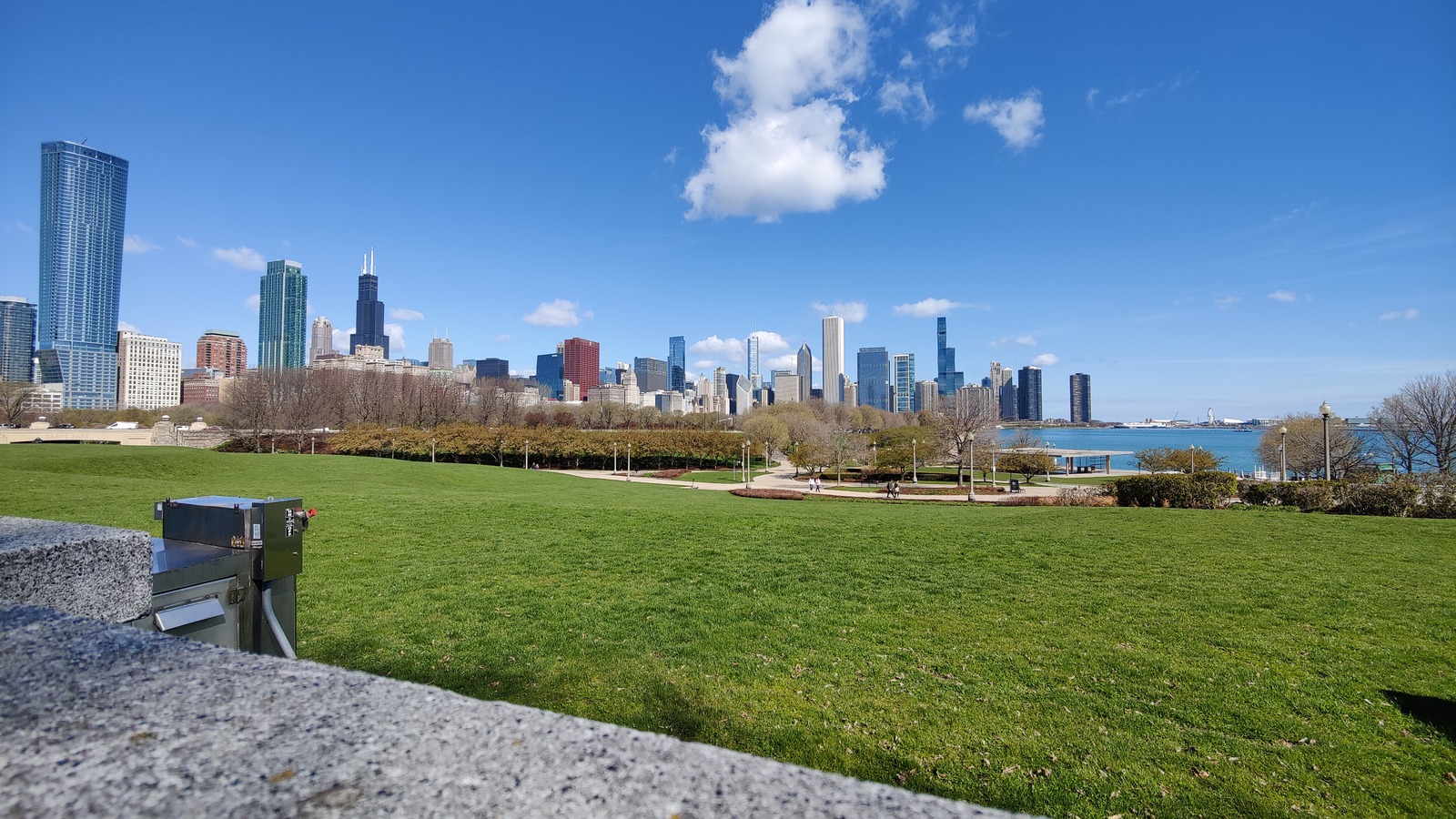
The photograph shows Chicago’s skyline from the Field Museum in April 2024, not the October 2026 convention or a particular hotel room.
- Reporting window: October 18 to 24, 2026, compared with the equivalent 2025 week.
- Event context: PACK EXPO overlapped the measured period.
- Cost illustration: A three-night calculation below translates the average into dollars.
- Important limit: These are past market averages, not bookable offers or forecasts.
An Event Week, Not a New Citywide Price
LODGING’s account of the CoStar results identifies PACK EXPO International as a contributor to Chicago’s performance. The organizer’s dated opening announcement puts the show at McCormick Place from October 18 through October 21, inside the measured week, with 2,700 exhibitors and tens of thousands of professionals expected.
That timing matters more to a leisure traveler than the packaging machinery on the exhibition floor. A city break can share hotel inventory with a major business gathering without sharing its itinerary, so a quiet-looking sightseeing calendar is not necessarily a quiet accommodation calendar; the event has now ended, and its dates are context for the new data rather than a reason to rush a booking.
The $49 Difference Behind the Headline
Here is the arithmetic behind the increase: dividing the reported Chicago rate by 1.264 produces an implied previous-year figure of about $186.32, leaving a difference of $49.19. Multiplying those averages across three nights gives approximately $706.53 versus $558.96, a $147.57 gap, but those calculations are illustrations from rounded market figures, not an actual hotel’s bill or a promise about what any guest paid.
Average daily rate, usually abbreviated ADR, is not the midpoint of a city’s published hotel prices: CoStar’s STR glossary defines it as room revenue divided by rooms sold. In a deliberately simplified example, one $150 room night and one $300 room night produce a $225 average, even though neither guest paid $225.
Add another $150 room night to that example, and the average drops to $200 without changing either listed price. This is an illustration, not a finding about Chicago’s specific mix, but it shows why an aggregate jump need not mean that every hotel has raised prices by the same percentage; the benchmark does not compare the service levels or cancellation terms of individual offers either.
| Reported Market | Average Room Rate and Annual Change |
|---|---|
| United States | $179.55, up 7.4% |
| Chicago | $235.51, up 26.4% |
| Tampa | $171.24, up 10.1% |
| Anaheim | $197.55, down 8% |
Chicago’s Surge Was Not the Whole U.S. Market
The contrast is the useful part of this release: Chicago’s rate growth exceeded the national figure by 19 percentage points, while Anaheim moved in the opposite direction. LODGING reports that Anaheim had the largest average-rate decline among the top 25 markets; that does not establish it as the cheapest destination, since a falling price can still be higher than another city’s rising one.
Occupancy adds a different piece of context, with CoStar reporting 80.4% in Chicago compared with 69.8% nationally. The same glossary defines this as the share of available rooms sold during a period, rather than a live availability search, so the figures cannot tell a traveler that a particular neighborhood is sold out or that waiting until tomorrow will improve the price.
Turn the Snapshot Into a Better Booking
If a Chicago quote looks startling, compare the identical stay against an alternative date window before abandoning the trip. Keep the room type, guest count, cancellation terms and displayed total consistent: otherwise a cheaper second search may be comparing a different product, and an extra night or a nonrefundable condition can quietly undo the apparent advantage.
Then put location back into the equation instead of treating the lowest nightly figure as the winner. The linked Chicago guide groups Millennium Park, the Art Institute and the Riverwalk around the downtown core, with the lakefront museums farther south; a room that fits your own route can be more useful than a headline discount that creates repeated cross-city transfers.
Compare the date and the full stay, not just the city’s reputation. Chicago’s completed event week and the mixed results elsewhere show why a national hotel headline is a starting point for a price check, not the answer to your own reservation.
Image Credits
- Lead Photo
Gianaccordi · CC BY 4.0 · edited