Brussels Airport will add eight manual border control booths in its arrivals hall by December 2026 and six more automated e-gates in early 2027 to cut long passport queues caused by the EU’s Entry/Exit System, Travel Trade Journal reports. The airport says processing times for arriving visa passengers at the morning peak have doubled or tripled since the system began.
The Entry/Exit System, or EES, records fingerprints and a facial image for most non-EU travelers the first time they cross a Schengen border. Our passport stamps guide explains how EES is replacing manual stamps.
- December 2026: Eight new manual booths at arrivals, a 66% capacity increase.
- Early 2027: Six more automated e-gates at arrivals, up 50%.
- Why: Peak processing for visa passengers is two to three times slower under EES.
- Kiosks: 60 pre-registration kiosks installed, but wider e-gate access is delayed.
- Who is affected: Non-EU travelers arriving into the Schengen area at Brussels.
Brussels Adds Border Booths and E-Gates
The new booths should double the airport’s manual processing capacity at arrivals within 12 months, Brussels Airport said, according to Travel Trade Journal. The six extra e-gates were ordered through Belgium’s federal police and are due for delivery in early 2027.
Before EES launched in late 2025, the airport had already added 20% more manual border positions at arrivals and 25% more at departures. That was not enough to offset the extra time each first registration takes.
Flight delayed or cancelled? AirHelp can check whether your trip may qualify for compensation. Check a flight with AirHelp Disclosure: Deep Arrival may earn a commission.
EES Is Slowing Arrivals Across Europe
Under EES, non-EU travelers have their fingerprints and a facial image taken at their first crossing, and their entries and exits are logged digitally. Waits at some European airports have reached two to four hours, Travel Trade Journal reports.
At Brussels, waits improved slightly in August, then rose again in September as more biometric registrations were made. We covered earlier problems in our report on Brussels passport queues in October.
Kiosks and E-Gates Still Held Up
Brussels Airport has installed 60 EES pre-registration kiosks to speed up the process. Authorities approved e-gate use for travelers from some non-European countries before summer 2026, but technical problems with government suppliers have delayed that change.
For now, arriving travelers can use the e-gates only if they are from a limited set of nationalities and are already registered in EES. Once wider access starts, the biggest gains are expected for departing passengers.
Calls for a Pre-Registration App
Brussels Airport backs calls from airport group ACI Europe and Airlines for Europe for faster biometric checks and a widely available app that lets travelers complete part of the process before they fly. Sweden and Portugal are the only European countries offering such an app so far, the airport says.
The airport has also asked for flexibility to pause biometric registration when queues become extreme, while keeping essential security checks in place. Official guidance on how EES works is on the EU’s Travel to Europe EES page.
Planning another trip? Review Travel Guard plan terms for delays, cancellations, and baggage before choosing coverage. Review Travel Guard plans Disclosure: Deep Arrival may earn a commission.
Tips for Arriving at Brussels
If it is your first trip to the Schengen area since EES began, expect to register at a manual booth or kiosk, which takes longer than a stamp. Morning arrivals are the busiest, so leave at least two to three hours for a connection or train after landing.
Book onward trains with flexible tickets if you can, and keep your passport, return ticket and hotel details handy for the officer. Children traveling with you also need to be registered, so families should plan for each person to go through the process. Your EES record lasts several years, so later trips through Brussels or other Schengen airports should be quicker.
| If you… | What to do |
|---|---|
| Are a first time EES arrival | Plan for biometric registration at the border. |
| Land in the morning peak | Allow extra time before onward trains or flights. |
| Fly into Brussels after December | Expect more manual booths in arrivals. |
| Are already registered in EES | Check whether your nationality can use the e-gates. |
December 2026: eight new booths. Arrivals capacity up 66%.
Early 2027: six more e-gates. Arrivals e-gate capacity up 50%.
Kiosk e-gate access: delayed. No new date given.
Why are passport queues longer at Brussels Airport?
The EU Entry/Exit System adds fingerprint and facial checks for non-EU travelers, which slows processing.
When will Brussels add more border booths?
Eight manual booths are due by December 2026, with six e-gates in early 2027.
Can I use the e-gates at Brussels?
Only some nationalities already registered in EES can use them on arrival for now.
Is there an app to pre-register for EES?
Only Sweden and Portugal offer one so far, according to Brussels Airport.
Do I register every time I fly into Europe?
No. The full biometric registration happens on your first crossing, and later trips use the stored record.
How long are EES waits in Europe?
Some European airports have seen waits of two to four hours at peak times.
Image Credits
- Lead Photo
Sjenghai · CC BY-SA 4.0 · edited
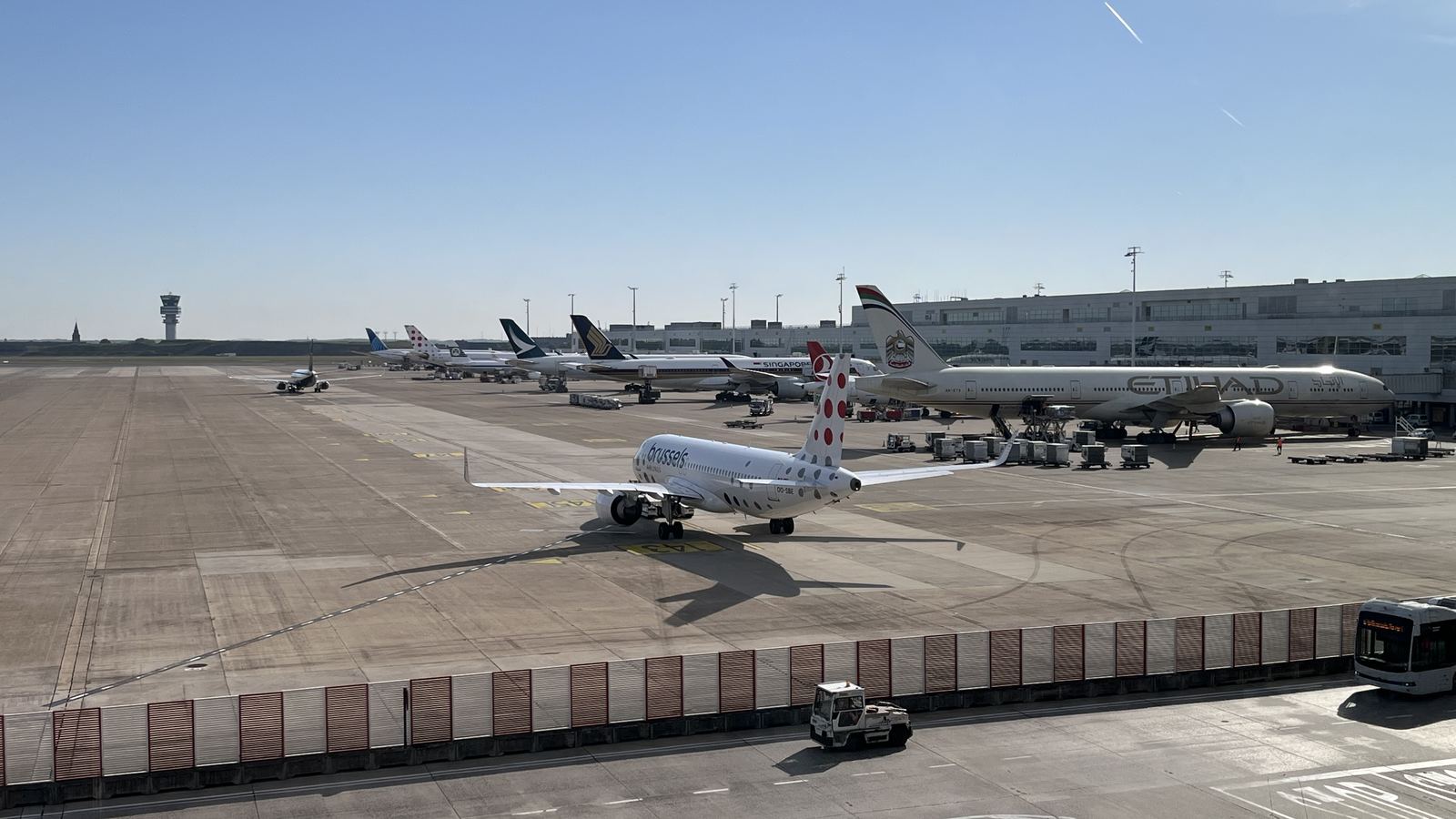
The featured photograph shows aircraft at the terminal at Brussels Airport in August 2025.