When clocks fall back across most of North America early Sunday, Nov. 1, British Columbia will not change. The province is staying on permanent daylight time, which it now calls Pacific time, so from that morning Vancouver will be one hour ahead of Seattle and Portland until the United States springs forward in March, the Washington State Department of Transportation reminded travelers this week.
For the first time, crossing the border between Washington and British Columbia will mean changing your watch. If you are taking the train, driving to Vancouver or Bellingham, or catching a flight or ferry across the line in the coming months, check which local time your ticket or booking uses.
- When: Sunday, Nov. 1, 2026, when Washington and Oregon fall back to Pacific Standard Time.
- British Columbia: Stays on UTC minus 7, now called Pacific time, with no more clock changes.
- Result: Vancouver is one hour ahead of Seattle and Portland until the U.S. springs forward in March.
- Amtrak Cascades: Tickets show a three-hour trip southbound and five hours northbound; the real trip is four hours.
- Exception: Southeastern B.C. communities such as Cranbrook, Golden and Invermere keep changing clocks with Alberta.
The Decision Behind the Change
The British Columbia government announced on March 2 that the March 8 spring forward would be the province’s last clock change and that clocks would stay the same on Nov. 1. Pacific time is UTC minus 7, the same offset the province used during daylight saving time.
Premier David Eby said he hoped American neighbours would soon end time changes too, and the release noted that Washington, Oregon and California are working on similar legislation. Until those states act, the Pacific Northwest will run on two clocks each winter.
Amtrak Cascades Tickets
WSDOT says Amtrak Cascades tickets will handle the gap the same way as a trip across U.S. time zones, showing departure time in the city you leave and arrival time in your destination. A southbound trip from Vancouver to Seattle will look like three hours on the ticket and a northbound trip five hours, though the actual travel time is four hours both ways.
Amtrak Cascades runs two daily round trips to and from British Columbia, one to Seattle and one to Portland, and the agency says onboard announcements will remind passengers of the time change at the border. Each spring, when the United States moves its clocks forward, the two sides will share the same time again.
Driving, Flying and Ferries
Drivers heading south from Vancouver to Bellingham or Seattle will effectively gain an hour, and lose it on the way back north. Hotel check-in times, tour departures and restaurant reservations are set in local time, so plan around the clock where you will be, not the one you left.
Airline and ferry schedules also use local times, so a short flight between Vancouver and Seattle may look like it lands before it takes off, or takes much longer than it does. Phones and computers update automatically if their software is current, but double check any calendar entries you made by hand for the first week of November.
Places That Still Change Clocks
Not all of British Columbia moves to the new Pacific time in the same way. The province says southeastern communities including Cranbrook, Golden and Invermere will keep switching clocks in step with Alberta, while northeastern areas such as Dawson Creek, Fort St. John and Fort Nelson already use UTC minus 7 year round and will match the rest of the province.
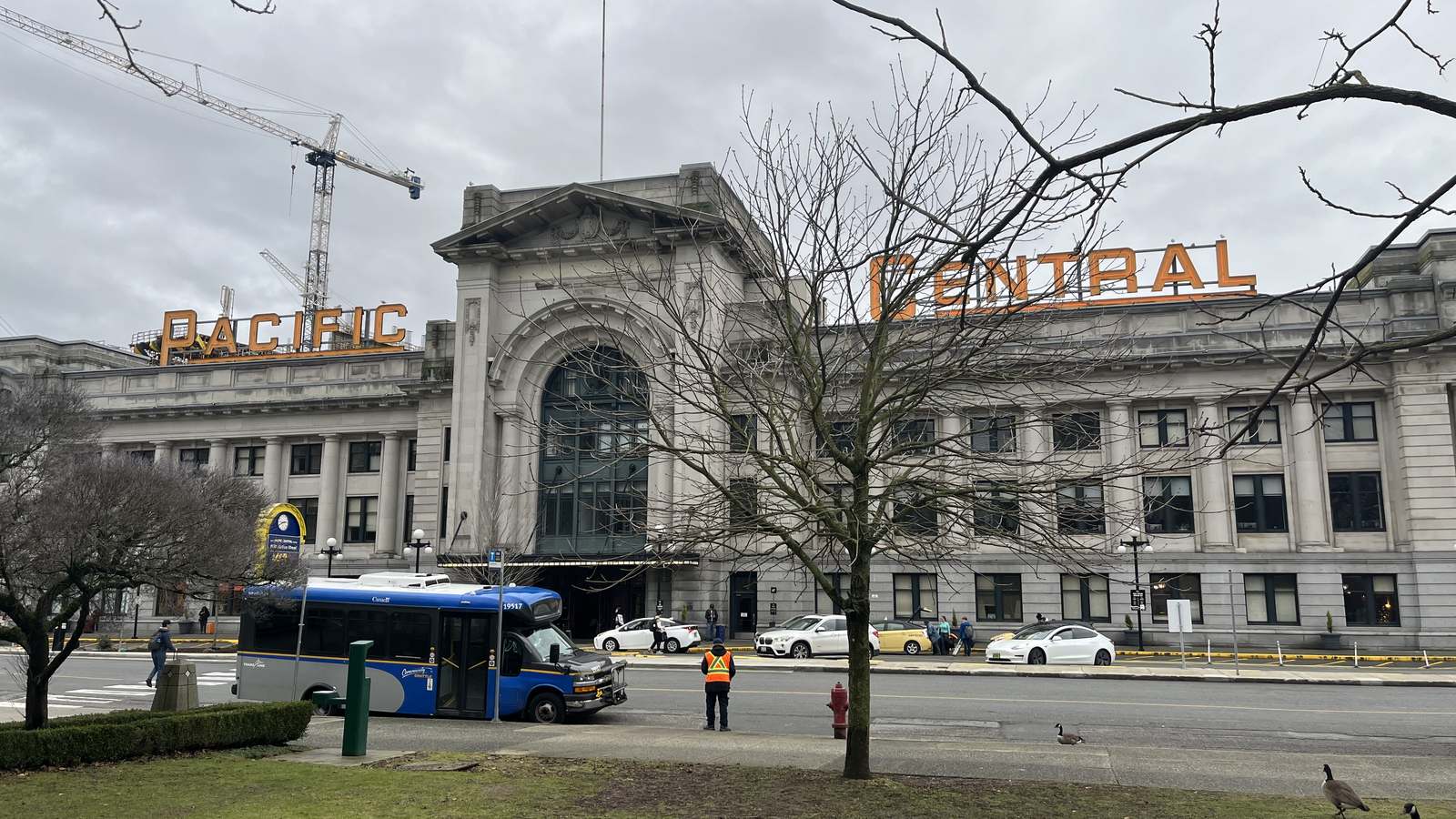
Clock changes are not uniform across Canada either: we reported earlier that the Northwest Territories is also skipping the Nov. 1 change. The photo above is a January 2024 file image of Pacific Central Station in Vancouver, where Amtrak Cascades trains arrive from the United States.
| If you… | What to do |
|---|---|
| Ride Amtrak Cascades to or from Vancouver after Nov. 1 | Read ticket times as local times; the trip still takes four hours. |
| Drive from Vancouver to Seattle for a set time | Remember Washington is an hour behind from Nov. 1 to March. |
| Book flights, ferries or tours across the border | Check which local time each booking uses. |
| Travel to Cranbrook, Golden or Invermere | Expect those areas to keep changing clocks with Alberta. |
Sunday, Nov. 1 opens the one-hour gap. Washington and Oregon fall back; most of British Columbia does not.
Through the winter, Vancouver runs an hour ahead. Cross-border tickets show local times at each end.
March brings the clocks back in line. The gap closes when the United States springs forward.
Does British Columbia fall back on Nov. 1, 2026?
No. British Columbia is staying on permanent daylight time, now called Pacific time, and will not change its clocks on Nov. 1.
What is the time difference between Vancouver and Seattle?
From Nov. 1 until the United States springs forward in March, Vancouver is one hour ahead of Seattle.
How long is the Amtrak Cascades trip from Vancouver to Seattle now?
The trip still takes four hours, but tickets will show three hours southbound and five hours northbound because of the time difference.
Does all of B.C. stay on the same time?
No. Southeastern communities such as Cranbrook, Golden and Invermere keep changing clocks with Alberta, according to the province.
Image Credits
- Lead Photo
Pacific Central Station, Vancouver, BC · David Wilson · CC BY 2.0 · edited