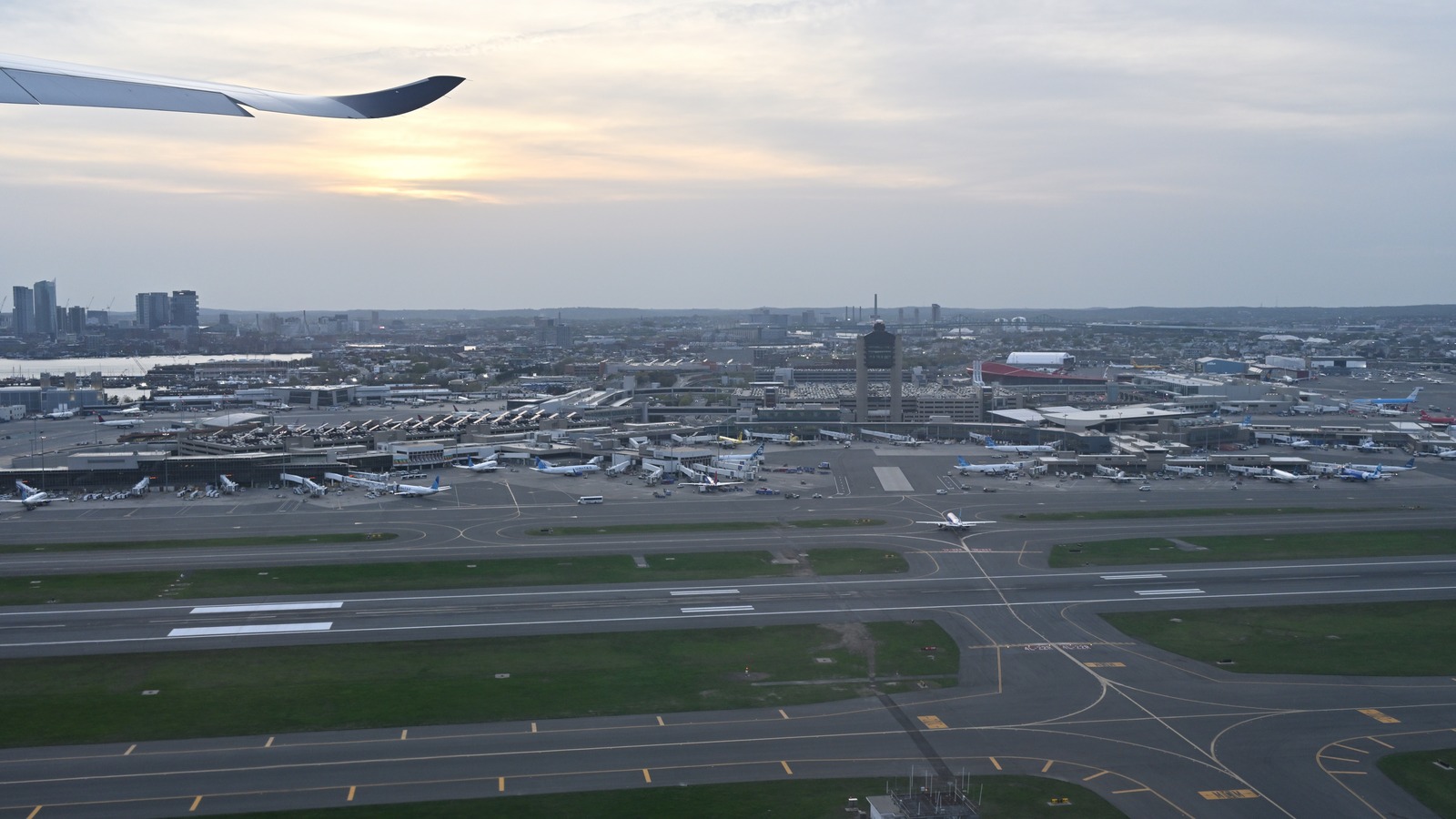
The Federal Aviation Administration listed a wind-driven ground delay program at Boston Logan International Airport on Monday, October 5, 2026, with average delays of 52 minutes. The agency’s National Airspace System status board showed the program covering 1:30 p.m. Monday through 1:59 a.m. Tuesday, Eastern Time, while a parallel feed also posted a 2 hour 12 minute delay figure next to the 52-minute average.
Anyone connecting through Logan this afternoon or overnight should treat arrival times as movable until the program expires, then recheck airline app alerts and the airlines booking tools rather than the original ticket clock. The National Weather Service forecast office in Boston/Norton said a cold front would bring breezy west to west-northwest winds today, and its Logan point forecast called for west gusts as high as 28 mph under sunny skies.
- Airport: Boston Logan International Airport (BOS).
- Program: FAA ground delay for wind, average 52 minutes.
- Window: 1:30 p.m. Monday to 1:59 a.m. Tuesday, Eastern Time.
- Weather: West gusts to 28 mph at Logan; aviation gusts 20 to 30 knots after noon.
- Action: Recheck inbound flights before leaving for a connection.
FAA Ground Delay Holds Boston Arrivals Monday
A ground delay program is a traffic tool, not a runway closure. The FAA slows departures at origin airports so aircraft arrive at a constrained airport at a rate the field can accept. Passengers usually feel it as a later pushback at the far end, a longer airborne hold, or a missed bank at Logan rather than a locked terminal.
On Monday the constraint was wind. The FAA National Airspace System status page placed Boston Logan on the ground delay list with a 52-minute average from 1:30 p.m. Eastern Time on October 5 through 1:59 a.m. on October 6. That window covers the afternoon bank, evening transcontinental arrivals, and the last East Coast connections of the night. The feed also printed 2 hours and 12 minutes beside the average. Use 52 minutes as the planning mean, and treat the longer figure as a reminder that some arrivals sit well above it.
Flight delayed or cancelled? AirHelp can check whether your trip may qualify for compensation. Check a flight with AirHelp Disclosure: Deep Arrival may earn a commission.
Deep Arrival previously covered a stronger Logan wind program on August 23, when the advertised average reached 124 minutes, in Boston Logan International Airport GDP Averages 124 Minutes August 23. Monday’s 52-minute average is a new dated program, not a continuation of that August event or of the September 22 runway-work delay.
West Winds at Logan Rise After Noon
The weather side is on the National Weather Service point forecast for Boston Logan. At 9:54 a.m. Eastern the observation was a few clouds, 10 miles of visibility, and a west wind. The forecast called for a sunny Monday, a high near 66, a west wind of 9 to 16 mph, and gusts as high as 28 mph.
The Boston/Norton discussion issued at 12:01 UTC on October 5 called the day breezy but dry ahead of a cold front, with gusts on the order of 20 to 30 mph especially over the waters. For KBOS, it assigned high confidence to the trend. Enhanced west-northwest gusts of 20 to 30 knots were expected around 16Z, noon Eastern, with the higher end more likely between 2 p.m. and 6 p.m. as a boundary moved through. That afternoon gust window is why a 1:30 p.m. ground delay is a traffic response, not a surprise.
Connection Buffers Need a Second Check
A 52-minute average delay is enough to break a layover that looked legal at booking. A 70-minute domestic connection can still work if the inbound is only a few minutes late. It fails if the inbound is held an hour at the origin while the Logan outbound still pushes on time. Passport-control connections are tighter still.
Ground delay programs target the arrival rate. An outbound from Logan may still leave close to schedule while inbound aircraft are metered. Confirm the inbound’s origin departure, then confirm the Logan outbound has not been retimed on its own. A hold issued at New York, Chicago, Washington, Atlanta, or a transatlantic gateway under Logan’s program is still a Boston delay for the passenger.
As of late morning Monday, neither the FAA status page nor the National Weather Service products listed an airline-wide change-fee waiver for Boston. Individual carriers may still move customers. Read that on the carrier’s own advisory. Do not infer a waiver from the wind forecast.
How to Recheck Logan Before You Leave Home
Start with the FAA status board, then the airline, then the airport. If Boston drops off the National Airspace System list, the program has ended even if the wind is still noticeable on the ground. If the average delay rises, add buffer before you leave for a pickup.
Massport’s Logan site did not, at late morning, publish a matching delay banner. That is normal. Use Massport for terminal, parking, and MBTA routing. Use the FAA and the airline for whether the airplane will be there. Add the 52-minute average plus baggage time to any curb pickup. Ride-hail queues at Terminals A through E stack up when delayed banks land together after 6 p.m.
If you originate at Logan, your departure may still leave close to schedule because the program meters arrivals. An outbound can still be late if its inbound tail is in the hold. Check that inbound flight, not only your flight number.
| If you… | What to do |
|---|---|
| Connect at Logan this afternoon or evening | Add at least 52 minutes to the inbound, then recheck the outbound before you leave the origin gate area. |
| Are being picked up at the curb | Shift the pickup later by the published average and watch the inbound’s origin departure, not the original Logan time. |
| Hold a ticket that already ends after midnight | Stay in the program window through 1:59 a.m. Tuesday before you assume the delay is over. |
| Need a same-day backup | Ask the airline about later BOS arrivals or a Northeast rail option; do not invent a waiver that the carrier has not posted. |
1:30 p.m. Eastern Time Monday is the listed start. Inbound aircraft that were going to land in the early afternoon bank are the first to feel the meter.
2 p.m. to 6 p.m. Eastern is the higher-gust window in the aviation forecast. That is the stretch when west-northwest gusts at KBOS are most likely to sit at the top of the 20 to 30 knot range.
1:59 a.m. Eastern Time Tuesday is the listed end. Recheck the FAA board overnight. If the program is still posted after that time, keep using the live average, not the original ticket.
Planning another trip? Review Travel Guard plan terms for delays, cancellations, and baggage before choosing coverage. Review Travel Guard plans Disclosure: Deep Arrival may earn a commission.
Tuesday Morning After the Wind Program
The National Weather Service said gusts decrease this evening at interior terminals, with low-end gusts lingering at coastal sites such as Boston. Tuesday is forecast sunny and cooler, with a high near 58 and west gusts as high as 23 mph. That is still breezy, and a step down from Monday afternoon’s aviation gust range.
Recovery is rarely instant. Aircraft that landed late Monday night still have to turn. A Tuesday 6 a.m. to 9 a.m. departure can inherit Monday’s mis-set tail even if the FAA program is off the board. Confirm that inbound Monday night rather than assuming a clean slate at 2 a.m. Only a fresh FAA posting would restart this delay story.
Keep the official pair bookmarked: the FAA status page for the program, and the Logan point forecast for the wind. Until then, plan Monday’s Boston connections around a 52-minute average hold and an end time of 1:59 a.m. Tuesday.
How long are Boston Logan wind delays today?
The FAA listed an average of 52 minutes for the October 5 wind ground delay at Boston Logan, with a program window from 1:30 p.m. Monday to 1:59 a.m. Tuesday, Eastern Time.
Does a ground delay cancel Boston flights?
No. A ground delay meters the arrival rate. Some flights still operate late rather than cancel. Check your specific flight with the airline; do not read the 52-minute average as a cancellation list.
What wind is forecast at Logan on October 5?
The National Weather Service Logan point forecast called for west winds of 9 to 16 mph and gusts as high as 28 mph. The aviation discussion expected west-northwest gusts of 20 to 30 knots at KBOS from about noon, highest between 2 p.m. and 6 p.m. Eastern.
Should I leave extra time for a Logan pickup?
Yes. Add the 52-minute average to the inbound arrival, then add baggage time. Several delayed banks can reach the curb together after 6 p.m.
Is this the same as the August 23 Logan wind delay?
No. August 23 was a separate program with a 124-minute average. Monday’s 52-minute wind delay is a new dated FAA posting.
When can I treat Logan as back to a normal flow?
Use 1:59 a.m. Tuesday only if the FAA board has dropped the program. Tuesday morning turns can still run late if Monday night arrivals were held.
Image Credits
- Lead Photo
4300streetcar · CC BY 4.0 · cropped