About a dozen tapestries might sound like a small museum detour. Baltimore Museum of Art is making a bigger case: Woven Monuments: Tapestry and Identity in Senegal, which opened October 25, is the first U.S. museum exhibition in 45 years dedicated to Senegalese tapestries, according to the museum. Its run continues through March 7, 2027.
The reason to go is not simply to count textiles. It is to see how an art form helped a newly independent country describe itself to the world. For a Baltimore trip, give this Charles Village stop its own place on the calendar; our Baltimore sightseeing guide separates the northern museums from the Inner Harbor circuit rather than squeezing every attraction into one waterfront day.
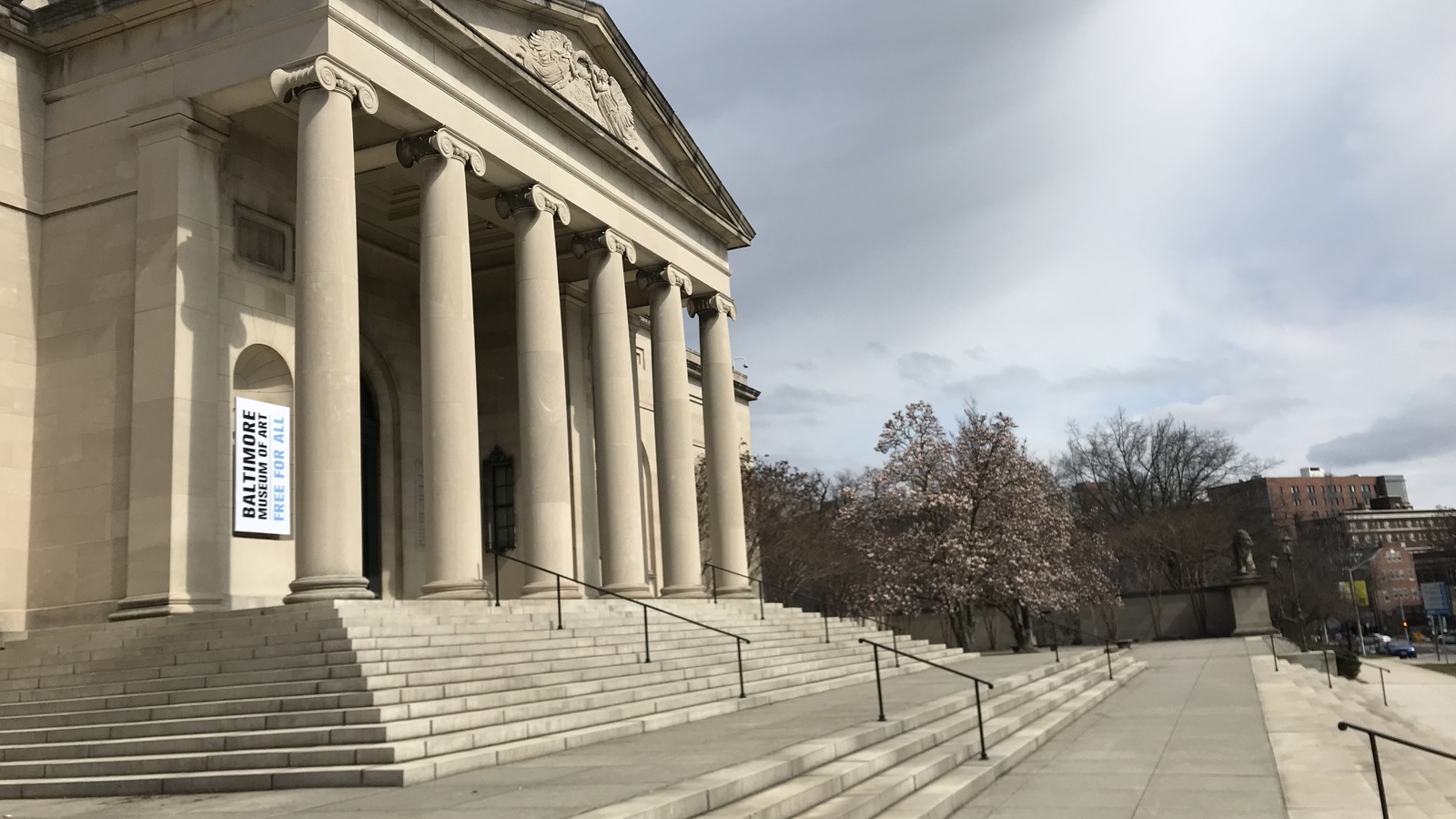
Image context: the museum’s historic front was photographed March 25, 2018. This is historical architecture, not a view of Woven Monuments or today’s entrance arrangements. The museum currently directs arriving visitors to Zamoiski East; the Merrick Historic Entrance is exit-only.
- New exhibition: Woven Monuments opened October 25, 2026, and runs through March 7, 2027.
- The draw: Approximately 12 monumental Senegalese tapestries, with the museum citing a 45-year gap in dedicated U.S. museum exhibitions.
- Location: Baltimore Museum of Art, 10 Art Museum Drive, in Charles Village.
- Visit timing: Closed Monday and Tuesday; regular gallery hours are Wednesday through Sunday, with extended Thursday hours.
The 45-Year Gap Is About the Show
That headline number needs a little care. The museum is describing the rarity of a dedicated exhibition in the United States, not saying that no American visitor has seen a Senegalese tapestry for 45 years. Nor does the claim make every object a never-before-seen discovery. The opportunity is a focused presentation of the medium, with enough works together to make their shared ambitions visible.
Approximately 12 works is also not a warning that the exhibition will feel slight. These are monumental textiles, and scale is part of the proposition. A compact selection can encourage a different kind of looking than a packed survey: compare the compositions, notice how figures and abstract shapes occupy the surface, and consider what changes when an image is woven rather than painted.
A Nation’s Story, Told in Wool
The works connect to Senegal’s effort to build a national identity following independence from France in 1960. Produced primarily at the state-supported tapestry workshop in Thiès, they place artistic ambition alongside a larger cultural project. The museum’s explanation emphasizes innovation, collaboration and cultural diplomacy, rather than treating the textiles as decorative souvenirs.
That is the useful lens for a first-time visitor. An image can speak about daily life or the natural landscape while also representing a country abroad. Instead of asking only whether a tapestry would look good on a wall, ask what kind of public statement it makes. The difference turns an attractive textile into a more interesting encounter with modern African art.
Artcentron’s August preview of the museum’s fall exhibitions likewise places Woven Monuments in the post-independence story and identifies the Thiès workshop as central to the presentation. That preview predates opening; the museum’s current exhibition page, not an older seasonal announcement, controls the March 7 closing date used here.
Look for the Collaboration, Not Just a Signature
Tapestry makes it worth slowing down at the labels. Design and weaving are different contributions, and the museum frames collaboration as one of the exhibition’s themes. Where an individual work identifies both roles, read them together. It is a more revealing approach than treating a textile as though a single name necessarily explains every step from image to finished object.
You do not need a textile-history background to make that comparison. Start with a scene or composition that catches your eye, then look at its construction and neighboring works. This is a suggested way to explore, not a claim about a guided tour or a timed route supplied by the museum. We have not inspected the installation in person or timed a complete visit.
Build Around an Open Day, Not Just an Opening Date
The exhibition opened on a Sunday, but that does not make the galleries a seven-day-a-week option. The museum’s current visitor information lists Monday and Tuesday closures, regular Wednesday through Sunday hours of 10 a.m. to 5 p.m., and Thursday extended hours until 9 p.m. The next regular open day after Monday, October 26, is Wednesday, October 28.
That distinction matters if you are adding an art stop to a short stay. Choose the museum day before arranging the rest of the itinerary. General admission is free with a reservation, but the museum says special exhibitions can require a separate ticket. We have not verified a Woven Monuments-specific price or ticket entitlement, so do not read the general free-admission statement as a promise that every exhibition is included.
The published calendar also lists Thanksgiving Day and Christmas Day among closure dates. A long exhibition run gives you options, not a guarantee that any holiday afternoon will work. Confirm the selected date, current gallery availability and admission selection directly before committing to a visit centered on this show.
Keep Charles Village in the Plan
The museum is at 10 Art Museum Drive, away from the Inner Harbor concentration of waterfront attractions. That is an argument for grouping your day sensibly, not an excuse to rush across town between reservations. The Baltimore guide’s neighborhood-based approach helps you decide which other stops belong together without pretending that the entire city is one continuous museum campus.
There is a small but useful arrival detail, too: the impressive historic front in the photograph is not the current entry instruction. Use Zamoiski East when arriving; Merrick Historic is presently exit-only. A strong museum day should start with the right door, then leave your attention for the much more interesting question inside: how about a dozen textiles can carry a national story.
When is Woven Monuments at Baltimore Museum of Art?
The current exhibition page lists October 25, 2026, through March 7, 2027. Check the museum’s open-day and holiday calendar before choosing a date.
Why does the museum call this Senegalese tapestry show unusual?
The BMA describes it as the first U.S. museum exhibition in 45 years dedicated to Senegalese tapestries. That refers to the exhibition category, not a claim that every work has been unseen for 45 years.
Is Woven Monuments automatically included with free admission?
The museum offers free general admission with reservation but says special exhibitions may need a separate ticket. A show-specific price or entitlement has not been verified here; check the official admission selection.