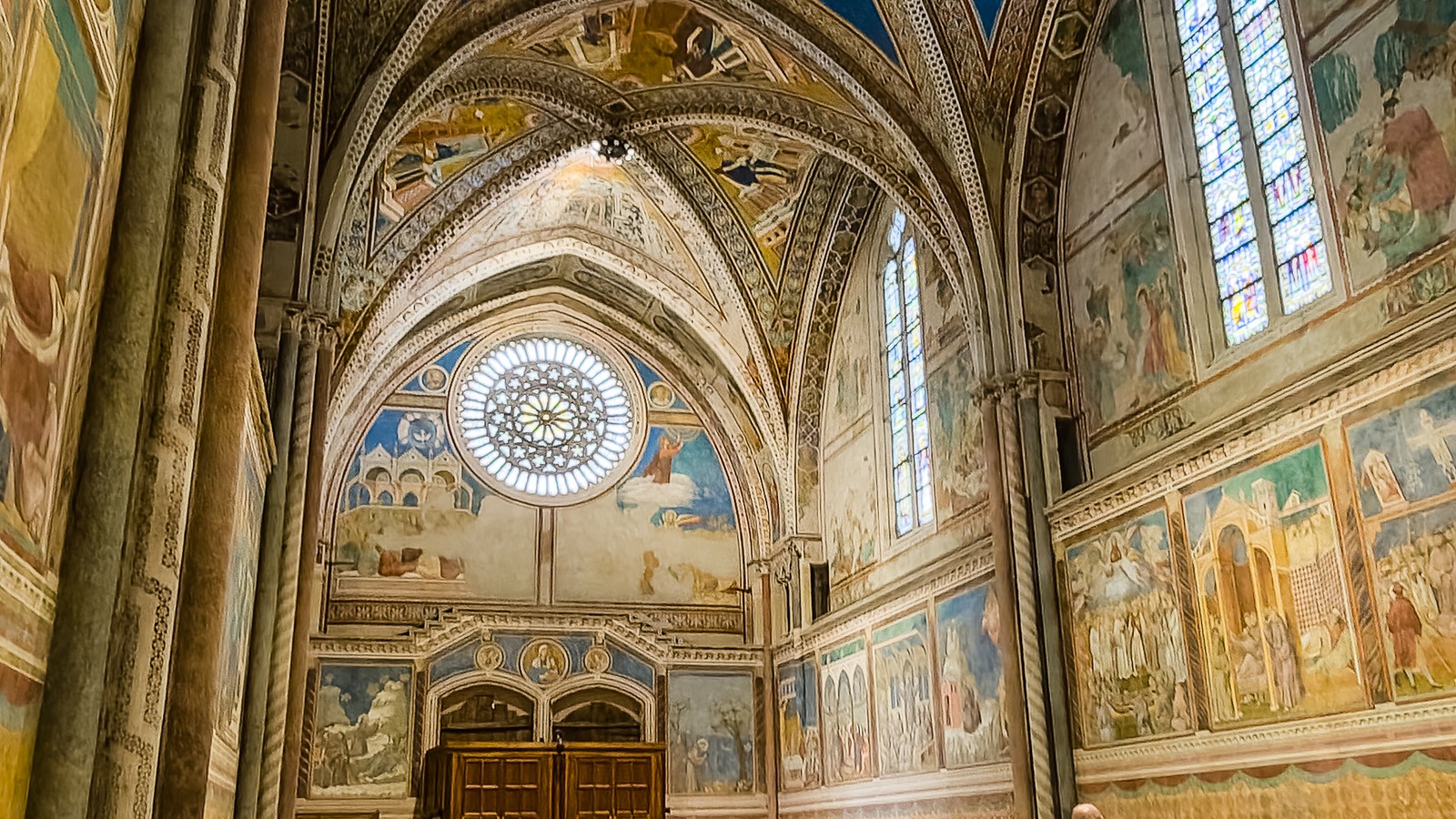
Assisi · xiquinhosilva · CC BY 2.0 · cropped
Preserving Assisi, a free digital platform devoted to the Basilica of San Francesco in Assisi, went live on 16 September 2026 and was presented in Rome the same day. Built by Haltadefinizione with the General Custody of the Sacred Convent, it offers 360-degree panoramas of the two stacked churches and the exterior, together with gigapixel zoom on individual frescoes.
Access is free and entirely remote. For anyone planning a trip to Assisi, the platform works as a preview: you can move through the Upper and Lower Basilicas room by room and study particular chapels and painted walls before deciding what to see first and where to spend your time. The basilica is a UNESCO World Heritage site, so the platform adds a screen-based companion to the physical visit.
- Launch: Preserving Assisi went live on 16 September 2026, presented in Rome the same day, and access is free.
- What you can do: Navigate 360-degree panoramas of the Upper and Lower Basilicas and the exterior, then zoom into gigapixel fresco details.
- Named works: Giotto's Homage of a Simple Man (c. 1300) in the Upper Basilica nave and Pietro Lorenzetti's Crucifixion (c. 1320) in the Lower Basilica south transept.
- Who runs it: Haltadefinizione, a Gruppo Panini Cultura technology company, and the General Custody of the Sacred Convent of the Friars Minor Conventual.
- Photo credit: Interior view by xiquinhosilva, shot 3 May 2023 under CC BY 2.0; it shows the physical church, not the digital platform.
What You Can Explore on the Platform
The platform is built around virtual tours and 360-degree environments covering the Upper and Lower Basilicas and the space outside them. Visitors navigate in a first-person view, steering with on-screen arrows much as they would in a mapping app, rather than watching a fixed video.
Zooming in is the other half. Selecting a detail opens a gigapixel image of a fresco or a painted cycle, letting a viewer inspect surface features, pigments and brushwork that are difficult to notice during a normal visit to a crowded church. The images also document colour and the condition of the surfaces.
Two works are singled out in the launch material. Giotto's Homage of a Simple Man, painted around 1300, hangs in the nave of the Upper Basilica; Pietro Lorenzetti's Crucifixion, from around 1320, is in the south transept of the Lower Basilica. Both appear among the platform's gigapixel views.
The platform extends beyond the church itself. Its own description covers the Sacred Convent and the surroundings, presented through maps as well as panoramas and digitised artworks, so the two churches can be read in the context of the whole monastic complex in Assisi.
How Detailed the Images Are, and What It Took to Capture Them
Haltadefinizione and the Custody report that the 2025 and 2026 campaigns produced more than 27,000 photographs and over 12 TB of data, yielding 98 final digital assets including gigapixel images and 360-degree panoramas, as relayed by Askanews. Those photographs were taken inside and outside the basilica and across its decorative scheme.
The Art Newspaper gives a different count from the same effort: about 27,000 high-definition images taken this year and last, which the company used to make 116 gigapixel images. The two sets of figures describe the campaigns from different angles and are best kept separate. Neither supersedes the other.
Among the project's largest images is Lorenzetti's Crucifixion, photographed in July 2026 at 101,627 by 78,170 pixels, containing nearly eight billion pixels in all. It sits in the south transept of the Lower Basilica.
Who Runs Preserving Assisi
The platform is a project of Haltadefinizione, a technology company of Gruppo Panini Cultura, and the General Custody of the Sacred Convent of Saint Francis of the Friars Minor Conventual. The two partners set up an association in participation, established by public deed, to carry the work forward.
It carries the patronage and support of the National Committee for the Celebrations of Saint Francis, along with patronage from the Region of Umbria and the City of Assisi. The University of Florence collaborated, and BPER Banca provided support. The launch falls in the year of the eighth centenary of Saint Francis's death.
Luca Ponzio, founder and chief executive of Haltadefinizione, called Preserving Assisi one of the most complex projects the company has handled in twenty years, and said it would offer a broader, integrated visual reading of the monument. Fra Marco Moroni, Custode of the Sacred Convent, said the aim was to make the basilica's artistic and spiritual treasures accessible worldwide in very high definition.
What It Means for a Visit to Assisi
The platform is an online access project. Nothing in the launch material indicates any change to tickets, opening hours or entry prices at the basilica, and no new physical access arrangements were announced, so an in-person visit still follows the basilica's own rules.
Its practical value is preparation. Because the Upper and Lower Basilicas and their painted cycles can be studied at home, a traveler can decide in advance which chapels, walls and specific works matter most, then give those the attention and time a single visit rarely allows.
The digitisation already covers specific ground inside the Lower Basilica: the chapels of San Martino, Santa Maria Maddalena and San Nicola, the transept and the presbytery vault, plus exterior spaces. Those are rooms and surfaces a visitor will walk past, and the online record mirrors them.
Why a Digital Record Matters, and What Comes Next
Beyond viewing, the work is building a digital twin: a computer-based replica of the basilica's architecture, paintings and surfaces, updated over time, that the promoters say will support documentation, study, monitoring and conservation, and help identify future changes to the monument. It is not a substitute for the building, but a reference point for its condition.
Photographic documentation has mattered here before. Earthquakes of magnitude 5.7 and 6.0 struck in 1997 and badly damaged the basilica, including a Giotto cycle on the life of Saint Francis and works by Cimabue. A campaign by publisher Franco Cosimo Panini Editore, under way at the time, produced high-definition images later used in restoration, The Art Newspaper reports.
The platform is not complete. Haltadefinizione says digitisation will continue over the coming months, with new results, including 3D models of the basilica complex, added progressively. The project site points to further campaigns during 2027. No fixed dates for that material have been announced.