
Irish capital city base chooser
Where to Stay in Dublin, Ireland
Dublin's center is compact, but its neighborhoods make very different bases for a city break. Choose Temple Bar for immediate atmosphere, St Stephen's Green for classic central access, Docklands for modern riverside space, or an inner village when you prefer cafes and a slower local rhythm.
Photo by Giuseppe Milo from Dublin, Ireland, CC BY 2.0, via Wikimedia Commons
Start here
Where should you stay? Start with the trip.
Start by choosing between immediate old-city atmosphere, Georgian streets, riverfront events, a northside rail hub, or an inner-village base with a slower evening pace.
The chooser
Six areas, and who each one suits
Every area includes a Skip if line. That is the useful part when two neighborhoods both look good on a map.
 Public domain via Wikimedia Commons
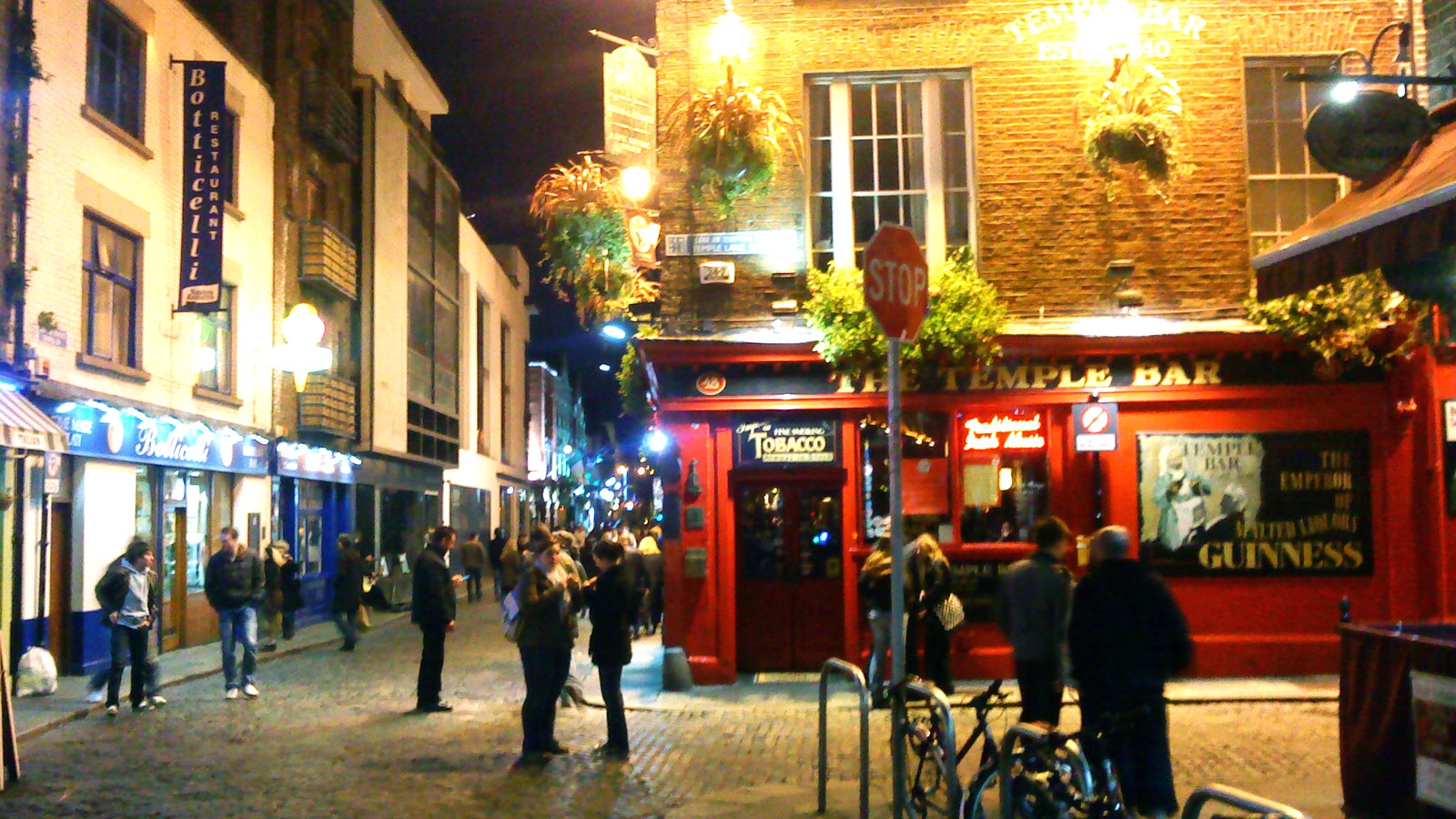
Temple Bar and Trinity College
The most immediate old-city base for cobbled lanes, cultural venues, pubs, live music, Trinity College, and first-time sightseeing on foot.
- Best for
- first-time visitors wanting Dublin's liveliest central atmosphere outside the door.
- Around
- Temple Bar, Trinity College, the River Liffey, cultural venues, restaurants, and central shopping streets.
- Feel
- Historic, energetic, and visitor-focused.
Skip if a quieter night and a more residential neighborhood rhythm are important.
 Dronepicr (edited by King of Hearts ) Edit corrects CA and sharpens image, CC BY 3.0
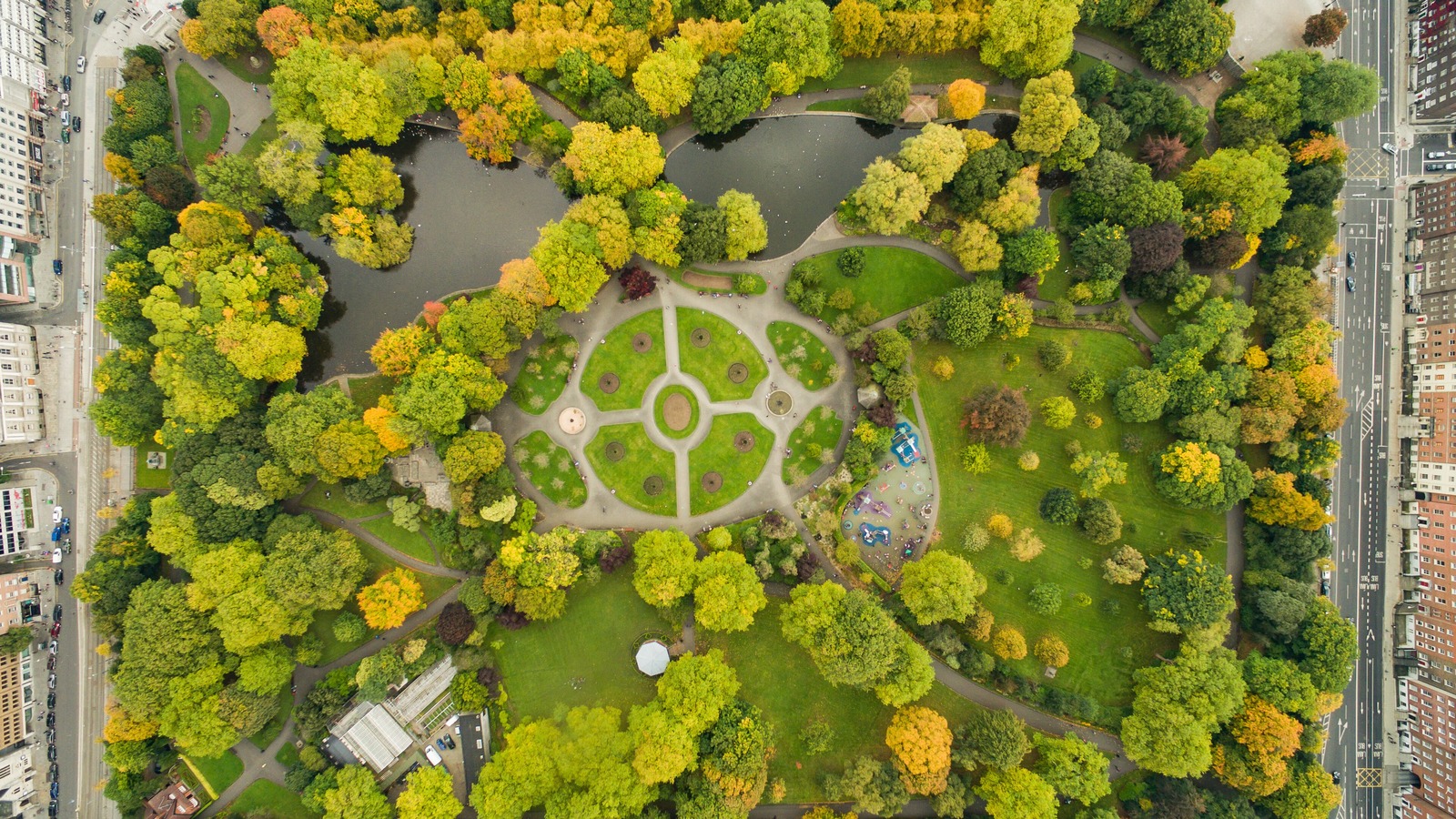
St Stephen's Green and Grafton Street
A polished south-side base where park walks, shopping, Georgian streets, museums, and central restaurants come together.
- Best for
- travelers who want a central, elegant base with parks, shopping, and museums nearby.
- Around
- St Stephen's Green, Grafton Street, Trinity approaches, galleries, restaurants, and Georgian streets.
- Feel
- Refined, central, and park-adjacent.
Skip if you want Temple Bar's immediate nightlife or a lower-key village setting.
 Pastor Sam, CC BY 3.0
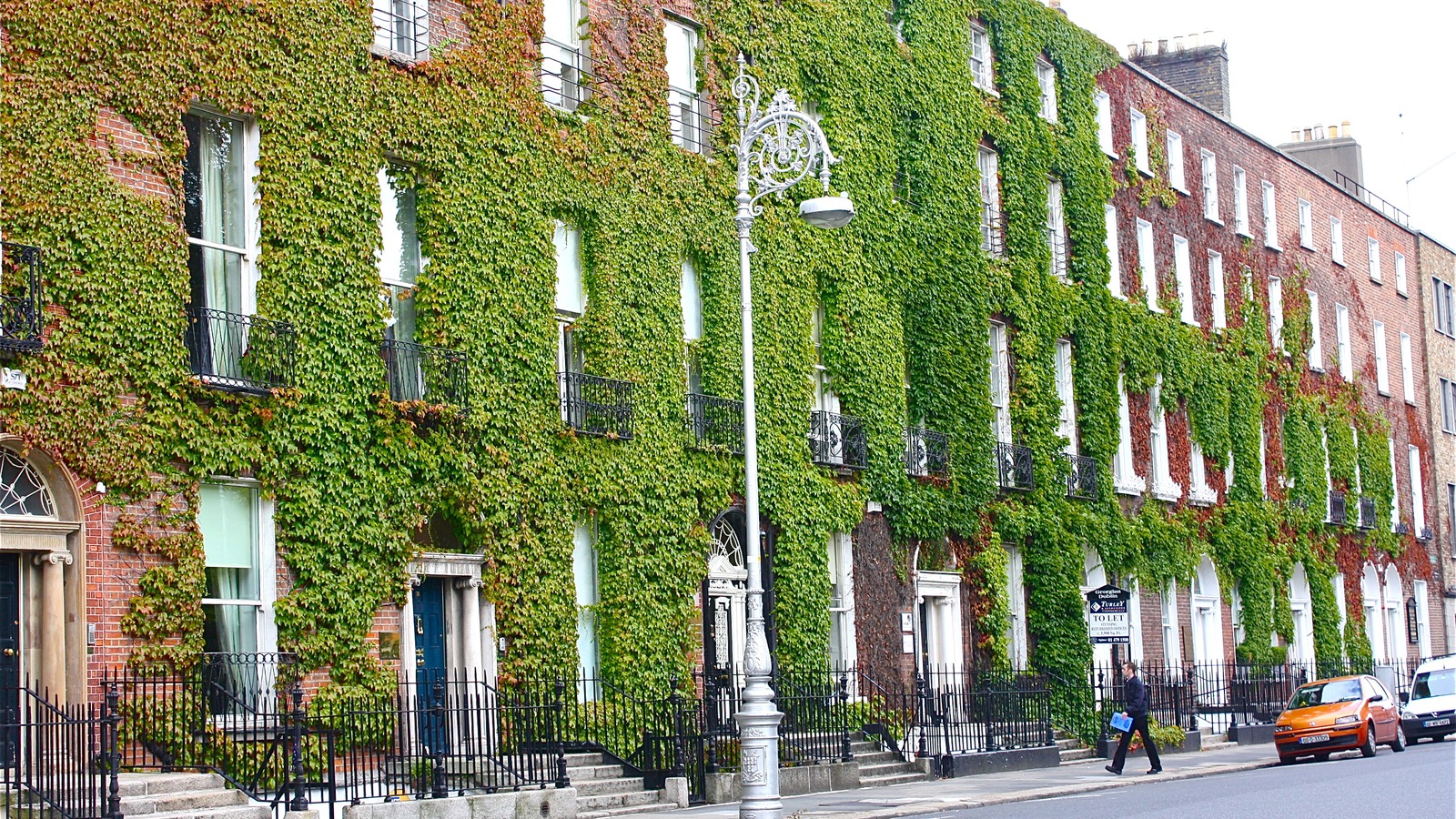
Merrion Square and Georgian Quarter
A calmer central district with formal squares, museums, embassies, and a strong sense of Georgian Dublin near the south city center.
- Best for
- museum visits, Georgian architecture, and travelers who prefer calmer central evenings.
- Around
- Merrion Square, the National Gallery area, Georgian streets, St Stephen's Green, and Trinity approaches.
- Feel
- Elegant, quieter, and cultural.
Skip if you want a nightlife-first stay or the most direct rail-hub setting.
 DXR, CC BY-SA 4.0
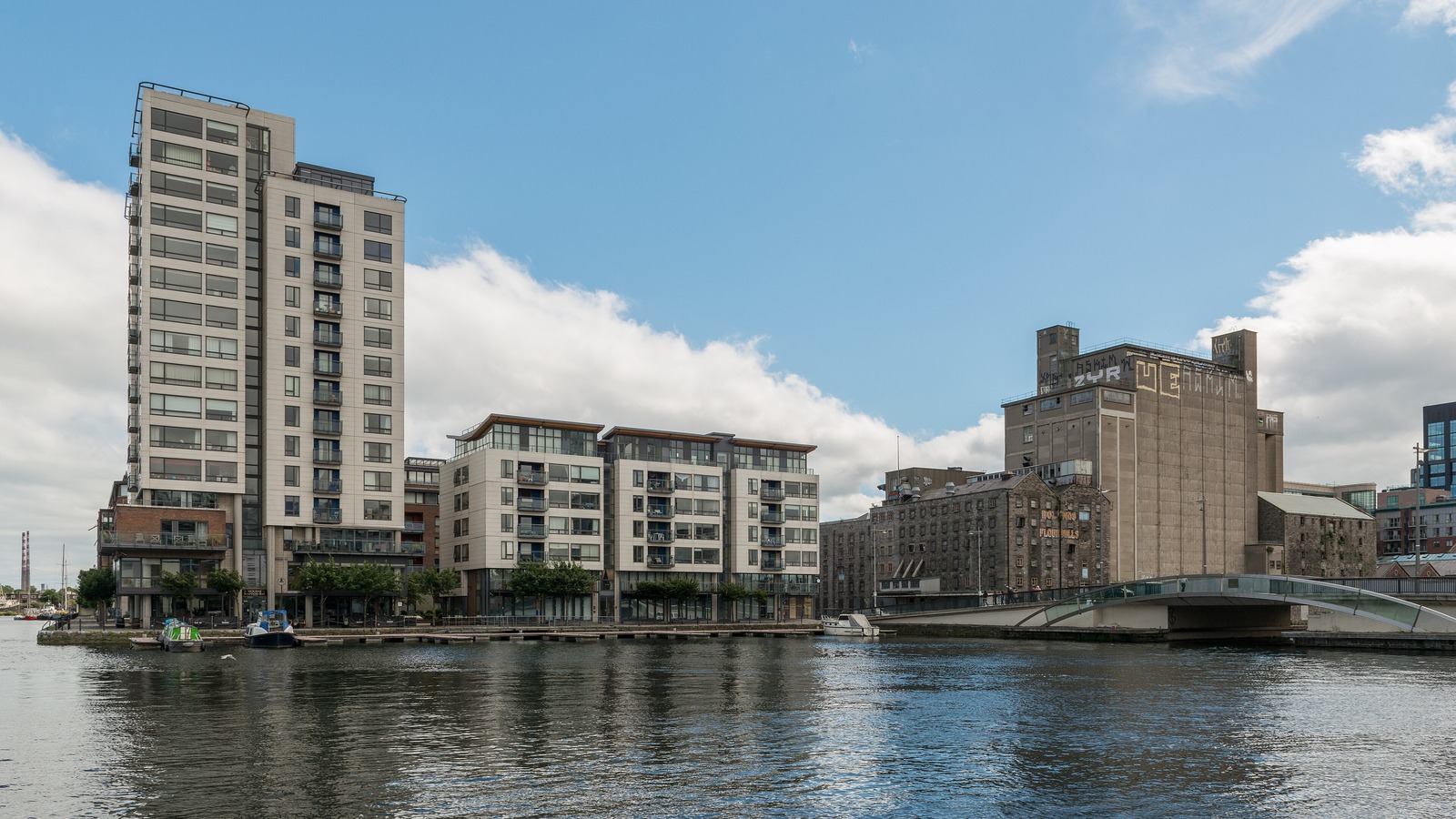
Docklands and Grand Canal Dock
A contemporary riverside base for architecture, waterfront walks, business trips, nearby venues, and a less traditional side of Dublin.
- Best for
- events, business stays, modern architecture, and riverside walks.
- Around
- Grand Canal Dock, Mayor Square, the Convention Centre, riverfront paths, and major venues.
- Feel
- Modern, open, and waterside.
Skip if you want to wake in the historic pub-and-lane atmosphere of Temple Bar.
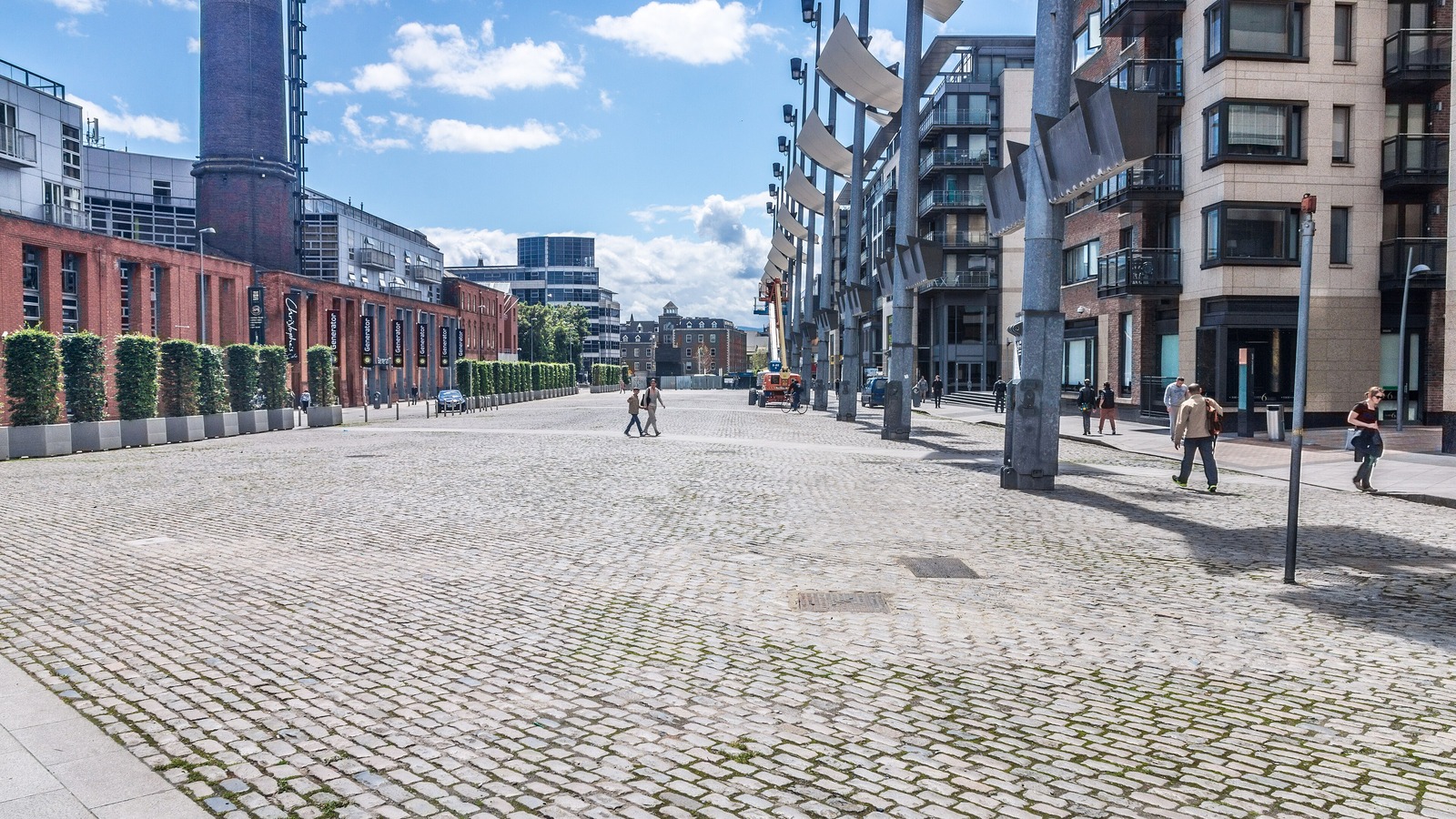 William Murphy, CC BY-SA 3.0
Smithfield and Stoneybatter
A north-of-the-river choice for coffee, traditional music, independent food, and an inner-city neighborhood feel that is still connected to the center.
- Best for
- repeat visitors and food-minded travelers who want a more local northside rhythm.
- Around
- Smithfield Square, Stoneybatter cafes, traditional music venues, the Luas, and the River Liffey approaches.
- Feel
- Creative, lived-in, and relaxed.
Skip if you want the shortest walk to Trinity College or a southside shopping base.
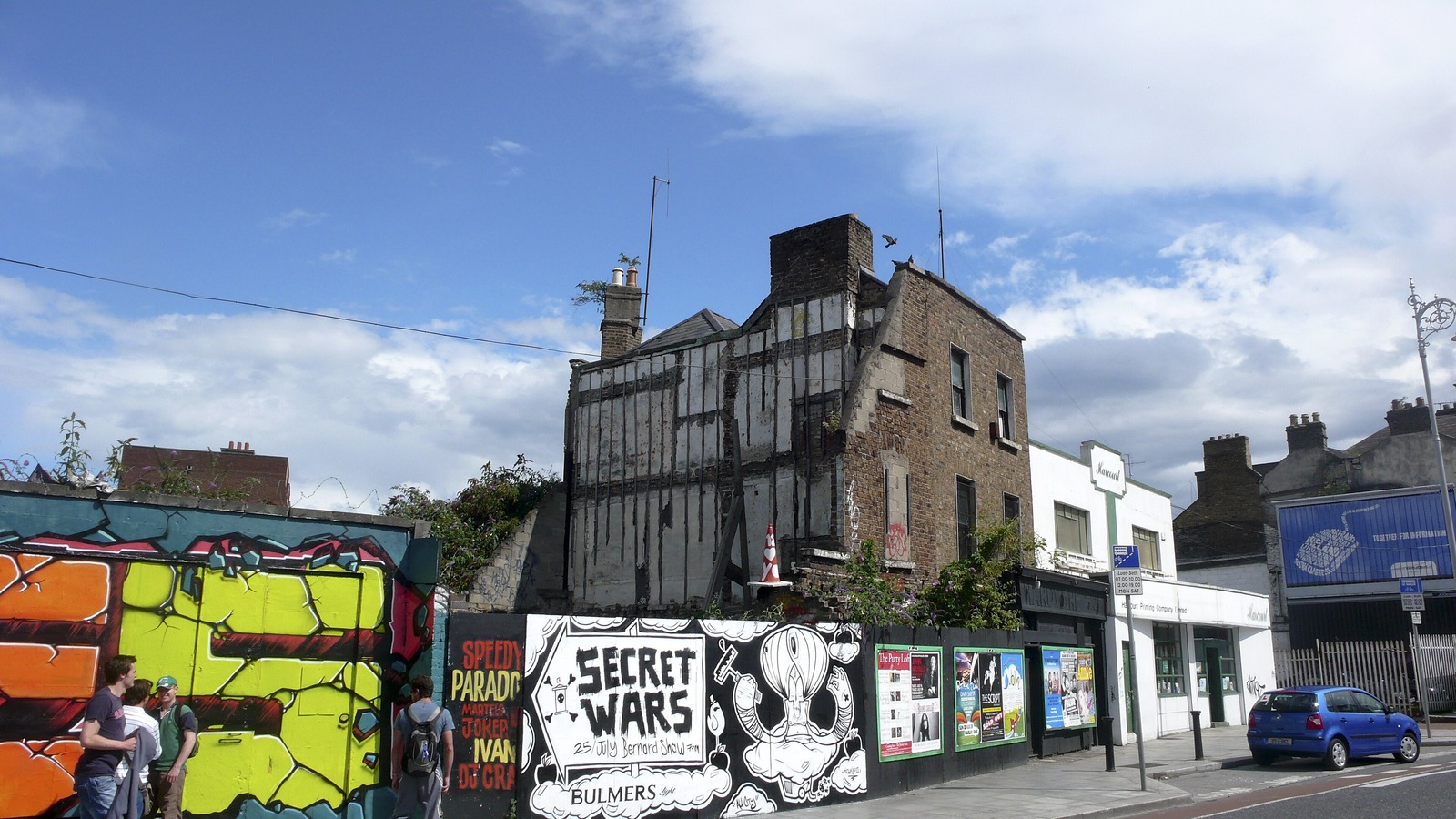 William Murphy from Dublin, Ireland, CC BY-SA 2.0
Portobello and Camden Street
A southside inner-village base for canal walks, cafes, neighborhood dining, and a softer landing from the busiest core streets.
- Best for
- travelers who want neighborhood dining and a quieter evening within reach of the center.
- Around
- Portobello canal, Camden Street, Georgian streets, cafes, and south-city routes.
- Feel
- Village-like, social, and calmer.
Skip if you want the quickest walk to Temple Bar or a rail-focused northside arrival base.
Tradeoffs at a glance
Dublin lodging bases at a glance
Compare six city bases before narrowing to an individual hotel, guesthouse, or apartment stay.
| Area | Vibe | Best for | Getting around | Best for | Who should skip |
|---|---|---|---|---|---|
| AreaTemple Bar and Trinity College | VibeHistoric core and nightlife | CoreTemple Bar, Trinity, and old city | Getting aroundWalkable to many central sights and close to buses and river crossings. Airport connections depend on your exact pickup point, so check the current operator route. | Best forfirst-time visitors wanting Dublin's liveliest central atmosphere outside the door. | Skipa quieter night and a more residential neighborhood rhythm are important. |
| AreaSt Stephen's Green and Grafton Street | VibeClassic south-side center | CoreSt Stephen's Green and Grafton Street | Getting aroundWalking covers much of the center, and the Luas Green Line adds a useful southside connection. Airport and intercity transport still require a specific route plan. | Best fortravelers who want a central, elegant base with parks, shopping, and museums nearby. | Skipyou want Temple Bar's immediate nightlife or a lower-key village setting. |
| AreaMerrion Square and Georgian Quarter | VibeMuseums and Georgian streets | CoreMerrion Square and Georgian museums | Getting aroundThe center is walkable and buses add reach. It is less about being beside the busiest pub lanes and more about having a composed central base. | Best formuseum visits, Georgian architecture, and travelers who prefer calmer central evenings. | Skipyou want a nightlife-first stay or the most direct rail-hub setting. |
| AreaDocklands and Grand Canal Dock | VibeModern riverfront and events | CoreDocklands, Grand Canal Dock, and venues | Getting aroundLuas, DART, buses, and walking link the docklands with the core. It works well for visitors who want modern transport connections rather than medieval lanes outside the door. | Best forevents, business stays, modern architecture, and riverside walks. | Skipyou want to wake in the historic pub-and-lane atmosphere of Temple Bar. |
| AreaSmithfield and Stoneybatter | VibeNorthside cafes and local character | CoreSmithfield plazas and Stoneybatter cafes | Getting aroundThe Luas Red Line and walking routes connect Smithfield with the center. Stoneybatter is more village-like, so check the exact walk or transit stop by property. | Best forrepeat visitors and food-minded travelers who want a more local northside rhythm. | Skipyou want the shortest walk to Trinity College or a southside shopping base. |
| AreaPortobello and Camden Street | VibeCanal village and dining | CorePortobello canal and Camden Street | Getting aroundWalk or take short rides to the central sights, with transit nearby for wider trips. It is more residential than the commercial heart of Dublin. | Best fortravelers who want neighborhood dining and a quieter evening within reach of the center. | Skipyou want the quickest walk to Temple Bar or a rail-focused northside arrival base. |
Getting around
Getting around Dublin
Central Dublin rewards walking, while the Luas, bus network, rail services, and Dublin Bikes extend your range. Dublin Airport has dedicated ground connections, so choose an airport route based on your exact neighborhood and arrival time.
If you stay in Temple Bar and Trinity College
Walk for core sights, then use public transport or a taxi for farther neighborhoods and airport travel.
If you stay in St Stephen's Green and Grafton Street
Walk the south city center and use the Luas or bus network for outer districts after confirming the current route.
If you stay in Merrion Square and Georgian Quarter
Walk to the south city center, then use bus, Luas, cycling, or taxi options for longer city trips.
If you stay in Docklands and Grand Canal Dock
Use Luas, DART, buses, and the river crossings to reach the city center, then check airport connections for your precise stop.
If you stay in Smithfield and Stoneybatter
Use the Luas and walking for the center, then plan the airport route with Transport for Ireland or the airport operator.
If you stay in Portobello and Camden Street
Walk or use short bus, tram, bike, and taxi connections for the core, then use the journey planner for airport travel.
Landing abroad? Set up a Yesim eSIM before you fly.
Deep Arrival earns a commission when you buy through partner links. It does not change the price you pay.
Frequently asked questions
Common questions on where to stay
What is the most central area to stay in Dublin?
Should I stay in Temple Bar or St Stephen's Green?
Is Docklands a good place to stay in Dublin?
Where should I stay in Dublin for a quieter city break?
Can I get around Dublin without a car?
What Dublin area is best for airport access?
Continue planning
Useful next pages
Use these Deep Arrival guides to test the base choice against the wider trip before booking.
Sources checked
References and image credits
- Dublin first-time visitor guide: Official destination overview of Dublin's districts, transport hubs, and visitor areas.
- Dublin city neighborhoods: Official destination guide to city villages including Portobello, Stoneybatter, and Smithfield.
- Temple Bar guide: Official destination information on Temple Bar's cultural, dining, and music setting.
- Dublin's iconic squares: Official context for St Stephen's Green, Merrion Square, Temple Bar, Docklands, and Grand Canal Dock.
- Transport for Ireland: National transport authority journey planning and public transport information.
- Dublin Airport ground transport: Primary airport ground transportation information for arrivals to Dublin.
- Getting around Dublin: Official city transport overview for bus, rail, cycling, and journey-planning context.
- Bright River Liffey cityscape in central Dublin: Photo by Giuseppe Milo from Dublin, Ireland, CC BY 2.0, via Wikimedia Commons
- Sunny cobblestone street in Dublin's Temple Bar district: Public domain image via Wikimedia Commons
- Sunny park and Georgian streets near St Stephen's Green in Dublin: Photo by Dronepicr (edited by King of Hearts ) Edit corrects CA and sharpens image, CC BY 3.0, via Wikimedia Commons
- Sunny Georgian townhouses beside Merrion Square in Dublin: Photo by Pastor Sam, CC BY 3.0, via Wikimedia Commons
- Sunny modern waterfront at Grand Canal Dock in Dublin: Photo by DXR, CC BY-SA 4.0, via Wikimedia Commons
- Sunny public square and city streets in Dublin's Smithfield district: Photo by William Murphy, CC BY-SA 3.0, via Wikimedia Commons
- Sunny canal-side street in Dublin's Portobello neighborhood: Photo by William Murphy from Dublin, Ireland, CC BY-SA 2.0, via Wikimedia Commons
This chooser uses stable area guidance, not hotel rankings or live prices. Check official transportation, airport, port, and visitor pages before locking arrival details.