
Things to Do in Tucson
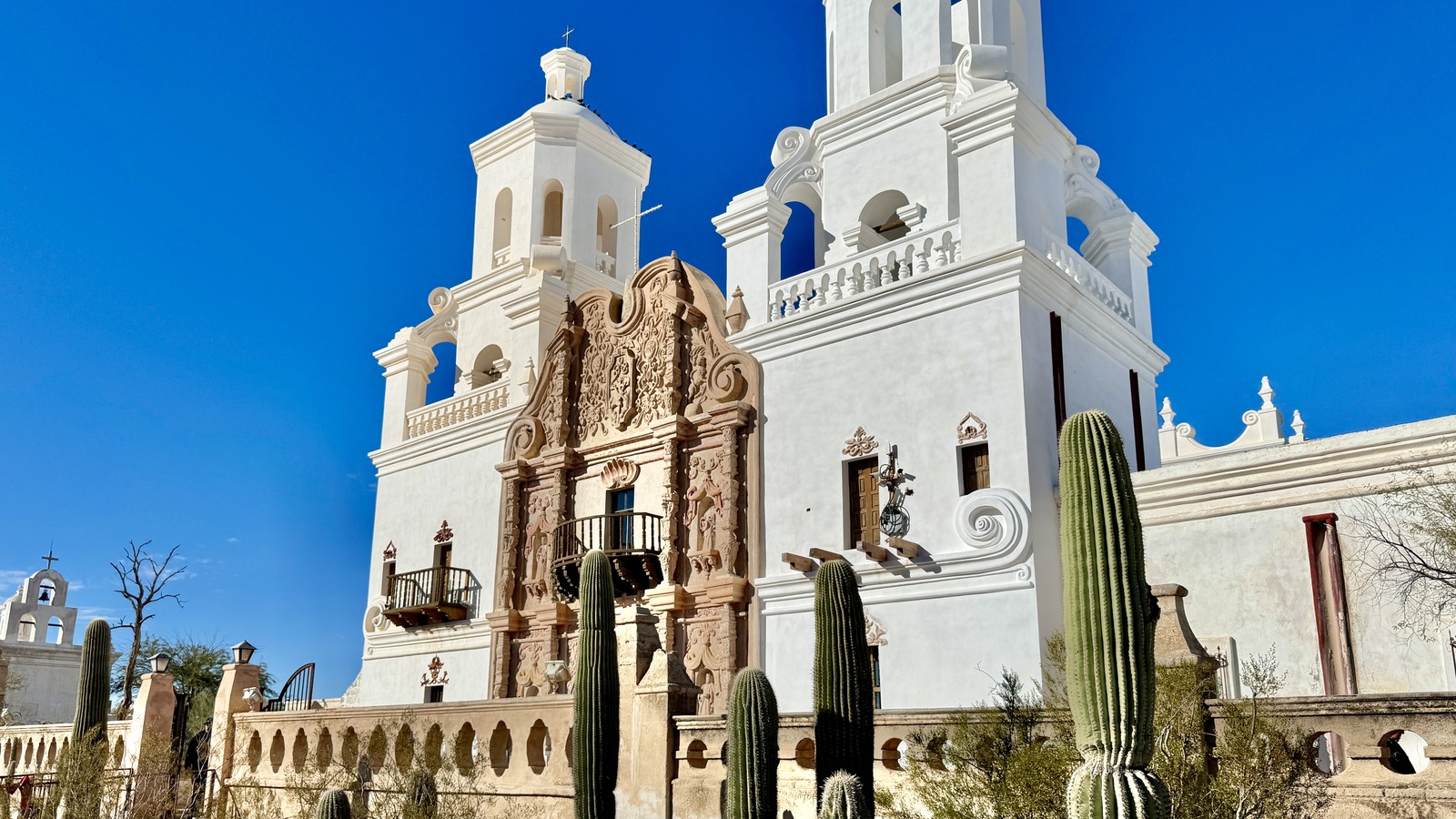
Tucson's headline attractions sit on opposite edges of a valley that takes most of an hour to cross, with the Desert Museum and the western half of Saguaro National Park beyond the Tucson Mountains, Sabino Canyon and Mount Lemmon along the northeast front, and the missions and air museums out to the south. The trips that work here group each day into one of those directions and push anything outdoors into the first hours of daylight, because from May into September the afternoon simply is not usable.
The top 15, ranked
Ranked by how consistently each pick appears across official Tucson sources, the local destination marketing organization, and recent independent roundups.
- Top pick
1Best for Desert wildlife · #1 of 15
Arizona-Sonora Desert Museum
MuseumThe Tucson Mountains and the west sideOpen daily with an earlier start in the hottest months and selected evening openings in summerTicketedPart zoo, part botanical garden, part natural history museum and aquarium, this 21 acre site west of the city holds more than 300 animal species and around 1,200 kinds of desert plant along nearly two miles of outdoor path. Mountain lions, javelina and a walk through hummingbird aviary sit beside a raptor free flight demonstration that sends hawks and owls low over the heads of the crowd.
Local tipAlmost all of it is open air, so arrive at opening, which shifts earlier in the hottest months, and carry more water than feels necessary.
- Top pick
2Best for Desert scenery · #2 of 15
Saguaro National Park, Tucson Mountain District
ParkThe Tucson Mountains and the west sideRoads and trails open daily from before sunrise until after sunset, visitor center on shorter daytime hoursTicketedThe western half of the park sits about twenty minutes from downtown and carries the denser, younger stand of saguaro, which is why most first visits start on this side. The graded Bajada Loop Drive runs past the Signal Hill petroglyphs, a cluster of Hohokam rock carvings reached by a short climb, and the Red Hills Visitor Center explains why a saguaro takes roughly a century to grow its first arm.
Local tipThe loop road is graded dirt and washboarded in places, so an ordinary rental car is fine but a slow pace is not optional.
- Top pick
3Best for Hiking · #3 of 15
Sabino Canyon Recreation Area
ParkThe Catalina Foothills and the northGrounds open daily from early morning until late evening, shuttles run on a fixed daytime scheduleTicketedA desert canyon on the northeast edge of town where Sabino Creek runs for much of the year, feeding cottonwood and sycamore that look nothing like the saguaro slopes standing above them. Private cars have been barred since 1978, so an electric shuttle carries visitors up the paved canyon road to a string of stops, and more than thirty miles of trail branch off toward Bear Canyon and Seven Falls.
Local tipParking and the shuttle seat are charged separately, so budget for both and reserve the seat ahead if the forecast is mild and the day is a weekend.
-
4Best for History · #4 of 15
Mission San Xavier del Bac
Historic SiteThe south side and the RinconsOpen to visitors daily outside services, with no admission charge and a donation box insideDonation suggestedTen miles south of downtown on the Tohono O'odham Nation, the white plastered church completed in 1797 is the oldest intact European building in Arizona and still serves the village of Wa:k as a working parish. Inside, a crowded program of painted saints, carved retablos and stenciled walls has earned it comparisons to a Sistine Chapel of North America, and conservators have spent decades stabilizing the surfaces.
Local tipThis is an active church rather than a museum, so dress modestly, keep voices low and plan the visit around Mass times.
-
5Best for Aviation · #5 of 15
Pima Air and Space Museum
MuseumThe south side and the RinconsOpen daily with a shorter afternoon in the hottest months, last admission well before closingTicketedOne of the largest aviation collections in the world spreads over eighty acres beside Davis-Monthan Air Force Base, holding roughly four hundred aircraft that run from a Wright Flyer replica to a Boeing 787 Dreamliner. Six cooled hangars, three of them given over to the Second World War, keep the most fragile airframes indoors while the rest are parked outside in rows that take hours to walk.
Local tipBus tours of the neighboring military storage yard run on a separate booking and require identification arranged in advance, so sort that out well before the day itself.
-
6Best for Escaping the heat · #6 of 15
Mount Lemmon and the Catalina Highway
ParkThe Catalina Foothills and the northThe road stays open year round, with winter storms occasionally closing the upper section and chains sometimes requiredFree with paid optionsThe Catalina Highway leaves the northeast edge of Tucson at around 2,700 feet and climbs to the 9,157 foot summit of Mount Lemmon, passing through saguaro, then oak, then ponderosa and finally fir in the space of about twenty seven miles. Ecologists compare the change to driving from Mexico to Canada, and the air at the top typically runs about thirty degrees cooler than the valley floor.
Local tipAllow roughly an hour each way to reach the village of Summerhaven at the top, and treat the pullouts at Windy Point as the real reason to make the drive.
-
7Best for Cycling and hiking · #7 of 15
Saguaro National Park, Rincon Mountain District
ParkThe south side and the RinconsLoop drive and trails open daily from early morning until sunset, visitor center on shorter daytime hoursTicketedThe eastern half of the park backs onto the Rincon Mountains and feels quieter and more open than the west, built around an eight mile paved Cactus Forest Loop Drive that cyclists share with cars. Behind it rises a wilderness climbing past eight thousand feet, so the trail network runs from flat desert strolls near the road to multi day backcountry routes reached only on foot or horseback.
Local tipA single entrance fee covers both districts for several days, so keep the receipt if the plan involves crossing town to the other side.
-
8Best for Family · #8 of 15
Old Tucson
Family AttractionThe Tucson Mountains and the west sideRuns on a seasonal calendar, with a main daytime season in the cooler months and evening events at other times of yearTicketedBuilt in 1939 as a set for the film Arizona and used for hundreds of westerns since, this studio backlot beside the western district of Saguaro National Park reopened to the public in 2022 under a new operator after a long closure. Visitors get stunt shows and saloon revues, a tour through the standing sets and their film history, and seasonal runs of ghost walks, autumn scares and a Christmas program.
Local tipThe park follows a published seasonal calendar rather than opening every day, so confirm the operating dates before building an afternoon around it.
-
9Best for History · #9 of 15
Titan Missile Museum
MuseumThe south side and the RinconsOpen most days with a reduced schedule in the hottest months, underground tours by timed reservationTicketedAbout half an hour south of Tucson at Green Valley, this is the only one of fifty four Titan II launch complexes left intact, preserved as a National Historic Landmark with a training missile still standing in its silo. Guided tours descend fifty five steps into the hardened control center, where crews once sat twenty four hour alerts, and walk through the launch sequence at the original console.
Local tipThere is no elevator to the control center, though a topside self guided route and a video tour cover the site for anyone who cannot manage the stairs.
-
10Best for History · #10 of 15
Presidio San Agustin del Tucson Museum
Historic SiteDowntown and midtownOpen on selected days each week, with reduced hours in the hottest monthsTicketedSpanish soldiers laid out a walled fort on this corner in 1775 and the city grew outward from it, which is why a reconstructed adobe wall and northeast tower now stand in the middle of downtown. Inside the compound sit a restored 1860s Sonoran row house, the excavated floor of a Hohokam pit house more than two thousand years old, and living history days staffed by costumed interpreters.
Local tipThe museum doubles as the departure point for guided walks into Barrio Viejo and the old center, which is the easiest way to read the adobe streets.
-
11Best for Science · #11 of 15
Biosphere 2
MuseumThe Catalina Foothills and the northOpen daily during daytime hours, with last entry well before closing and a couple of holiday closuresTicketedTwenty four miles north of central Tucson, this 1980s experiment sealed eight people inside just over three acres of glass holding a rainforest, an ocean, a savanna, a mangrove marsh and a desert. The University of Arizona now runs it as a working research campus, and a self guided route with an audio app goes through the biomes and down into the lung, an underground chamber whose vast rubber diaphragm kept the structure from bursting.
Local tipThe route covers about half a mile with stairs and no air conditioning inside the biomes, so the earliest slots are far more comfortable from May through September.
-
12Best for Gardens · #12 of 15
Tohono Chul
GardenThe Catalina Foothills and the northOpen daily, closing early in the hottest months, with occasional evening openingsTicketedForty nine acres on the northwest side, divided between desert gardens, a shaded ethnobotanical plot, nature trails and galleries that show regional artists rather than touring blockbusters. The site is best known for its night blooming cereus collection, among the largest anywhere, which opens for a single evening each summer when hundreds of flowers unfurl together and the gardens stay open long after dark.
Local tipSummer hours shift to the early morning to stay ahead of the heat, which makes this a breakfast stop rather than an afternoon one from June through September.
-
13Best for Gardens · #13 of 15
Tucson Botanical Gardens
GardenDowntown and midtownOpen daily during daytime hours, with an earlier close in the hottest monthsTicketedA compact midtown site grown out of a family home and commercial nursery, now split into more than a dozen themed plots that include a cactus and succulent garden, a barrio garden and a herb garden. Mature trees make it one of the shadiest walks in central Tucson, and a heated tropical greenhouse fills with live butterflies through the cooler half of the year.
Local tipThe butterfly greenhouse is a seasonal exhibit rather than a permanent one, so check whether it is running before making it the reason to come.
-
14Best for Hot afternoons · #14 of 15
The Mini Time Machine Museum of Miniatures
MuseumDowntown and midtownOpen most days with one closed weekday and closures on major holidaysTicketedMore than five hundred miniature houses, rooms and scenes fill three purpose built galleries on Camp Lowell Drive, arranged by period, by place and by pure invention. The Enchanted Realm wing leans into fairy tale and fantasy work under low light, which tends to hold children far longer than the antique dollhouses do, and the whole building is comfortably cooled.
Local tipRooms are kept dim to protect the pieces, so give eyes a minute to adjust and expect the visit to run longer than the small floor plan suggests.
-
15Best for Young children · #15 of 15
Reid Park Zoo
Family AttractionDowntown and midtownOpen daily from early morning, closing in the early afternoon during the hottest monthsTicketedTucson's zoo sits inside Reid Park in the middle of the city and is small enough to walk in about two hours, which suits young children far better than a sprawling site would. Elephants, giraffes, lions, rhinos, jaguars and red pandas anchor the collection, a carousel and a small train run through the day, and an Asia expansion is being built out across the south end.
Local tipGates open early and close in the early afternoon through the hot months, so treat this as a first stop rather than an afternoon filler.
Where things cluster
Tucson spreads wide and crossing between opposite corners can eat an hour, so it pays to keep each day inside one of these four zones.
- Downtown and midtownThe old Presidio corner, the streetcar line out through Fourth Avenue to the University, and the midtown belt that holds the zoo, the botanical gardens and the miniatures museum. Everything here sits close together and much of it is indoors or shaded, which matters a great deal from May through September.
- The Tucson Mountains and the west sideBeyond Gates Pass, about twenty minutes from downtown, where the Desert Museum, the western district of Saguaro National Park and the Old Tucson backlot sit within a few miles of one another. Treat the three as a single outing and start early, because there is almost no shade on that side.
- The Catalina Foothills and the northThe range front northeast and north of the city, running from Sabino Canyon up the Catalina Highway to Mount Lemmon and out past Tohono Chul toward Oracle. This is where to go when the valley is too hot, since every thousand feet of elevation buys back a few degrees.
- The south side and the RinconsThe corridor running south along the Santa Cruz toward San Xavier, the air base and Green Valley, plus the eastern district of Saguaro National Park out past Old Spanish Trail. Distances here are longer than a map suggests, so pair two of these rather than attempting all four in a day.
Make it a day
West side first, old city after
Be at the Arizona-Sonora Desert Museum when it opens, then cross into the Tucson Mountain District of Saguaro National Park for the Bajada Loop and the Signal Hill petroglyphs before the heat builds. Come back over Gates Pass for a late lunch, give the afternoon to the Presidio museum downtown, and finish with the short drive south to Mission San Xavier del Bac in the low evening light.
Desert one day, mountain the next
Give day one to the west, taking the Desert Museum at opening, Saguaro West through the middle of the day and Gates Pass or Old Tucson at sunset. Point day two north instead, riding the Sabino Canyon shuttle in the morning and then climbing the Catalina Highway to Mount Lemmon, where the air runs roughly thirty degrees cooler than the valley you left.
Animals early, aircraft after
Open the day at Reid Park Zoo, which is small enough to finish before anyone wilts and closes early in summer anyway. Move to the Pima Air and Space Museum for the afternoon, where six cooled hangars and four hundred aircraft absorb several hours without putting anyone in the sun.
Map
Best time to visit
F
M
A
M
J
J
A
S
O
N
D
October through December and again in March and April brings daytime highs in the seventies and eighties with cool nights, which is when the loop drives, the canyon shuttle and the long walks all work at any hour of the day. January and February are pleasant but genuinely cold after dark, and the February gem and mineral show fills hotels across the whole city. From late May into September afternoons routinely pass 100 degrees, so outdoor sightseeing has to happen at dawn or up on Mount Lemmon.
Staying over? Compare hotels in Tucson at Expedia.
Deep Arrival earns a commission when you buy through partner links. It does not change the price you pay.
Tucson things to do FAQ
Parking, timing, cost, and weather answers for a smoother visit.
How many days do you need in Tucson?
Three days is the comfortable number, because the major attractions sit on opposite sides of a very spread out valley and each side deserves most of a day. Two days works if you take the west side and Sabino Canyon and accept a lot of driving. A fourth day frees you to add Mount Lemmon or Biosphere 2 without cutting anything short.
Do you need a car in Tucson?
For practical purposes, yes. The streetcar links downtown, Fourth Avenue and the University, and that corridor works on foot, but Saguaro National Park, the Desert Museum, Sabino Canyon, San Xavier and the Pima Air and Space Museum are each separate drives of fifteen to forty minutes. Rideshare covers the gaps but adds up quickly at those distances, and there is no useful public transit to any of the parks.
Is it worth visiting Tucson in summer?
It can be, provided the day is rebuilt around the heat instead of ignoring it. From June through September highs regularly clear 100 degrees, so outdoor sites have to be done between sunrise and mid morning, and several of them shorten their hours to match. Afternoons then belong to cooled options such as the Pima Air and Space Museum, the miniatures museum or the Titan Missile silo, or to Mount Lemmon, which sits about thirty degrees cooler than the valley. Carry far more water than seems reasonable and turn around early on any trail.
Which side of Saguaro National Park should you visit?
The Tucson Mountain District on the west has the denser cactus stand, the Signal Hill petroglyphs and the shorter drive from downtown, and it pairs naturally with the Desert Museum next door. The Rincon Mountain District on the east is quieter, has a paved loop that road cyclists use heavily and backs onto a large wilderness with much longer trails. One entrance fee covers both districts for several days, so there is no financial reason to pick only one.
Is Old Tucson still open?
Yes. The film studio backlot shut during the pandemic and reopened in 2022 under a new operator working with Pima County, which owns the land. It does not run every day, following instead a seasonal calendar built around a main daytime season in the cooler months plus ghost tours, an autumn scare event and a Christmas program. Confirm the operating dates before driving out, because the schedule is the thing most likely to catch visitors out.
What is the best free thing to do in Tucson?
Mission San Xavier del Bac charges no admission and is the most striking building in southern Arizona, with only a donation box inside the church. Driving the Catalina Highway up Mount Lemmon costs nothing unless you stop and park at a fee area, and the view from Windy Point is the best in the county. Gates Pass at sunset is free as well, and the DeGrazia Gallery in the Sun in the foothills opens its grounds and chapel without a ticket.
Keep planning
Use these nearby guides to extend your Tucson trip with a different pace and a clear next stop.
Hero image: Mission San Xavier del Bac, photograph by w_lemay, CC BY-SA 2.0, via Wikimedia Commons. Cropped to 16:9.