
Richmond stacks its capitol, its house museums and its Civil War sites into a compact downtown, then drops straight into whitewater and wooded islands at the edge of the same street grid. Three clusters carry almost everything worth seeing, the historic blocks around Capitol Square, the museum row on Arthur Ashe Boulevard, and the river parks on both banks, so a visit works best when each day stays inside one of them.
The top 15, ranked
Ranked by how consistently each pick appears across official Richmond sources, the local destination marketing organization, and recent independent roundups.
- Top pick
1Best for Art · #1 of 15
Virginia Museum of Fine Arts
MuseumArthur Ashe Boulevard and CarytownOpen every day of the year, with extended evening hours several nights a weekFree with paid optionsVirginia's state art museum keeps general admission free and holds close to fifty thousand objects spanning six thousand years, with deep American, African, Art Nouveau and South Asian galleries and the largest public collection of Faberge outside Russia. It opens every day of the year and stays late several nights a week, so it absorbs a wet afternoon or a spare evening better than anything else in the city.
Local tipThe sculpture garden and the ground floor cafe are open without a ticket, which makes the museum a useful free place to regroup between other stops.
- Top pick
2Best for Family · #2 of 15
Maymont
ParkByrd Park, Oregon Hill and the JamesGrounds open daily, with the mansion and the nature center keeping shorter hoursFree with paid optionsJames and Sallie Dooley left this hundred acre estate above the James to the city in the 1920s, and the grounds still cost nothing to walk. The property holds an 1893 mansion, formal Italian and Japanese gardens, a working farm, a nature center with James River aquariums, and a wildlife trail where rescued bears, bison and bald eagles live in open habitats.
Local tipThe Dooley mansion is shown only on timed tours and the last one leaves well before the grounds close, so start there if the house matters and save the gardens for afterward.
- Top pick
3Best for History · #3 of 15
American Civil War Museum at Historic Tredegar
MuseumDowntown, Court End and Shockoe BottomOpen daily during daytime hours, with last entry before closingTicketedThe museum is built into the ruins of the Tredegar Iron Works, the foundry that cast more than half the artillery used by the Confederate army, and two floors of galleries trace the war and Reconstruction from Union, Confederate and African American perspectives at the same time. One organization now runs this building and the White House of the Confederacy in Court End, and a combination ticket covers both.
Local tipThe National Park Service visitor center for the Richmond battlefields shares the same riverside lot, so anyone driving out to the battlefields can collect maps and advice here first.
-
4Best for Outdoors · #4 of 15
James River Park System and Belle Isle
ParkByrd Park, Oregon Hill and the JamesOpen daily from early morning until dusk, with no gates on most unitsFreeRichmond is the only large American city with class three and four whitewater inside its limits, and the park system framing it runs for miles along both banks as a string of connected units. Belle Isle is the centerpiece, an island of quarry ponds, hydroelectric ruins and flat granite reached by a footbridge slung beneath a highway span, while Pony Pasture, Texas Beach and the Buttermilk Trail cover the quieter stretches upstream.
Local tipRiver levels swing fast after rain and the rocks stay slick for days, so check the Westham gauge reading before planning to swim, wade or scramble.
-
5Best for History · #5 of 15
Virginia State Capitol
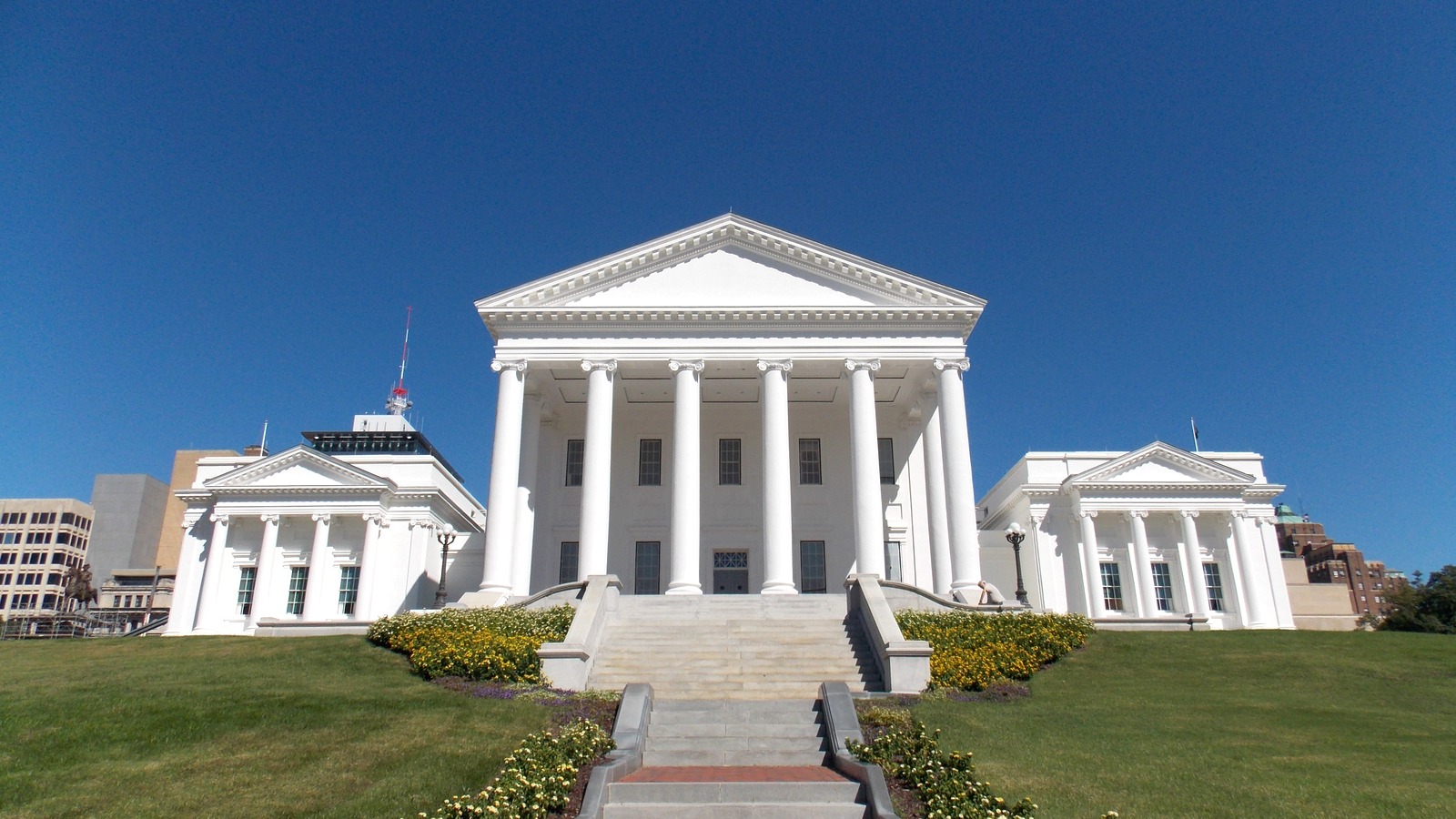
Historic SiteDowntown, Court End and Shockoe BottomOpen most days for free guided and self guided tours, closed on state holidaysFreeThomas Jefferson designed this building with Charles Louis Clerisseau on the model of a Roman temple in southern France, and the legislature has met inside it since 1788. The rotunda holds Jean Antoine Houdon's marble George Washington, the only full length likeness made from life sittings, and tours cost nothing and start from an underground visitor entrance on the south side of Capitol Square.
Local tipEveryone passes through security screening and the square is closed to general traffic, so allow extra time and travel with a small bag.
-
6Best for Gardens · #6 of 15
Lewis Ginter Botanical Garden
GardenJackson Ward and north of downtownOpen daily during daytime hours, with later evenings through the winter light seasonTicketedFifty acres of themed gardens sit about twenty minutes north of downtown in Lakeside, on land once owned by the tobacco magnate Lewis Ginter and opened to the public in the 1980s. A domed classical conservatory anchors the site through the winter, the children's garden adds a wheelchair accessible treehouse and a water play area, and a recent expansion opened several more acres of planting.
Local tipThe winter light display fills the garden from late November into January on timed tickets that sell out early, so book before traveling in that window.
-
7Best for History · #7 of 15
Hollywood Cemetery
Historic SiteByrd Park, Oregon Hill and the JamesOpen to visitors daily during daylight hours, with the office staffed on weekdaysFreeJohn Notman laid out this garden cemetery in 1849 on bluffs above the James, and the winding drives now pass the graves of presidents James Monroe and John Tyler, a ninety foot granite pyramid raised over thousands of Confederate soldiers, and Victorian ironwork under old hardwoods. Entry costs nothing and the overlook at the western edge is one of the best free river views in the city.
Local tipThe lanes are narrow, steep and easy to lose, so collect a map at the office inside the Cherry Street gate before setting off on foot.
-
8Best for History · #8 of 15
Edgar Allan Poe Museum
MuseumDowntown, Court End and Shockoe BottomOpen most days during daytime hours, with one closed weekdayTicketedPoe grew up in Richmond and edited the Southern Literary Messenger here, and the museum built around him occupies the Old Stone House, the oldest surviving dwelling in the city, along with three neighboring buildings set around a walled Enchanted Garden. The collection runs to his engagement ring, a gold pocket watch, a waistcoat and a fragment of his original coffin, and two resident black cats patrol the courtyard.
Local tipThe garden and its brick shrine are included in the ticket and easy to walk past, so leave time to sit out there after the rooms.
-
9Best for Family · #9 of 15
Science Museum of Virginia
Family AttractionArthur Ashe Boulevard and CarytownOpen most days during daytime hours, with a later close one evening a weekTicketedThe museum fills Broad Street Station, a 1919 terminal by John Russell Pope whose domed hall now holds hands on galleries covering speed, health, energy and the natural world. The Dome is a full size digital planetarium and giant screen theater, and daily live demonstrations run from shark dissections to rat basketball, which makes this the strongest wet weather option in the city for children.
Local tipDome shows carry a separate charge from general admission and the good slots go first, so buy both together at the door rather than deciding later.
-
10Best for History · #10 of 15
Virginia Museum of History and Culture
MuseumArthur Ashe Boulevard and CarytownOpen daily during daytime hours, closed on a few national holidaysTicketedThe Virginia Historical Society has been collecting since 1831, and its building on Arthur Ashe Boulevard reopened after a full renovation with a signature gallery that runs from the first Indigenous nations through colonization, slavery, the Civil War, Reconstruction and the civil rights years. Charles Hoffbauer's Four Seasons murals fill a separate memorial hall and remain the most striking single room on the site.
Local tipIt shares a block with the art museum and sits a short walk from the science museum, so all three can be done from one parking stop.
-
11Best for History · #11 of 15
Black History Museum and Cultural Center of Virginia
MuseumJackson Ward and north of downtownOpen several days a week during daytime hours, usually closed at the start of the weekTicketedThe museum occupies the Leigh Street Armory, an 1895 building raised for the First Battalion Virginia Volunteers, a Black militia unit, and reopened as galleries in 2016 after standing derelict for decades. Exhibits follow African American life across the state from slavery and Reconstruction through the years when Jackson Ward operated as a national center of Black banking and business, and on into the civil rights era.
Local tipThe rest of Jackson Ward is within a few blocks, so pair this with the Maggie Walker house and the old Hippodrome block and cover all three on foot.
-
12Best for History · #12 of 15
The Valentine
MuseumDowntown, Court End and Shockoe BottomOpen most days during daytime hours, with the Wickham House shown on timed toursTicketedRichmond's own city history museum has been collecting since 1898 and covers the place itself rather than the state, with rotating exhibits on work, housing, photography and the shape of the modern city. Admission also opens the 1812 Wickham House next door, a National Historic Landmark whose painted neoclassical wall panels are among the rarest surviving interiors of their kind in the country.
Local tipThe museum runs a large program of neighborhood walking tours that start from its courtyard, which is the simplest way to see Court End with context.
-
13Best for Waterfront · #13 of 15
Riverfront Canal Walk and Brown's Island
Neighborhood LandmarkDowntown, Court End and Shockoe BottomOpen at all hours as a public walkway, with canal boats running seasonallyFree with paid optionsA mile and a quarter of paved walkway follows the Haxall and Kanawha canals through the bottom of downtown, linking Brown's Island to the start of the Virginia Capital Trail and passing interpretive medallions, a triple railroad crossing and murals on a disused hydroelectric plant. Narrated canal boats run through the warmer months, and the Potterfield pedestrian bridge carries walkers out over the James toward the south bank.
Local tipBrown's Island hosts most of the free outdoor concerts and festivals in the city, so look at what is scheduled before assuming the riverfront will be quiet.
-
14Best for Local life · #14 of 15
Carytown and the Byrd Theater
Neighborhood LandmarkArthur Ashe Boulevard and CarytownShops keep daytime hours while the cinema screens into the eveningFree with paid optionsNine blocks of West Cary Street carry the densest run of independent shops in Richmond, anchored at the eastern end by a 1928 movie palace with a gilded auditorium and a Wurlitzer organ that an organist still plays before most evening screenings. Seats stay cheap because the programming leans on second run films and repertory nights, and the whole strip is a short walk from the museum boulevard.
Local tipCary Street parking fills early on weekends, and the residential side streets a block north and south are the reliable fallback.
-
15Best for History · #15 of 15
Maggie L. Walker National Historic Site
Historic SiteJackson Ward and north of downtownOpen six days a week during daytime hours, closed on the major winter holidaysFreeMaggie Walker chartered the St. Luke Penny Savings Bank in 1903 and became the first Black woman to found a bank in the United States, running it from Jackson Ward while the neighborhood served as a national center of Black enterprise. The Park Service keeps her Leigh Street house furnished close to the way she left it, and rangers lead free tours that set out from a visitor center around the corner.
Local tipTour groups are small, they leave on a fixed rotation and they cannot be reserved far ahead, so arrive early in the day rather than late.
Where things cluster
Richmond divides into four workable zones, and keeping each day inside one of them removes most of the driving.
- Downtown, Court End and Shockoe BottomCapitol Square, the Court End house museums and the riverfront at Tredegar all sit within about fifteen walkable blocks, with Shockoe Bottom and the Poe Museum immediately east. A first day belongs here, and it is the one part of Richmond where a car is more nuisance than help.
- Arthur Ashe Boulevard and CarytownThree of the largest museums in the state line up along a single boulevard roughly two miles west of downtown, with the Carytown shopping strip a few blocks south of them. One parking stop covers the lot, which makes this the most efficient half day in the city.
- Byrd Park, Oregon Hill and the JamesMaymont, Hollywood Cemetery and the busiest James River Park units share the high ground and the water along the western edge of the city. Footbridges and trails connect more of it than the map suggests, and almost everything here is free.
- Jackson Ward and north of downtownJackson Ward holds the story of Black Richmond in a few dense blocks of row houses and cast iron porches, including the Maggie Walker house and the armory museum. The botanical garden lies about twenty minutes further out in Lakeside, so walk the neighborhood and drive the garden.
Make it a day
Capitol Square, then the boulevard
Start at the Virginia State Capitol when the first tours run, walk down the hill to Historic Tredegar and the Canal Walk, and give the middle of the day to the Poe Museum or the Valentine. Drive west after lunch for the free galleries at the art museum and finish with an early evening in Carytown.
History first, river second
Give day one to the walkable downtown, pairing Capitol Square and Court End with Historic Tredegar and an afternoon in Jackson Ward at the armory museum and the Maggie Walker house. Spend day two west of the center on the museum boulevard, then work through Maymont, Hollywood Cemetery and the rocks at Belle Isle.
Animals first, science after lunch
Maymont's farm, wildlife trail and nature center will hold small children for a whole morning and the grounds cost nothing to enter. Cross town afterward for a dome show and the live demonstrations at the Science Museum of Virginia, then save the flat rocks on Belle Isle for a cooler hour.
Map
Best time to visit
F
M
A
M
J
J
A
S
O
N
D
Spring brings the gardens into full bloom and keeps humidity at a level that makes the river trails pleasant, and early autumn repeats the same weather with lighter crowds and the free folk festival on the downtown riverfront. July and August turn hot and sticky enough that outdoor sightseeing works best before mid morning, while winter is quiet and cheap but limits how much of the river is usable.
Staying over? Compare hotels in Richmond at Expedia.
Deep Arrival earns a commission when you buy through partner links. It does not change the price you pay.
Richmond things to do FAQ
Parking, timing, cost, and weather answers for a smoother visit.
How many days do you need in Richmond?
Two full days is the comfortable answer, one for the walkable downtown and one for the museum boulevard and the river parks. A single day works if you stay downtown and pick one museum rather than three. A third day opens up the battlefields east of the city, the botanical garden north of it, and enough time on Belle Isle to actually swim.
Do you need a car in Richmond?
Not for downtown, where Capitol Square, Court End, Shockoe Bottom and the riverfront are all within a walk of each other. The Pulse bus rapid transit line runs the length of Broad Street and reaches the museum district and Scott's Addition without a car. A car or rideshare becomes worthwhile for Maymont, Hollywood Cemetery, Lewis Ginter and the outer river parks, none of which are more than about twenty minutes out.
What is the best free thing to do in Richmond?
General admission at the Virginia Museum of Fine Arts costs nothing and the collection is one of the strongest in the South, which is hard to beat for value. Outdoors, the James River Park System and Belle Isle are free and hold class three and four rapids inside the city limits. Maymont's grounds, Hollywood Cemetery, the Canal Walk and tours of the State Capitol are also free.
What happened to the statues on Monument Avenue?
The Confederate statues that gave the street its name were taken down between 2020 and 2021, and the remaining pedestals were removed afterward. The avenue is now a broad residential boulevard of grand houses and grass medians, and the 1996 monument to the tennis champion Arthur Ashe still stands at its western end. It is a pleasant walk or drive for the architecture, but older guidebooks describing the statues are out of date.
Where should you go to understand Richmond's history of slavery and the Civil War?
Historic Tredegar covers the war itself from Union, Confederate and African American perspectives, and it sits beside the National Park Service visitor center for the surrounding battlefields. The Black History Museum in Jackson Ward and the Maggie Walker house cover what came before and after, from the domestic slave trade through Black banking and the civil rights era. Shockoe Bottom, where the trade was centered, now has a purpose built interpretive center at Main Street Station.
Is Richmond a good trip with kids?
Yes, and the strongest options are clustered rather than scattered. Maymont combines a farm, a nature center with aquariums and a wildlife trail on free grounds, and the Science Museum of Virginia carries a rainy day with its dome theater and live demonstrations. Lewis Ginter has a dedicated children's garden with water play, and Belle Isle gives older children somewhere to scramble.
Keep planning
Use these nearby guides to extend your Richmond trip with a different pace and a clear next stop.
Hero image: Virginia State Capitol, photograph by Farragutful, CC BY-SA 4.0, via Wikimedia Commons. Cropped to 16:9 and exposure adjusted.