
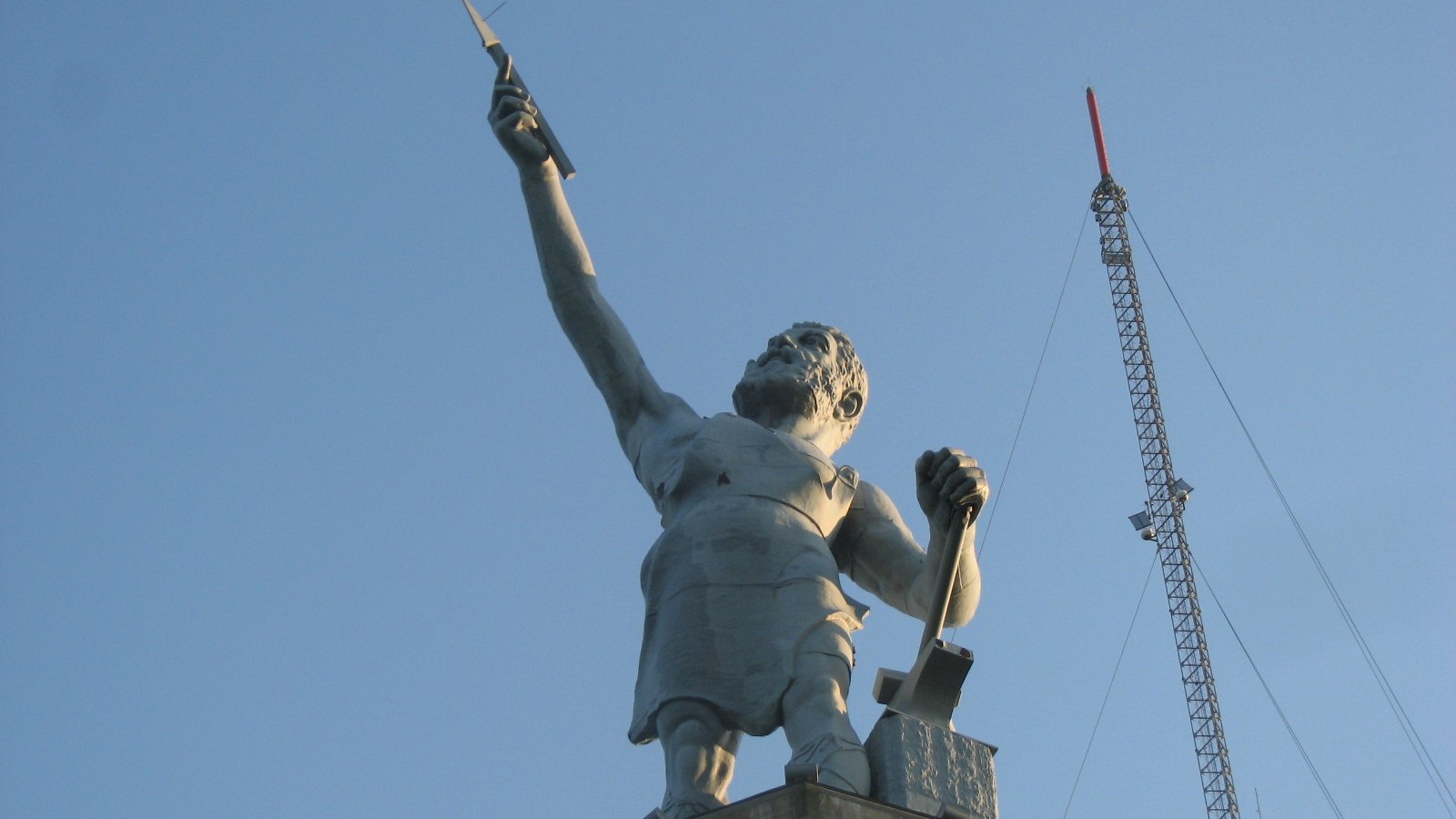
Birmingham carries more historical weight than its size suggests. The Birmingham Civil Rights Institute, 16th Street Baptist Church and Kelly Ingram Park sit inside a single walkable block downtown and form the core of a National Monument now managed with the National Park Service, and the city adds the world's largest cast iron statue on Red Mountain, a preserved 19th century blast furnace and the oldest professional ballpark still standing in the country. A number of the best stops, including the botanical gardens, several parks and the civil rights memorial park, are free.
The top 15, ranked
Ranked by how consistently each pick appears across official Birmingham sources, the local destination marketing organization, and recent independent roundups.
- Top pick
1Best for History · #1 of 15
Birmingham Civil Rights Institute
MuseumCivil Rights DistrictOpen Tuesday through Saturday during the day and Sunday afternoon, closed Mondays; the museum occasionally shifts its hours for private events, so check the site before visiting.Under $20The Birmingham Civil Rights Institute sits at 520 16th Street North, directly across from Kelly Ingram Park and the 16th Street Baptist Church, and anchors the Birmingham Civil Rights National Monument that the National Park Service now helps oversee. A Smithsonian affiliate, the museum walks visitors chronologically through segregation era Birmingham and the 1963 campaign that forced the city to desegregate, using oral histories, artifacts and a recreated Freedom Rides bus alongside rotating exhibitions. General admission runs about fifteen dollars, with discounts for students, seniors and military, and free entry for young children.
Local tipPair the visit with Kelly Ingram Park and 16th Street Baptist Church right across the street, since all three sit inside the same walkable block and read as one connected story rather than three separate stops.
- Top pick
 #2Best for History · #2 of 15
16th Street Baptist Church
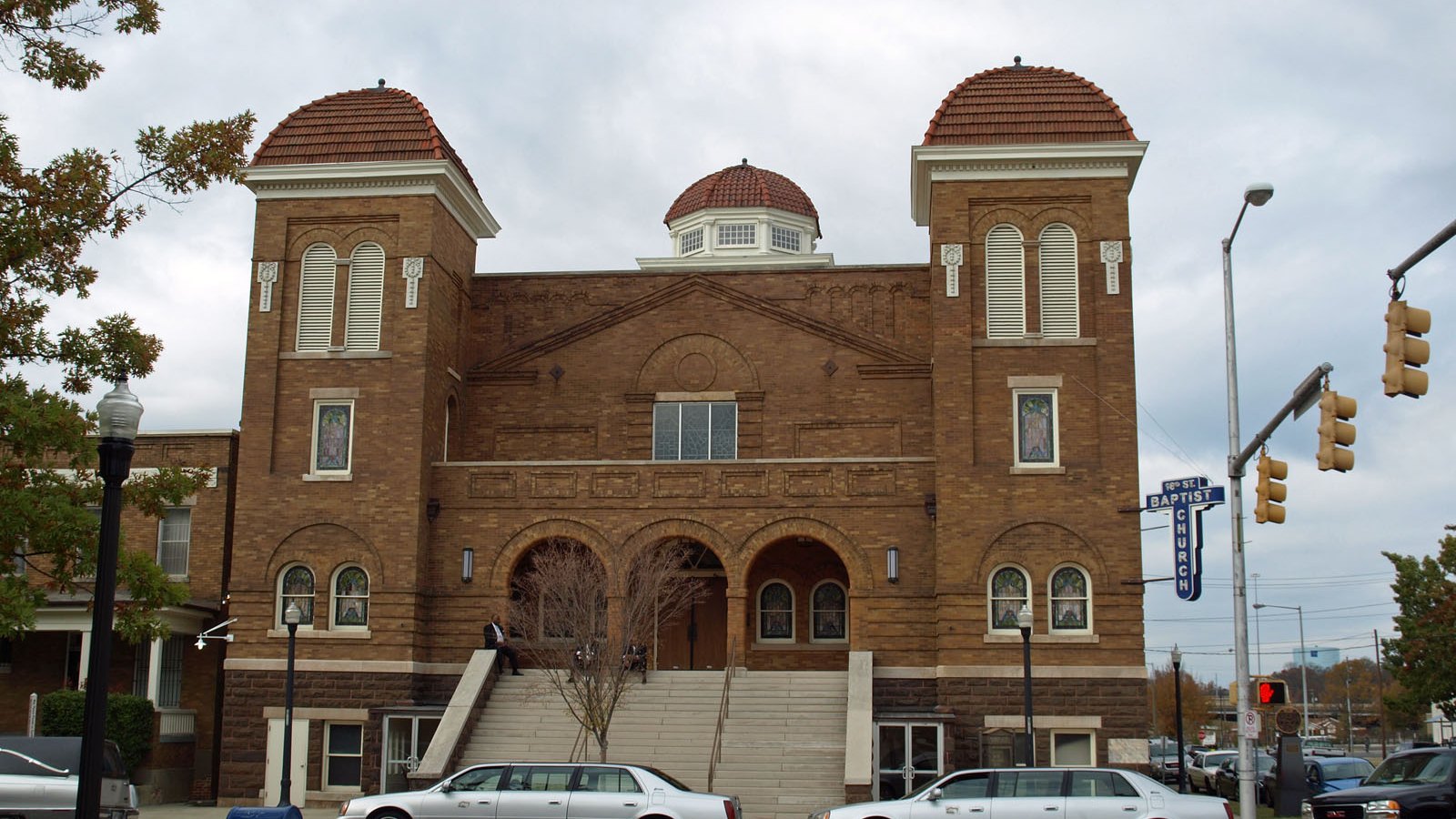
Historic SiteCivil Rights DistrictGuided tours run on a scheduled basis and must be booked in advance; the church is closed to tour groups during Sunday worship and Wednesday Bible study.Under $10The 16th Street Baptist Church has stood at 16th Street and 6th Avenue North since 1911 and remains an active Baptist congregation as well as a National Historic Landmark. On September 15, 1963, a bomb planted by Klansmen killed four girls, Addie Mae Collins, Cynthia Wesley, Carole Robertson and Denise McNair, during Sunday school, a killing that helped turn national opinion toward the civil rights movement. Guided tours cover the sanctuary and the church's role in the 1963 Birmingham Campaign and are booked in advance through the church office rather than dropped into casually.
Local tipBook a tour ahead through the church website rather than arriving unannounced, since this is a working congregation with regular services and the sanctuary is not open for casual browsing between tours.
- Top pick
3Best for Free landmarks · #3 of 15
Kelly Ingram Park
Historic SiteCivil Rights DistrictThe park is open daily and free, with no set closing time, though visiting during daylight makes the memorial sculptures easier to see and read.FreeKelly Ingram Park is the 3.68 acre square where Birmingham police and fire departments turned dogs and high pressure hoses on child protesters during the 1963 Birmingham Campaign, images broadcast worldwide that pushed the civil rights movement into the national conversation. The park is now laid out as a memorial, with sculptures of snarling dogs, a kneeling minister and the Four Spirits sculpture honoring the girls killed in the 16th Street Baptist Church bombing, arranged along a circular Freedom Walk visitors can follow at their own pace, free of charge at any hour.
Local tipWalk the Freedom Walk sculptures in order rather than cutting across the park, since the pieces are arranged to tell the events of 1963 roughly in sequence.
- Top pick
4Best for Views · #4 of 15
Vulcan Park and Museum
LandmarkRed Mountain and SouthsidePark grounds, museum and observation tower are open daily, Sunday through Thursday during the day and into the evening, Friday and Saturday until later at night.Under $20Vulcan Park and Museum sits atop Red Mountain and holds the world's largest cast iron statue, a 56 foot figure of the Roman god of the forge that Birmingham commissioned for the 1904 World's Fair to represent its iron and steel industry. Visitors ride an elevator up the 124 foot pedestal to an observation deck the park calls the best skyline view in the city, and the museum below covers Birmingham's industrial founding. Tickets are sold online or at the gate and cover both the tower and the museum galleries.
Local tipGo close to sunset if the schedule allows, since the observation deck stays open into the evening on Friday and Saturday and the skyline view is the reason most visitors make the trip.
- Top pick
5Best for History · #5 of 15
Sloss Furnaces National Historic Landmark
Historic SiteAvondale and East BirminghamGrounds and self guided tours are typically open Tuesday through Saturday during the day and Sunday afternoon, closed Mondays; special events can shift or close public hours, so check ahead directly.FreeSloss Furnaces operated as a working pig iron blast furnace from 1882 to 1970 and is now preserved as a National Historic Landmark, a rare example of this kind of industrial site open to the public rather than demolished after closure. Rusted furnaces, blowing engines and a maze of catwalks and pipework sit largely as they were left when the plant closed, and free self guided tours let visitors walk through the machinery up close rather than behind glass. The site also runs a metal arts program and hosts concerts and a haunted house each October.
Local tipCome for the free self guided tour first and treat any concert or festival as a bonus, since those events can close off parts of the furnace yard to casual visitors.
-
6Best for Free landmarks · #6 of 15
Railroad Park
ParkDowntown coreOpen daily from 7am to 11pm year round and free to enter, with individual event spaces booked separately.FreeRailroad Park is a 19 acre green space built along the old rail corridor at the south edge of downtown, opened in 2010 and often called Birmingham's front lawn. The park has a lake, walking trails, an amphitheater, a skate park and open lawns with a view of the Regions Field ballpark and the downtown skyline, planted with more than 600 trees. It draws over 440,000 visitors a year and is free and open every day from early morning to late at night.
Local tipBring a picnic and stay for a Birmingham Barons game next door at Regions Field, since the park and the ballpark share the same block and the walk between them takes only a few minutes.
-
7Best for Outdoors · #7 of 15
Birmingham Botanical Gardens
GardenMountain Brook and Lane ParkOpen daily from dawn to dusk and free to enter, with the conservatory and individual event spaces sometimes on their own schedule.FreeBirmingham Botanical Gardens covers 67.5 acres near Lane Park and calls itself Alabama's largest living museum, with more than 25 themed gardens spread across the grounds. The Japanese Gardens include a traditionally built tea house, and the grounds also hold two rose gardens, a wildflower garden and a fern glade, plus what the gardens describe as the largest public horticulture library in the country. Admission and parking are both free every day, and the gardens run free field trips for more than 11,000 school children a year.
Local tipStart at the Japanese Gardens near the main entrance before the midday heat, since the koi ponds and tea house are the most photographed corner and get crowded on weekend afternoons.
-
8Best for Family · #8 of 15
Birmingham Zoo
ZooMountain Brook and Lane ParkOpen daily except for a small number of holiday closures; opening and closing times vary by season, so confirm the day's hours online before visiting.Under $30The Birmingham Zoo sits next to the botanical gardens and holds roughly 950 animals across 230 species, organized into regional trails including Africa, Asia and a South American exhibit. A new axolotl habitat opened in 2026, and the zoo runs behind the scenes encounters, a splash pad and a carousel alongside the standard exhibits. It was named Alabama's Attraction of the Year for 2026 by the state tourism department, and tickets are sold online or at the gate.
Local tipBuy tickets online before arriving, since the zoo publishes its daily animal encounter and feeding schedule on the website and building a visit around two or three of those makes the day feel more organized.
-
9Best for Family · #9 of 15
McWane Science Center
Family AttractionDowntown coreOpen Wednesday through Sunday, closed Monday and Tuesday; IMAX films run on their own schedule and are ticketed separately from museum admission.Under $30McWane Science Center occupies a downtown building at 200 19th Street North and combines a hands on science museum with an aquarium and an IMAX dome theater under one roof. Exhibits include a shark touch tank, a dinosaur gallery with real fossils, a bubble room and Itty Bitty Magic City, a dedicated space for the youngest visitors, while the dome theater runs science documentaries and features on a separate ticket. It is closed Mondays and Tuesdays, a pattern worth checking before building a downtown day around it.
Local tipCheck the closed days before planning, since McWane is shut Monday and Tuesday while most other downtown Birmingham attractions stay open those days.
-
10Best for Art · #10 of 15
Birmingham Museum of Art
MuseumDowntown coreOpen Tuesday through Sunday, closed Mondays; hours run shorter on Sunday than the rest of the week.FreeThe Birmingham Museum of Art holds a collection reported at more than 27,000 works spanning Asian, European, American and African art, along with one of the largest Wedgwood ceramics collections outside England, in a downtown building the museum describes as the largest municipal art museum in the Southeast. A small outdoor sculpture garden sits alongside the main building, and general admission is free every day the museum is open. The museum is closed Mondays, and special traveling exhibitions sometimes carry their own separate ticket.
Local tipCheck the museum's website for the current special exhibition before visiting, since those shows occasionally require a timed ticket even though the permanent collection stays free.
-
11Best for History · #11 of 15
Barber Vintage Motorsports Museum
MuseumOutside the cityOpen daily, with slightly longer hours from April through September than the rest of the year; Sunday opens later than the rest of the week.Under $20The Barber Vintage Motorsports Museum sits beside the Barber Motorsports Park racetrack east of downtown and holds what Guinness World Records recognizes as the world's largest motorcycle collection, along with a run of vintage Lotus race cars. The five story building displays machines from the 1890s to the present in a rotating, densely stacked arrangement rather than a fixed permanent hang, so repeat visits show different bikes. Premium docent led tours run on weekends and add access to the conservation level where restoration work happens.
Local tipBook the weekend docent led tour in advance if the mechanical history is the draw, since it reaches the conservation level and workshop areas that a self guided walk through the main galleries does not cover.
-
12Best for Outdoors · #12 of 15
Red Mountain Park
ParkRed Mountain and SouthsideTrails and park grounds are open daily and free to enter, closing in the early evening; the zipline and ropes course run on a separate booked schedule.FreeRed Mountain Park spreads across 1,500 acres of former mining land on the ridge south of downtown and gives visitors 16 miles of multi-use trails for hiking and mountain biking, along with the ruins of old mine openings marked with historical signage. Remy's Dog Park on site has been recognized by Southern Living as one of the great southern dog parks, and a separate operator runs a treetop zipline and ropes course on part of the grounds. Entry to the park itself is free.
Local tipDownload the free TravelStorys app before arriving, since it plays oral histories from people who worked the mountain's mines at marked stops along the trails.
-
13Best for History · #13 of 15
Rickwood Field
Historic SiteDowntown coreOffice hours run weekday mornings through mid afternoon; weekends are generally limited to scheduled game days, and the park closes on holidays.FreeRickwood Field opened in 1910 and is preserved as the oldest professional baseball park still standing in the United States, built by industrialist Rick Woodward with input from Connie Mack. It was long time home to both the Birmingham Barons and the Negro Leagues' Birmingham Black Barons, whose alumni include Willie Mays, and Major League Baseball returned to the park in June 2024 for a nationally televised tribute game honoring the Negro Leagues. Self guided and guided tours are free, and weekday office hours make it easiest to visit on a weekday morning or afternoon.
Local tipCall ahead to arrange a guided tour rather than showing up unannounced, since the park is largely run by volunteers and weekday staffing can be limited.
-
14Best for Family · #14 of 15
Avondale Park
ParkAvondale and East BirminghamPark grounds are open daily and free; the amphitheater and villa are reservable separately for private events.FreeAvondale Park covers 36.5 acres in the Avondale neighborhood east of downtown, built around a spring fed duck pond and marked at its entrance by a statue of an elephant, a leftover from a small zoo the park once housed. The grounds include a splash pad, an amphitheater used for community events and open lawns, and sit a short walk from the restaurants, breweries and music venues that have turned Avondale into one of Birmingham's most walkable neighborhoods. Entry to the park is free.
Local tipCombine the park with a walk along 41st Street in Avondale afterward, since the neighborhood's restaurants and Avondale Brewing Company sit only a few minutes from the park gates.
-
15Best for Arts · #15 of 15
Alabama Theatre
Historic TheaterDowntown coreThe theatre operates around its event calendar rather than fixed daily visiting hours; building tours are offered separately from ticketed shows.VariesThe Alabama Theatre opened in 1927 as an ornate movie palace billed as the Showplace of the South and still runs on its original Mighty Wurlitzer organ, one of the few in the country still played live before classic film screenings. A nonprofit, Birmingham Landmarks Inc, now operates the building for concerts, touring shows, symphony performances and a long running holiday film series, alongside occasional building tours. Ticket prices vary by event and are sold through the venue's usual ticketing partner.
Local tipCheck the classic film calendar specifically if the organ is the draw, since the Wurlitzer is played live before those screenings and not before every event on the calendar.
Where things cluster
Birmingham's visitor sites cluster into a few compact zones rather than spreading evenly across the metro. These five groupings keep a day inside one area rather than crossing town repeatedly.
- Civil Rights DistrictA single walkable downtown block holding the Birmingham Civil Rights Institute, 16th Street Baptist Church and Kelly Ingram Park, the heart of the Birmingham Civil Rights National Monument and the most historically significant stop in this guide.
- Downtown and the ballpark districtRailroad Park, McWane Science Center, the Birmingham Museum of Art, Rickwood Field and the Alabama Theatre sit within a short drive or walk of one another around the city center and Regions Field.
- Red Mountain and SouthsideVulcan Park and Museum and Red Mountain Park share the ridge just south of downtown, both built on the mining and iron history that shaped the city, with UAB and Southside restaurants nearby.
- Mountain Brook and Lane ParkThe Birmingham Botanical Gardens and the Birmingham Zoo sit side by side a few miles from downtown, an easy pairing for a family morning or afternoon.
- Avondale and East BirminghamSloss Furnaces and Avondale Park anchor the walkable Avondale neighborhood. The Barber Vintage Motorsports Museum and racetrack are a separate, car-required trip further east near the interstate, not a walkable extension of Avondale.
Make it a day
Civil rights history, then Red Mountain
Spend the morning inside the Civil Rights District: the Birmingham Civil Rights Institute, 16th Street Baptist Church and Kelly Ingram Park all sit on the same block. Have lunch downtown, then drive up to Vulcan Park and Museum for the observation deck, and close the day with a walk through Railroad Park before dinner.
Civil rights downtown, then industrial history
Give the first day to the Civil Rights District and downtown: the Institute, the church, Kelly Ingram Park, then McWane or the art museum and an evening at the Alabama Theatre if something is playing. Spend the second day on Birmingham's industrial story, pairing Sloss Furnaces and Vulcan Park and Museum, with the botanical gardens or Red Mountain Park as an outdoor add on.
Science, animals, then a splash pad
Start at McWane Science Center for the hands on exhibits and an IMAX film if the schedule allows. Move to the Birmingham Zoo and the adjoining Birmingham Botanical Gardens for the afternoon, and finish at Avondale Park or Railroad Park, both free and built around open lawns and water features kids can run around in.
Map
Best time to visit
F
M
A
M
J
J
A
S
O
N
D
Spring and fall are the most comfortable seasons for a Birmingham visit, with mild temperatures that make outdoor stops like Railroad Park, the botanical gardens and Red Mountain Park more enjoyable and the civil rights sites easier to combine with a downtown walk. The Barber Vintage Festival draws crowds to the motorsports museum in October and is worth planning around either way. Summer in Birmingham is hot and humid, and while winter rarely brings serious cold, it strips back the gardens and shortens some outdoor hours.
Staying over? Compare hotels in Birmingham at Expedia.
Deep Arrival earns a commission when you buy through partner links. It does not change the price you pay.
Birmingham things to do FAQ
Parking, timing, cost, and weather answers for a smoother visit.
How many days do you need in Birmingham?
One full day covers the essentials: the Civil Rights District in the morning, then Vulcan Park and Museum or Railroad Park in the afternoon. Two days lets you add Sloss Furnaces, the botanical gardens, the zoo and one of the museums without rushing, and a third day works if Barber Vintage Motorsports Museum or Red Mountain Park's trails are on the list, since both sit further from downtown.
What happened at 16th Street Baptist Church in 1963?
On September 15, 1963, a bomb planted by Ku Klux Klan members exploded at the church during Sunday morning services, killing four girls, Addie Mae Collins, Cynthia Wesley, Carole Robertson and Denise McNair. The bombing came during the wider 1963 Birmingham Campaign, months after police used dogs and fire hoses on child protesters in nearby Kelly Ingram Park, and the killings helped shift national opinion toward civil rights legislation. The church remains an active congregation today and is part of the Birmingham Civil Rights National Monument alongside the Institute and the park across the street.
What is free to do in Birmingham?
Several of the city's most significant stops cost nothing to enter. Kelly Ingram Park, Sloss Furnaces, Railroad Park, the Birmingham Botanical Gardens, the Birmingham Museum of Art, Red Mountain Park, Avondale Park and Rickwood Field are all free, though the Birmingham Civil Rights Institute, 16th Street Baptist Church tours, Vulcan Park, the zoo and McWane Science Center charge admission.
Do you need a car in Birmingham?
For the Civil Rights District alone, no, since the Institute, the church and Kelly Ingram Park sit on the same block and downtown attractions like Railroad Park, McWane and the art museum are a short walk or rideshare apart. Everything else in this guide, including Vulcan Park, the botanical gardens, the zoo, Sloss Furnaces, Red Mountain Park and Barber Vintage Motorsports Museum, is spread across the metro and easier to reach with a vehicle.
Is the Birmingham Civil Rights Institute part of a National Park?
The Institute anchors the Birmingham Civil Rights National Monument, a National Park Service designation that also covers 16th Street Baptist Church, Kelly Ingram Park and other nearby sites tied to the 1963 Birmingham Campaign. The Institute itself remains independently operated as a Smithsonian affiliate museum, charging its own admission, while the National Park Service coordinates interpretation and ranger led programs across the broader monument.
What is Birmingham known for?
Birmingham is known both for its central role in the 1963 civil rights campaign, marked today by the Civil Rights Institute, 16th Street Baptist Church and Kelly Ingram Park, and for the iron and steel industry that built the city, represented by the Vulcan statue on Red Mountain and the preserved blast furnaces at Sloss. It also holds Rickwood Field, the oldest professional ballpark still standing in the country.
Keep planning
Use these nearby guides to extend your Birmingham trip with a different pace and a clear next stop.
Image credits. Hero: Photo via Wikimedia Commons. 2 16th Street Baptist Church: Photo by Chris Pruitt, via Wikimedia Commons.