
15 Things to Do in Barcelona, Ranked
Barcelona packs a Gothic old town, a grid of Modernista landmarks and a working city beach into an area small enough to cross on foot, so the planning problem is rarely distance but admission, because the Sagrada Familia, Park Guell, Casa Batllo and La Pedrera all sell timed slots that go early. Book one headline building for each morning, then let the free layer of the city, the Gothic streets, the market halls, the Montjuic gardens and the shoreline, carry the rest of the day.
The top 15, ranked
Ranked by how consistently each pick appears across official Barcelona sources, the local destination marketing organization, and recent independent roundups.
- Top pick
 #1Best for Architecture · #1 of 15
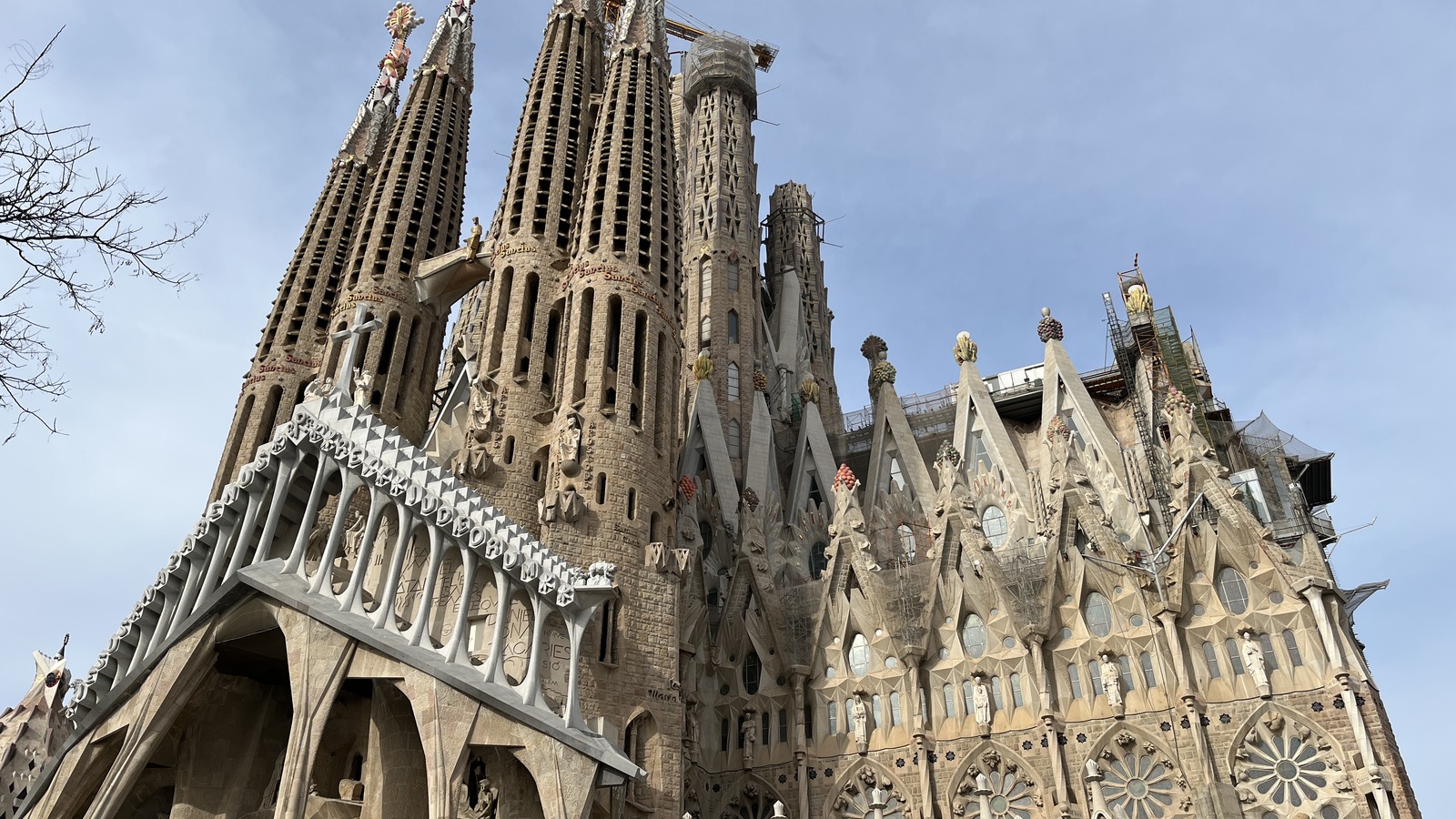
Basilica de la Sagrada Familia
Historic SiteEixampleOpen daily on compulsory timed entry, with shorter hours in winter and adjustments around major servicesTicketedGaudi took charge of this basilica in 1883 and spent the rest of his life on it, leaving a forest of branching stone columns and a nave that colors the light through walls of stained glass. Building has never stopped, and the central Tower of Jesus Christ was topped out in early 2026, making this the tallest church in the world while the Glory facade remains years from finished.
Local tipTower access is a separate add on to the basilica ticket, runs on a lift up and a tight spiral stair down, and sells out well before general admission does.
- Top pick
 #2Best for Outdoors · #2 of 15
Park Guell
ParkGracia, Tibidabo and the westThe ticketed zone runs on timed slots through daylight hours, while the free parkland around it opens earlier and closes laterFree with paid optionsGaudi laid this hillside out from 1900 as a garden estate that never sold, and the finished fragments became a public park in 1926. The ticketed core holds a mosaic salamander on the entrance stair, a hall of tilted Doric columns and a serpentine tiled bench wrapped around the terrace above it, with a view that runs across the whole city to the sea.
Local tipOnly the fenced Monumental Zone needs a timed ticket, so the woodland paths, the rough stone viaducts and the hilltop crosses at Turo de les Tres Creus can be walked for nothing.
- Top pick
 #3Best for Architecture · #3 of 15
Casa Batllo
Historic SiteEixampleOpen daily on timed entry, with rooftop and evening formats added through the warmer monthsTicketedGaudi rebuilt an ordinary 1877 apartment block between 1904 and 1906 into something closer to a creature than a house, with a scaled roof read as a dragon's back, balconies shaped like masks and a light well tiled in blue that darkens as it rises so the lower floors are not left in shadow. It stands on the stretch of Passeig de Gracia called the Block of Discord, where rival Modernista architects built side by side.
Local tipThe visit is self guided with an augmented reality handset, so it moves at the pace of the crowd and an early or late slot makes a real difference.
-
 #4Best for Neighborhoods · #4 of 15
The Gothic Quarter and Barcelona Cathedral
Neighborhood LandmarkCiutat VellaStreets are open at all hours, while the cathedral splits the day between services and ticketed visitingFree with paid optionsThe dense lanes between the Rambla and Via Laietana sit on the Roman colony of Barcino, whose wall sections and four temple columns still stand inside later buildings. The Gothic cathedral anchors the quarter and keeps a cloister where thirteen white geese are kept, while Placa del Rei, the bullet scarred wall of Placa Sant Felip Neri and the old Jewish quarter of El Call are all minutes apart.
Local tipThe cathedral separates free worship hours from a ticketed tourist visit, and that ticket includes a lift to the roof terrace above the nave.
-
 #5Best for Architecture · #5 of 15
La Pedrera, Casa Mila
Historic SiteEixampleOpen daily with separate day and evening visits, and shorter hours around the turn of the yearTicketedGaudi's last private commission went up between 1906 and 1912 and drew immediate mockery for its rippling limestone front, which is where the nickname the stone quarry comes from. The route climbs through a restored period apartment into an attic of thin brick catenary arches and out onto a roof terrace where the chimneys and stair towers stand like helmeted figures over Passeig de Gracia.
Local tipSunset and night formats cost more than daytime entry but put far fewer people on the roof, which is the part almost everyone comes for.
-
 #6Best for Architecture · #6 of 15
Palau de la Musica Catalana
Music VenueCiutat VellaDaytime visits run in fixed slots most days, with the schedule cut back when rehearsals or concerts take the hallTicketedLluis Domenech i Montaner built this hall between 1905 and 1908 for an amateur choral society and filled it with stained glass, mosaic and sculpture until the structure nearly disappears behind its own decoration. An inverted glass skylight hangs over the auditorium like a dropped sun, which makes it the rare European concert hall that can be lit by daylight alone, and UNESCO listed it in 1997.
Local tipGuided, audio guided and self guided visits all cover the same hall, but an inexpensive short concert is the only way to hear how the room actually sounds.
-
 #7Best for Art · #7 of 15
Museu Picasso
MuseumCiutat VellaOpen Tuesday through Sunday with seasonal closing times, closed on MondaysTicketedFive joined medieval palaces on Carrer Montcada hold more than four thousand works, weighted heavily toward the years Picasso trained and worked in Barcelona before cubism carried him elsewhere. The collection runs from academic canvases he painted as a teenager through the blue period to the 1957 series in which he took Velazquez's Las Meninas apart across fifty eight paintings, most of them hung together.
Local tipFree entry slots on the first Sunday of the month and on winter Thursday afternoons have to be reserved several days ahead and disappear quickly.
-
 #8Best for Views · #8 of 15
Montjuic Castle and the Montjuic cable car
Historic SiteMontjuic and the waterfrontCastle and cable car both run daily with seasonal closing times and occasional maintenance pausesTicketedA cable car covers the last climb up Montjuic to a fortress begun in 1640 that spent most of its working life aimed at the city rather than at any invader, serving as a barracks, a prison and an execution ground before the army finally handed it to Barcelona in 2007. Four bastions, a dry moat turned into gardens and a rampart walk give a full circle over the port and the sea.
Local tipRide the cable car up and walk back down through the Montjuic gardens toward the Miro foundation and the national museum terrace, which is downhill the whole way.
-
 #9Best for Art · #9 of 15
Museu Nacional d'Art de Catalunya
MuseumMontjuic and the waterfrontOpen Tuesday through Sunday, closed on Mondays, with free admission from mid afternoon on Saturdays and on the first Sunday of each monthTicketedThe Palau Nacional, raised for the 1929 international exposition, holds a thousand years of Catalan art, and its centerpiece is a set of Romanesque wall paintings lifted from remote Pyrenean churches and rebuilt inside reconstructed apses. Beyond them come Gothic altarpieces, Renaissance and Baroque rooms and a Modernisme floor with furniture and stained glass by Gaudi, Domenech i Montaner and Puig i Cadafalch.
Local tipGeneral admission includes the rooftop viewpoint above the dome, reached by lift, and the same ticket can be used again on a second day within the month.
-
 #10Best for Food · #10 of 15
Mercat de la Boqueria
MarketCiutat VellaOpen Monday through Saturday from early morning until evening, closed on Sundays and public holidaysFree with paid optionsBarcelona's best known market has traded on this site since 1836, under an iron and glass roof added decades later, with more than two hundred traders selling fish, jamon, offal, mushrooms and fruit to restaurant buyers and residents alike. The stalls closest to the Rambla entrance work the visitor trade hardest, while the fish counters and the small bar stools deeper inside are where it still behaves like a working market.
Local tipIt closes on Sundays and public holidays, and mid morning is when residents shop and the aisles are hardest to move through.
-
 #11Best for Architecture · #11 of 15
Sant Pau Recinte Modernista
Historic SiteEixampleOpen daily with shorter hours on Sundays and public holidaysTicketedDomenech i Montaner spread a hospital across twelve garden pavilions instead of one block, on the theory that light, air and greenery helped patients recover, then covered them in mosaic, sculpture and colored tile. Medicine moved to a modern building next door in 2009, and the restored complex now opens as the largest Art Nouveau site in Europe, UNESCO listed since 1997 alongside the Palau de la Musica.
Local tipIt sits about ten minutes up the pedestrian Avinguda de Gaudi from the Sagrada Familia, so the two pair naturally into a single morning.
-
 #12Best for Outdoors · #12 of 15
Barceloneta and the city beaches
Neighborhood LandmarkMontjuic and the waterfrontOpen shoreline at all hours, with lifeguards and beach services on duty only through the bathing seasonFreeBarceloneta was laid out in the eighteenth century as a grid for families displaced by the Ciutadella fortress and stayed a fishing quarter until the 1992 Olympics turned the city back toward its own shoreline. The sand below it is the closest to the old town, backed by a promenade with lifeguard towers, showers and volleyball courts, and a chain of quieter beaches runs northeast from there toward the Forum.
Local tipNova Icaria and Bogatell further up the coast are less crowded and easier to swim from than Barceloneta itself, and each sits a short walk from a metro stop.
-
 #13Best for Families · #13 of 15
Tibidabo and the Temple del Sagrat Cor
Family AttractionGracia, Tibidabo and the westThe main park keeps a seasonal calendar weighted to weekends and holidays, while the free panoramic area runs longer hoursFree with paid optionsThe high point of the Collserola ridge carries an amusement park that opened in 1901 and still runs several of its original attractions, among them a 1928 ride shaped like an aircraft that swings out over the edge of the hill and an observation tower from 1921. The Temple del Sagrat Cor rises beside it, with a lift to a terrace beneath the bronze Christ that crowns the whole skyline.
Local tipThe upper panoramic area, with the viewpoint and the historic rides, is free to enter, so a trip up the Cuca de Llum funicular does not have to include a full park ticket.
-
 #14Best for Sports · #14 of 15
Spotify Camp Nou and the Barca museum
MuseumGracia, Tibidabo and the westOpen daily with seasonal closing times, and access is reduced or suspended around fixturesTicketedFC Barcelona's ground is being rebuilt in stages around a club museum holding the trophy cabinet, the Ballon d'Or collection and a long account of what the club has meant in Catalonia. Public visits have continued through the works, though what they cover shifts as construction advances, and recent formats pair the museum with a viewing point over the rebuilt stands rather than the old walk down to the pitch.
Local tipRead what a ticket actually includes before booking, because the stadium portion has changed repeatedly during the redevelopment and match days close it altogether.
-
 #15Best for Outdoors · #15 of 15
Parc de la Ciutadella
ParkCiutat VellaGardens open from early morning until dusk, while the zoo and the museums inside keep their own hoursFree with paid optionsPhilip V cleared close to a thousand houses here after 1714 to raise the fortress that held Barcelona down, and the city turned the emptied ground into its first public park for the universal exposition of 1888. What is left is a boating lake, a monumental cascade that a student Gaudi worked on, the Catalan parliament inside the old arsenal and the city zoo along the eastern edge.
Local tipThe brick Arc de Triomf and its wide promenade lead straight into the park from the north, which is the entrance worth using.
Where things cluster
Barcelona splits into four workable zones, and keeping a day inside one of them saves a lot of doubling back across the city.
- Ciutat VellaThe medieval core either side of the Rambla, holding the Gothic Quarter, El Born with the Picasso museum and Santa Maria del Mar, the Raval and the Boqueria, with Parc de la Ciutadella on its eastern edge. Almost everything here is twenty minutes from everything else on foot.
- EixampleCerda's nineteenth century expansion of chamfered blocks north of the old town, where the Sagrada Familia, Casa Batllo, La Pedrera and Sant Pau all stand. Distances look shorter on a map than they walk, so the metro is worth using between them.
- Montjuic and the waterfrontThe green hill above the port, carrying the castle, the national art museum, the Miro foundation, the Magic Fountain and the 1992 Olympic ring, with Barceloneta and the beaches curving away below. A funicular, a cable car and city buses all climb it, so nobody has to walk up.
- Gracia, Tibidabo and the westThe districts above and beyond the grid, from the low rise squares of Gracia up to Park Guell, the Collserola ridge and Tibidabo, with the Camp Nou site out west in Les Corts. Each needs a metro, bus or funicular leg of twenty to forty minutes rather than a walk.
Make it a day
One booked morning, then downhill
Take the earliest Sagrada Familia slot, then walk down the pedestrian avenue to Sant Pau before turning back into the Eixample for Casa Batllo or La Pedrera. Give the afternoon to the Gothic Quarter, the Boqueria and El Born, and finish on the shoreline at Barceloneta as the light goes.
Gaudi first, then the hill and the shore
Day one takes the Modernista set pieces, with a booked Sagrada Familia slot in the morning, Casa Batllo or La Pedrera at midday and Park Guell in the late afternoon light. Day two starts in the Gothic Quarter and the Boqueria, crosses to Montjuic by cable car for the castle and the national art museum, and ends on the beach below.
A funicular, a park and the sand
Start at Park Guell, where the mosaic terrace and the viaduct paths hold attention far better than a gallery will, then ride the Cuca de Llum funicular up to the free panoramic area at Tibidabo for the antique rides and the view. Keep the afternoon loose on the beach at Nova Icaria or in Parc de la Ciutadella, where the rowing boats and the zoo sit minutes apart.
Map
Best time to visit
F
M
A
M
J
J
A
S
O
N
D
Late spring and early autumn bring warm days, a sea that is still swimmable in September and evenings comfortable enough to keep walking after dinner, which is also when hotel rates and museum queues run highest. July and August are hot and humid with the beaches at their fullest and many small businesses shut for a stretch, while winter is mild, cheap and far quieter, with shorter hours at the outdoor sites.
Landing abroad? Set up a Yesim eSIM before you fly.
Deep Arrival earns a commission when you buy through partner links. It does not change the price you pay.
Barcelona things to do FAQ
Parking, timing, cost, and weather answers for a smoother visit.
How many days do you need in Barcelona?
Three full days is the realistic minimum to cover the Gaudi buildings, the old town and Montjuic without rushing. Two days works if everything is booked in advance and you accept a fast pace. Four or five days is what lets you add the beaches, Tibidabo, a second museum and still keep some afternoons unplanned.
Which Barcelona attractions have to be booked in advance?
The Sagrada Familia, the Monumental Zone at Park Guell, Casa Batllo and La Pedrera all sell timed entry that fills days or weeks ahead in the busy months, and arriving without a ticket usually means being turned away rather than queueing. Tower access at the Sagrada Familia is a separate add on with its own limited slots. The Picasso museum, Palau de la Musica and Sant Pau are easier, though booking still saves a wait.
Is Park Guell free, or do you need a ticket?
Both, and the distinction catches people out. The Monumental Zone, the fenced part holding the mosaic salamander, the columned hall and the long curving bench, is ticketed and entered on a timed slot booked online, with entry lost if you miss your window by more than half an hour. The rest of the park, including the woodland paths, the stone viaducts and the hilltop crosses, stays free and open to anyone.
Do you need a car in Barcelona?
No. The metro, buses, trams and the FGC lines reach every attraction on this list, a rechargeable multi trip ticket covers ten journeys in the central zone, and a separate fare applies on the metro line out to the airport terminals. Driving means low emission zone rules, camera enforcement and expensive parking. A car only earns its keep for trips out into the rest of Catalonia.
How bad are pickpockets in Barcelona, and where?
Petty theft is the city's real visitor problem, and it is concentrated rather than random. La Rambla, the Boqueria entrances, the metro around Placa de Catalunya and the Sagrada Familia, the Barceloneta seafront and any dense queue are where most of it happens, almost always by distraction rather than force. Keep nothing in a back pocket, wear bags closed and in front of you on the metro, and treat a phone left on a cafe table as already gone.
What is the best free thing to do in Barcelona?
Walking the Gothic Quarter costs nothing and delivers the Roman wall, the cathedral square and El Call. The beaches are free, the unfenced part of Park Guell shares the same hillside view as the paid terrace, the panoramic area at Tibidabo charges nothing to enter, and the Magic Fountain shows on Montjuic are watched from an open square. Several city museums, the national art museum and the Picasso museum among them, also run free admission windows that have to be reserved ahead.
Keep planning
Use these nearby guides to extend your Barcelona trip with a different pace and a clear next stop.
Hero image: Basilica de la Sagrada Familia, photograph by Chris Yunker, CC BY 2.0, via Wikimedia Commons. Cropped to 16:9. Image credits. #1 Basilica de la Sagrada Familia: Chris Yunker, CC BY 2.0, via Wikimedia Commons. #2 Park Guell: Bernard Gagnon, CC BY-SA 3.0, via Wikimedia Commons. #3 Casa Batllo: Mike McBey, CC BY 2.0, via Wikimedia Commons. #4 The Gothic Quarter and Barcelona Cathedral: Bewahrerderwerte, CC BY-SA 4.0, via Wikimedia Commons. #5 La Pedrera, Casa Mila: Robot8A, CC BY-SA 4.0, via Wikimedia Commons. #6 Palau de la Musica Catalana: JoJan, CC BY 3.0, via Wikimedia Commons. #7 Museu Picasso: Maria Rosa Ferre, CC BY-SA 2.0, via Wikimedia Commons. #8 Montjuic Castle and the Montjuic cable car: Enric, CC BY-SA 4.0, via Wikimedia Commons. #9 Museu Nacional d'Art de Catalunya: Rafa Esteve, CC BY-SA 4.0, via Wikimedia Commons. #10 Mercat de la Boqueria: Freepenguin, CC BY-SA 3.0, via Wikimedia Commons. #11 Sant Pau Recinte Modernista: Jesus Arpon, CC BY-SA 3.0, via Wikimedia Commons. #12 Barceloneta and the city beaches: Thingstodoinbarcelona, CC BY-SA 4.0, via Wikimedia Commons. #13 Tibidabo and the Temple del Sagrat Cor: Enfo, CC BY-SA 3.0, via Wikimedia Commons. #14 Spotify Camp Nou and the Barca museum: Luis Miguel Bugallo Sanchez, CC BY-SA 3.0, via Wikimedia Commons. #15 Parc de la Ciutadella: Niels Broekzitter from Piershil, The Netherlands, CC BY 2.0, via Wikimedia Commons.