
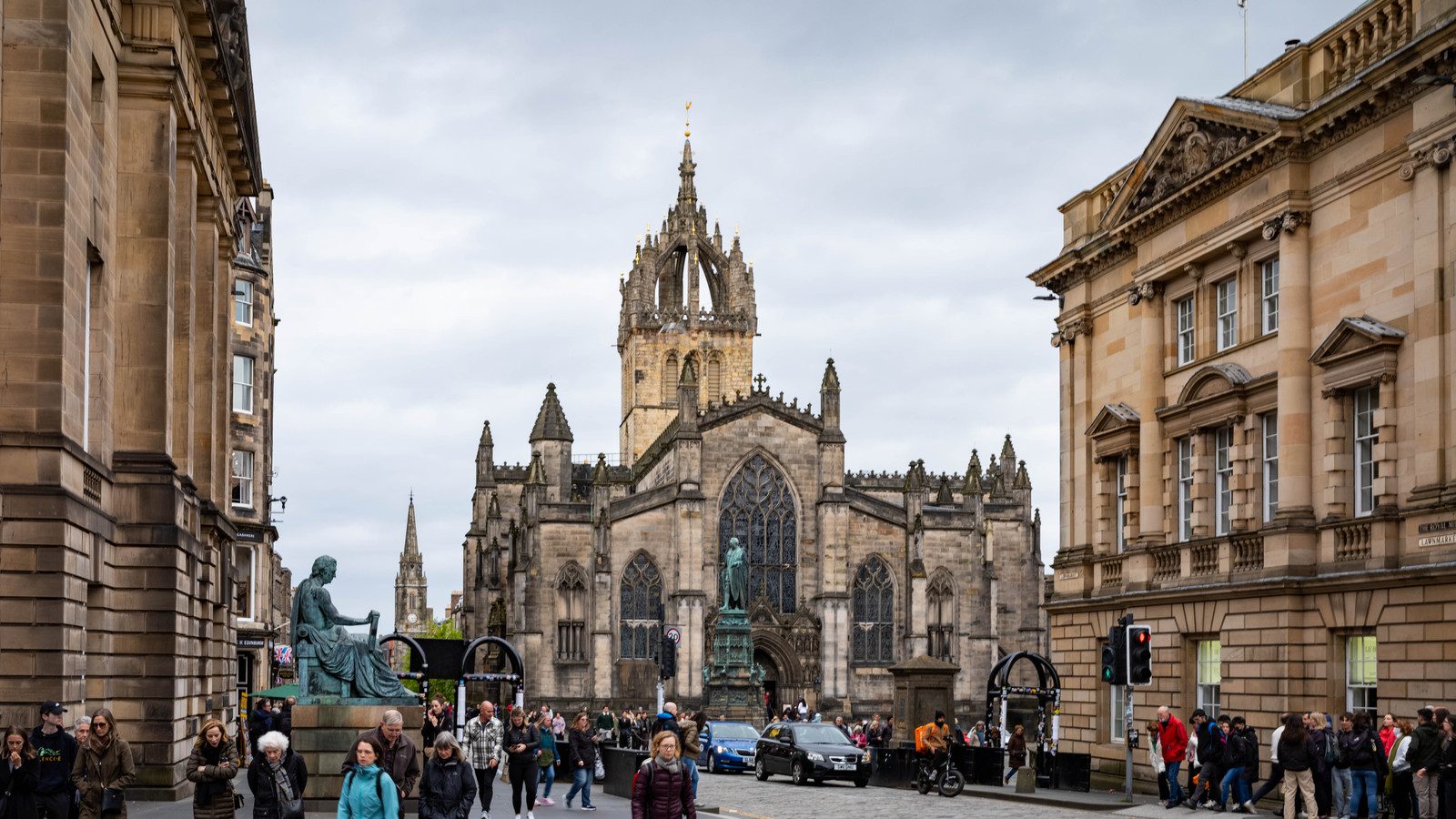
rboed* / Wikimedia Commons / CC BY 2.0 Image source CC BY 2.0 Cropped and resized. The Royal Mile in Edinburgh with historic stone buildings and a broad daylight street view.
Screen Trips visitor guide
Where Was Frankenstein (2025) Filmed? Scotland, England, Ontario and Alberta
Guillermo del Toro’s 2025 Frankenstein filmed in Scotland, England, Ontario and Alberta. Edinburgh offers the clearest public walking cluster; other heritage properties and outdoor locations require separate journeys and current access checks. Studios, private estates, miniature work and Alberta landscape plates explain the film rather than provide set tours. Gosford’s public house tours have ended for 2026, and Wilton is retained as production history without a current visitor recommendation.
Start here
The 2025 film used Scotland, England, Ontario and Alberta
Real locations, private builds, miniatures and landscape plates contributed to the screen world. This guide keeps public visits separate from production facilities and private estates.
Filming locations
What you can visit, and what to leave off the route
| Place | Production role | Status and cluster | Current action | Evidence |
|---|---|---|---|---|
| Canongate, Bakehouse Close, Museum of Edinburgh in Acheson House, West Parliament Square, and Makars' Court, Edinburgh | Film Edinburgh identifies Canongate as the busy street, Bakehouse Close as the butcher's alley, Acheson House as Victor's residence, West Parliament Square as the marketplace, and Makars' Court as the hanging square. | Exact public stop Edinburgh Old Town walk |
Walk the public streets and courts without blocking residents or businesses. Check the Museum of Edinburgh separately for current hours and managed interior access. | |
| The Signet Library, Edinburgh | The production-design submission identifies the Signet Library as the elegant dining and dance interior used for Victor and Elizabeth. | Booked stay or ticketed Edinburgh Old Town walk |
View the exterior freely, but enter only through the operator's current booked dining or event offer. Do not promise a walk-in visit or access to the exact filmed room. | |
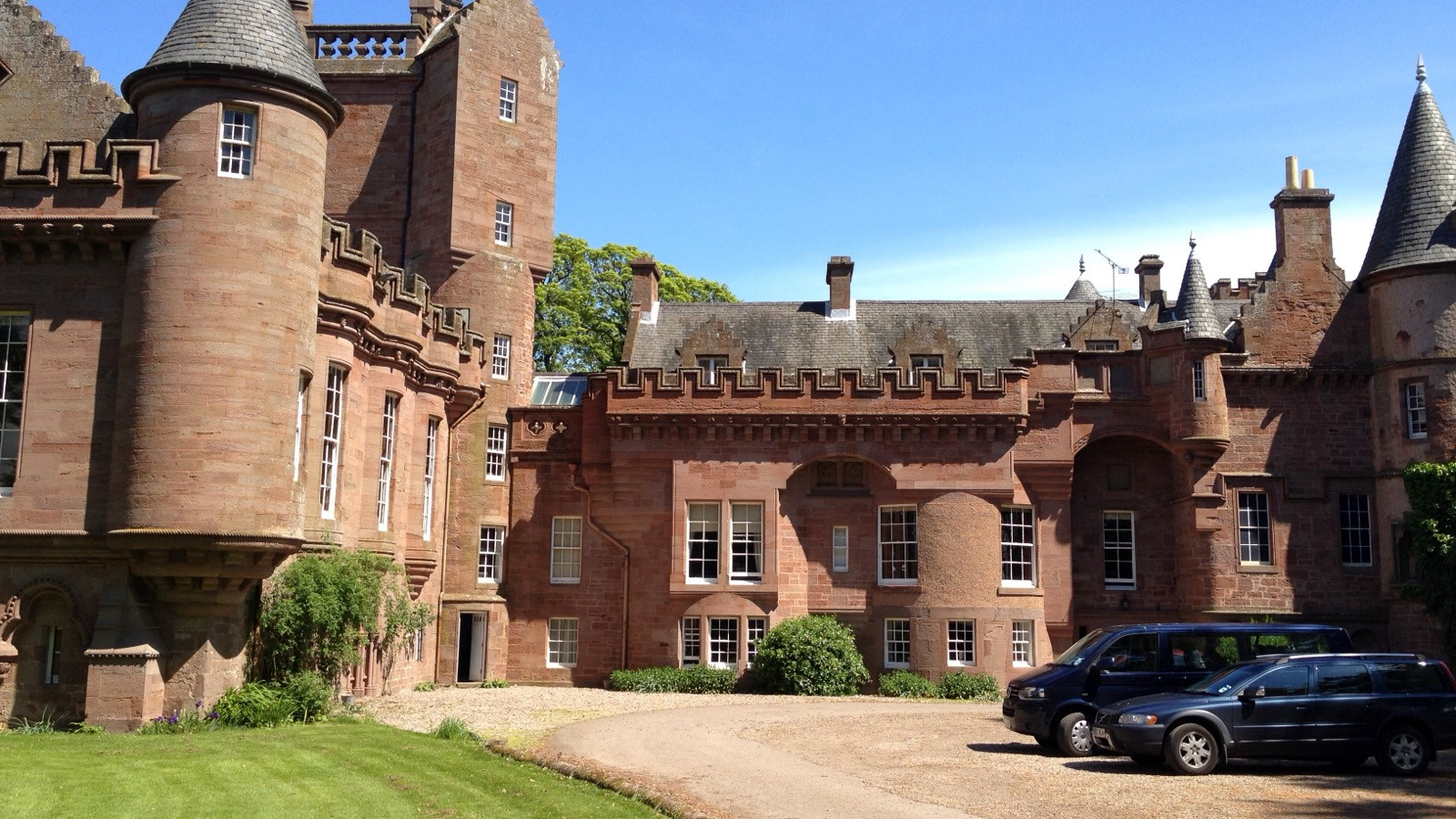
| Hospitalfield House, Arbroath | VisitScotland lists Hospitalfield in the film-location record, and Deverell identifies it as the property used for Harlander's house. | Conditional public stop Hospitalfield and Glasgow heritage choices |
Check Hospitalfield's own current programme before travel. Do not promise an interior, a daily opening, or filming access. | |
| Glasgow Cathedral, Glasgow | The church sequence used Glasgow Cathedral for the confessional setting, with part of the interior action completed in Gosford House's ballroom. | Conditional public stop Hospitalfield and Glasgow heritage choices |
Treat worship, services, events, heritage operations, and on-site instructions as controlling conditions. | |
| Glencoe, Scotland | Screen Scotland names Glencoe as production geography, but the evidence does not establish a safe camera pin or a scene-specific visitor stop. | Broad production region Glencoe landscape extension |
Use visitor-centre advice, marked paths, weather, road, and parking conditions. Do not search for an unsupported camera position. | |
| Gosford House, East Lothian | Gosford supplied the main family-estate exterior, wedding staircase, butterfly-park scene, snow-covered lawn, and coach-house exterior for the silversmith. | Conditional public stop East Lothian coast and estate extension |
Public house tours have ended for 2026 and return in April 2027. Private tours may be arranged year round subject to availability; grounds have separate access and permit rules. | |
| Seacliff Beach, East Lothian | Seacliff supplied the shoreline where the Creature washes up and the cliff plates behind the laboratory sequence. The tower was added with miniature and visual-effects work. | Conditional public stop East Lothian coast and estate extension |
Use the designated narrow private road and paid parking barrier, check coastal conditions, and leave no trace. Do not promise a tower, prop, or exact camera position. | |
| Dunecht House, Aberdeenshire | Dunecht House supplied the Frankenstein family library. The production designer identifies it as a private residence that was substantially redressed. | Private or excluded Unrouted Scotland estates and plates |
Do not route to, pin, or seek access to the private residence. Its value here is production completeness only. | |
| Aberdeen production geography | Screen Scotland identifies Aberdeen among the film's Scottish production locations. That city-level record is kept separate from the Aberdeenshire houses and is not expanded into an unsupported building or scene. | Broad production region Unrouted Scotland estates and plates |
Do not infer a city building, private estate, or camera position from the broad Aberdeen credit. No Screen Trips stop is recommended from this evidence alone. | |
| Invercauld House, Aberdeenshire | VisitScotland includes Invercauld House in its official Scotland location list for the 2025 film, without a narrower scene assignment in the sources used here. | Private or excluded Unrouted Scotland estates and plates |
Record the filming connection without promising public access, an interior, a scene recreation, or an exact visitor pin. | |
| Firth of Forth and remaining Scottish landscape plates | VisitScotland names the Firth of Forth, while direct production reporting describes additional landscape plates between Arbroath and Glasgow. Seacliff Beach is listed separately as the exact shoreline location. | Broad production region Unrouted Scotland estates and plates |
Keep the remaining water and landscape material broad. Do not invent a road pullout or camera position from the regional evidence. | |
| Burghley House, Stamford, Lincolnshire | The owner confirms 2024 filming in the Great Hall, Bow Room, and Old Kitchen for Guillermo del Toro's Frankenstein. | Booked stay or ticketed England country-house and model extension |
Plan from Burghley's current visitor calendar and ticket rules. The operator, not the film, determines room access and photography conditions. | |
| Wilton House, Wiltshire | Wilton House supplied Frankenstein family dining and cemetery work within the assembled family estate. | Private or excluded England country-house and model extension |
Production history only in this guide: no current visitor opening is verified. Confirm directly with the owner before planning any house or grounds visit. | |
| Magic Camera Company miniature work and White Waltham Airfield, England | American Cinematographer confirms Magic Camera Company miniature work and photography at White Waltham Airfield; no specific miniature-build studio is asserted. | Private or excluded England country-house and model extension |
Keep both facilities as production-craft context. Do not promise studio or airfield access, a surviving model, or a public camera position. | |
| Pinewood Toronto laboratory builds, Ontario | The production designer says the laboratory was built primarily at Pinewood Toronto, with full-scale interiors later combined with miniature and visual-effects work. | Private or excluded Ontario production context |
Treat Pinewood as private production context. Do not imply a public studio tour, surviving laboratory, or set access. | |
| Cinespace Marine Terminal Campus, Toronto | The owner confirms Frankenstein production at Marine Terminal Campus. Separate production reporting describes ship and ice builds in Toronto without assigning those builds to this campus. | Private or excluded Ontario production context |
Treat the campus as private production history. Do not seek access or infer a surviving set from the production credit. | |
| Lake Nipissing, North Bay, Ontario | The dog-sled chase and final Arctic pursuit work used Lake Nipissing. The named lake is exact, while the production ice position is not. | Broad production region Ontario production context |
Use public North Bay waterfront areas for a safe lake view. Never advise walking onto the ice, seeking the production position, or recreating the scene. | |
| The Village at Black Creek, Toronto | Netflix's official location record identifies The Village at Black Creek as the winter outpost where Victor buys dynamite before the final confrontation. | Booked stay or ticketed Ontario production context |
Check the operator's calendar, admission, parking, and building availability. Do not promise the exact room, retained dressing, or access beyond guest areas. | |
| Rockwood Conservation Area, Ontario | Deverell identifies Rockwood Conservation Area as the Canadian forest used when the Creature emerges into the wooded landscape. | Conditional public stop Ontario production context |
Use the conservation authority's live capacity, activity status, hours, fees, trail map, and safety rules. The filming source does not identify a public camera pin. | |
| Markham Agricultural Fairgrounds tower-base build, Ontario | Deverell says the nearly 180-foot laboratory tower base was constructed at the Markham Agricultural Fairgrounds outside Toronto, with interiors made across separate sets. | Private or excluded Ontario production context |
Treat the former build as production history only. Do not imply that the set remains, that event access includes it, or that visitors should search the grounds. | |
| Kleinburg-area horse farm mill-house build, Ontario | Deverell reports that the mill house was built on a horse farm next to the Kleinburg studio area months before filming. | Private or excluded Ontario production context |
Keep the private farm and temporary build off maps and routes. No public access or surviving-set claim is made. | |
| Canadian Rockies footage, Alberta | Deverell says Canadian Rockies footage was used by the VFX team to create the Swiss Alps visible in the finished film. | Broad production region Alberta VFX plate context |
Keep Alberta at province and mountain-range level. No park, trail, road, or camera pin is established by the source, so this is not a visitor stop. |
Traveler task
Check the operator before committing to a house or heritage stop
Film information tells a reader why a place matters. The property operator decides whether it can be visited today and under what conditions.
- In Edinburgh, remain in public space and book any Signet Library interior experience through the operator.
- At Seacliff, use the designated private road and paid barrier, then check coastal conditions before committing.
- For Hospitalfield, Glasgow Cathedral, Gosford, Burghley, Wilton, Rockwood, and Black Creek, verify the current calendar, admission, closures, accessibility, photography, and parking rules that apply.
- At Lake Nipissing, use public waterfront areas and never treat a frozen surface as a route to the production position.
- Keep private estates, studios, temporary sets, the airfield model unit, and Alberta plate geography off the visitor route.
Do this now: If an operator page conflicts with this guide, the operator page controls the trip decision.
Route shape
Choose one real cluster instead of chasing every screen setting
Choose the compact Edinburgh walk first. Seacliff and Gosford form a separate East Lothian decision, and every other Scotland, England, or Ontario stop needs its own travel window. Private studios, miniature facilities, temporary builds, and Alberta plates stay informational.
-
Edinburgh Old Town walk
Order: Canongate, Bakehouse Close, Museum of Edinburgh in Acheson House, West Parliament Square, and Makars' Court, Edinburgh, then The Signet Library, Edinburgh
Transfer: Walk Canongate, Bakehouse Close, Acheson House, West Parliament Square, and Makars' Court at an unhurried pace.
Current check: Check crowd controls, museum hours, events, and Signet Library reservations on the day.
-
East Lothian coast and estate extension
Order: Gosford House, East Lothian, then Seacliff Beach, East Lothian
Transfer: Treat the coast and estate as a separate road-based extension from Edinburgh, not extra stops in the Old Town walk.
Current check: Check the Seacliff road and parking barrier, coastal conditions, and Gosford's own tour calendar.
-
Hospitalfield and Glasgow heritage choices
Order: Hospitalfield House, Arbroath, then Glasgow Cathedral, Glasgow
Transfer: Arbroath and Glasgow are separate rail or road decisions from Edinburgh.
Current check: Check Hospitalfield's programme and Glasgow Cathedral's services, events, and access rules.
-
Glencoe landscape extension
Order: Production or story context only; no visitor route is proposed.
Transfer: Glencoe is broad landscape production context. A separate Highlands trip can use official visitor guidance, but this guide proposes no exact filming stop or camera pin.
Current check: Recheck weather, roads, paths, parking, and visitor-centre conditions immediately before departure.
-
Unrouted Scotland estates and plates
Order: Production or story context only; no visitor route is proposed.
Transfer: These records do not combine into a public route.
Current check: Do not seek private-estate access or infer a shoreline, road, or camera position.
-
England country-house and model extension
Order: Burghley House, Stamford, Lincolnshire
Transfer: The houses require their own calendar and base. The model unit and White Waltham are not visitor stops.
Current check: Confirm house admission, room access, photography, and closures with the operators.
-
Ontario production context
Order: The Village at Black Creek, Toronto, then Rockwood Conservation Area, Ontario
Transfer: Toronto, North Bay, Rockwood, Markham, and Kleinburg are separate production places, not one sourced circuit.
Current check: Use current operator pages. Do not enter studios, farms, temporary-build areas, or production ice.
-
Alberta VFX plate context
Order: Production or story context only; no visitor route is proposed.
Transfer: The source identifies Canadian Rockies footage used as Swiss Alps plates.
Current check: Do not create an Alberta itinerary from province-level production evidence.
Best single stop: Canongate through West Parliament Square and Makars' Court in Edinburgh Old Town.
Time reality: Allow half a day for Edinburgh. Give every extension its own operator check and travel window.
Route reality: Scotland, England, Ontario, and Alberta are production regions, not one practical road trip.
Fact check
What was filmed on location, what was built, and what you cannot visit
Filmed in
Exact location work includes Edinburgh, Seacliff Beach, Glasgow Cathedral, the Scottish and English houses, Lake Nipissing, Rockwood, and The Village at Black Creek. Broader Scotland and Alberta material remains region-level plate geography.
Set in
Toronto hosted separate Pinewood laboratory builds and the Cinespace Marine Terminal ship and ice environment. Markham and the Kleinburg-area farm held temporary builds, while the England model unit photographed tower miniatures.
A set, a private studio, a film-inspiration visit, or a fictional screen setting is not a visitor stop. The most responsible plan uses only public streets and property access confirmed by the current operator.
Scene to place guide
Plan your visit
Why the complete answer spans the United Kingdom and Canada
The 2025 Guillermo del Toro film combines real locations, full-size builds, miniature work, and visual-effects plates across four production regions. Scotland supplies the densest public route, England adds country houses and model photography, Ontario mixes practical locations with large private builds, and Alberta supplies broad Canadian Rockies footage used for the Swiss Alps. A useful answer names all four, then separates places a traveler can enter from private facilities and unpinned landscape work.
Edinburgh is the best starting point because several exact locations fit one walk. Seacliff and Gosford require a separate East Lothian decision. Burghley, Wilton, Hospitalfield, Glasgow Cathedral, the Signet Library, Rockwood, and Black Creek each depend on an operator. Lake Nipissing is exact at waterbody level but not at ice-position level. Dunecht, Invercauld, studio campuses, temporary builds, the model unit, and Alberta plates add production understanding without becoming a visitor checklist.
Start in Edinburgh, where the visitor route is genuinely public
Film Edinburgh gives the Old Town cluster unusually precise roles: Canongate became the busy street, Bakehouse Close the butcher's alley, the Museum of Edinburgh in Acheson House Victor's residence, West Parliament Square the marketplace, and Makars' Court the hanging square. That is enough detail to orient a walk without inventing a doorway or blocking a working entrance. The People's Story Museum belongs to the Canongate backdrop rather than a duplicate stop.
The Signet Library adds an exact interior, identified in the production-design submission as the elegant dining and dance environment. It is a working law library with a public afternoon-tea offer that requires current booking and can close for private events. Walk the street cluster in half a day, then add the library only when the operator's live offer fits. Use the [Screen Trips](https://deeparrival.com/destinations/screen-trips/) hub and [Where to Stay in Edinburgh: 6 Areas Compared](https://deeparrival.com/destinations/where-to-stay-in-edinburgh/) to build the surrounding trip.
Separate public Scotland stops from estates, coast, and plate geography
Seacliff Beach is the exact shoreline where the Creature washes up and the source landscape for the cliff sequence. The visible tower was supplied through miniature and visual-effects work, so the safe visitor promise is the beach, not a surviving set. The destination authority describes a narrow private road and coin-operated parking barrier. Check coastal conditions, use the designated access, and do not treat a frame match as permission to leave the public visitor area.
Gosford supplied the main estate exterior, wedding stairs, snow-covered lawn, butterfly-park scene, and coach-house silversmith exterior, but its owner controls every visit. Hospitalfield and Glasgow Cathedral also require their own programmes, services, or event checks. Dunecht remains private, Invercauld lacks a public filming route, and Aberdeen, Glencoe, the Firth of Forth, and remaining landscape plates stay broad where the evidence is broad. Seacliff is the explicit exception to that coast-level restraint.
Gosford public house tours have ended for 2026 and are due to return in April 2027. Private tours remain subject to arrangement and availability; grounds rules are separate.
Treat England as a separate house and miniature-work extension
Burghley House confirms filming in its Great Hall, Bow Room, and Old Kitchen, making it the strongest owner-documented English property. Wilton House supplied family dining and cemetery work. Both can be relevant to a trip when their own calendars permit, but neither belongs in an Edinburgh day. Check admission, room access, photography, and event closures before committing to transport or lodging.
England also contributed a different kind of production geography. The Magic Camera Company built the tower miniatures, while the miniature unit photographed them at White Waltham Airfield for establishing and destruction shots. These are craft records rather than attractions. Do not infer studio access, airfield access, a surviving tower, or a camera pin from the production account.
Wilton is retained as a filming credit only: current operator access could not be independently confirmed, so it is excluded from the proposed visitor route.
Ontario mixes exact visitor places with private builds and an unsafe ice boundary
Ontario supplies three different visitor answers. Rockwood Conservation Area is a public, operator-controlled forest location. The Village at Black Creek is the ticketed heritage site used for the winter outpost where Victor buys dynamite. Lake Nipissing is the exact waterbody used for the dog-sled and final pursuit work, but the production position on the ice is not established. View the lake from a public North Bay waterfront area rather than treating winter surface conditions as a Screen Trips route.
The private production work must remain separate. Pinewood Toronto hosted laboratory builds. The Cinespace owner confirms production at Marine Terminal Campus; Toronto ship and artificial ice builds remain broader private production context without a campus-specific claim. Markham held the temporary tower-base build, and a private horse farm near the Kleinburg studio area held the mill-house build. None of those entries supports a surviving-set promise or public access. Use [Outlander Filming Locations in Scotland You Can Visit](https://deeparrival.com/destinations/screen-trips/outlander-filming-locations-scotland/) for a separate Scotland continuation.
Alberta footage became the Swiss Alps, but no camera pin is established
Deverell says the VFX team used Canadian Rockies footage to create the Swiss Alps seen in the final film. That makes Alberta material to the complete production answer, even though it is not presented as principal estate filming or a public set. The distinction is semantic and practical: a plate is photographed landscape material incorporated into the finished image, while the Swiss Alps are the story-world result. Collapsing those into a normal filming-location stop would misstate both the craft and the geography.
The interview does not name a park, mountain, trailhead, highway, or camera position in Alberta. Treat this as a broad Canadian Rockies production connection. Do not choose a Rockies itinerary from this filming fact, do not pull over in search of a frame, and do not relabel a generic viewpoint as the exact plate position. Alberta completes the answer to where the film was made; it does not add a visitor route without a more precise production source.
Plan by access, not by the order scenes appear
Begin with Edinburgh, then add one extension that already serves the wider trip. Seacliff or Gosford can fit an East Lothian day. Hospitalfield, Glasgow, Glencoe, an English house, Rockwood, Black Creek, or the North Bay waterfront each requires a different base and access check. Private estates, studio campuses, temporary builds, miniature facilities, and broad Alberta footage remain production literacy rather than access requests.
Before booking, open the current operator page for every non-street stop. Check hours, reservations, closures, accessibility, services, events, private functions, photography rules, trail status, coastal or winter weather, and parking as relevant. If an operator page differs from a filming guide, the operator page controls. That preserves the fun of recognizing a place without asking a private, sacred, historic, natural, or working site to behave like a permanent set.
Evidence in context
Why these locations belong in the plan
Film Edinburgh assigns distinct screen roles to Canongate, Bakehouse Close, Acheson House, West Parliament Square, and Makars' Court. Film Edinburgh location record.
Production designer Tamara Deverell identifies Seacliff Beach and Lake Nipissing as exact outdoor locations and explains the different house and Toronto environments. direct production-designer interview.
Netflix's official Canadian map identifies both Lake Nipissing and The Village at Black Creek with their screen roles. Netflix Canadian location record.
Burghley House confirms its own filming and names the Great Hall, Bow Room, and Old Kitchen. Burghley House production record.
The production-design submission identifies the Signet Library as the Elegant Bistro interior. Art Directors Guild submission.
Cinespace confirms that Frankenstein filmed at its private Marine Terminal Campus. Cinespace facility record.
American Cinematographer records miniature tower photography at White Waltham Airfield. direct miniature cinematography account.
Visit East Lothian publishes the current Seacliff road, paid parking, transport, and facility conditions. Seacliff visitor guidance.
Black Creek warns that some heritage buildings may be unavailable during a visit even when the site is open. Black Creek admission and building guidance.
North Bay identifies a public waterfront walkway and parking on Lake Nipissing, separate from the unknown production ice position. North Bay waterfront guidance.
Grand River Conservation Authority publishes Rockwood's current capacity, activity, trail, fee, and safety rules. Rockwood visitor rules.
On location
Places along the route
Continue planning
Use these next before booking or driving
Sources checked
Official and supporting references
Production evidence establishes why a place belongs here. Operator and public-authority sources control what a traveler can safely do now.
Planning questions
Common questions before you go
Where was Guillermo del Toro's Frankenstein filmed?
The 2025 film used Scotland and England for streets, estates, coast, interiors, and model work; Ontario supplied locations and major builds; Canadian Rockies footage from Alberta became Swiss Alps plates. Edinburgh is the easiest public cluster.
Which Frankenstein locations can you visit in Edinburgh?
The public Old Town route includes Canongate, Bakehouse Close, Acheson House, West Parliament Square, and Makars' Court. The Signet Library requires a current operator booking for interior access.
Was the Frankenstein beach scene filmed at Seacliff?
Yes. Seacliff Beach supplied the Creature's wash-up shoreline and cliff plates. The laboratory tower was added with miniature and visual-effects work, so visitors should not expect a tower or exact prop.
Was Frankenstein filmed on Lake Nipissing?
Yes. The dog-sled and final Arctic pursuit work used Lake Nipissing. The lake is confirmed, but the production ice position is not, so use public waterfront areas and never follow an ice route from a film guide.
Can you visit Frankenstein filming locations in England?
Burghley House and Wilton House are operator-controlled visitor possibilities. Check their current calendars and room access. the Magic Camera Company and White Waltham model work remain private production context.
Can you visit the Toronto Frankenstein sets?
No public studio or surviving-set tour is established. The Village at Black Creek is a ticketed heritage attraction, but Pinewood, Cinespace, Markham, and the Kleinburg-area build remain private or historical production context.
Is Glencoe an exact Frankenstein camera location?
No exact public camera pin is established here. Glencoe is a broad production landscape, so use official visitor guidance and marked public routes without attempting scene recreation.
Was Frankenstein filmed in the Canadian Rockies?
Canadian Rockies footage was used as visual-effects plates for the Swiss Alps. No park, road, trail, or camera position is established, so Alberta remains broad production geography rather than a visitor stop.