
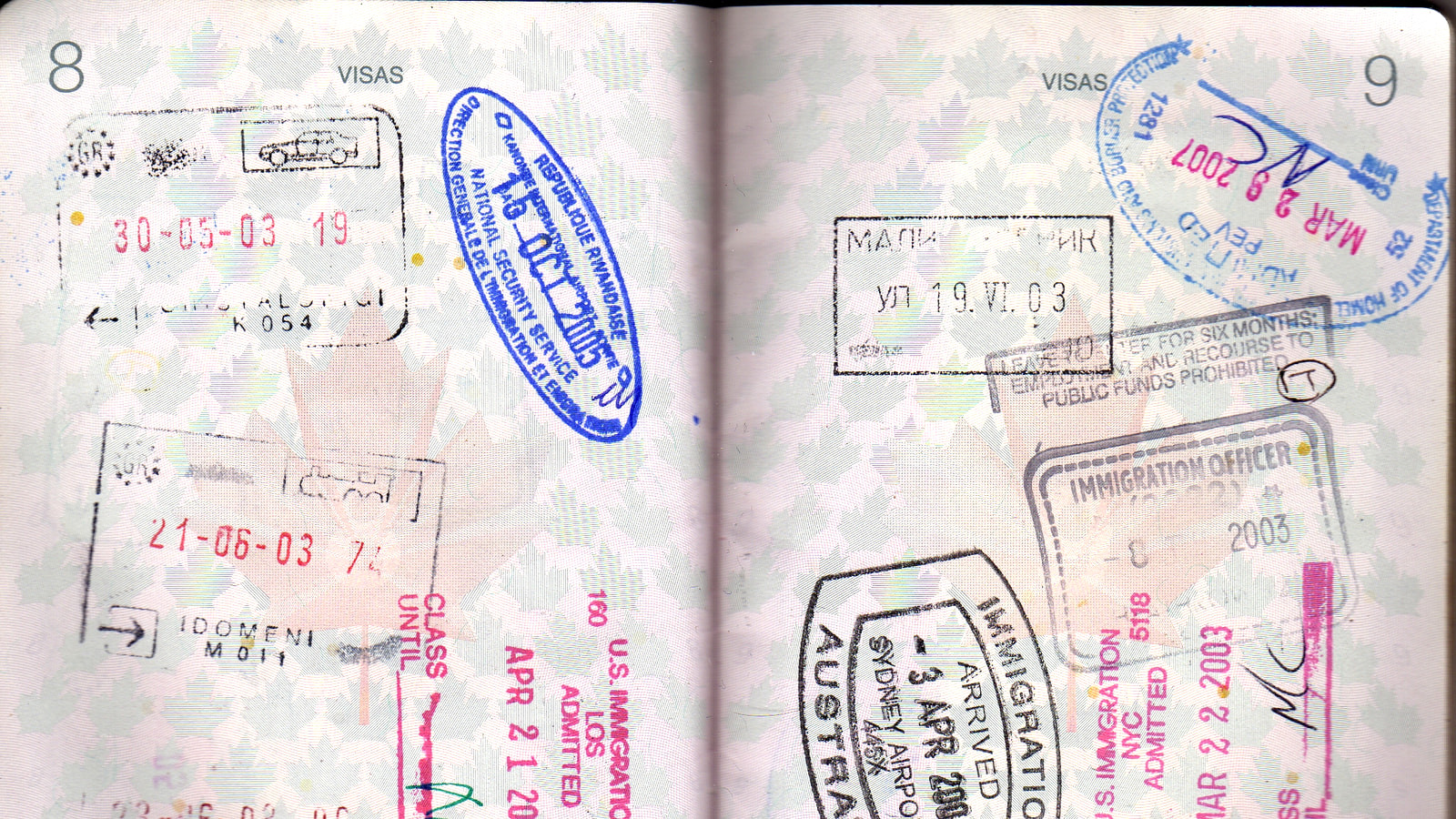
Jon Evans, Wikimedia Commons, CC BY 2.0; cropped and adjusted by Deep Arrival.
Border records explained
Passport Stamps: What They Mean and What Is Changing
A passport stamp is one clue in your travel record, not always the controlling record. Use the ink, the electronic entry record, and the destination's official rules together before assuming how long you may stay.
A passport stamp is one clue in your travel record, not always the controlling record. Use the ink, the electronic entry record, and the destination's official rules together before assuming how long you may stay.
Fast read
What matters first
Use this page as the practical filter before you open booking pages, maps, or official policy documents.
Start with the date and code
Look for an arrival or departure date, a port or airport code, and any handwritten limit. Faint ink is common, so compare the mark with your itinerary.
Find the controlling record
Some border agencies now rely on an electronic admission record even when a passport was stamped. Save that record while the trip is still fresh.
Treat uncertainty as urgent
If the stamp and electronic record conflict, contact the border authority before the admitted period ends. An airline desk or hotel cannot correct the record.
Decision system
The planning sequence
Use the sequence below to decide how this should shape the trip.
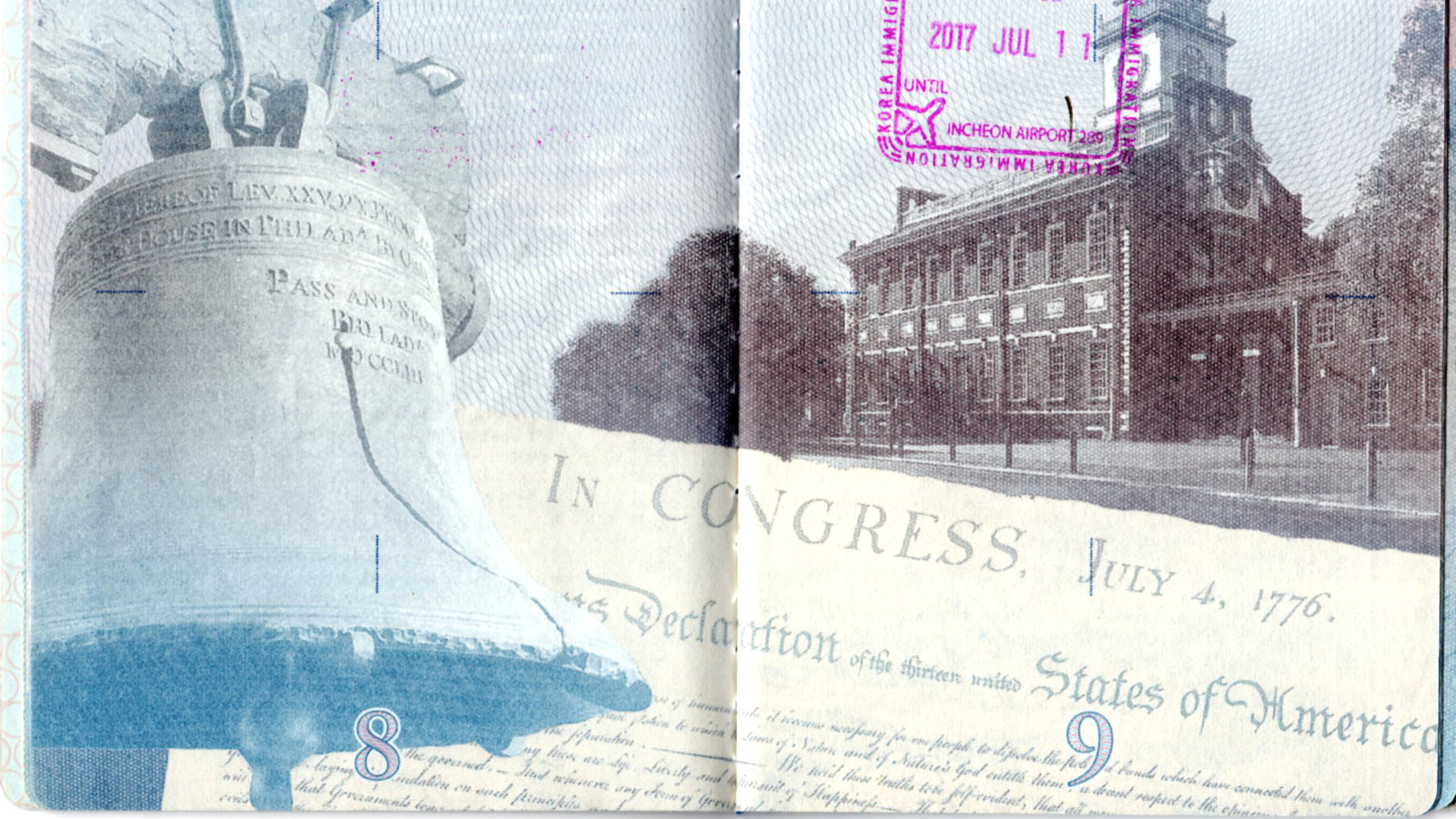
Ranch9613, Wikimedia Commons, CC0; cropped and adjusted by Deep Arrival.
Route and planning context
Exact comparison of unstamped and stamped passport pages
Use the visual as orientation, then confirm the current operating details through the official sources below.
What a passport stamp can tell you
An entry stamp usually helps identify the border authority, port of entry, and calendar date. An exit stamp records a departure where the country still uses one. Symbols, colors, and layouts vary widely, and some stamps include a permitted stay or admission category while others do not. Read only what is actually printed or written. Do not infer a stay limit from the stamp's shape or from a picture online. The destination's official immigration rules and its electronic record are the safer sources for the legal admission period.
Why the electronic record may matter more
United States Customs and Border Protection creates electronic Form I-94 arrival records for many travelers arriving by air or sea. CBP says an admission stamp may still be provided, but the traveler can retrieve the I-94 online. Compare the name, passport number, admission class, arrival date, and admitted-until date. Download or print the record before leaving the United States because it can help with extensions, employer paperwork, and correction requests. A stamp that looks reasonable does not cure an incorrect electronic admission record.
How Europe is changing the routine
The European Union's Entry Exit System records the travel document, facial image, fingerprints when required, and entry or exit data for covered non-EU short-stay travelers. The EU says passports are not stamped under the system and that EES became fully operational on April 10, 2026. That means a traveler can cross a participating external border without receiving the familiar Schengen ink mark. Keep transport records and follow the official EES guidance rather than treating an empty passport page as proof that no entry was recorded.
A safe way to decode a faint mark
Place the open passport on a flat surface and use indirect daylight. Take a straight photograph, then increase contrast on a copy rather than writing on the passport. Match the visible date, city code, and direction symbol to the itinerary. A public stamp gallery can help identify the country, but it cannot establish your legal status. If the date remains unreadable, use the authority's official arrival history or request process. Never trace over ink, add a note, laminate the page, or try to improve the original document.
What to do when records disagree
Gather the passport biographic page, the stamped page, boarding pass, ticket receipt, and any visa or approval notice. Write down the actual arrival location and time. For a United States I-94 error, follow CBP's official correction guidance or contact an appropriate deferred inspection location. Other countries use their own immigration offices or online portals. Ask for written confirmation of the corrected record. Do not wait until check-in for the next flight, because airline staff can verify documents but generally cannot change government entry data.
Protect the information on the page
A passport stamp photo can expose a passport number, birth details, visa number, travel pattern, and machine-readable information from the opposite page. Store the image in an encrypted or access-controlled location and share it only through an official channel that requests it. If you need help identifying the mark, crop out the biographic page and obscure unrelated document numbers. Avoid posting a full passport spread on social media or in a public travel forum, even if the stamp itself seems harmless.
Build a simple border-record habit
After each international arrival, save the boarding pass and entry confirmation in a trip folder. Retrieve any official digital admission record within a day or two, when an error is easiest to document. Before departure, confirm that an extension or status change is reflected where required. This habit is especially useful as countries adopt biometric gates and reduce physical stamping. It also gives you a reliable timeline for visa applications that ask for prior travel dates long after the ink has faded.
Planning traps
Mistakes to avoid
These are the small decisions that quietly derail an otherwise good plan.
Many border systems record the crossing electronically, and some intentionally stop adding ink.
A visual match can identify a mark, but only the border authority can confirm admission status and correction steps.
A discrepancy is easier to address while tickets, dates, and the entry event are still documented.
Crop and protect the file because the surrounding page may reveal sensitive identity and travel data.
Sources checked
Official and supporting references
Use these references to confirm live prices, dates, rules, and operating details before money changes hands.
FAQ
Common planning questions
Do all countries still stamp passports?
What if my passport was not stamped on arrival?
Is the passport stamp or the I-94 controlling in the United States?
Can an airline correct a passport stamp?
Should I keep photos of my stamps?
What should I save for an error request?
Continue planning