
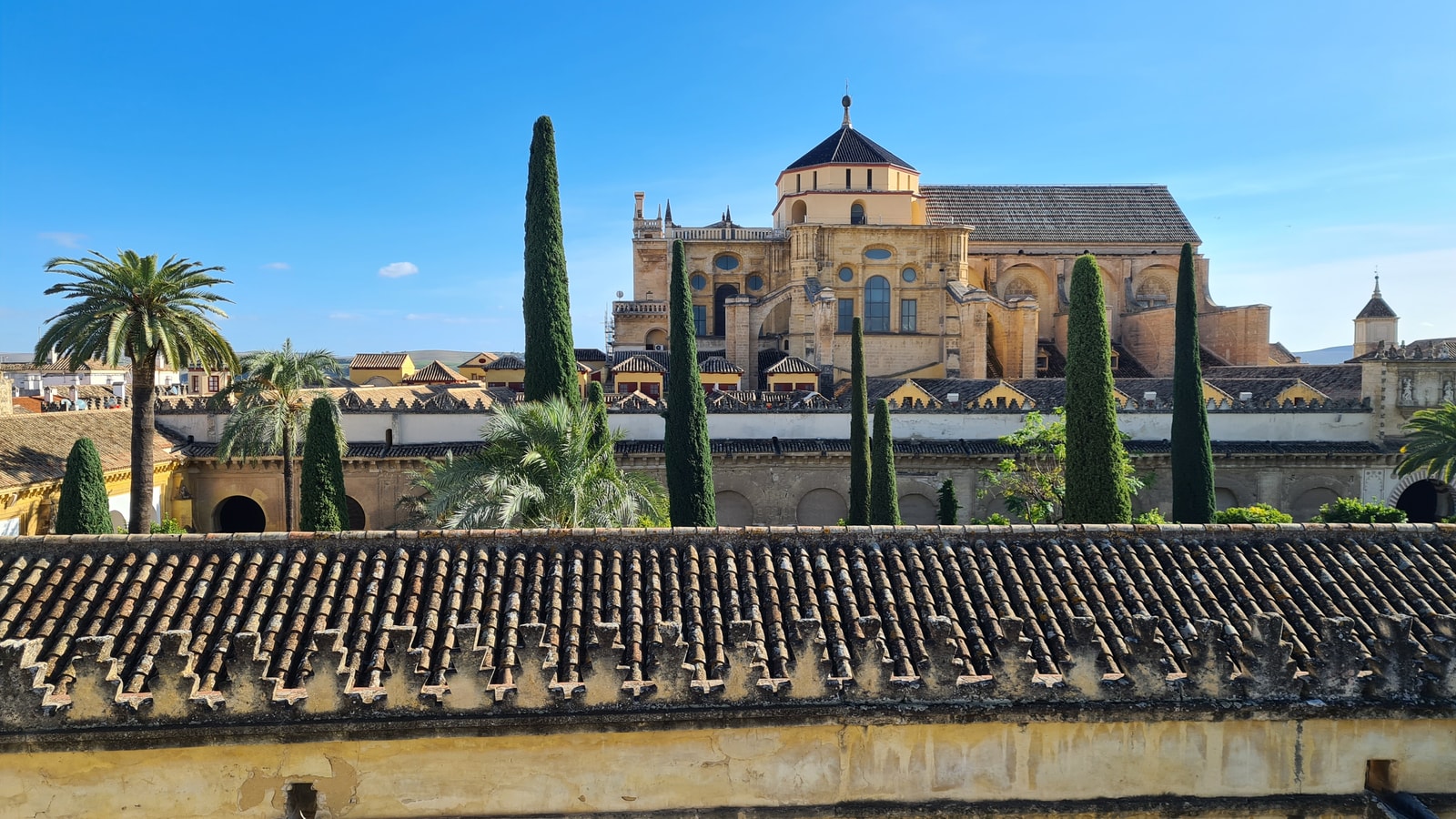
Córdoba mosque and cathedral decision guide
Mezquita Cathedral Córdoba Tickets, Hours and Route Guide
Choose the paid visit or quiet free morning window, then trace the mosque's expansions into the cathedral without missing the separate tower rules.
Choose the paid visit or quiet free morning window, then trace the mosque's expansions into the cathedral without missing the separate tower rules.
Fast read
What matters first
The visit changes most with the selected date, the paid or free entry window and whether the separate €4 Bell Tower climb suits the group.
Paid and free entry
General admission is €15, with €12, €8 and €6 reductions for listed groups and free entry for children under 10 and other official categories. Monday through Saturday has a free individual visit from 8:30am to 9:30am, with no groups and access ending at 9:20am.
Hours and last entry
The operator's date tool showed 10am to 7pm on September weekdays and Saturdays, and 8:30am to 11:30am plus 3pm to 7pm on Sunday September 20. Tickets and access stop 30 minutes before each final close, and worship or special events can alter the day.
Tower, access and photos
The Bell Tower costs €4 and uses 30-minute escorted slots with narrow stairs rising about 40 metres; reduced mobility and several health conditions exclude the climb. The main monument offers wheelchairs and adapted toilets, while tripods and photography of liturgical celebrations are prohibited.
Decision system
The planning sequence
Choose the entry window first, then decide whether the building sequence or the separate Bell Tower deserves the extra time.
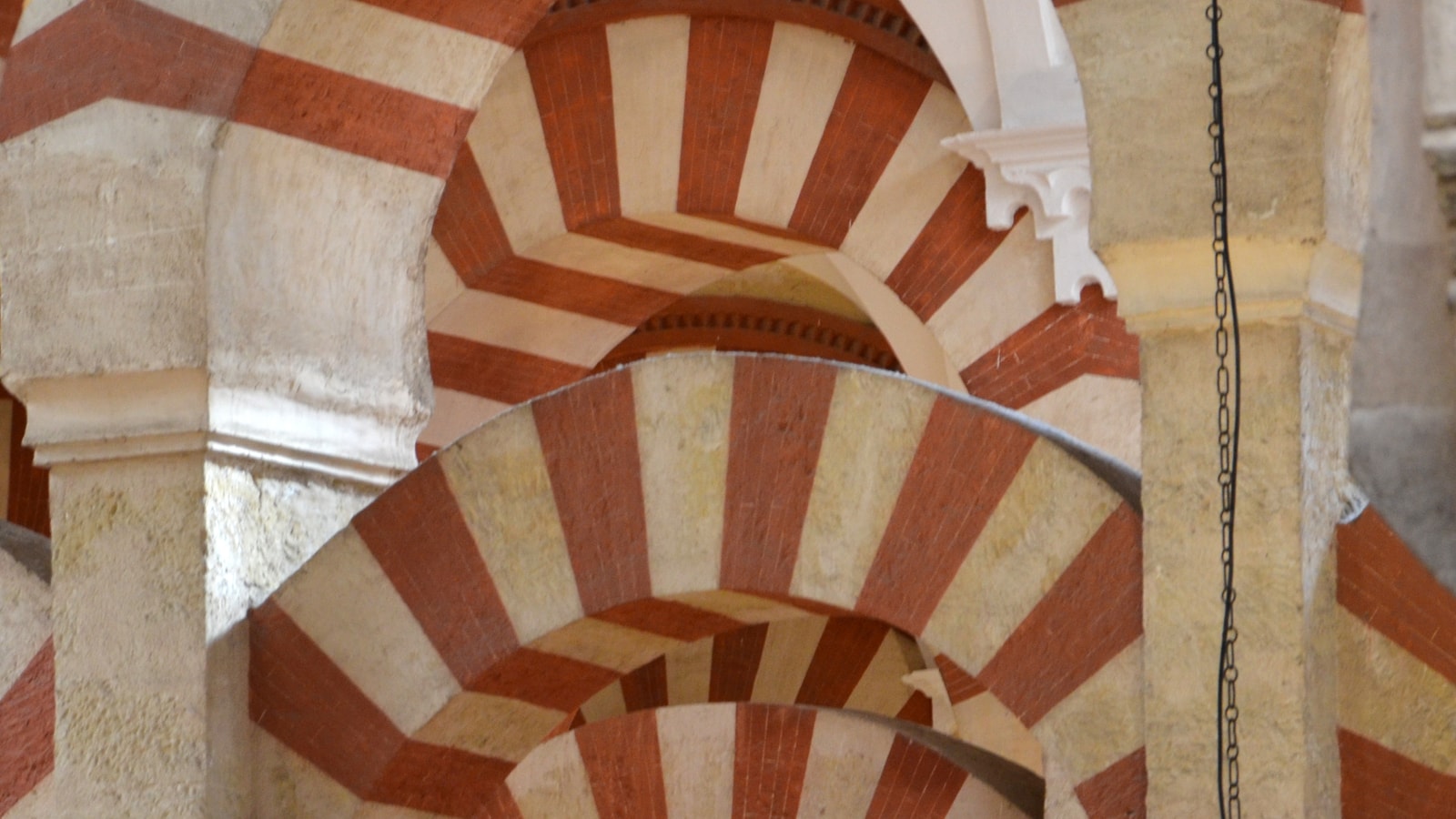
Arches, mosaics and cathedral light
Follow the building by changes in structure and light
The repeated double arches establish the original rule, while Al-Hakam's skylights and mosaics intensify the route near the Mihrab.
The cathedral transept then breaks the low horizontal rhythm with a new vertical volume inside the same monument.
Choose the correct ticket product
General daytime admission is €15, while listed reductions are €12, €8 and €6. The Bell Tower is a separate €4 product, and the operator's current prices control over third-party guides.
Use the free morning window precisely
The free individual visit runs Monday through Saturday from 8:30am to 9:30am except during extraordinary celebrations. Groups are prohibited, access ends at 9:20am and the building remains a working cathedral, so this is a quiet, time-limited visit.
Start in the Patio de los Naranjos
The courtyard began as the Caliphate ablutions space and later became part of Catholic ceremonial life. Its rows of orange trees, palms and cypresses visually extend the prayer hall's columns outdoors.
Find the original mosque module
Abd al-Rahman the First's eighth-century mosque used eleven naves and superimposed arches, reusing Roman and Visigoth material. This double-arch system became the structural idea that later expansions repeated.
Read growth in Abd al-Rahman the Second's expansion
Population growth drove an extension of eight bays toward the south in the ninth century. The builders kept the double arches but removed column bases and added locally carved capitals, so continuity and change appear together.
Slow down in Al-Hakam the Second's expansion
The tenth-century southern extension added twelve sections and used marble, mosaics and stylised plant decoration. Four skylights guide attention toward the Maqsurah and Mihrab as the most elaborate part of the mosque sequence.
Treat the Maqsurah as a threshold
The Maqsurah gathers intersecting arches and skylights immediately before the Mihrab. Its controlled light and richer surfaces signal the approach to the focal area rather than simply another aisle.
Read the Mihrab as an octagonal room
The Mihrab is a small octagonal chamber beneath a shell-shaped dome, not a shallow wall niche. Byzantine-tradition mosaics, Quranic inscriptions and plant motifs concentrate Al-Hakam the Second's artistic program at the prayer-direction wall.
Compare Almanzor's eastward expansion
Almanzor added eight naves to the east, enlarging the mosque but shifting its established central axis. Painted imitation replaces some of the earlier alternation of stone and brick, making scale rather than new ornament the phase's main contribution.
Use Villaviciosa Chapel as the first Christian adaptation
After the 1236 consecration, the main altar initially occupied Al-Hakam's skylight area. The later Gothic nave and recovered painted timber ceiling show Catholic worship adapting an existing focal space before the great Renaissance intervention.
Observe the Royal Chapel without planning entry
The fourteenth-century Royal Chapel joined Christian royal burial purpose with dense Moorish plasterwork, but it cannot currently be visited. Read it from the available viewpoint and keep moving rather than treating it as an open room.
Enter the Main Chapel, Transept and Choir as a new volume
Construction begun in 1523 inserted Gothic, Renaissance and Mannerist architecture into the column forest. The vertical light and monumental vaults create the clearest spatial shift in the full route.
Build the short route around six meanings
In about 75 minutes, keep the Patio de los Naranjos, original mosque, Abd al-Rahman the Second expansion, Al-Hakam the Second expansion, Maqsurah and Mihrab, then finish at the transept. The full route adds Almanzor, Villaviciosa, the Royal Chapel viewpoint and choir.
Separate the Bell Tower decision
Tower slots last 30 minutes for groups of no more than 22, and the climb rises about 40 metres through narrow stairs. Children under 7, reduced-mobility visitors, pregnant visitors and people with listed health conditions cannot climb.
Use the current photo rule
Tripods and stands are prohibited, and liturgical celebrations may not be photographed or filmed. Keep equipment handheld, follow posted restrictions and stop shooting whenever worship or staff direction requires it.
Arrive through the old city
The visitor address is Calle Cardenal Herrero 1, with urban bus lines 3 and 12 stopping at Puerta del Puente. Build walking time through the pedestrian historic centre into the ticket or free-window plan.
Planning traps
Mistakes to avoid
The main failures are trusting generic hours, confusing the tower with general admission or treating a working cathedral like an unrestricted museum.
Sunday has split visiting hours in the current pattern, and special worship can change any date; use the official date tool.
Tickets and access stop 30 minutes before the final close, which is still too late for a coherent architectural route.
The climb is a separate €4 ticket with timed, escorted slots and strict physical restrictions.
Groups are prohibited, access stops at 9:20am and worship takes priority during the quiet morning visit.
The operator prohibits tripods and stands, and photography or filming of liturgical celebrations is not allowed.
The chapel is currently not visitable; use the available viewpoint and continue through open spaces.
Sources checked
Official and supporting references
The Cathedral Chapter controls prices, date-specific hours, free entry, tower access, visitor rules and architectural interpretation. UNESCO supports World Heritage identity, and an independent guide provides a comparison point.
FAQ
Common planning questions
How much is the Mezquita Cathedral of Córdoba in 2026?
When is the Mezquita Cathedral free?
What are the Mezquita Cathedral opening hours?
Is the Mezquita Cathedral wheelchair accessible?
Can you take photos inside the Mezquita Cathedral?
Continue planning