
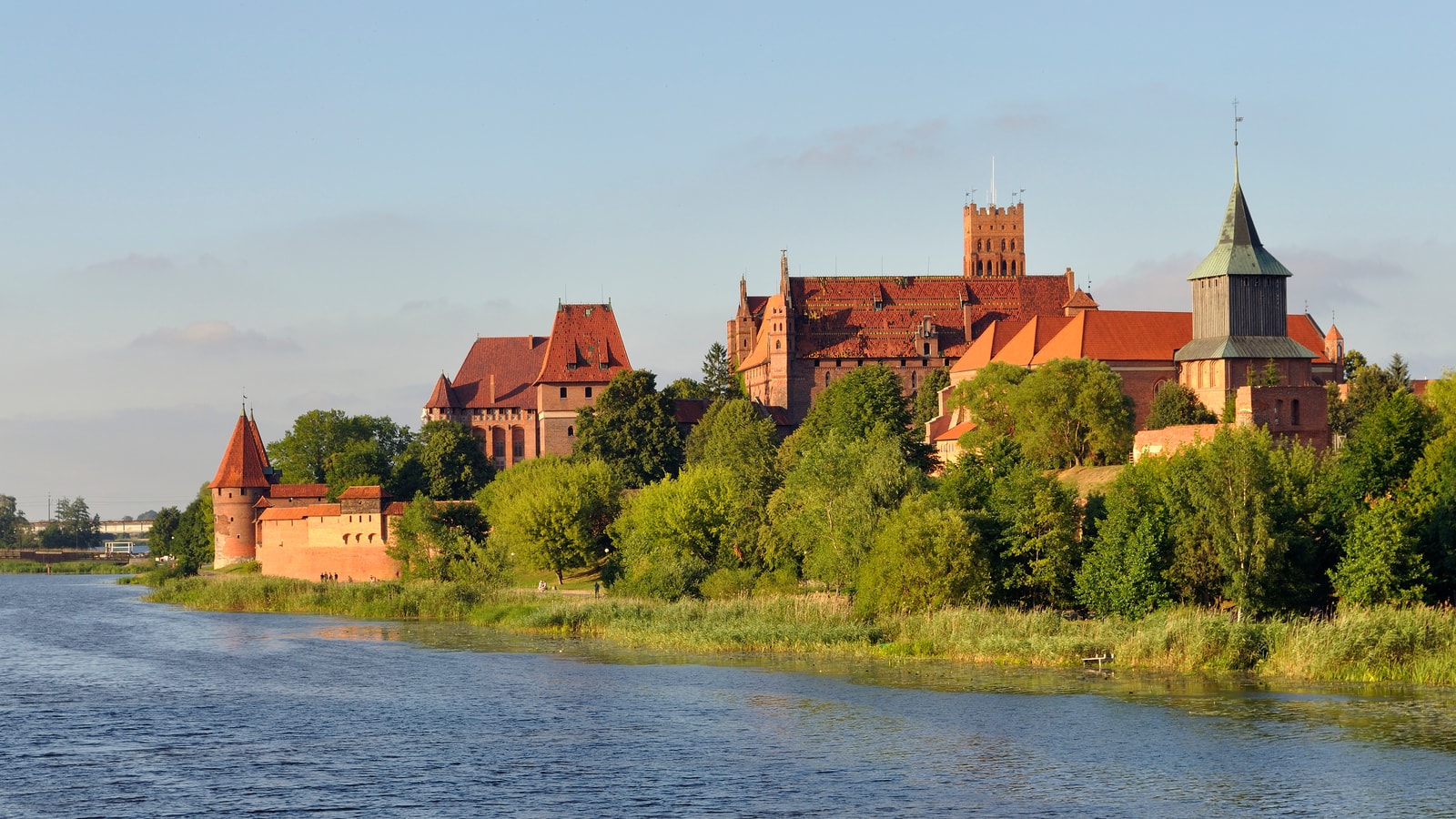
DerHexer, Malbork Castle in the afternoon, Wikimedia Commons, CC BY-SA 3.0; cropped and resized.
Historical rooms, grounds tickets and arrival timing
Malbork Castle Tickets, Hours and Route Guide
Malbork is a museum inside a vast brick fortress, and its two main visitor routes deliver very different days. Choose the historical route for interiors and collections, or the shorter grounds route for courtyards and fortifications; the early historical last entry matters more than the final gate closing time.
Malbork is a museum inside a vast brick fortress, and its two main visitor routes deliver very different days. Choose the historical route for interiors and collections, or the shorter grounds route for courtyards and fortifications; the early historical last entry matters more than the final gate closing time.
Fast read
What matters first
Checked October 3, 2026: historical admission is 80 PLN adult or 60 PLN reduced, including a guide or audio guide, with Tuesday through Sunday entry from 09:00, last entry at 12:45, and interiors closing at 15:00. Grounds close at 16:00; Monday offers a free grounds-only ticket collected onsite, so choose another day for the historical interiors.
Historical ticket or grounds ticket
Historical admission is 80 PLN standard or 60 PLN reduced, including a guide or audio guide; visitors aged 8 to 26 can select the operator's current PLN 1 campaign ticket. Grounds-only admission is 35 PLN standard or 25 PLN reduced and excludes historical interiors and exhibitions.
Protect the historical entry deadline
Book a 09:00 or 10:00 historical start and allow the operator's published 3.5 hours before interiors close at 15:00. The 12:45 last entry leaves only 2 hours 15 minutes inside and cannot accommodate that full recommended route.
Arrival and mobility
Use the official visitor entrance at Starościńska 1 and allow time to reach the ticket and meeting area. Cobbles, thresholds and narrow stairs make a full step-free circuit unavailable; the palace platform serves only part of the complex.
Decision system
The planning sequence
Use the following route selector before choosing a train or timed ticket. These are editorial priorities within the museum's permitted circuit; follow the guide, audio route and current room closures instead of treating the order as permission to enter every space.
Water, working buildings and layered defenses
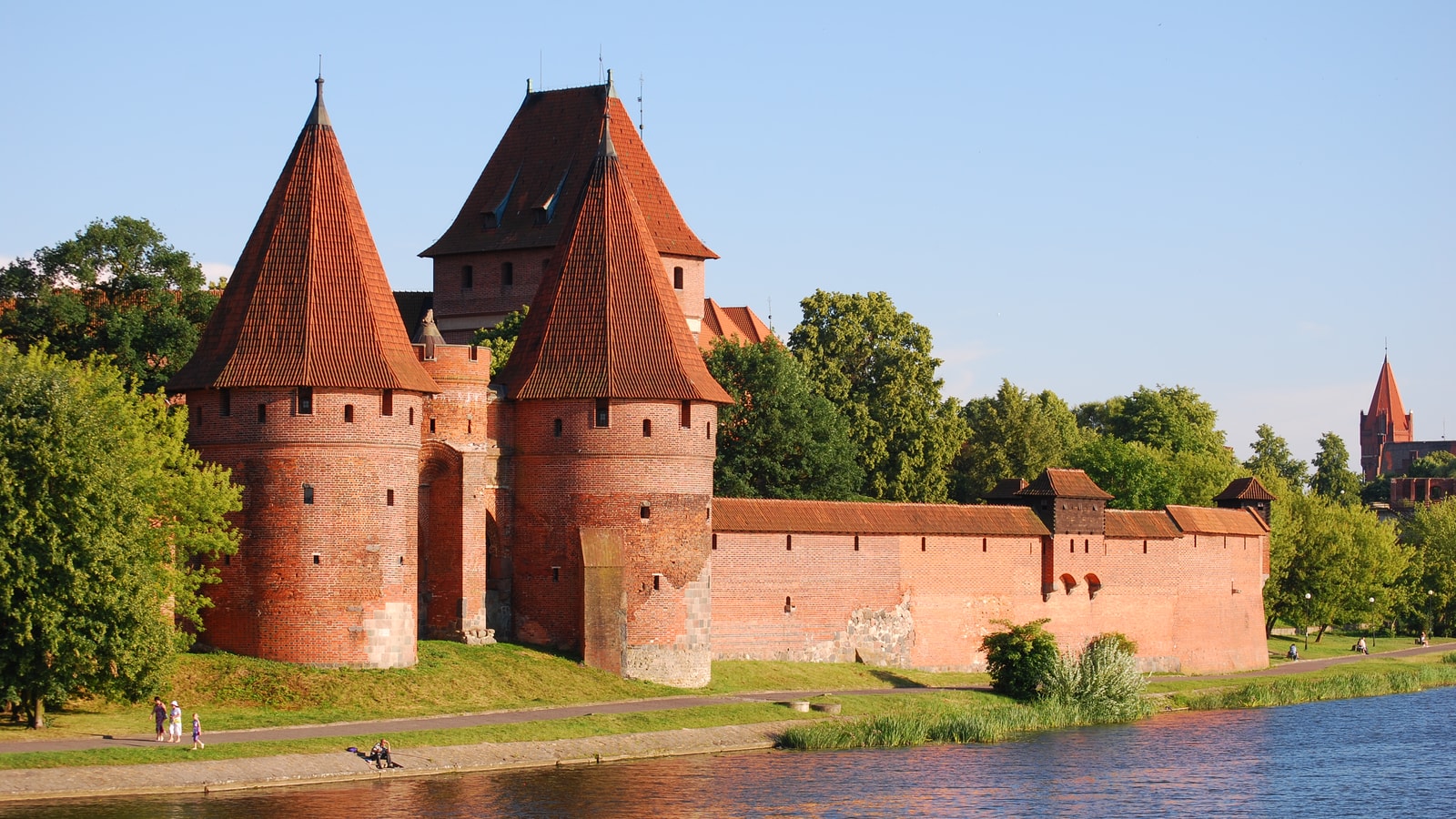
Use the gate and river edge to read the fortress
The Nogat frontage makes the castle's scale and relationship to movement visible.
A grounds visit can explain that outer structure, while the historical ticket opens a different interior story.
Choose the circuit before the price
The historical ticket is the relevant purchase for travelers who want to see the castle as a museum. It includes a guide or audio guide, while the grounds ticket delivers courtyards, defensive passages, part of the Outer Bailey, St Anne's Chapel, terraces and moats.
The lower price therefore buys a different experience, not the same rooms with fewer extras. Read the official route description before buying through any third-party booking service, and keep the official PLN price separate from reseller packages that may add transport or a guide.
Visitors aged 8 to 26 should check the current PLN 1 museum campaign before selecting a standard ticket. The official announcement instructs buyers to choose the date, route, time and guided or audio option, then the named campaign ticket.
Use the October clock correctly
For the current autumn period, the Polish operator notice places historical last entry at 12:45 and closes interiors at 15:00. A 16:00 site closing time is therefore too late to use as your museum arrival target.
The museum's English opening-hours body still displays the earlier summer schedule, so use the dated Polish notice and current ticket calendar for this visit. On the grounds route, the opening notice says 13:00 while the ticket description says 13:30; planning for 13:30 or later before 14:30 avoids relying on the disputed first half hour.
A 09:00 or 10:00 start gives the full 3.5 hour circuit room before the 15:00 interior close. Starting at 12:45 leaves only 2 hours 15 minutes inside, so the last permitted admission is not a sensible full-route start.
Start by reading the Middle Castle
The Middle Castle is the best place to understand the change from a fortified monastery to the seat of a powerful order. The Grand Masters' Palace and Great Refectory give the complex a ceremonial and administrative scale that an exterior photograph cannot explain.
Pause over the refectory vaulting and the palace's relationship to the courtyard before moving to the more enclosed High Castle. The route order may change with tours or conservation work, so these are priorities to recognize rather than an independent access plan.
Give the High Castle its own attention
The High Castle carries the monastic core: the Church of the Blessed Virgin Mary, cloister setting and the route toward the Dansker latrine tower show religious, communal and practical functions within the same fortress. St Anne's Chapel connects the church complex with the burial of Grand Masters.
These spaces work better as a linked sequence than as isolated photo stops. Follow barriers and staff instructions around restorations, and avoid assuming that a tower, upper room or chapel is open simply because it appears on an architectural map.
Select collections that change your reading of the building
The permanent exhibition list includes amber, the Malbork Armoury, the castle mill and displays about architectural fragments and conservation. Amber introduces trade, craft and collecting alongside the military story; the armoury gives weapons context without making every room a battle scene.
The mill connects the complex to the ordinary work of feeding a community, while conservation material explains why the present castle combines surviving fabric with repaired and reconstructed sections. Check which displays are included and open within the purchased route.
Treat the Outer Bailey as more than spare walking
The Karwan, the castle's great former armoury building, and defensive passages help explain the working and protective edges of the complex. The river-facing architecture places the brick fortress beside the Nogat, while terraces and moats make its defensive layers easier to see.
On a short grounds visit, use these relationships as the central experience. Do not promise access inside Karwan or every tower: recognizing a building from the authorized outdoor route is different from entering its interior.
Understand the history and the restoration
UNESCO identifies a fortified monastery founded in the thirteenth century and expanded after the Grand Master's seat moved from Venice in 1309. The Teutonic Order's religious and military authority belongs within the broader history of Baltic conquest and conflict, not only picturesque knight imagery.
The castle's present form also reflects major nineteenth- and twentieth-century conservation and rebuilding after wartime damage. Looking for repaired surfaces and exhibition explanations makes the building more legible than treating every visible brick as an untouched medieval survivor.
Plan access around actual barriers
The official accessibility declaration describes rough cobbles, high thresholds, slopes and narrow or winding stairs. Staff can operate a platform for a representative floor of the Grand Masters' Palace, but that selective facility does not create a step-free historical route through the High Castle.
Contact the museum with the mobility aid and rooms you hope to visit before buying. An adapted toilet is in the Middle Castle, and wheelchairs or walkers may be available at the gate; confirm availability rather than making equipment the basis of an unannounced visit.
Make the train connection part of the route
Malbork has rail connections from Gdańsk, Gdynia, Warsaw and other cities, and the museum gives the visitor address as Starościńska 1. Use current railway timetables and budget roughly 20 minutes for the station walk as a planning buffer, then additional time for tickets and the tour meeting point.
The operator names Kościuszki and Piastowska streets or Sierakowskich as walking approaches from the station. After the circuit, an exterior view across the Nogat can provide a quieter finish, but do not attach a tight departing train to the nominal end of an audio route.
Keep photography and baggage practical
The museum rules allow photography without flash or extra lighting and require visitors to avoid obstructing others. The same rules describe pram storage and lockers near the gate or cash-desk building, useful when bags or a stroller would make stairs harder.
Confirm current availability and follow staff directions about any exhibition-specific restriction. A morning interior visit followed by unhurried exterior time gives photography a place in the day without turning narrow historic passages into a prolonged stopping point.
Planning traps
Mistakes to avoid
Most disappointing visits come from buying the wrong route or treating the final closing time as the last moment to begin the museum.
The 35 PLN adult grounds ticket excludes historical rooms and exhibitions. Choose the historical route when those are the purpose of the visit.
The present historical last entry is 12:45, but interiors close at 15:00. Choose an earlier start for the 3.5 hour circuit rather than treating last admission as enough time for the full visit.
The regular Monday offer is free grounds-only entry with an onsite ticket, not the full historical circuit.
The official declaration describes substantial barriers elsewhere, especially the High Castle. Confirm the exact rooms and assistance before travel.
Restoration, route controls and exhibition closures can change the available circuit. Follow the current guide and staff instructions.
The published 3.5 hour route covers the historical visit, not the station walk, ticket collection, breaks and device return.
Sources checked
Official and supporting references
The museum supplies ticket rules, the dated Polish operating clock, visitor conduct and access details. UNESCO supplies the architectural and restoration context.
FAQ
Common planning questions
How much are Malbork Castle tickets?
What is the last entry for Malbork Castle?
Is Malbork Castle free on Monday?
How long should you allow at Malbork Castle?
Is Malbork Castle wheelchair accessible?
Continue planning