
Park City / Arrival
Getting Around Park City: Buses, Walking and the Car Decision
Test the actual morning, grocery and evening journeys before deciding whether to rent a car.
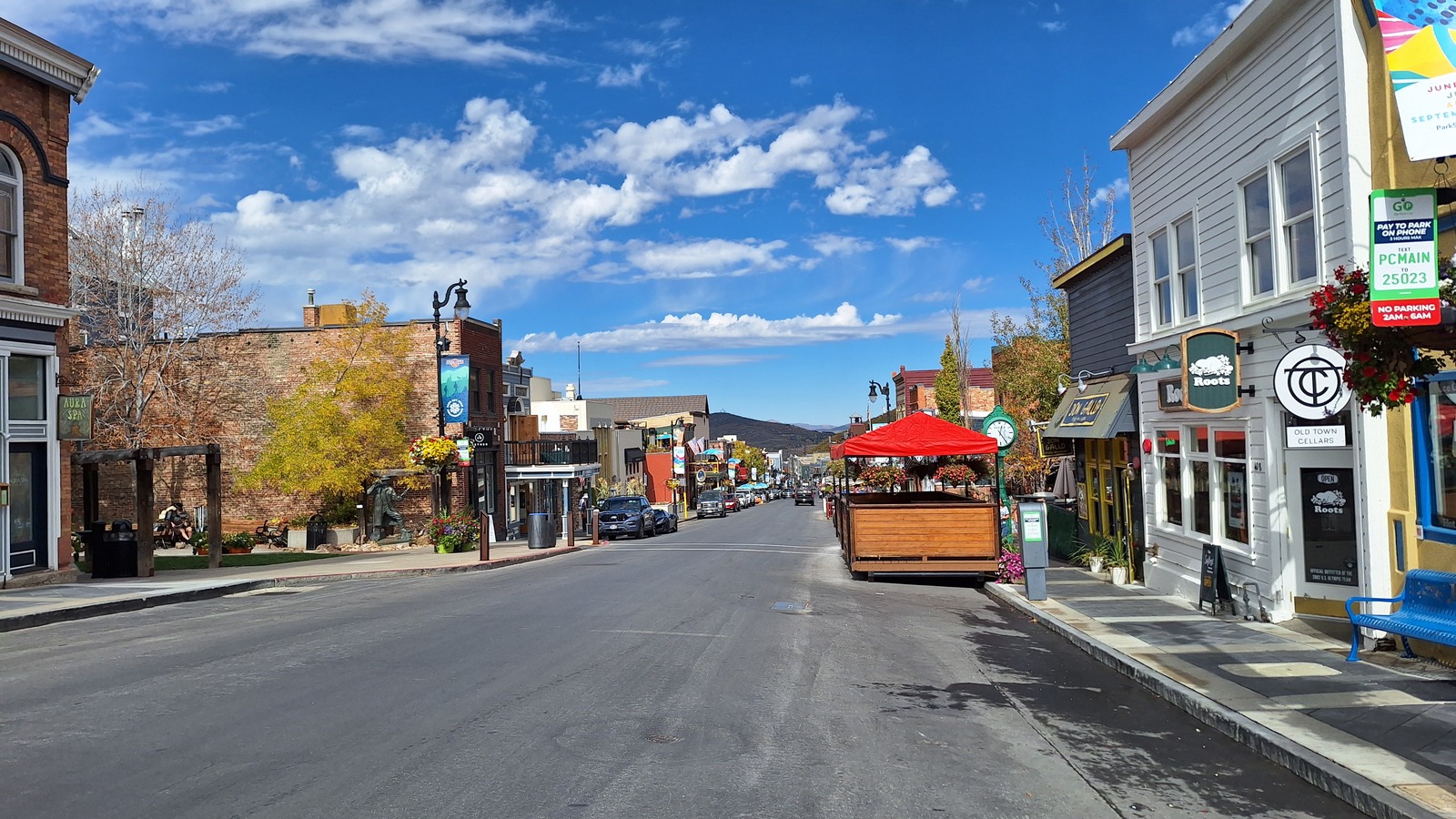
A trolley on Park City Main Street, photographed in October 2026. Photo: Park City, UT_Cutler_20261006_122438 / Wendy Cutler / CC BY-SA 4.0
Plan a trip that works
Getting around in Park City
You can plan a Park City vacation without using a car for every journey, but the decision belongs to the exact accommodation and itinerary. Main Street, Park City Mountain’s two main bases, Deer Valley and Kimball Junction are not one pedestrian district. A good local transport plan connects the places your group will actually use and accounts for the walk at each end.
Two public operators matter: Park City Transit and High Valley Transit. They provide complementary services, but their routes, tools and some passenger rules differ. Property shuttles, private transfers and resort lifts are additional systems, each with its own purpose and conditions.
Start with the Park City vacation planner and your accommodation address. This guide helps you test an ordinary day, a ski day, a grocery trip and an evening out. Use the separate airport guide for reaching Park City from a flight, and avoid assuming that an easy airport transfer automatically solves movement during the rest of the stay.
Explore this guide
- Learn the geography before choosing a transport pass
- Use Park City Transit for the named local journey
- Understand High Valley Transit's wider connections
- Treat Micro as a defined shared service
- Judge walking by the people and conditions
- Make the ski-day journey specific to the booking
- Plan groceries as a carrying problem
- Give evenings their own return plan
- Account for dogs and access requirements early
- Decide when a car adds enough value
- Test three journeys before finalizing the stay
01 / Getting around
Learn the geography before choosing a transport pass
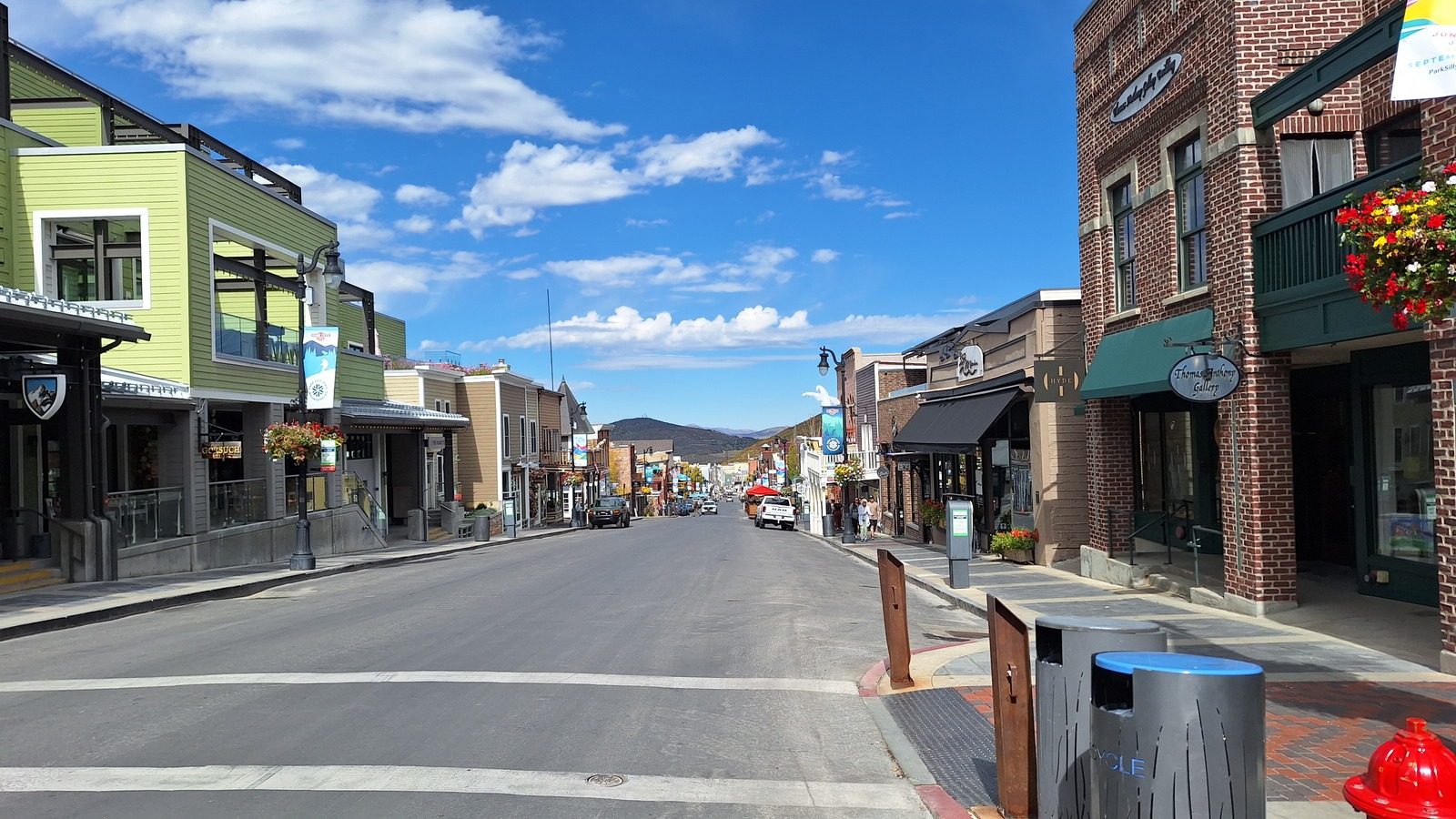
Historic Main Street and Old Town provide a town-centered setting, while Park City Mountain Village is a distinct resort arrival point. Canyons Village is another main base of Park City Mountain, with its own access arrangements. Deer Valley is a separate resort with several base neighborhoods, including Snow Park, Silver Lake and East Village.
Kimball Junction is a different part of the wider destination, useful for some lodging, shopping and activity plans. Heber, Midway and the Jordanelle area extend the choice of places to stay or visit, but they require their own journey planning. A rental advertised under Park City may be in one of those surrounding areas.
Mark the accommodation, first lesson or activity, groceries and the evening destination on the same map. Those four points usually reveal more than a generic claim that the town is easy to navigate. If they are spread across different networks, a no-car plan needs more deliberate coordination than a stay clustered around one area.
Do not treat ski terrain connections as ordinary transport for everyone. A route usable by a skier with suitable lift access may not work for a non-skier, a young child or a dog. The road and public-transport journey between bases is a separate question from the way skiers move across an open mountain.
Use the resort and base comparison before buying any access product. Epic and Ikon products relate to participating mountain access under their terms; they are not a single destination-wide ticket covering every vehicle and activity. Local public transit is its own service, with its own route information.
02 / Getting around
Use Park City Transit for the named local journey
Park City Transit’s official site provides routes, maps and live journey information. Its current timetable page lists services including the Main Street trolley and several color-named routes. Open the actual map or schedule for the journey instead of assuming that a familiar color from an older guide still follows the same seasonal pattern.
Enter the exact starting address and destination in the planner, then inspect the walking portions. A result that reaches a resort transit stop may still leave a walk to the lesson meeting point or rental shop. Ask the accommodation about its nearest practical stop, not simply the nearest stop measured in a straight line.
Check both directions and the time you expect to return. A route useful for morning skiing may be less convenient after a late dinner, and a seasonal service can have a limited operating period. The current route-specific timetable is more useful than a general statement about buses operating around town.
Allow for loading and the group reaching the stop together. Children carrying unfamiliar equipment can move more slowly than the adults expect, especially if a boot or glove needs attention. Choose a departure that leaves room for those ordinary interruptions before a lesson or timed reservation.
Keep the operator’s current service notices available during the stay. Construction, events and weather can alter a stop or route. A saved screenshot of the basic plan is useful, but it should not prevent you from checking an announced change before an important journey.
03 / Getting around
Understand High Valley Transit's wider connections
High Valley Transit’s route directory covers the Wasatch Back and lists connections that extend beyond Park City’s local streets. Current names include the 101 Spiro/224 Local, 105 Canyons Village Shuttle, 106 Wasatch Back Connector and 107 Park City/Salt Lake City Commuter. The 10X High Line Express is another service to examine for the relevant corridor.
Use those names as a starting point for the current route map, not as a complete instruction to board anywhere along a road. Check the actual stops, direction and timetable for your travel date. A commuter connection and a frequent local route can serve different purposes even when both appear in one planner.
The 106’s Heber Valley connection does not imply direct service to every hotel, campground or attraction there. Identify the last leg after leaving the bus, including any walk or separate service. This is especially important when planning a day trip with children and a fixed return time.
HVT publishes real-time and trip-planning tools through its own site. Use them to distinguish the scheduled departure from an estimate affected by current conditions. If the timetable lists only selected timepoints, follow the operator’s guidance for the intermediate stop rather than inventing a departure minute.
Public transit can reduce parking decisions, but it does not eliminate all timing decisions. Plan a return that leaves a useful alternative if the group misses one departure. A fare-free service is valuable when the route fits; it should not become a reason to accept an impractical sequence of connections.
05 / Getting around
Judge walking by the people and conditions
A walkable area is not the same as a universally easy walk from every unit. Ask about the route from the specific entrance, including slopes, steps, crossings and snow clearing. A short distance on a map can feel very different while carrying equipment or accompanying a tired child.
Separate walking in ordinary shoes from walking in ski boots. The family may happily stroll to dinner yet find the same distance awkward with skis and helmets. Consider equipment storage or collection near the activity when it genuinely reduces the daily carrying task.
For a stroller or mobility device, request concrete route information rather than relying on a walkable label. Check the entrance, surface and crossings in the direction you will travel. A step-free building does not establish a step-free route to the restaurant or bus stop outside it.
Give the return walk as much attention as the outward walk. Darkness, fatigue and changing surfaces can make the evening feel different from a cheerful morning departure. Choose dinner and activity times that fit the group’s comfortable return rather than measuring the day only by what is possible when everyone is fresh.
A short first-day walk can help orient the group. Find the stop, the nearest practical meal option and the correct building entrance before the next morning’s appointment. This small reconnaissance is more useful than discovering the route while carrying all the equipment to a lesson.
06 / Getting around
Make the ski-day journey specific to the booking
Use the lesson or activity confirmation to identify the exact meeting point. Park City Mountain Village and Canyons Village are different arrivals, and Deer Valley bookings belong to their stated base. A bus arriving at the right resort name can still leave you in the wrong place for the booked program.
Include rental collection and fitting if they happen before the lesson. Those tasks need their own time and may occur at a different shop from the meeting location. Ask the provider whether equipment can be collected earlier and what rules apply, instead of assuming the morning schedule includes every preparation step.
Count the equipment and help needed at the same time. Children may need support with skis, gloves and boots, while an adult may be managing luggage or a mobility aid. With one caregiver, choose a route and lesson schedule that can be handled together. If the party separates, name who carries each item and how everyone reunites, without assigning all the handling to the traveler who is not skiing.
For drivers, compare the resort’s current parking arrangement with park-and-ride or local transit options. Park City Mountain’s 2026/27 arrival information includes construction and different early-season and later parking plans. A car can remain at the accommodation for a ski day even if it is useful for the wider trip.
Keep the first ski day simpler than an established routine. The first-ski-trip guide covers lessons and equipment choices, but transport is part of that preparation. Reaching the right place calmly is more valuable than selecting a theoretically shorter route with an unfamiliar connection.
07 / Getting around
Plan groceries as a carrying problem
A grocery journey has two different halves: reaching the shop and returning with purchases. Count the bags, the children and any stroller before deciding to make a large shop by bus. A route that is convenient empty-handed can become awkward after buying food for several days.
Whole Foods at Canyon Corners is one documented grocery option in the Kimball Junction area. Check the current hours for the date and identify the actual stop or pickup point you will use. Its presence does not mean every rental in the destination has a simple direct connection to the store.
Consider a smaller first shop and later top-ups rather than carrying the whole week’s food at once. That can work particularly well when you have not yet seen the kitchen’s storage space or equipment. It also reduces waste if the family later chooses more meals out than expected.
If you prefer delivery, confirm that a provider serves the exact address and date, then check the building’s receiving instructions. A general delivery advertisement does not establish a slot or access to a locked condominium entrance. Decide who will receive the order and how substitutions will be handled.
The food guide connects meal choices to the base areas. Pair grocery planning with that decision rather than treating it as a separate errand added after every activity is booked. A practical kitchen and a manageable food journey can make a no-car family stay substantially easier.
08 / Getting around
Give evenings their own return plan
Choose a restaurant with both the outward and return journey in mind. Main Street, Canyons Village, Deer Valley and Kimball Junction offer different evening patterns. The desired meal may be worth traveling for, but it should be a conscious outing rather than a surprise transfer after a tiring day.
Check the relevant transport schedule near the end of the meal, especially if the booking is late. Do not assume that a morning service pattern continues unchanged through the evening. Keep the appropriate operator’s notices available if an event or road change affects the return.
A hotel shuttle can be convenient, but ask about its actual coverage and reservation process. Some services may cover resort journeys without covering every restaurant or a late return. Ask what happens if the family finishes earlier or later than planned and whether a second booking is required.
For taxis or app-based rides, treat availability as something to establish at the time and place needed. Do not build the only workable return around an assumed immediate vehicle, particularly if you need child seats, a large luggage space or pet approval. A prearranged option can be worth comparing for a specific evening.
Keep one easy meal near the accommodation in the plan. That gives the family a choice when weather, fatigue or a child’s needs make a longer outing unattractive. Transport works best when it supports the vacation rather than forcing every meal into an elaborate excursion.
09 / Getting around
Account for dogs and access requirements early
Ordinary-dog policies differ between the public systems. Park City Transit requires a leash and properly fitted muzzle under its published conditions, while High Valley Transit requires a closed carrier for companion pets. Check the operator for every leg instead of assuming one rule applies throughout the destination.
Property shuttles and private vehicles need their own animal approval. A rental that welcomes a dog does not automatically provide a pet-approved shuttle, and permission to board does not establish admission at the activity. The pet-transport guide separates those checks.
Describe access needs precisely when asking about a service. The required boarding arrangement, equipment dimensions or step-free last leg may matter more than a general accessible label. Public operators publish accessibility information, but specialized services may have an application or eligibility process distinct from ordinary fixed-route travel.
A route can meet every operator rule and still be difficult to use. Compare the load with the people available to carry it, control the dog and assist anyone who needs help. A solo traveler with a large carrier, a caregiver with a stroller and a group carrying sports equipment may each need different arrangements. Reducing bags or booking one simpler journey can be more useful than adding another transfer to save a small amount.
Build a fallback that preserves the essential requirements. A replacement ride is useful only if it can carry the same people and equipment or animal. Keep the relevant confirmations where the adult managing the journey can find them, especially when the group divides for different activities.
10 / Getting around
Decide when a car adds enough value
A car can be useful for accommodation beyond convenient routes, multiple independent outings or a group carrying substantial equipment. It also brings rental charges, parking, winter preparation and the responsibility of driving in changing conditions. Compare a complete car-based plan with a complete transfer-and-transit plan rather than comparing only daily rental rates.
Count the journeys for which a car makes a meaningful difference. If most days center on one base and the accommodation has a practical connection, occasional approved private rides may meet the remaining needs. If each day begins with a difficult last-mile problem, a car or a different lodging location may be the more sensible answer.
Ask the accommodation about parking before reserving the vehicle. Include garage dimensions, assigned spaces and any extra-car restrictions. If the vehicle carries a roof box or the group selects a tall van, verify the fit rather than assuming a standard parking description covers it.
Use the driving guide for UDOT conditions and the mountain approach. A car does not make every nearby destination a simple outing, particularly when seasonal roads are closed. The local transport decision should remain connected to the actual roads and dates of the trip.
It is also possible to mix modes deliberately. Use a car for a regional outing, a bus for a resort day and walking for a meal near the rental. A good transport plan is not an argument for one mode everywhere; it is a small set of reliable choices that fit the family’s different days.
11 / Getting around
Test three journeys before finalizing the stay

Test the first morning’s most important trip, the grocery return and the latest evening return. These represent different loads, times and levels of fatigue. If all three work from the proposed address, you have a much stronger basis for a no-car decision than a general promise that buses are nearby.
For each test, write the stop or pickup point, operator, walking stages and fallback. Record any reservation, pet or access condition that changes the result. Keep the plan short enough that another adult can understand it without repeating the research.
Recheck the date-specific timetable near travel because seasonal services and operating patterns can change. The October route listing is a useful planning source, but it is not a guarantee of the same timetable throughout winter. Save the current official links with the reservation information so updates are easy to find.
If one essential journey remains awkward, change the plan before booking dependent activities. That might mean a different base, a private ride for that occasion or a vehicle for part of the stay. Solving the specific weak point is more useful than abandoning all public transport or insisting on it for every outing.
Once those journeys are clear, keep the daily schedule flexible. Park City is easier to enjoy when transport supports a few well-chosen activities rather than a continuous sequence of transfers. The aim is a vacation the whole group can navigate comfortably, with or without a car.
Before you book
Questions before you book
Can I visit Park City without a car?
Yes, when the exact accommodation and planned journeys fit the available services. Test the lesson or activity trip, grocery return and evening return before deciding.
Are Park City Transit and High Valley Transit the same operator?
No. Their services complement each other, but route information and some passenger rules differ. Identify the operator of each leg.
Does Micro go directly to every address?
No. It is shared on-demand service within defined zones, and a journey may combine it with a bus or require a walk to the pickup point. Check the actual proposed itinerary.
Can I walk between every resort base?
Do not plan the destination as one pedestrian district. Mountain Village, Canyons Village and Deer Valley bases are distinct locations, and the exact route and conditions matter.
Should I use the same transport for every day?
Not necessarily. A mix of walking, public transit, an approved private ride and occasional driving may suit the trip better than forcing every journey into one mode.
Resources for your trip
Sources and useful links
- Park City Transit services
- Park City Transit current routes and schedules
- High Valley Transit route directory
- High Valley Transit Micro service
- Park City Transit dogs-on-buses policy
- High Valley Transit animal policies
- Park City Mountain arrival and parking
- Whole Foods Market Canyon Corners store
Photograph credits and licenses
- A trolley on Park City Main Street, photographed in October 2026. Photo: Park City, UT_Cutler_20261006_122438 / Wendy Cutler / CC BY-SA 4.0 · Cropped and resized to 16:9.
- Historic Main Street in Park City, photographed in October 2026. Photo: Park City, UT_Cutler_20261006_122955 / Wendy Cutler / CC BY-SA 4.0 · Cropped and resized to 16:9.
- Whole Foods Market at Canyon Corners, photographed in October 2022. Photo: Whole Foods Market - Park City - Utah / Tony Webster / CC BY-SA 2.0 · Cropped and resized to 16:9.
Plan the complete trip