
Closest airport by total trip fit
Closest Airport to New York City
LGA minimizes many Midtown trips, JFK leads for broad international access, and EWR can win for west side addresses. The right answer changes by borough and arrival hour.
Start here
Start with JFK for an international itinerary, then compare LGA and EWR to the exact address. Keep HPN, ISP, and SWF for a named suburban or Hudson Valley advantage rather than treating them as routine city substitutes.
Decision router
Choose the service branch first
Ranked matrix
Six airports compared by total trip fit
| Airport | City | Best for | Skip if |
|---|---|---|---|
| 1. John F. Kennedy International Airport (JFK) | Queens | international arrivals, broad route choice, and Brooklyn or Queens trips | a practical LGA or EWR nonstop creates a much easier complete trip |
| 2. LaGuardia Airport (LGA) | Queens | many domestic trips to Midtown, the Upper East Side, Queens, or the Bronx | JFK or EWR provides the needed long haul flight or a cleaner full route |
| 3. Newark Liberty International Airport (EWR) | Newark | west side Manhattan, Lower Manhattan, New Jersey, or a strong nonstop | the address lies east of Manhattan and JFK or LGA offers the simpler route |
| 4. Westchester County Airport (HPN) | White Plains area | Westchester, the northern Bronx, Greenwich, or a suburban business trip | the stay is in central or southern New York City |
| 5. Long Island MacArthur Airport (ISP) | Islip | a Long Island itinerary with a useful nonstop | New York City is the only destination |
| 6. New York Stewart International Airport (SWF) | New Windsor | the Hudson Valley or an exact fare and flight advantage | the trip centers on New York City without a northern regional stop |
Ranked airport cards
Use the first airport that clears every dependency
John F. Kennedy International Airport
John F. Kennedy International Airport (JFK) is the broad international default for New York City. For a New York City trip, it is most useful for international arrivals, broad route choice, and Brooklyn or Queens trips, and its Queens location and large terminal system add ground and connection time for many Manhattan addresses.
Validate before booking: terminal, AirTrain, rail, taxi, pickup, and exact borough route
LaGuardia Airport
LaGuardia Airport (LGA) is the closest major airport to Times Square and much of Midtown. For a New York City trip, it is most useful for many domestic trips to Midtown, the Upper East Side, Queens, or the Bronx, and Road traffic and a bus connection for public transit can erase part of the distance advantage.
Validate before booking: terminal, bus or road route, traffic, pickup zone, and exact address
Newark Liberty International Airport
Newark Liberty International Airport (EWR) can be the strongest west side or New Jersey option. For a New York City trip, it is most useful for west side Manhattan, Lower Manhattan, New Jersey, or a strong nonstop, and Hudson crossings, rail transfers, terminal access, and traffic make the result address specific.
Validate before booking: AirTrain status, rail connection, tunnel traffic, tolls, and terminal
Westchester County Airport
Westchester County Airport (HPN) serves a smaller northern suburban branch. For a New York City trip, it is most useful for Westchester, the northern Bronx, Greenwich, or a suburban business trip, and limited route depth and a road transfer reduce its value for most city stays.
Validate before booking: operating flight, rental or car service, traffic, and return margin
Long Island MacArthur Airport
Long Island MacArthur Airport (ISP) can fit a Long Island and city itinerary. For a New York City trip, it is most useful for a Long Island itinerary with a useful nonstop, and its long ground leg makes it a poor default for Manhattan.
Validate before booking: flight, rail or road link, traffic, luggage, and return buffer
New York Stewart International Airport
New York Stewart International Airport (SWF) can anchor a Hudson Valley and city open route. For a New York City trip, it is most useful for the Hudson Valley or an exact fare and flight advantage, and Distance and limited service outweigh most fare savings for a city-only trip.
Validate before booking: operating flight, ground provider, traffic, weather, and return margin
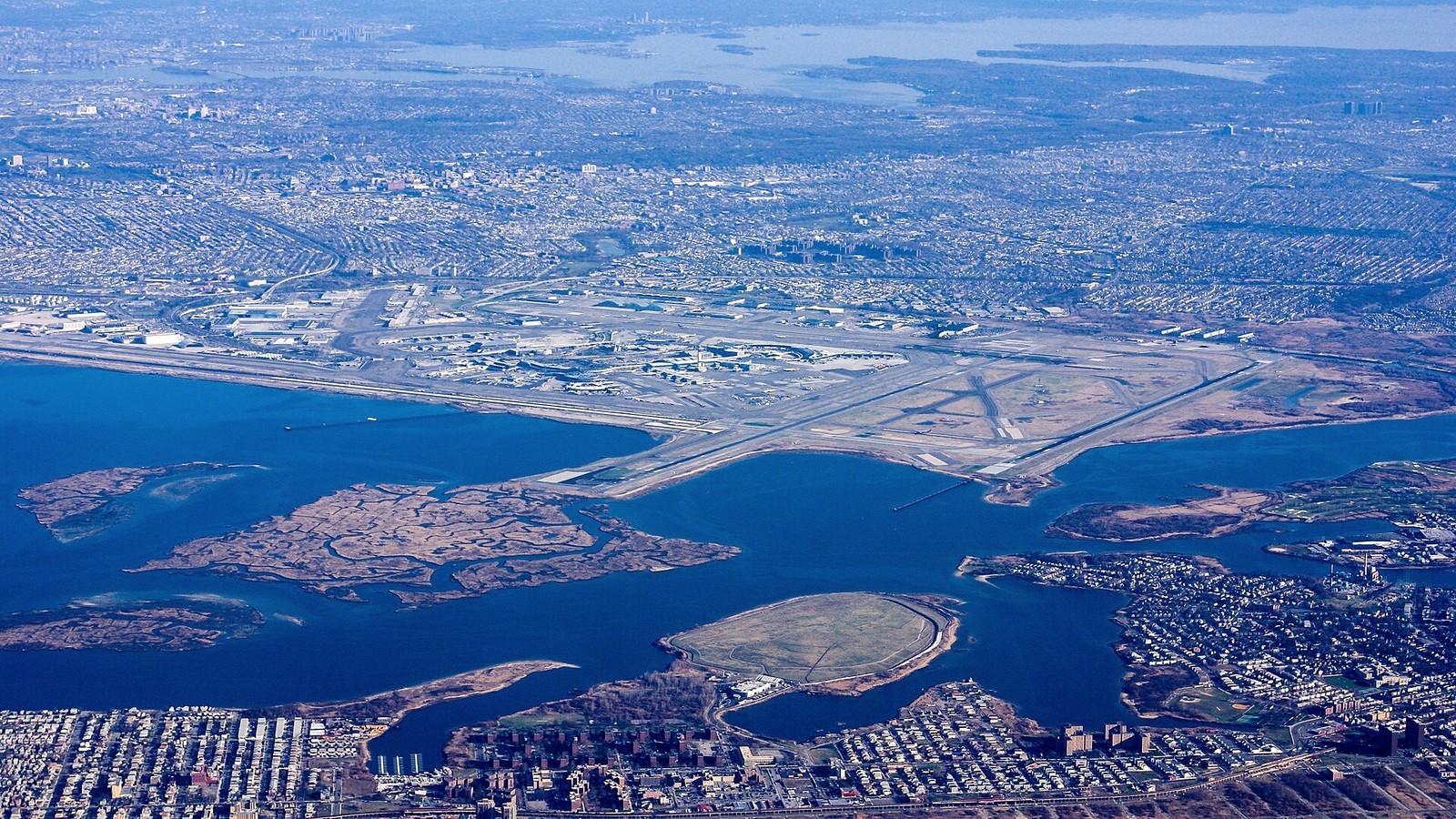
Service orientation
Choose the airport by borough and route, not by a single city center pin
New York City has no universal airport winner. LGA is closest to Midtown, JFK has the broadest international role, and EWR can reduce ground friction for west side and New Jersey itineraries, while a Brooklyn, Queens, Bronx, Staten Island, or Lower Manhattan address can reverse the order.
AirTrain, rail, subway, bus, taxi, ride app pickup rules, tolls, luggage, construction, and the arrival terminal all affect the useful route. Price the airport to the actual address and do not use a Midtown estimate for another borough.
Field notes
How the New York City airport choice actually works
New York City has no universal airport winner. LGA is closest to Midtown, JFK has the broadest international role, and EWR can reduce ground friction for west side and New Jersey itineraries, while a Brooklyn, Queens, Bronx, Staten Island, or Lower Manhattan address can reverse the order.
AirTrain, rail, subway, bus, taxi, ride app pickup rules, tolls, luggage, construction, and the arrival terminal all affect the useful route. Price the airport to the actual address and do not use a Midtown estimate for another borough.
Rush hours, holidays, major events, severe weather, rail work, and airport construction can widen every transfer band. Recheck the operating flight and the complete ground chain close to travel.
New York City has more than one plausible airport because route networks and road geography point in different directions. EWR serves west side Manhattan, Lower Manhattan, New Jersey, or a strong nonstop; HPN serves Westchester, the northern Bronx, Greenwich, or a suburban business trip; ISP serves a Long Island itinerary with a useful nonstop; SWF serves the Hudson Valley or an exact fare and flight advantage; each option remains conditional until the exact flight and transfer are priced together.
The planning bands on this page terminate at Times Square in Midtown Manhattan. Add baggage, rental pickup, tolls, weather, event traffic, and the actual lodging address before deciding that a shorter airfare search result creates a shorter trip.
Booking sequence
Five decisions in dependency order
Build the JFK baseline
Price one workable JFK itinerary to New York City with bags, arrival time, rental or transfer, and the return journey. This complete baseline gives every alternative a real trip to beat.
Verify the local branch
Map LGA to the exact New York City address for the arrival hour, then compare that complete route with JFK and EWR. A shorter road distance does not win when the flight or transfer chain is weaker.
Name the alternate advantage
For EWR, HPN, ISP, SWF, identify the nonstop, fare, arrival window, or wider itinerary that creates value. If the advantage cannot be named, keep JFK as the default.
Price the final transfer
Use a live map from the chosen airport to Times Square in Midtown Manhattan for the arrival hour, then add pickup time, toll treatment, parking, equipment, and driver fatigue. The New York City bands are an early screen, not a promise.
Repeat pre-travel checks
Before travel, recheck the flight, airport notice, rental or shuttle hours, road conditions, and the return buffer. Recheck the arrival terminal, live rail or road route, taxi and ride pickup instructions, tolls, luggage needs, and the return airport buffer.
Ranking method
Service, ground friction, total cost, then live controls
Usable flight first
For New York City, an operating itinerary with recovery choices outranks a closer field that does not fit the ticket.
Ground friction second
Score the route to Times Square in Midtown Manhattan, pickup method, tolls, traffic, weather, and event or seasonal pressure.
Total cost third
Combine fare, bags, rental or transfer, fuel, tolls, parking, lodging, and the value of travel time.
Live conditions last
Recheck the arrival terminal, live rail or road route, taxi and ride pickup instructions, tolls, luggage needs, and the return airport buffer. A current disruption can override the evergreen order.
Drive and transfer bands
Use bands for planning, then recalculate live
| Airport | Branch | Planning band | Interpretation |
|---|---|---|---|
| JFK | JFK to Times Square | About 50 minutes to 1 hour 40 minutes | international baseline |
| LGA | LGA to Times Square | About 30 minutes to 1 hour 15 minutes | closest Midtown branch |
| EWR | EWR to Times Square | About 35 minutes to 1 hour 30 minutes | west side and New Jersey branch |
| HPN | HPN to Times Square | About 45 minutes to 1 hour 30 minutes | Westchester branch |
| ISP | ISP to Times Square | About 1 hour 20 minutes to 2 hours 30 minutes | Long Island branch |
| SWF | SWF to Times Square | About 1 hour 20 minutes to 2 hours 30 minutes | Hudson Valley branch |
These are deliberately broad planning bands, not live traffic promises. Add baggage, immigration where relevant, rental or ride pickup, tolls, weather, construction, and the exact New York City arrival point.
Arrival logistics
Four decisions that can change the winner
Exact arrival point
Route to Times Square in Midtown Manhattan, then replace it with the real lodging, campus, park entrance, or meeting address before booking.
Rental or transfer
Compare the full vehicle cost with a prebooked transfer. Include counter hours, equipment, tolls, parking, and the return journey.
Peak conditions
Rush hours, holidays, major events, severe weather, rail work, and airport construction can widen every transfer band. Recheck the operating flight and the complete ground chain close to travel.
Late arrival
Protect time for bags and pickup on the way to Times Square in Midtown Manhattan. A late landing can make a closer New York City airport worse when a rental desk, shuttle, road, or destination access point closes.
Staying over? Compare hotels for this trip at Expedia.
Deep Arrival earns a commission when you buy through partner links. It does not change the price you pay.
Frequently asked questions
Airport and transfer questions
What is the closest airport to New York City?
LaGuardia Airport (LGA) is the closest major airport to Times Square and much of Midtown Manhattan. The closest airport can differ for Queens, Brooklyn, Staten Island, the Bronx, or an address near New Jersey.
What is the best airport to fly into for New York City?
JFK is the broad international default. LGA is often best for a domestic Midtown trip, while EWR can be best for a west side Manhattan or New Jersey itinerary.
Is JFK or LGA better for New York City?
Choose JFK for the stronger international itinerary, LGA for many domestic and Midtown trips, and EWR when its flight or rail and road approach fits the west side or New Jersey better.
How long is the transfer from JFK to New York City?
Use about 50 minutes to 1 hour 40 minutes from JFK to Times Square as an early road planning band. Rail can be more predictable in heavy traffic, but every transfer and terminal step must be checked.
When does EWR make sense?
EWR makes sense when its nonstop, fare, or approach to west side Manhattan or New Jersey beats both JFK and LGA after the ground leg is included.
Should you use HPN for New York City?
HPN should be used for a Westchester, Bronx, or northern suburban itinerary with a useful flight, not as a routine airport for central Manhattan.
Do you need a rental car after flying to New York City?
A rental car is usually unnecessary and can add parking and toll friction for a Manhattan stay. It can help for a suburban or multi-stop regional trip after city access is planned.
Can public transportation replace a rental car for New York City?
Public transportation can replace a car from JFK or EWR and can connect from LGA by bus plus rail or subway. Verify service, operating hours, elevators, and luggage handling for the exact route.
What should you recheck before booking an airport for New York City?
Recheck the terminal, airline schedule, AirTrain or local transit service, taxi and ride pickup rules, tolls, construction, weather, and the route to the exact address.
Keep planning
Build the New York City trip around the arrival
Choose the airport first, then build lodging, activities, and the ground-transfer plan around the same complete itinerary.
References
Current official and supporting sources
- Port Authority of New York and New Jersey: JFK Transportation. JFK AirTrain and ground transportation
- Port Authority of New York and New Jersey: LaGuardia Public Transportation. LGA bus and public transportation options
- Port Authority of New York and New Jersey: Newark AirTrain. EWR AirTrain and rail connection
- Westchester County: Westchester County Airport. HPN passenger airport role
- Port Authority of New York and New Jersey: New York Stewart International Airport. SWF airport role
- New York City Taxi and Limousine Commission: New York City Taxi Fare. regulated airport taxi framework and current fare check
Airline service, airport operations, ground options, and access pages were checked September 4, 2026. Confirm every operating itinerary and transfer detail before booking and travel.